5 Steps How to Care for Baby Chicks
Caring for baby chicks can feel overwhelming, especially if you’re new to raising poultry. You’re not alone—many people struggle with keeping their chicks healthy and happy in those crucial first weeks.
The good news is, with the right setup and routine, you can give your chicks the best start possible.
Care for baby chicks by setting up a warm, safe brooder with clean bedding and steady heat around 95°F, then lower it each week as they grow.
Give them chick starter feed with the right protein and always provide fresh, shallow water.
Keep the brooder dry by removing wet spots and droppings daily.
Watch their health closely for bright eyes, strong legs, and steady growth, and you’ll soon know the signs to keep them thriving.
Key Takeaways
- Set up a warm, secure brooder with dry bedding and enough space for chicks to move away from heat.
- Feed chick starter feed with proper protein, vitamins, and minerals, and keep it fresh.
- Provide clean, fresh water daily in a shallow, stable dish to prevent dehydration and accidents.
- Keep the brooder clean and dry by removing wet bedding, droppings, and spilled feed every day.
- Watch for healthy growth, including alertness, bright eyes, strong legs, and normal feather development.
Set Up a Safe, Warm Brooder for Baby Chicks

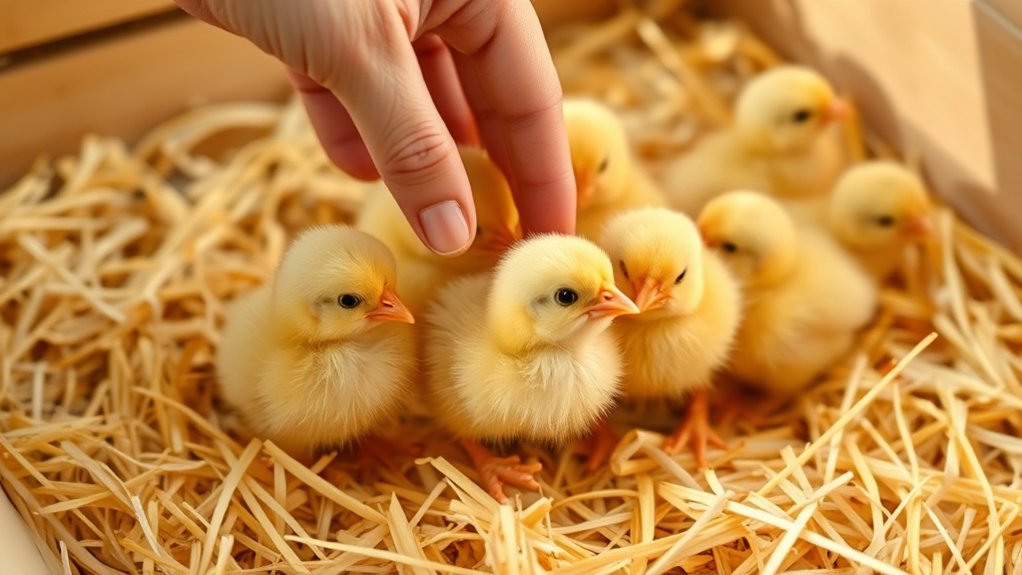
Before you bring your chicks home, set up a brooder that keeps them safe, dry, and warm. Use a sturdy box, tub, or pen with solid walls and a secure cover to block drafts and predators. Line the floor with pine shavings or another clean bedding material, and avoid slippery surfaces that can strain tiny legs.
Place a heat lamp or brooder plate so you can keep the brooder temperature steady, then monitor it with a thermometer at chick level. Start around 95°F and lower it each week as your chicks grow. Provide enough space for them to move away from the heat if they get too warm.
Keep water shallow, stable, and easy to reach, and check the setup often for wet spots, droppings, or overcrowding. A clean, well-lit brooder helps your chicks settle in quickly and stay healthy.
Choose the Right Starter Feed
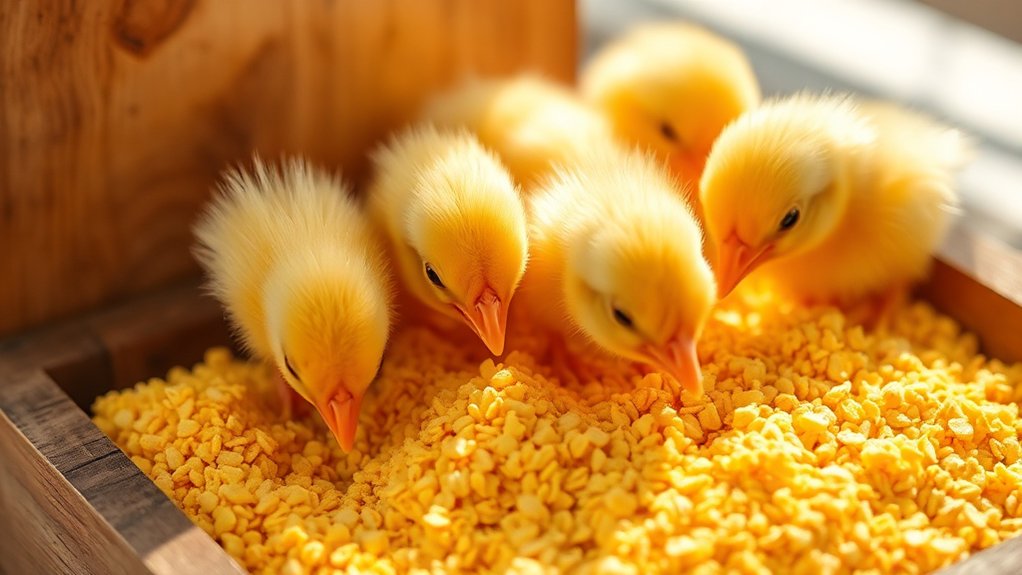
Choose a chick starter feed that’s specially formulated for growing birds. It gives them the right balance of protein, vitamins, and minerals for healthy development. Check feed ingredients so you know what you’re offering and how it supports a strong start. Compare starter types below to match your flock’s age and needs.
| Starter type | Best for | Protein |
|---|---|---|
| Crumbles | Easy pecking | 20%-22% |
| Mash | Small flocks | 18%-20% |
| Medicated | Cocci risk areas | 20%-22% |
| Non-medicated | Healthier flocks | 18%-20% |
Keep the feed fresh and follow a consistent feeding schedule so chicks can eat steadily throughout the day. Avoid treats and scratch grain now because they can upset nutritional balance and slow growth. If you switch brands, do it gradually so your chicks adjust without stress. Read labels carefully, choose a trusted product, and refill feeders often enough that timid chicks don’t miss meals.
Give Baby Chicks Fresh Water Daily
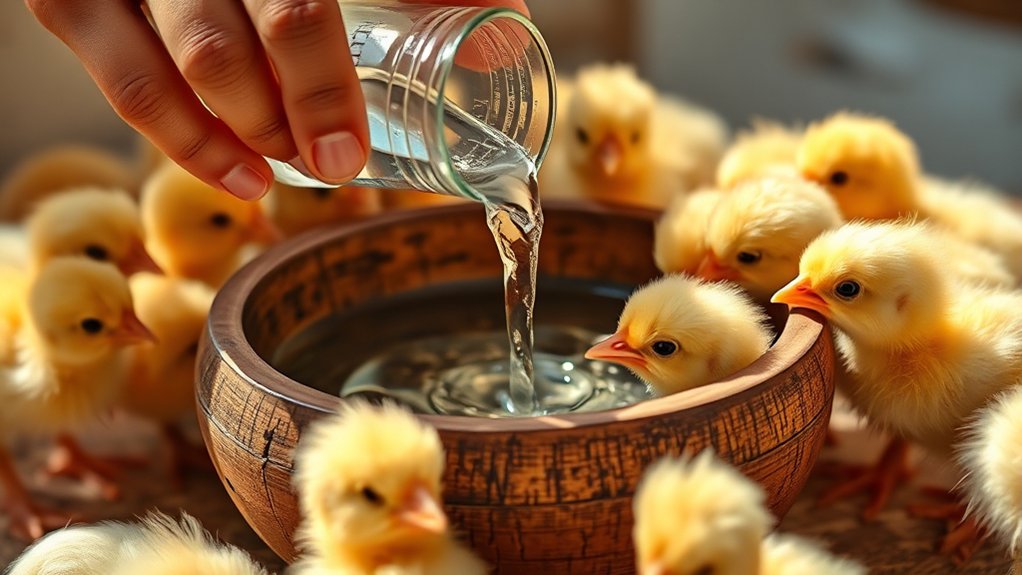
Fresh, clean water is essential for baby chicks because they dehydrate quickly and need constant access to drink. You should replace it every day, and sooner if it becomes dirty or warm. Use a shallow, stable dish so chicks can reach the water without slipping in.
Check the water temperature often; cool water encourages steady drinking, while cold water can discourage them from sipping. Their hydration importance can’t be overstated, since even brief dryness can slow growth and weaken them.
- Refresh water morning and evening.
- Watch each chick drink after you refill.
- Keep the container low and easy to reach.
- Add clean pebbles or marbles only if needed to prevent accidents.
If you notice chicks crowding the dish, add another waterer so everyone drinks comfortably. Consistent access helps them stay active, eat well, and develop strong.
Keep the Brooder Clean and Dry
A clean, dry brooder helps baby chicks stay healthy and warm, so remove wet bedding, spilled feed, and droppings every day. Good brooder hygiene starts with a routine: check corners, refresh damp spots, and replace soiled material before it starts to smell.
Keep airflow gentle, because stagnant moisture can chill chicks and make cleaning harder. Choose bedding options that absorb well and stay fluffy.
| Task | How Often |
|---|---|
| Remove wet bedding | Daily |
| Spot-clean feed and droppings | Daily |
| Replace all bedding | As needed |
If you use pine shavings, straw, or paper bedding, watch for clumps and pack-down since those signs mean it’s time for a change. A dry floor also helps you notice messes faster, so you can keep the brooder comfortable.
When you stay consistent, you protect your flock and make daily care easier for yourself too.
Check for Healthy Growth Signs
Watch your chicks closely each day so you can spot healthy growth early. Healthy chicks stay alert, eat enthusiastically, and move around with steady energy. Their eyes should look bright, their legs strong, and their down smooth and fluffy.
Track growth milestones by weighing them weekly and comparing them with breed expectations. You’ll also notice feather development starting on the wings and tail before it spreads across the body.
Check that each chick stands upright and walks without wobbling. Watch for consistent eating, drinking, and active scratching. Look for clean vents and clear eyes, nostrils, and beaks. Compare size, weight, and feathering against expected growth milestones.
If a chick lags behind, isolate it briefly and watch for signs of illness, injury, or bullying. Acting quickly helps you support the flock before a small problem becomes serious.
Frequently Asked Questions
When Can Baby Chicks Go Outside?
Baby chicks can go outside when they’re fully feathered, usually around 6 to 8 weeks old, and nighttime temperatures stay warm enough for them. You should meet their temperature requirements by easing them out gradually on mild days.
Make sure you provide safe outdoor shelter, shade, and protection from predators. Start with short visits, then increase their time outside as they grow stronger and weather stays stable.
How Do I Introduce Chicks to Older Hens?
You should introduce chicks to older hens slowly, because 80% of flock stress comes from rushed mix-ins. Start with side-by-side pens so they can see each other without contact.
Then let them mingle briefly under supervision. Watch for bullying and let the hens establish a pecking order. Provide extra feeders, waterers, and hiding spots.
Good social integration takes patience, but it helps your flock settle safely and calmly.
What Toys Do Baby Chicks Need?
Baby chicks don’t need fancy toys, but you can give them safe toys for chick enrichment. You can add a mirror, a small perch, paper towels to peck, or a shallow dish of clean dirt for scratching.
You should avoid anything with loose strings, sharp edges, or tiny parts they could swallow. You’ll keep them curious, active, and less stressed by rotating simple enrichment items often.
How Often Should I Handle Baby Chicks?
For baby chicks, you should handle them briefly every day after they’ve settled in. Keep sessions short, gentle, and calm so they don’t get stressed.
Use handling tips like supporting their feet and body, and try bonding techniques such as speaking softly and offering your hand first. Don’t overdo it; a little goes a long way.
Stop if they seem frightened, and let them rest between visits.
When Should Baby Chicks Be Vaccinated?
You should vaccinate baby chicks according to your vet’s vaccination schedule, usually before or soon after they arrive, depending on the disease risks in your area. You’ll protect chick health best by asking a poultry vet or hatchery what’s recommended for your flock.
Some chicks need Marek’s disease protection at hatch, while others may need later vaccines. Always follow local guidance and keep records of every vaccination.
Conclusion
Caring for baby chicks gets easier when you stick to the basics: give them a safe, warm brooder, the right starter feed, fresh water, a clean, dry space, and healthy checkups. These simple steps work like a sturdy nest, giving your chicks the support they need to grow strong and happy.
Stay attentive and keep their environment comfortable. You’ll help them feather out into healthy chickens before you know it. Remember, caring for baby chicks is all about consistency and love.