Chicken Molting: How to Care for Your Flock
If you’ve ever cared for hens during their molting season, you know how challenging it can be to keep your flock healthy and comfortable. Many people struggle with spotting the right care routine or feel overwhelmed when their chickens suddenly stop laying and look patchy. You’re not alone—molting is a tricky time for both hens and their keepers, but with the right approach, it doesn’t have to be stressful.
Chicken molting is a natural yearly process when your hens shed old feathers and grow new ones, often looking patchy and laying less or stopping for a while. You can help by keeping fresh water available, feeding a balanced, protein-rich diet, limiting treats, and maintaining a calm, clean coop.
Watch for pin feathers, weight loss, or unusual behavior. With the right care, your flock will recover well, and there’s more to know about making molt easier.
Key Takeaways
- Molting is a normal feather-shedding cycle that can make chickens look patchy for 6 to 16 weeks.
- Expect fewer or no eggs during molt because energy shifts from laying to feather regrowth.
- Feed a balanced, protein-rich diet with 16% to 18% protein to support new feather growth.
- Keep fresh water available, limit treats, and maintain a clean, calm coop to reduce stress.
- Monitor for weight loss, lethargy, or unusual molting patterns that may signal health problems.
What Is Chicken Molting?
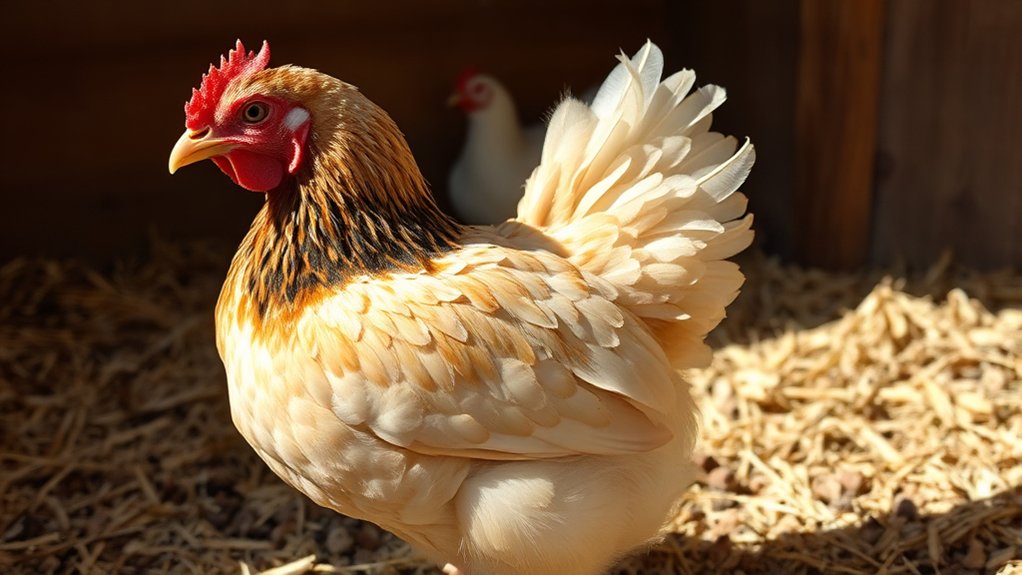
Chicken molting is a natural process where your chicken sheds old feathers and grows new ones. You’ll notice feathers drop from the body, neck, and tail as new ones push through the skin.
During this stage, your bird may look patchy or scruffy, but that’s normal. Molt duration varies from chicken to chicken, and you may see it last several weeks or longer.
Your bird may look patchy or scruffy, and molt duration can last several weeks or longer.
Feather types don’t all change at once, so some areas may look fuller while others seem bare. You can spot loose feathers in the coop and around favorite resting spots.
Your chicken may also seem less active and more focused on grooming. Molting affects appearance, not identity, and it’s a routine part of a bird’s life cycle.
If you understand what’s happening, you can watch your flock more closely and respond calmly when the feathers start falling.
Why Chickens Molt Each Year

Your chickens molt every year to swap out old, worn feathers for fresh, new ones. It’s usually the change in daylight that kicks off this process. During this time, their bodies focus more energy on growing feathers instead of laying as many eggs. This natural cycle keeps them healthy and ready to face the upcoming seasons.
Natural Feather Renewal
Even healthy hens shed and regrow feathers each year because molting is a normal part of their cycle, not a sign that something is wrong. During this reset, you’ll notice loose feathers, dull feather color, and a thinner body covering as old plumage drops away.
Your chicken’s body replaces worn feathers with fresh ones that better protect skin, keep warmth in, and support flight balance. This process also helps restore natural oils on new feathers, improving their flexibility and water resistance.
You don’t need to panic when your flock looks scruffy; their bodies are simply renewing damaged plumage. Give them steady nutrition, clean water, and a calm routine so they can rebuild strong feathers efficiently and return to full condition.
Seasonal Light Changes
As daylight shortens in fall, your hens’ bodies get the signal to slow down egg production and shift energy toward feather regrowth. You’ll usually see this response after changes in light duration and daylight exposure tell their internal clocks that winter’s coming.
Molting helps them replace worn feathers before colder weather arrives, so the cycle repeats each year.
Shorter days trigger the molt
Less light can reduce laying
Hormones respond to seasonal cues
Feather replacement follows the signal
Your flock’s timing may vary
You can’t stop the process, but you can understand why it happens and plan for the temporary break in egg production.
Energy Conservation Shift
When a hen molts, her body shifts energy away from laying and toward rebuilding feathers, because both tasks are demanding and she can’t do them well at the same time. You’ll often see her slow down, eat more protein, and spend less time scratching around the yard.
This energy conservation move helps her stay in better energy efficiency mode while she replaces old feathers with new ones. You may also notice behavioral changes, like reduced egg production, quieter routines, and more resting in sheltered spots.
Molting isn’t a sign of illness by itself; it’s a seasonal reset that protects her health. If you support her with good nutrition, clean water, and a calm coop, you help her recover faster and return to laying.
Signs Your Hen Is Molting

When you notice your hen losing feathers in uneven patches, she might be starting to molt. You could also see fewer eggs during this time because reduced egg production often comes with this natural cycle. These signs can help you tell molting apart from a health problem. So, if your hen looks a bit scruffy but is otherwise acting normal, she’s probably just molting.
Feather Loss Patterns
A hen that’s molting usually loses feathers in a fairly predictable way, with new ones replacing the old ones in patches rather than all at once. You’ll notice this pattern across the neck, back, and tail first, while the head often stays fuller. Feather color may look duller as old plumage sheds.
Age factors can affect how fast the change happens, and stress effects may make the loss seem uneven. Breed differences also matter, since some birds molt more dramatically. Climate impact can shift timing, and a solid nutrition balance supports steady regrowth.
- Patchy bare spots
- Pinfeathers emerging
- Ragged tail feathers
- Thinner neck plumage
- Uneven shed areas
Reduced Egg Production
As your hen starts molting, you’ll usually see egg production drop or stop altogether because her body redirects energy from laying to growing new feathers. You may also notice weaker egg quality, with thinner shells or smaller eggs before laying pauses.
Watch your flock behavior too; a molting hen often moves less, eats more, and avoids nest boxes.
| Sign | What You’ll See | Why It Matters |
|---|---|---|
| Fewer eggs | Daily laying slows | Energy shifts to feather growth |
| Poor egg quality | Soft shells, tiny eggs | Nutrients get diverted |
| Quiet behavior | Less nesting, more resting | Helps you spot molt early |
Keep feed steady, offer extra protein, and don’t worry if production rebounds after the molt concludes.
How Long Chicken Molting Lasts
Molting usually lasts anywhere from 6 to 16 weeks, though the exact timeline depends on the bird, the season, and how severe the molt is. You’ll notice the process moving through distinct molting stages, and those stages shape the total time.
Several duration factors can speed things up or slow them down, including age, breed, and whether your flock molts all at once or gradually.
- Light molts may finish in about 6 to 8 weeks
- Moderate molts often take 8 to 12 weeks
- Heavy molts can stretch to 12 to 16 weeks
- Young birds may recover faster than older hens
- Cool weather can make the molt seem longer
You can expect feathers to drop and regrow unevenly, so the timeline won’t look perfectly steady. Even within one flock, each chicken may follow a different pace.
Care for Molting Chickens
When your chickens start molting, focus on helping them conserve energy and stay comfortable since new feathers take a lot out of them. Provide a steady molting diet with balanced feed and fresh treats, and keep water available so you meet their hydration needs.
Watch for behavior changes like extra sleeping, reduced laying, or irritability, and use those cues for health monitoring. Good stress management matters, so keep handling gentle and avoid adding new birds or changing routines.
Check flock dynamics often because bullied hens may need extra space or protected feeding time. Make small coop adjustments by adding dry bedding, blocking drafts, and improving ventilation without chilling them.
Support feather care by keeping the run clean and dry, and note environmental factors like heat, rain, and mud that can slow recovery. With calm attention and nutrient balance, you’ll help your flock get through molt more easily.
Boost Protein for Feather Growth
You can help your chickens grow strong new feathers by offering protein-rich feed during their molt. Try adding mealworms or other high-protein treats—they give your birds an extra boost. This kind of support really helps with feather regrowth and keeps them in better shape overall.
Protein-Rich Feed Options
During molting, your chickens need extra protein to rebuild feathers quickly and stay healthy, so switch to a feed that supports that demand. Offer high protein grains like sunflower or peas, commercial supplements made for molting hens, natural sources such as soy or alfalfa, homemade mixes with balanced amino acids, and kitchen scraps only if they won’t upset nutritional balance.
Keep feeding frequency steady, and watch hydration needs closely so digestion stays efficient. When supplementing vitamins, choose products that fit your flock’s age and condition. You can also try adjusting rations gradually to avoid stress.
These protein-rich feed options help birds replace lost feathers without wasting energy, and they keep your flock strong through the molt.
Mealworms And Treats
Mealworms make a handy high-protein treat during molt, giving your chickens an extra boost for feather regrowth without overcomplicating their diet. You can offer a small handful a few times a week, and your flock will usually gobble them up.
The mealworm benefits are simple: they add protein, encourage healthy appetite, and give you an easy reward to hand out during a stressful season. Keep treats limited so they don’t crowd out balanced feed.
If you want treat alternatives, try chopped scrambled eggs, sunflower seeds, or plain oats in small amounts. Always pair treats with fresh water and a steady layer ration so your birds stay on track.
A little variety helps, but moderation keeps molting hens focused on recovery and steady feather production.
Support Feather Regrowth
Feather regrowth needs extra protein, so make a quality layer feed the foundation of your flock’s diet while they molt. You can also offer small portions of high-protein extras to strengthen feather nutrition and help birds rebuild faster in a calm molting environment.
- Choose a feed with 16% to 18% protein.
- Add cooked eggs or plain fish sparingly.
- Keep fresh water available every day.
- Limit treats so feed stays balanced.
- Watch for new pin feathers as recovery starts.
You should keep handling gentle, reduce stress, and avoid sudden diet changes. Strong nutrition now supports healthier feathers, better comfort, and a quicker return to laying when molting ends.
Adjust Egg Expectations During Molting
If your hens are molting, expect egg production to slow down or stop for a while. Their bodies shift energy from laying to growing new feathers, so egg production fluctuations are normal. Don’t worry if you collect fewer eggs or none at all for several weeks. You can still monitor your flock’s condition by checking their combs, appetite, and body weight.
Keep your routine steady but stay flexible with adjusting feeding schedules if your hens need extra support during this break. Offer a balanced layer feed with enough protein and fresh water so they can rebuild feathers and regain laying strength later. Avoid setting egg goals for this period; molting isn’t a failure, it’s a natural pause.
As feather growth finishes, laying usually returns gradually. By understanding this cycle, you’ll know what to expect and can plan ahead without disappointment.
Protect Molting Chickens From Stress
Molting is already hard on your hens, so try to keep their environment calm and predictable. Stress reduction starts with small changes: keep routines steady, limit loud noises, and avoid moving birds unless you must. Watch environmental factors like heat, drafts, and wet bedding, because discomfort can drain energy your hens need for feather growth.
- Provide fresh water daily
- Offer extra roost space
- Keep predators out
- Reduce handling and chasing
- Feed at regular times
Flock dynamics matter, too. If one bird pecks at others, give the flock more space or separate the bully for a while. Make nutritional adjustments by offering a balanced feed with enough protein and minerals, since molting hens need support without sudden diet shifts.
When you stay consistent, you help your chickens feel safe, recover faster, and come through molt with less strain and better feather regrowth.
When Molting Signals a Health Problem
Sometimes shedding feathers is normal, but you should pay attention when the pattern seems off or your hens act unwell. Look for health indicators such as weight loss, pale combs, lethargy, reduced appetite, or patchy feather loss outside the usual molt pattern.
If several birds molt badly at once, check stress factors like overcrowding, predators, parasites, or sudden weather shifts. You should also consider nutritional deficiencies, especially if your flock’s diet lacks enough protein, vitamins, or minerals for healthy feather turnover.
When feathers break, skin looks irritated, or bald areas spread unevenly, feather diseases may be involved rather than simple molting. Watch droppings, egg production, and behavior too, because changes often point to a deeper problem.
If the molt lasts unusually long or your hens seem weak, treat it as a warning sign and investigate the cause before it worsens.
Support Healthy Feather Regrowth
Once the molt is underway and your birds are ready to regrow feathers, give them the support they need to rebuild quickly and safely. You can speed recovery by feeding a balanced layer ration with extra protein, along with minerals and vitamins that drive feather nutrition. Keep fresh water available because birds need it to form strong new plumage.
- Offer high-protein treats sparingly
- Add leafy greens for micronutrients
- Check for mites and lice
- Reduce crowding and stress
- Maintain a clean molting environment
You should also protect flockmates from pecking by limiting handling and providing enough space. Shade, shelter, and dry bedding help birds conserve energy while their bodies focus on regrowth. Watch for pin feathers, and don’t trim them. With steady care, your hens will replace worn feathers with a healthy, glossy coat and return to laying in better condition.
Frequently Asked Questions
Can Molting Chickens Still Go Outside Safely?
Yes, you can let molting chickens go outside safely if you watch for molting signs and protect their outdoor safety. They may feel more vulnerable, so keep them away from harsh weather, predators, and rough flockmates.
Provide shade, clean water, and easy access to feed. If a bird seems weak, stressed, or ill, you should keep her in a calm, sheltered space until she’s stronger and regrows feathers.
Should I Trim Feathers During Molting?
You shouldn’t trim feathers during molting unless you’re addressing a specific problem. Molting signs show your bird is already shedding old feathers and growing new ones, so extra trimming can stress skin and slow feather health.
If feathers are dirty, broken, or causing injury, you can carefully clean or clip only what’s necessary. Otherwise, leave them alone and let your chicken finish molting naturally.
Do Roosters Molt Differently Than Hens?
Not really; you’ll usually see the same autumn storm of feathers on both. You may notice rooster behavior shift, though, as males can get quieter or a bit cranky while they shed.
Their feather types differ slightly from hens’, especially around the neck, saddle, and tail, so the molt can look more dramatic. You should still expect patchy loss, slower movement, and new pin feathers pushing through soon.
Can Molting Affect a Chicken’s Comb Color?
Yes, molting can affect your chicken’s comb color because the bird redirects energy toward feather growth, which can temporarily reduce circulation and change appearance. You might notice a paler, smaller, or less vibrant comb during this time.
Good comb health usually returns as molting ends and your chicken regains strength. If the comb stays discolored, dry, or swollen, you should check for illness, parasites, or poor nutrition.
Is Molting Contagious to Other Chickens?
No, you don’t catch molting like a cold. Think of it as your chicken shedding yesterday’s coat for a new one.
Molting causes are usually seasonal stress, age, or shorter daylight, not an infection. Still, you should watch the flock closely since poor diet or parasites can trigger feather loss in more than one bird.
Support feather regrowth with extra protein, clean water, and calm housing during this temporary reset.
Conclusion
When your chickens molt, you can give them the calm, steady care they need to bounce back. Keep their feed rich, their water fresh, and their stress low so new feathers can grow in strong.
Don’t worry when egg baskets shrink; that break is normal. Remember, every cloud has a silver lining, and this one ends with a healthier, renewed flock.
Watch closely, support them well, and your flock will soon look and lay their best again. Caring for your chickens during molting ensures they stay healthy and productive.