7 Facts About How Many Breeds of Chickens There Are
Choosing the right chicken breed can feel overwhelming, especially with so many options out there. You’re not alone—many people struggle to find the perfect breed that fits their needs, whether it’s for egg production, meat, or just something unique to show off. Understanding the variety can make all the difference.
You might be surprised to learn there are over 500 recognized chicken breeds worldwide, each bred for traits like egg production, meat quality, or unique looks. Breed standards help define what makes a breed distinct, including physical and behavioral features.
Many breeds are rare due to industrial farming favoring a few types, making conservation important. Adaptations also vary by region and climate.
If you want to understand breed differences and find the right one for your needs, there’s plenty more to investigate.
Key Takeaways
- There are over 500 recognized chicken breeds worldwide, reflecting extensive diversity in traits and purposes.
- Breeds vary widely in feather color, size, comb shape, and other physical characteristics for identification.
- Selective breeding has produced chickens suited for egg-laying, meat production, dual-purpose, or ornamental use.
- Many rare and heritage breeds face endangerment because industrial farming focuses on a few high-yield types.
- Preserving diverse breeds is crucial for genetic diversity, disease resistance, and adaptability to different climates.
How Many Chicken Breeds Exist Worldwide?
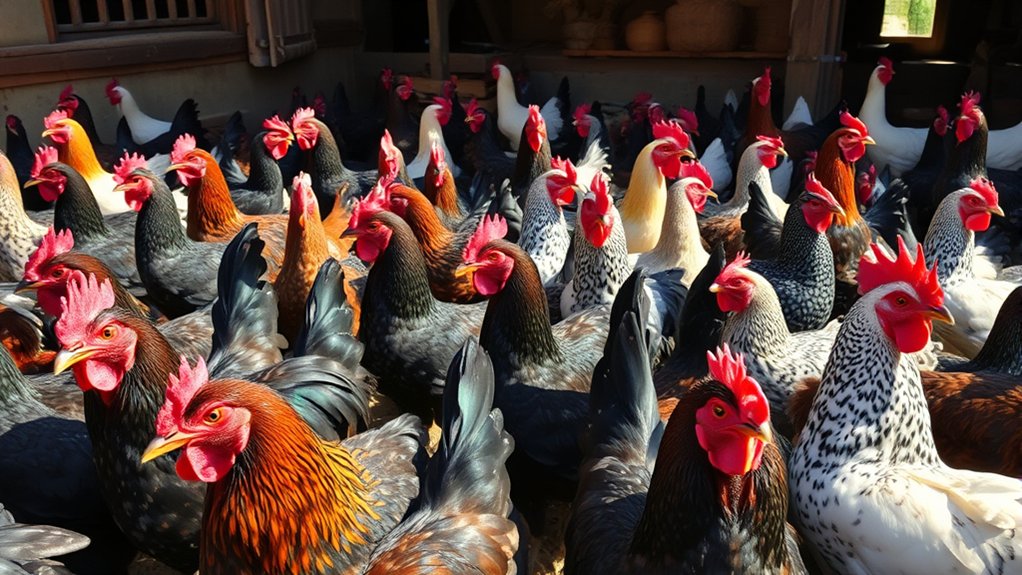
Although the exact number varies, there are over 500 recognized chicken breeds worldwide. When you look into these breeds, you’ll notice how diverse they are, especially regarding egg production and feather coloration.
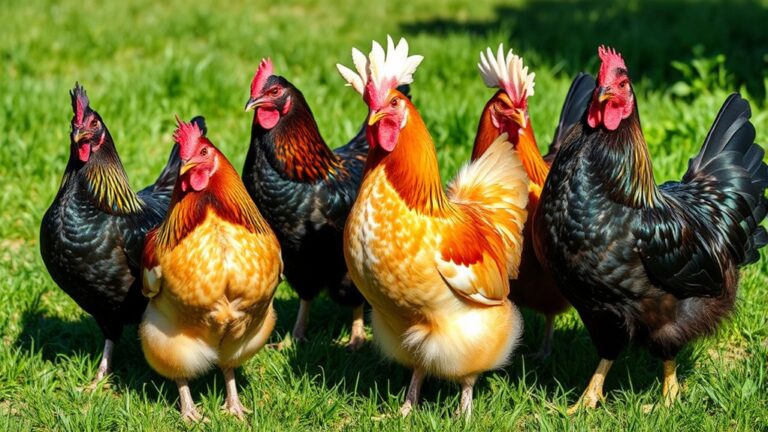
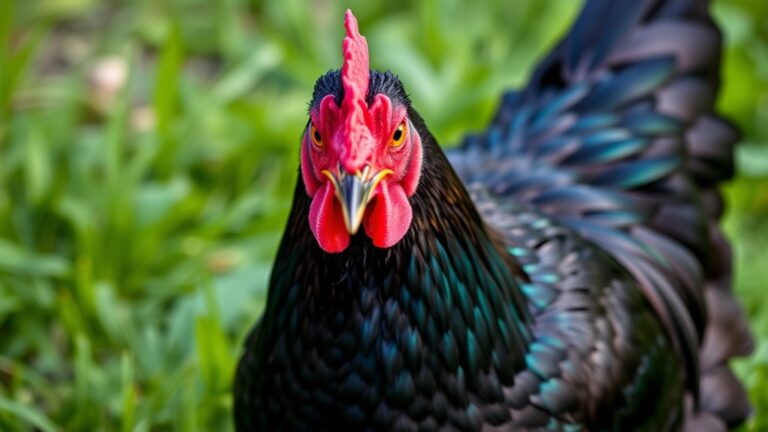
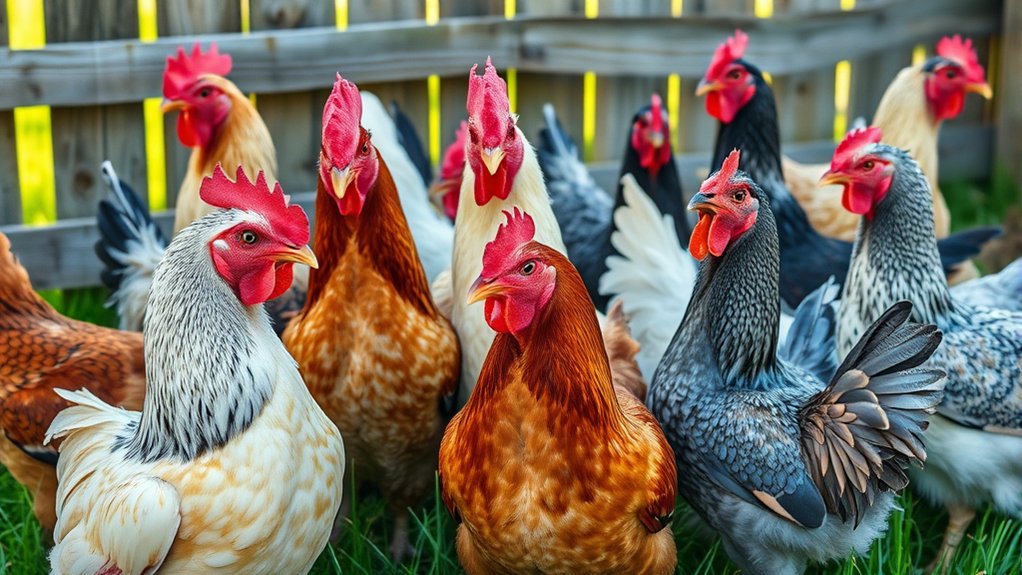
Some breeds are bred specifically for high egg production, giving you a steady supply of eggs, while others are prized for their unique feather colors and patterns. You might find chickens with feathers ranging from pure white to deep black, or even vibrant reds and blues.
This variety isn’t just for show; it reflects the different purposes each breed serves, whether for eggs, meat, or ornamental value. Understanding this diversity helps you appreciate how humans have selectively bred chickens over centuries, tailoring their traits to fit various needs and environments.
Who Decides What Makes a Chicken Breed?

You might be wondering, who actually sets the rules for what makes a chicken breed? Well, it’s the breed standards authorities that lay down clear criteria to keep everything consistent. Knowing what they do helps you understand why certain chickens are grouped together the way they are.
Breed Standards Authorities
When determining what qualifies as a distinct chicken breed, official organizations set clear standards that breeders must follow. These breed standards authorities, such as poultry associations and clubs, ensure breeders adhere to strict breeding ethics, promoting responsible practices that preserve each breed’s unique traits.
They play a vital role in maintaining genetic diversity by preventing excessive inbreeding and encouraging healthy gene pools. By establishing detailed descriptions of physical characteristics, behavior, and performance, these authorities help you understand which chickens truly represent a recognized breed.
Their oversight keeps breeding honest and consistent, so when you raise or show chickens, you know the birds meet accepted criteria. Ultimately, breed standards authorities safeguard the integrity and future of chicken breeds worldwide.
Classification Criteria
Deciding what makes a chicken breed involves more than just appearance; specific classification criteria guide this process. When you look into it, breed classification relies heavily on genetic diversity, ensuring that distinct genetic traits set one breed apart from another.
Breeding programs play a vital role. They help maintain these unique traits by controlling mating and preserving breed integrity. You’ll find that breed standards authorities use these criteria to recognize and register new breeds officially.
They assess factors like physical characteristics, behavior, and genetic markers to confirm a breed’s uniqueness. So, when you think about who decides what makes a chicken breed, it’s a combination of scientific evaluation and carefully managed breeding programs that uphold these classifications.
What Makes Chicken Breeds Unique?
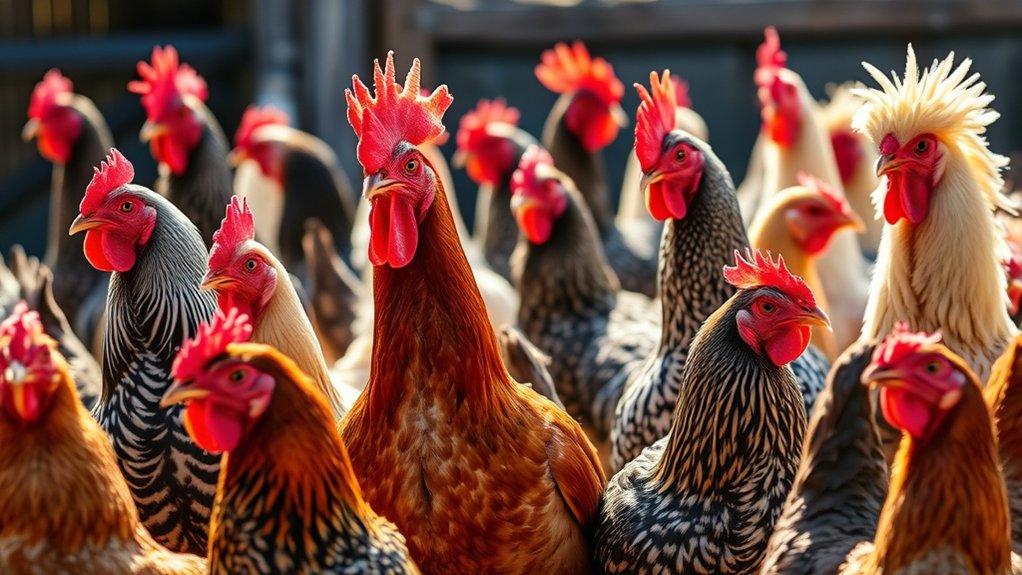
You’ll notice chicken breeds really stand out because of their physical traits, like size and feather color. And it’s not just how they look — their behaviors can be pretty different too. Some are super social, while others might be more independent or active. On top of that, each breed usually has a specific purpose. Some are great for laying eggs, others are raised mainly for meat, and some are even bred just for shows. It’s pretty interesting how varied they can be!
Physical Characteristics Differences
Although chicken breeds share common traits, their physical characteristics vary widely and make each breed unique. When you look closely, you’ll notice differences that help identify each breed easily.
Feather coloration is one of the most striking features, ranging from solid colors to intricate patterns. Comb shapes are another key trait, with varieties like single, rose, or pea combs setting breeds apart.
Other physical differences include body size and shape, from bantams to large-heavy breeds; leg color and feathering, influencing appearance and adaptation; ear lobe color, which can hint at egg color; and tail shape and length, adding to the breed’s distinctive silhouette.
These features help you recognize and appreciate the diversity in chicken breeds.
Behavioral Traits Variation
Since each chicken breed developed for different purposes and environments, their behavior varies considerably. When you observe chickens, you’ll notice some breeds exhibit strong behavioral adaptability, adjusting quickly to new surroundings or changes in their routine. This flexibility helps them thrive in diverse conditions.
Moreover, social hierarchy plays a key role in how chickens interact within their flocks. Some breeds establish clear pecking orders faster and with less conflict, while others are more laid-back or even shy.
Understanding these behavioral traits helps you choose the right breed for your setting and expectations. Whether you want a breed that’s calm and easygoing or one that actively asserts itself, recognizing these variations ensures you’ll manage your flock more effectively and enjoy their unique personalities.
Purpose And Utility
When choosing a chicken breed, understanding its primary purpose and utility helps you make the best decision for your needs. Different breeds excel in specific areas, so knowing what you want, whether it’s egg production, meat quality, or both, guides your choice.
Some breeds are prized for their high egg yield, while others deliver superior meat quality.
Consider these factors when selecting a breed:
- Egg production: How many eggs the breed lays and their size.
- Meat quality: Texture, flavor, and growth rate of the bird.
- Dual-purpose breeds: Balanced traits for both eggs and meat.
- Adaptability: How well the breed thrives in your climate or setup.
How Do Chicken Breeds Vary by Region and Climate?
Because different regions experience unique climates, chicken breeds have adapted specific traits to thrive in their environments. You’ll notice that climate adaptability plays a huge role in regional breed diversity. For example, some breeds have thick feathers to withstand cold winters, while others have lighter plumage to handle heat better.
When selecting chickens, consider how well a breed matches your local climate to keep your flock healthy and productive.
Here’s a quick look at how chicken breeds vary by region and climate:
| Region | Adapted Traits |
|---|---|
| Northern Europe | Dense feathers, cold hardy |
| Southeast Asia | Lightweight feathers, heat tolerant |
| North America | Varied traits, suited for diverse climates |
What Are the Most Popular Chicken Breeds Globally?
Although chicken breeds vary widely around the world, some have gained global popularity due to their productivity, temperament, and adaptability. If you’re looking to raise chickens, you’ll find that certain breeds consistently stand out, especially for egg production or ornamental varieties.
Certain chicken breeds shine worldwide for their productivity, temperament, and adaptability, perfect for egg layers and ornamental flocks.
Here are four popular breeds you should know:
- Leghorn: Famous for high egg production and resilience, perfect if you want plenty of white eggs.
- Rhode Island Red: Known for its hardiness and brown egg-laying ability, it adapts well to various climates.
- Sussex: A friendly breed prized for both meat and eggs, making it a versatile choice.
- Silkie: An ornamental variety loved for its unique fluffy feathers and gentle nature.
Choosing among these popular breeds means you’ll enjoy reliable egg production and, if desired, striking looks with ornamental varieties. These chickens have earned their global reputation by balancing productivity and personality, making them ideal for backyard flocks everywhere.
Why Are Some Chicken Breeds Rare or Endangered?
Many chicken breeds have become rare or endangered as industrial farming favors a few high-yield varieties, pushing others out of the market. When you rely on commercial breeds designed for maximum egg or meat production, less common breeds often get overlooked.
This reduction in breed variety threatens genetic diversity, which is vital for disease resistance and adapting to changing environments. If you want to help preserve these rare breeds, supporting conservation efforts is key.
Organizations and breeders work hard to maintain heritage breeds, keeping their unique traits alive. You can contribute by choosing to raise or buy from rare breeds, helping maintain a broader genetic pool.
Without these efforts, some breeds risk extinction, which would mean losing irreplaceable genetic resources. So, understanding why some chicken breeds become rare helps you appreciate the importance of conservation and the role you can play in sustaining genetic diversity in poultry.
How to Choose the Right Chicken Breed for Your Needs
When selecting a chicken breed, consider what you want most, whether it’s eggs, meat, temperament, or appearance. Your choice should align with your goals to guarantee satisfaction and success.
Pay close attention to feeding habits since some breeds require more specialized diets. This can impact your budget and time. Egg production rates vary widely, so if you want consistent eggs, choose breeds known for high output.
Here are key factors to guide you:
- Egg production rates: Select breeds like Leghorns for frequent laying or heritage breeds for seasonal cycles.
- Feeding habits: Some breeds eat less or thrive on foraging, reducing feed costs.
- Temperament: Friendly breeds suit families, while more independent ones fit free-range setups.
- Purpose: Decide if you want meat, eggs, or dual-purpose birds to match your needs.
Frequently Asked Questions
How Long Does It Take for a New Chicken Breed to Be Recognized?
It usually takes several years for you to get a new chicken breed recognized. You’ll need to go through the breed registration process, which involves proving consistent traits and maintaining genetic diversity within your flock.
This guarantees the breed has stable characteristics and enough variation to thrive. Patience is key because breed clubs and associations carefully review your documentation before granting official recognition, making the process thorough but rewarding.
Can Chicken Breeds Interbreed and Produce Fertile Offspring?
You can think of chicken breeds mixing like colors on an artist’s palette. Yes, they can interbreed and produce fertile offspring. When breeds are compatible, their genes combine to create hybrid vigor, boosting health and productivity.
However, breed compatibility matters. Some crosses flourish, while others may face challenges. So, if you’re aiming for strong, fertile hybrids, choosing compatible breeds is key to painting a vibrant genetic masterpiece.
What Is the Average Lifespan of Different Chicken Breeds?
The average lifespan of different chicken breeds usually ranges from 5 to 10 years, but this can vary based on genetic diversity and breed identification. When you understand a breed’s background, you’ll know its typical health and lifespan traits.
Breeds with greater genetic diversity often live longer and resist diseases better. By identifying your chicken’s breed, you can tailor care to help it embark on its full lifespan potential.
How Do Chicken Breed Characteristics Affect Egg Color and Size?
You’ll notice that chicken breed characteristics directly influence egg shell pigmentation and size. Larger breeds tend to lay bigger eggs, while smaller breeds produce smaller ones.
The pigmentation of the eggshell varies because of genetics linked to each breed, resulting in colors like white, brown, blue, or green. So, when choosing chickens, consider both breed size variation and their natural shell pigmentation to get the eggs you want.
Are There Any Heritage Chicken Breeds Used for Conservation Farming?
Absolutely, you’re like a guardian of the chicken domain when you raise heritage breeds for conservation farming. These breeds, like the Rhode Island Red or Sussex, are champions of heritage preservation.
Conclusion
Choosing the right chicken breed is like picking the perfect key to open your farm’s potential. With so many breeds worldwide, each with unique traits shaped by climate and culture, you can find one that fits your needs perfectly.
Whether you want eggs, meat, or a charming pet, knowing the differences helps you make a smart choice. Welcome the diversity, and watch your flock flourish like a well-tuned orchestra. Understanding how many breeds of chickens there are is the first step to building a thriving flock.