Can Chickens Eat Bananas?
If you’re a chicken owner, you’ve probably wondered what kinds of treats are safe and healthy to share with your flock. You’re not alone—many people struggle with finding snacks that are both nutritious and enjoyable for their birds without upsetting their diet. Can Chickens Eat Bananas.
Knowing what to feed chickens can be tricky, especially when it comes to fruits like bananas.
Yes, you can feed chickens bananas in moderation as an occasional treat. You should offer ripe banana pieces in small amounts a few times a week, since they provide quick energy, potassium, and some fiber but little protein or calcium.
Too much banana can cause loose droppings and crowd out a balanced feed. You can also try small bits of peel if they’re clean and soft.
Keep going to see the best serving tips and limits.
Key Takeaways
- Yes, chickens can eat bananas in moderation as an occasional treat. Ripe bananas are best, and small pieces help prevent choking.
- Bananas provide energy and some vitamins, but they are low in protein and calcium.
- Too many bananas can cause loose droppings and upset a balanced diet.
- Keep treats under 10% of daily intake and remove spoiled fruit immediately.
Can Chickens Eat Bananas Safely?
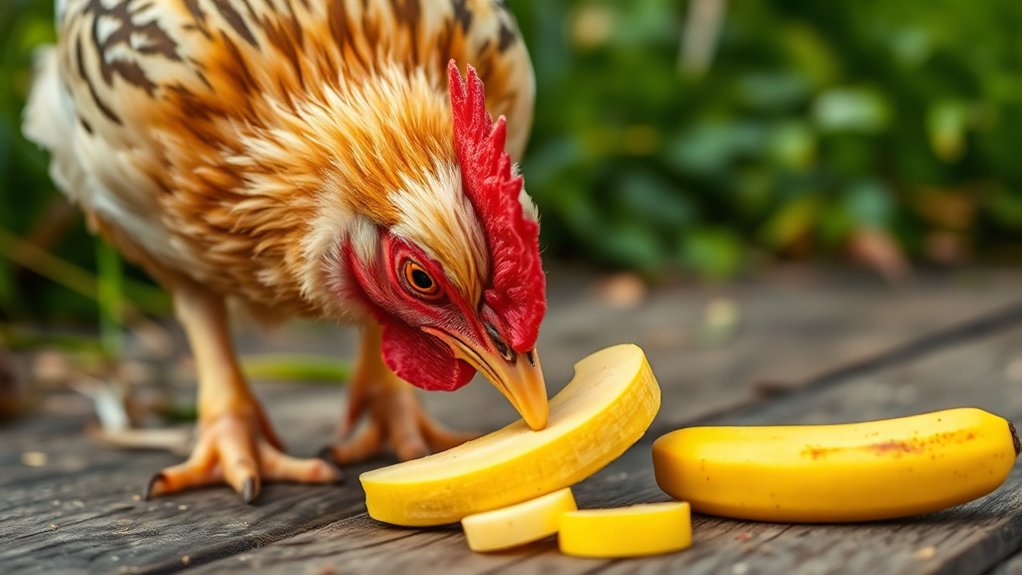
Yes, chickens can eat bananas safely in moderation. You can offer small pieces as an occasional treat, and your flock usually handles them well. Keep servings limited so you don’t crowd out their regular feed, which should remain their main diet.
Ripe bananas work best because they’re soft and easy to peck, but you should avoid overfeeding them. You’ll also want to watch your birds’ chicken preferences, since some hens love the sweet taste while others ignore it.
Ripe bananas are easiest for chickens to peck, but offer them sparingly based on each bird’s preference.
If your flock seems interested, introduce bananas slowly and see how they respond. When you think about banana nutrition, keep in mind that treats should support, not replace, balanced nutrition.
Remove any spoiled fruit right away, and don’t leave leftovers in the coop. Clean portions, given sparingly, help you keep snack time safe, simple, and stress-free for your chickens.
What Do Bananas Offer Chickens?

Bananas offer chickens a quick source of energy, along with potassium, vitamin B6, vitamin C, and a little fiber. When you look at banana nutrition, you’ll see it can add small amounts of useful nutrients to your flock’s diet. The potassium helps support normal muscle function, while vitamin B6 plays a role in metabolism.
Vitamin C can help with general health, and fiber may aid digestion in modest amounts. You won’t get a complete feed from bananas, but you can use them to provide chicken benefits as an occasional addition.
Their soft texture makes them easy for hens to peck and eat. If you feed bananas, you’re giving your chickens a simple fruit with natural sugars and trace nutrients. That makes bananas a convenient way to offer variety without changing their main ration.
Why Bananas Make a Good Treat

A ripe banana can be a great chicken treat because it’s sweet, easy to eat, and simple to serve. You can offer it when you want a soft snack that most birds peck at quickly. Banana nutrition also adds natural sugars, potassium, and fiber, which makes the fruit feel like a wholesome change from their usual feed.
Because chickens often show clear preferences, you may find that some flock members love bananas while others ignore them, and that’s fine.
- You can mash it for younger birds.
- You can slice it for easy pecking.
- You can mix it with other safe foods.
This treat works well because it’s familiar, affordable, and easy to handle. You don’t need special prep, and you can use it to add variety without making mealtime complicated.
How Much Banana Can Chickens Eat?
Even though bananas are safe, they should stay a treat, not a staple. So offer only small amounts a few times a week. You can use simple banana portions to keep feed balanced and avoid excess sugar. A good rule is to give each chicken a few bite-sized pieces, not a whole fruit. Treat moderation helps you protect digestion and keep hens interested in their regular feed.
| Chicken size | Banana portion | Frequency |
|---|---|---|
| Chick | 1 small bite | Rarely |
| Adult bantam | 2 to 3 bites | 2 times weekly |
| Standard hen | 3 to 4 bites | 2 to 3 times weekly |
If you notice loose droppings or less interest in feed, cut back. You don’t need much to make bananas exciting, and smaller servings work best. Keep banana portions modest, and your flock can enjoy them without problems.
How Should You Serve Bananas to Chickens?
To serve bananas to chickens, peel them first and cut the fruit into small, easy-to-peck pieces so they can eat it safely and without waste. Use these banana preparation tips to keep treats tidy and appealing, and follow serving size guidelines so you don’t crowd out their regular feed.
You can mash ripe banana for chicks or scatter chunks for older birds, but keep portions modest.
- Chop bananas into bite-size pieces
- Offer them as an occasional treat
- Remove leftovers before they spoil
You should place the fruit in a clean feeder, dish, or on a flat surface where your flock can reach it easily. If you mix banana with other safe foods, keep the amount small so they still eat balanced feed.
Fresh banana works best, and you’ll reduce mess by serving it in dry weather or indoors. Monitor how your chickens respond, then adjust treats to suit their flock size and appetite.
Can Chickens Eat Banana Peels?
Yes, chickens can eat banana peels in small amounts, but you should feed them only if the peels are thoroughly washed and cut into manageable pieces. You’ll help your flock by removing dirt, pesticides, and sticky residues before offering them.
Soft peels are easier for chickens to peck at, and smaller pieces reduce waste and choking risk. Some keepers mention banana peel benefits, since the peels add fiber and a little extra nutrition, but they shouldn’t replace a balanced feed.
Your birds may not love the texture, so offer peels as an occasional treat rather than a staple. Because chicken digestion works best with simple, digestible foods, you should introduce peels slowly and watch how your hens respond.
If they ignore them, don’t worry; many chickens prefer the fruit itself. Keep treats limited so their main diet stays complete, and always provide clean water for healthy eating.
When Are Bananas Too Much?
Bananas become too much when they crowd out a chicken’s regular feed, because too many treats can throw off a balanced diet and add excess sugar. You should keep banana portioning small and make sure pellets, grains, and greens stay the main event. With treat frequency, think occasional, not daily.
- Offer a few thin slices, not a whole banana.
- Use banana as a reward, not a staple.
- Watch your flock’s total treats across the week.
If you give bananas too often, your chickens may start ignoring their normal feed, which can make it harder for them to get the nutrients they need. You don’t need to ban bananas; you just need limits. A little fruit can fit nicely into a healthy routine when you stay consistent and keep portions modest.
What Happens If Chickens Eat Too Much Banana?
If you let your chickens eat too many bananas, they might end up with some digestive issues, like loose droppings or an upset crop. It’s not just that, though—feeding them too many bananas can also push out more balanced feed from their diet. Over time, this could cause nutritional imbalances.
Plus, since bananas are pretty high in sugar, giving your flock too much can load them up with extra calories. And when that happens, they might not be as interested in eating healthier foods. So, it’s best to keep banana treats in moderation.
Digestive Upset Risks
Too much banana can upset a chicken’s digestive system, especially if it starts replacing their normal feed. You may notice changes in digestive health within a day or two because the fruit’s soft texture and sugar can move through the gut quickly. Keep an eye out for potential symptoms and cut back right away if you see trouble.
- Loose droppings or wet bedding
- Reduced interest in feed
- Mild bloating or gurgling
If you keep banana treats small, your flock usually handles them well. Offer only a few bite-sized pieces and let fresh water stay available. When you limit extras, you help your chickens digest food normally and avoid unnecessary stomach upset.
Nutritional Imbalance Concerns
Even though bananas can be a healthy treat, feeding them too often can throw off your chickens’ diet by filling them up on sugar and water instead of the protein, vitamins, and minerals they need from balanced feed. You can weaken nutrient balance if bananas crowd out layer pellets, grains, and greens.
Over time, that gap may leave your flock missing key nutrients for growth, feather quality, and egg production. To keep things on track, follow feeding guidelines and offer bananas only as a small supplement, not a meal replacement.
Chop them into manageable pieces and serve them sparingly alongside their regular ration. When you limit treats, you help your chickens stay nourished and maintain a steady, healthy diet.
Excess Sugar Effects
Bananas aren’t just a filler treat; they’re also high in natural sugar, so too much can quickly cause trouble for your flock. When you overfeed banana, you push your chickens’ sugar metabolism harder than it should work, and that can lead to energy fluctuations.
Your birds may act hyper, then suddenly slow down. Loose droppings can appear if the extra sugar upsets digestion. Regular overuse can crowd out balanced feed.
You should keep banana portions small and occasional, especially for chicks or overweight hens. A few bites now and then won’t hurt, but constant servings can weaken healthy eating habits and encourage pickiness. Stick to moderation, and your flock will enjoy the treat without the sugar overload.
How Do Bananas Compare to Other Treats?
Compared with many common chicken treats, bananas are a sweet but less protein-rich option, so they should stay an occasional snack rather than a staple. When you look at banana nutrition, you’ll see quick energy from natural sugars, some potassium, and a bit of fiber, but not much of the protein, fat, or calcium your flock needs from food.
In a treat comparison, chopped veggies, mealworms, or scrambled egg usually offer more practical benefits because they’re richer in nutrients chickens use for growth and egg production. You can still offer banana for variety, especially if you want a soft, easy-to-peck treat for younger birds or older hens.
Just keep portions small so the sweetness doesn’t crowd out more useful snacks. If you mix treats, bananas can be one part of a rotating menu, not the main event.
How Do Bananas Fit in a Balanced Chicken Diet?
When you’re adding bananas to a chicken’s diet, think of them as a treat, not a replacement for a complete feed. You give your flock steady nutrition through a balanced layer or grower ration, while bananas can add variety, moisture, and a small boost of banana nutrition.
Bananas should be a treat, not a substitute, for your chickens’ balanced feed.
For chicken health, keep treats under 10% of daily intake so you don’t upset digestion or crowd out essential protein, calcium, and vitamins.
- Offer ripe banana in small pieces
- Remove peels if they’re tough or dirty
- Mix bananas with other safe treats sparingly
You can also use bananas to encourage shy birds to investigate new foods, but don’t rely on them often. If you overfeed sugary snacks, you may invite loose droppings and weight gain.
Instead, pair bananas with greens, grains, and clean water, and let your chickens get most of their calories from feed.
Frequently Asked Questions
Can Baby Chicks Eat Bananas?
Yes, you can offer baby chicks bananas in tiny amounts as an occasional treat. For baby chick nutrition, focus mostly on starter feed, which gives them the balanced protein and vitamins they need to grow.
Bananas do provide banana health benefits like potassium and energy, but they’re too sugary for regular feeding. Mash them well, serve only a little, and make sure your chicks still eat their main feed first.
Do Chickens Prefer Ripe or Unripe Bananas?
You’ll usually find chickens prefer ripe bananas because they’re softer, sweeter, and easier to peck, though banana preferences can vary by flock. Their chicken taste leans toward moist, fragrant fruit more than firm, starchy pieces.
Offer small, mashed bits and watch how they react. If they ignore unripe bananas, don’t force them; you’ll waste food and miss a happy treat. Ripe ones often win their curious, beady approval.
Can Frozen Bananas Be Given to Chickens?
Yes, you can give chickens frozen bananas, but you’ll want to thaw or soften them first so they can peck safely. Frozen banana benefits include a cool treat in hot weather, and they still offer some chicken nutritional value like potassium and fiber.
You shouldn’t make them a regular feed, though. Offer small pieces as a treat, and make sure the fruit isn’t moldy, sugary, or mixed with additives.
Will Bananas Change Egg Taste or Color?
No, bananas won’t change your eggs’ taste or color. You’ll keep the same egg flavor, the same shell shade, and the same yolk look.
Bananas add banana nutrition to your flock’s diet, but they don’t usually alter eggs in a noticeable way. If you feed them treats in moderation, you can enjoy variety without worrying about odd-tasting or oddly colored eggs.
Can Chickens Eat Banana Stems?
Yes, you can offer banana stems to chickens in small amounts, but they shouldn’t be a regular feed. Banana stem nutrition is mostly fiber and moisture, so it doesn’t provide much energy or protein.
Your chickens may peck at it, but their digestion works best with balanced feed, grains, and greens. Chop the stem finely, keep it clean, and watch for any digestive upset afterward.
Conclusion
So, can chickens eat bananas? Yes, they can, and you can offer them as an occasional treat. Bananas give your flock a soft, sweet snack with helpful nutrients, but they shouldn’t replace their regular feed.
Slice them up, keep portions small, and watch how your birds react. A balanced diet still matters most. Think of bananas as a bright yellow bonus in the coop, not the main meal.
In conclusion, chickens can eat bananas safely, but remember to keep them as a treat and not a staple.