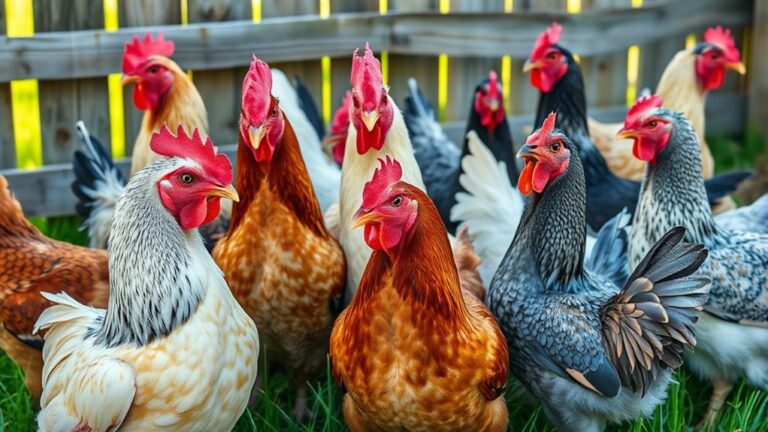
Keep Chickens Safe at Night in 3 Steps
Keeping your chickens safe at night can feel like a constant challenge, especially if you’ve dealt with predators sneaking in or restless birds escaping. You’re not alone—many chicken owners struggle with securing their flocks and want reliable ways to protect their birds after dark.
That’s why we’ve put together some helpful tips to make nighttime coop security easier and more effective. Keep Chickens Safe at Night.
Lock your chickens in the coop before dark so every bird is inside before roosting. Use predator-proof hardware like strong locks, welded wire mesh, and secured vents to stop twisting, prying, or digging.
Then do one last nighttime check for loose latches, gaps, or missing birds, and fix small issues right away.
A steady evening routine keeps your flock safer and helps you spot weaknesses before trouble starts, with a few smarter habits making the rest easy.
Key Takeaways
- Lock chickens in the coop before dusk so every bird is inside before roosting.
- Use predator-proof latches, welded wire mesh, and secure hardware to block entry points.
- Do a quick nighttime coop check for gaps, loose latches, and damaged panels.
- Cover vents with sturdy hardware cloth and keep doors fully closed with no gaps.
- Make locking up a consistent evening habit to protect the flock every night.
Lock the Coop Before Dark
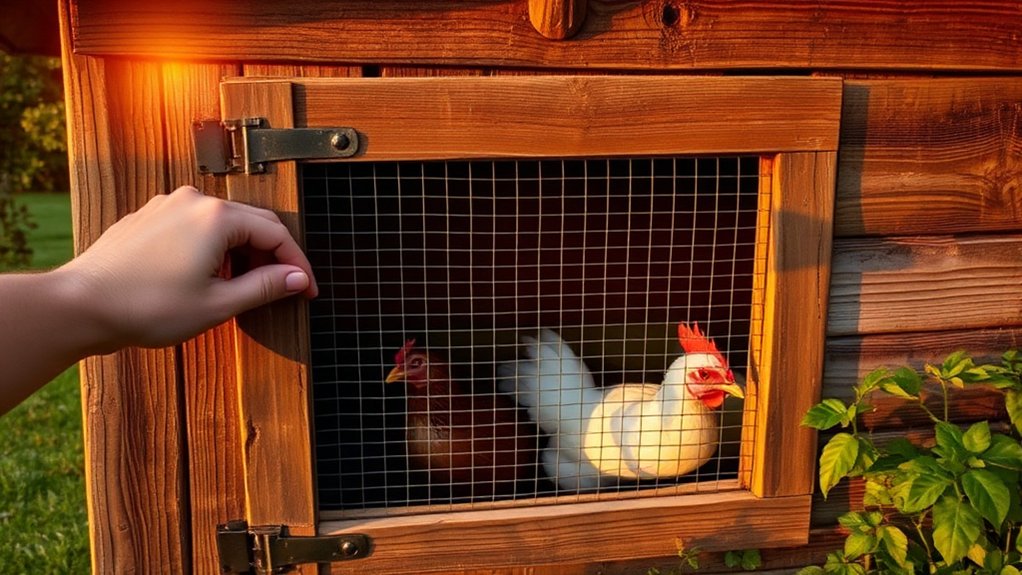
Before dusk settles in, you should lock your chickens in the coop so predators can’t take advantage of the darkness. Make this a daily habit, because evening routines protect your flock when your attention shifts elsewhere.
Watch the sky, note the fading light, and move the birds inside before they start roosting outside. A consistent closing time strengthens coop security and reduces the chance that a hen lingers in the yard.
Check that every bird is accounted for, then shut the door fully so no gap stays open. If you delay, nighttime predators like raccoons, foxes, and owls may find an easy target.
You don’t need complicated steps here; you need timing, consistency, and a careful final check. When you lock up early, you keep your flock calm, safe, and ready for the night.
Install Predator-Proof Locks and Mesh

Secure hardware matters as much as timing, so you should use predator-proof locks and sturdy mesh on every opening. Choose latches that raccoons can’t twist, pry, or lift, and test them with one hand so you know they’ll hold under pressure.
Cover windows, vents, and run panels with welded wire mesh, not chicken wire, because it resists biting and clawing far better. Fasten the mesh with screws and washers, then inspect edges for gaps where a snout or paw could fit.
When you understand predator behavior, you can spot weak points before trouble starts. Add a second lock on the coop door if local threats are persistent, and keep hinges tight so they don’t sag.
Good coop security depends on materials that stay strong through wind, weather, and nighttime visitors. With the right locks and mesh, you make entry difficult and protect your flock from easy access.
Check the Coop Before Bedtime

After you’ve installed strong locks and mesh, make a quick nighttime check part of your routine. Walk to the coop just before dark and look for anything a predator could use: a loose latch, a gap near the door, or a lifted panel. Make sure vents are covered with sturdy hardware cloth, not flimsy wire.
Then count your birds and confirm they’ve gone inside. If one is still out, guide it in and shut the door right away.
Good coop inspections also help you spot small problems before they grow. Check for spilled feed, broken boards, wet bedding, and signs of digging around the base.
These simple nighttime habits take only a few minutes, but they can save your flock from a serious threat. When you repeat the same steps every evening, you build a reliable routine that keeps your chickens safer and gives you peace of mind.
Frequently Asked Questions
What Bedding Is Best for Keeping Chickens Warm Overnight?
Thick, dry pine shavings usually work best because you can fluff them, they insulate well, and you can keep them clean. You should avoid damp straw since it can chill birds and invite mold.
Different bedding types matter, but you don’t need fancy heating options if the coop stays draft-free and dry. Add extra bedding in cold snaps, and your chickens’ll stay warmer overnight without overheating or risking fire.
How Often Should Coop Waterers Be Cleaned at Night?
You should clean coop waterers every night if you can, or at least on a strict cleaning schedule every 1 to 2 days. Fresh water keeps your flock healthier, and dirty containers quickly hurt water quality.
In this modern-day castle, you wouldn’t leave a goblet unwashed, so don’t let chickens drink from grimy bowls. Rinse, scrub, and refill before dusk, then check again in the morning for spills, droppings, or algae.
Can Chickens Sleep Safely With a Dim Coop Light On?
Yes, you can keep a dim coop light on, but you should keep the light intensity very low. Too much light can disrupt your chickens’ sleep patterns and make them restless or stressed.
You’ll want a soft, warm glow only if you need it for checking the coop or helping chicks find roosts. For best results, give them darkness most nights so they sleep deeply and stay healthy.
What Sounds Indicate a Nighttime Predator Is Nearby?
You’ll often hear sudden rustling, scratching, or thumps near the coop when a predator’s close. Foxes may bark, coyotes howl, raccoons chatter, and owls or cats can stay eerily quiet.
Your chickens may cluck loudly, freeze, or crowd the roost. Listen for predator calls and watch for repeated noises after dark, since nocturnal threats often return.
If you hear that, check the coop right away and secure every opening.
Should Baby Chicks Be Housed Separately at Night?
Yes, you should house baby chicks separately at night if they’re too small, weak, or vulnerable. You can protect them from pecking, crushing, and chill by matching housing to chick behavior and night temperatures.
As the old saying goes, “Better safe than sorry.” You’ll help them rest, stay warm, and avoid stress, while still giving them enough space, bedding, and security until they’re big enough to join the flock.
Conclusion
To keep your chickens safe at night, lock the coop before dark, use predator-proof locks and mesh, and always check everything before bedtime. These simple steps help you stay one step ahead of trouble and protect your flock from harm.
As the saying goes, “An ounce of prevention is worth a pound of cure.” When you build these habits, you give your chickens a secure home and yourself real peace of mind. Keeping chickens safe at night means a safer, happier flock for you to enjoy every day.