How to Start a Backyard Flock in 5 Steps
Thinking about starting a backyard flock but feeling overwhelmed by all the choices and steps? You’re not alone. Many people struggle with where to begin, what breeds to pick, and how to set up a safe space for their chickens.
The good news is, with a little guidance, you can have a thriving flock right in your backyard.
Start a backyard flock by choosing breeds that fit your goals, such as Leghorns for eggs or Orpingtons for calm temperament.
Next, build a secure coop and run with good airflow, nesting boxes, and predator-proof wire. Then buy healthy chicks or pullets plus feed, grit, and supplies.
After that, give balanced feed, fresh water, and clean bedding.
Finally, watch flock health and follow local rules, and you’ll uncover even smarter ways to do it well.
Key Takeaways
- Choose chicken breeds that fit your goals, climate, space, and desired temperament.
- Build a secure coop and run with enough room, ventilation, bedding, and predator protection.
- Buy healthy chicks or pullets, plus feed, waterers, grit, and bedding before they arrive.
- Feed age-appropriate ration, provide fresh water, and keep the coop clean and dry.
- Monitor health daily, quarantine new birds, and check local rules for backyard flocks.
Choose the Right Backyard Chicken Breeds

Choosing the right backyard chicken breeds makes your flock easier to care for and more enjoyable to keep. You should start by deciding what you want most: steady egg production, friendly personalities, meat, or hardy birds that handle weather well.
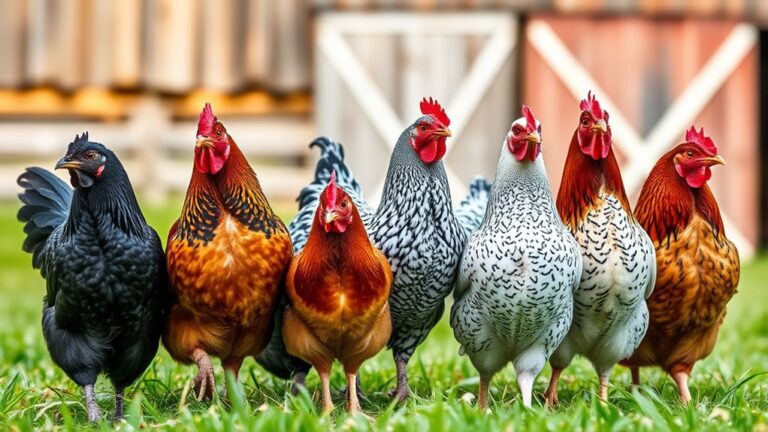
If you want lots of eggs, choose proven layers like Leghorns, Australorps, or Rhode Island Reds. If you’d rather keep calm, attractive birds, look into heritage breeds such as Plymouth Rocks, Orpingtons, or Sussex. Heritage breeds often grow more slowly, but they usually adapt well and can thrive for years.
You should also think about your climate, available space, and how much attention you can give each bird. Some breeds stay active and need more room, while others do well in smaller backyard flocks. Avoid choosing only by appearance. Instead, match the breed to your goals so you get healthier birds, better egg production, and a flock that fits your routine and lifestyle.
Set Up a Safe Chicken Coop and Run

A safe coop and run give your chickens shelter, protect them from predators, and keep daily care manageable. Choose a coop design that fits your yard, flock size, and climate. You need enough indoor space for roosting, nesting, and airflow, plus a run that lets birds scratch, dust bathe, and stay active.
Use sturdy lumber, hardware cloth, and tight latches for strong predator protection. Bury wire around the perimeter or add an apron to stop digging animals. Keep windows screened, seal gaps, and add a solid roof section so rain and hawks don’t threaten your flock.
Inside, place roosts higher than nest boxes, line the floor with absorbent bedding, and make cleaning easy. In the run, offer shade, dry ground, and a water station. Then check fences and locks often so you catch damage before it becomes a problem.
Buy Chickens, Feed, and Supplies

Now that your coop and run are ready, you can buy your flock, feed, and basic supplies. Choose healthy chicks or started pullets from a trusted source, and ask about breed temperament, egg goals, and cold hardiness. Match the birds to your chicken housing so they’ll fit comfortably as they grow.
Pick quality feed, grit, and a sturdy feeder and waterer before they arrive. A simple feeding schedule helps you stay organized and keeps your flock thriving from day one.
- Healthy birds bring excitement and hope.
- The right feed builds confidence in your start.
- Solid supplies make your first morning feel calm.
Bring home a heat source only if you need one, and set up bedding, transport boxes, and a secure place to quarantine newcomers. When you prepare well, you’ll feel proud, not rushed, and your backyard flock will get the smooth, safe beginning it deserves.
Feed and Care for Your Backyard Flock
Once your flock is home, the daily routine begins with good feed, clean water, and steady care. You’ll want to offer a balanced layer or starter ration that matches their age, and keep feed dry in a secure bin. Refresh water often so they always have access to it, especially on hot days.
Watch how they eat and move, because chicken behavior can tell you a lot about stress, appetite, and comfort. Spend a few minutes each day observing your birds. Check that everyone is active, alert, and getting enough to eat.
Provide space to scratch, dust-bathe, and roost, since these habits support healthy flock dynamics and reduce squabbles. Clean bedding regularly to keep the coop tidy and inviting, and move feeders and waterers so they stay easy to reach. If you keep a simple routine, your chickens will settle in faster, and you’ll notice problems sooner.
Keep Your Chickens Healthy and Legal
Keeping your flock healthy starts with prevention, so make daily checks part of your routine and act quickly if something seems off. Watch for bright eyes, steady appetite, clean vents, and normal droppings because chicken health can change fast.
Quarantine new birds, clean waterers often, and keep bedding dry to cut disease risk. You should also learn local legal regulations before you buy chicks, since rules may limit flock size, coop placement, noise, or roosters. A quick call to your town office can save you fines and stress.
- Seeing a limping hen early can stop a small problem from becoming heartbreak.
- Identifying a predator gap before dark helps you sleep easier.
- Knowing you’re following the law lets you enjoy your flock with confidence.
Keep records of vaccinations, illnesses, and feed changes, and use them to spot patterns. When you stay alert and informed, you protect both your birds and your peace of mind.
Frequently Asked Questions
How Much Does a Backyard Flock Cost to Start?
You’ll usually spend about $300 to $1,000 to start a backyard flock, depending on coop size, birds, and gear. Your initial expenses include chicks, a coop, feeders, waterers, and bedding.
After that, ongoing costs like feed, bedding, grit, and vet care can run $15 to $40 a month for a small flock. If you build the coop yourself, you can cut startup costs quite a bit.
Can I Keep Chickens in a Small Urban Yard?
Yes, you can keep chickens in a small urban yard because apparently even city spaces can pretend to be country farms. You’ll need to check local rules, meet space requirements, and choose calm chicken breeds that suit tight quarters.
Give them safe shelter, enough room to move, and regular cleanup. If you plan well, your yard can support a happy, legal little flock without turning into a feathered disaster.
How Do I Introduce Chickens to Existing Pets?
You should introduce chickens slowly and supervise every meeting. Start with scent and sight barriers, then let your pets watch from a distance. Use treats to reward calm chicken behavior and calm pet behavior during pet introductions.
Keep dogs on leash and cats controlled. Separate them if anyone chases, stares hard, or flaps. Give chickens a safe, enclosed space so they can adjust without stress or injury while you monitor closely.
What Should I Do With Chicken Manure?
You should compost chicken manure, not use it fresh. Mix it with bedding and leaves for manure composting, then let it age until it’s safe. This boosts nutrient benefits, supports pest control, and turns waste management into a simple routine.
Once fully composted, spread it as a garden fertilizer to improve soil enrichment. Keep it dry, balanced, and covered so you avoid odor and keep your compost healthy.
How Do I Protect Chickens From Neighborhood Predators?
You protect your chickens by locking down coop security and using sturdy fencing options around the run. Add predator deterrents like motion lights, reflective tape, and guard animals if they fit your setup.
You should shut birds in before dusk and check latches every night as part of your nighttime precautions. Bury wire skirt deep to block diggers, and don’t leave feed out since it attracts raccoons, rats, and other trouble.
Conclusion
Starting a backyard flock doesn’t have to feel overwhelming. If you choose the right breeds, build a safe coop, stock up on supplies, and give your chickens proper care, you’re setting yourself up for success.
Why rush the process when a little planning makes everything easier? Keep up with daily feeding, health checks, and local rules. You’ll enjoy fresh eggs and happy hens for years to come by starting a backyard flock the right way.