How Much Feed Per Chicken: Simple Feeding Guide
If you’ve ever found yourself second-guessing how much to feed your chickens, you’re not alone. Many people struggle with getting the right amount of feed just right to keep their flock healthy and happy without wasting money.
Finding the perfect balance can feel tricky, but understanding the basics makes all the difference.
You can feed most adult chickens about 1/4 pound of feed per day, but the right amount changes with age, size, and purpose. How Much Feed Per Chicken.
Chicks need small, frequent meals of starter crumble, while growing pullets do best on a higher-protein grower ration.
Laying hens need complete layer feed, plus fresh water and grit.
Cold weather and high activity can increase intake, and you’ll spot more tips for waste, health, and feed changes ahead.
Key Takeaways
- Chicks need small, frequent meals of crumbly starter feed with constant access to clean water.
- Growing pullets need a balanced grower ration, with free-choice feeding and grit for digestion.
- Laying hens usually eat about 1/4 pound, or 113 grams, of layer feed per day.
- Cold weather and high activity increase feed needs, while hot weather usually lowers appetite.
- Use quality feed, limit waste with proper feeders, and adjust portions based on body condition and egg production.
How Much to Feed Chickens by Age

How much you feed chickens depends on their age, because chicks, growers, and laying hens all need different amounts. You should match portions to chick growth so each stage gets the right support without waste.
How much you feed chickens depends on their age, with each stage needing the right amount to grow well.
Young chicks need small, frequent servings, while growers eat more as their bodies build muscle and feathers. Once hens start laying, you can increase intake to meet egg production demands.
Choose feed types that fit each stage: starter for chicks, grower for developing birds, and layer feed for hens. You’ll avoid overfeeding when you measure daily amounts instead of guessing.
Watch body condition, egg output, and feed loss to see whether you’re on track. If birds leave feed behind, cut back a little; if they look thin, raise the amount.
Age-based feeding keeps your flock healthy, steady, and productive throughout every stage.
How Much to Feed Chicks

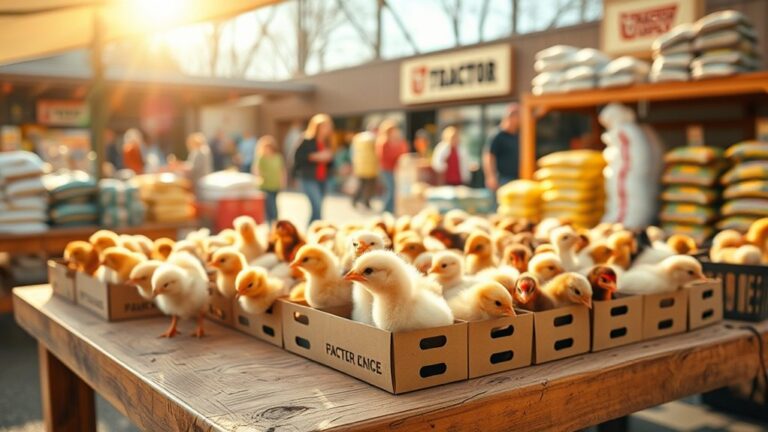
Chicks should have feed available all day, but they still need only a small amount at a time so they can eat without waste. Use a crumbly starter feed in a shallow feeder, and refill it before it runs empty.
When you watch their eating habits, you can adjust portions so they always have access without piling feed high enough to spill. A steady feeding schedule helps you check that each chick is eating well and lets you spot changes fast.
Fresh water should stay nearby because chicks eat more comfortably when they can drink often. Keep the feeder clean and dry to protect chick growth and reduce spoilage.
If you notice feed getting scattered, lower the amount in the tray, not the number of meals. Your goal is simple: offer enough feed for constant nibbling, limit waste, and support healthy development every day.
How Much to Feed Growing Pullets
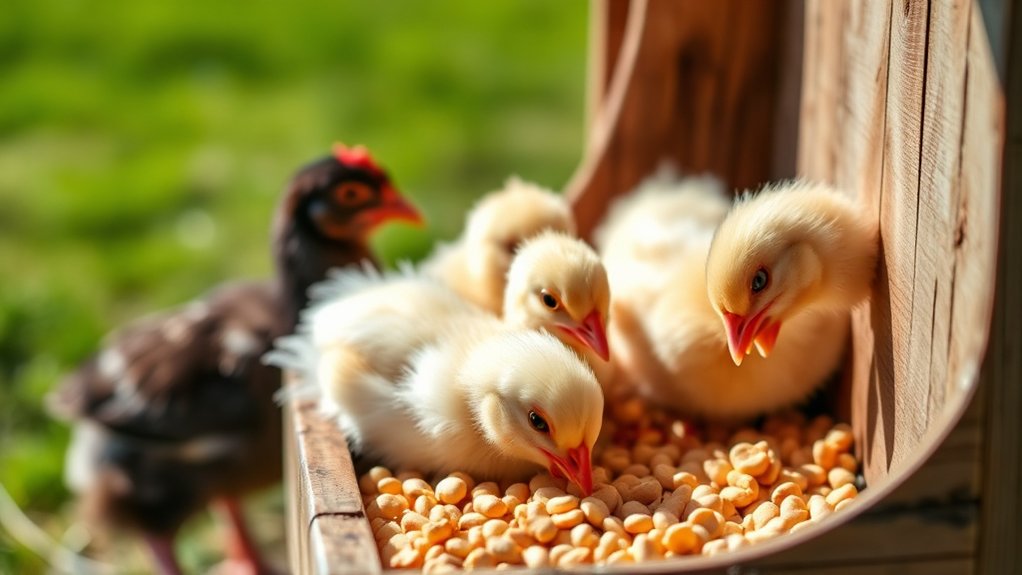
As your chicks grow into pullets, their feed needs change from constant nibbling to more measured portions. You should offer a balanced grower ration and watch appetite, body shape, and energy. Most pullets do well on free-choice feed, but you can measure daily amounts if you need tighter control. Aim for feed types that match growth, not excess fat.
- Choose a grower feed with the right protein requirements, usually higher than adult feed.
- Provide enough for steady growth, then adjust if birds leave feed or look too thin.
- Keep clean water and grit available so pullets can digest feed well.
You can also split feed into morning and evening servings if that fits your routine. Avoid sudden feed changes and mix new feed gradually so digestion stays steady. Healthy pullets stay active, feather out well, and maintain even condition without overeating or lagging behind.
How Much to Feed Laying Hens
Once your hens begin laying, their feed needs shift from growth to steady egg production. You should offer a complete layer feed that supports calcium, protein, and vitamin needs without overloading calories.
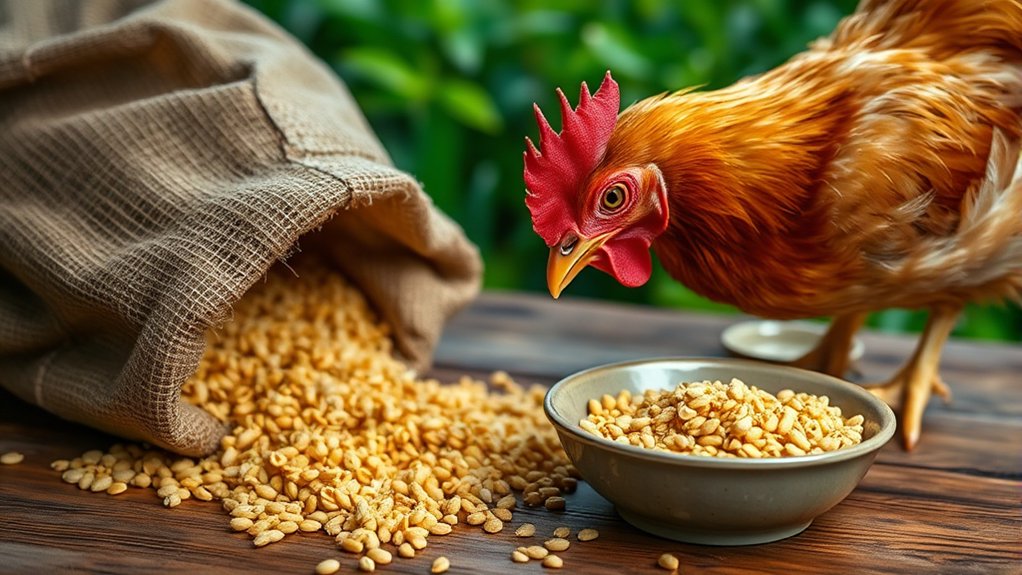
Most laying hens eat about 1/4 pound, or 113 grams, of feed per day, though larger birds may need a bit more. Watch body condition, egg size, and shell quality to judge whether you’re meeting their needs.
Good feed efficiency means your hens convert feed into eggs without wasting energy, so avoid frequent treats that dilute the ration. Keep fresh water available at all times since poor hydration can reduce intake and laying.
You can supplement with oyster shell if your hens need extra calcium, but don’t replace balanced feed with scraps. For best nutrient balance, measure feed consistently, adjust for season, and check that each bird gets enough access at the feeder.
How Much to Feed Broilers
When you feed broilers, you want to match their growth rate with a high-protein ration that supports fast weight gain. Usually, you’ll offer a complete broiler feed each day and adjust the amount as the birds get bigger.
Broiler Feed Requirements
Broiler chickens eat more as they grow, so their feed needs change quickly from week to week. You should match the diet to their age, body weight, and growth goal to support strong broiler nutrition and better feed conversion.
A starter feed helps chicks build muscle fast, while a grower or finisher feed supports steady weight gain without wasting feed. Watch their body condition, because thin birds need more energy and protein, while overfed birds lose efficiency.
- Use a balanced ration with the right protein level.
- Keep feed fresh, clean, and always available.
- Check growth often and adjust feed when needed.
When you track intake and growth together, you can meet broiler feed requirements more accurately and avoid costly mistakes.
Daily Broiler Rations
A growing broiler can eat a surprising amount each day, and the right ration changes as the flock gets older. You should watch body weight, appetite, and feeder waste to fine-tune daily feed.
Start with a starter ration, then move to grower and finisher feeds as birds gain size. Make ration adjustments slowly so you don’t upset digestion or slow growth.
| Age | Feed per bird/day |
|---|---|
| 1-2 weeks | 25-35 g |
| 3-4 weeks | 60-80 g |
| 5-6 weeks | 100-130 g |
| 7-8 weeks | 140-170 g |
Keep fresh water available, and check feeders twice daily. If birds leave feed behind, cut back slightly. If they empty feeders early, increase the daily feed.
What Changes How Much Chickens Eat?
How much your chickens eat changes depending on their age and growth stage. For example, chicks, growers, and laying hens all need different amounts of food. Temperature plays a role too—birds usually eat less when it’s hot and more when it’s cold. Plus, their activity level makes a difference. Active chickens burn more energy and need more feed compared to those that mostly stay still.
Age And Growth Stage
Chickens don’t eat the same amount throughout their lives, and age is one of the biggest factors that changes feed needs. When chicks are young, you should offer frequent meals because they grow fast and need dense chicken nutrition.
As they move into the grower stage, their appetite usually steadies, so you can adjust portions to match their pace. Mature hens and roosters often eat more consistently, but laying hens may need extra support for egg production.
A simple feeding schedule helps you track changes without overfeeding.
- Chicks need small, regular feedings.
- Growers need balanced portions for steady growth.
- Adults need feed matched to their role.
Temperature And Activity
When the weather shifts, so does your flock’s appetite. Cold temperatures usually make chickens eat more to stay warm, while hot weather can reduce feed intake and leave them picking at food less enthusiastically. You’ll notice temperature effects most in seasonal variations and coop conditions.
If your birds stay active, they burn more energy and need extra feed. Low activity levels lower demand. Watch environmental factors like shade, ventilation, and humidity because stress impacts appetite fast.
Adjust feeding schedules and offer cool water in heat, or slightly richer rations in cold snaps.
| Factor | Effect |
|---|---|
| Cold weather | More feed |
| Hot weather | Less feed |
| High activity | Higher intake |
| Stressful coop | Lower intake |
How to Choose the Best Chicken Feed
Choosing the best chicken feed starts with your flock’s age, purpose, and health, since chicks, layers, and meat birds all need different nutrient levels. Compare feed types by checking protein, calcium, and energy so you match nutritional content to each bird’s stage.
Match chicken feed to your flock’s age, purpose, and health for the right nutrition at every stage.
Look closely at ingredient quality; whole grains, balanced vitamins, and clean minerals usually signal a stronger feed. If you prefer organic options, confirm they still meet your birds’ needs.
- Choose pellet sizes your chickens can peck easily.
- Follow feeding schedules that fit your routine and their growth.
- Select supplement choices only when a diet gap exists, and use feeding methods that keep every bird eating evenly.
You’ll get the best results when you read labels, buy from trusted brands, and adjust feed as your flock changes.
How to Prevent Feed Waste in the Coop
Even the best feed won’t help much if your flock wastes it on the coop floor. Start with smart feed storage so you only pour out what birds will eat soon. Choose feeder types that limit scratching and tipping, and place them at back height to match your flock’s natural bird behavior.
Good coop design also helps. Keep feeders off the ground, away from roosts, and clear of tight corners where feed spills collect. Use feeding techniques that let each bird access feed without crowding, and set a steady feeding schedule so hens don’t rush or scatter grain.
Watch feeding habits closely. If you see tossing, overfilling, or selective eating, adjust right away. These simple waste reduction steps keep feed cleaner, cut losses, and help you track how much your chickens really consume each day. Small changes in placement, portion size, and routine can save money and reduce mess fast.
How to Adjust Chicken Feed for Weather
Cold weather usually means your chickens need a bit more feed because they burn extra energy just staying warm. Hot weather can lower appetite and make them eat less. You can match feed types to weather effects by checking body condition, activity, and egg production.
Cold weather often means chickens need more feed, while hot weather can reduce appetite and intake.
Make seasonal adjustments gradually so their nutritional needs stay steady. In winter, offer a little more energy-dense ration and keep feed consistency high. In summer, avoid sudden changes and watch temperature impact on appetite.
- Winter: raise portions slightly and provide shelter from drafts.
- Summer: feed early or late, when birds eat best.
- Year-round: support hydration importance and note forage availability, since grass, insects, and shade can change daily intake.
If the flock seems sluggish, review the ration before changing anything else. Balanced feeding helps you respond to the weather without disrupting daily routines or confusing your birds.
How to Spot Overfeeding and Underfeeding
You can spot overfeeding and underfeeding by watching your chickens’ body shape, behavior, and daily output. Overfed birds often feel padded around the breast and abdomen, move less, and leave feed in the trough. You may also see extra weight gain, greasy feathers, or wet droppings if they’re eating too much grain or treats.
Underfed chickens look thin, have prominent breastbones, act restless, and may crowd the feeder or peck excessively. Their eggs can get smaller, fewer, or stop altogether. Check crop fill each morning and compare it with normal flock condition.
Adjust portion sizes slowly, not all at once, so you don’t shock their digestion. Keep feeding schedules consistent, because irregular meals can make hunger signs harder to read. Watch how quickly they finish feed, then watch their energy, feather quality, and egg output.
If you stay observant, you can correct problems early and keep your flock healthy, steady, and productive.
Frequently Asked Questions
How Do I Measure Feed Accurately for a Mixed-Age Flock?
You can measure feed accurately for a mixed-age flock by weighing each age group’s daily portion with a kitchen scale or hanging scale, then combining totals in labeled containers. You’ll adjust rations based on feed conversion and flock dynamics, since younger birds eat less and grow faster.
Use the same scoop every time, check weight weekly, and track leftovers so you can fine-tune amounts and avoid waste.
Should Chickens Have Feed Available Overnight?
No, you usually shouldn’t leave feed out overnight unless you’re managing chicks, cold weather, or birds that need extra access. You’ll often invite rodents and wasted feed, and you can’t monitor chicken behavior well if they’re eating when you’re not watching.
Give them enough during the day, then remove leftovers at dusk. With overnight feeding, you should only use it when a specific flock need truly calls for it.
Can Free-Ranging Chickens Eat Less Commercial Feed?
Yes, free-ranging chickens can eat less commercial feed, but you shouldn’t cut it too far. If you picture a flock pecking through grass, bugs, and seeds, you’ll see foraging benefits in action.
Still, you need to keep nutritional balance in mind because wild snacks don’t always supply enough protein, vitamins, or calcium. Offer quality feed daily, then adjust based on their age, season, and how well they’re actually ranging.
How Often Should Feeders Be Cleaned?
You should clean feeders at least once a week, and more often if you notice damp feed, droppings, or mold. Your cleaning frequency depends on weather, flock size, and feeder design.
Good feeder maintenance keeps feed fresh, discourages pests, and helps your chickens stay healthy. Wash with warm soapy water, rinse well, and dry fully before refilling.
If feed gets wet or spoiled, clean it right away.
What Treats Are Safe for Chickens in Moderation?
Safe treats for chickens in moderation include fruit options, vegetable scraps, grain types, protein sources, and even tiny amounts of dairy products. You can offer berries, melon, leafy greens, oats, mealworms, or plain yogurt, but don’t turn your coop into a five-star buffet.
You’ll help your flock with foraging benefits when you scatter treats sparingly, keeping their main feed balanced and their bellies, mercifully, not living like royalty.
Conclusion
Feed your flock the right amount, and you’ll raise healthier birds, reduce waste, and save money. Feed chicks for steady growth, feed pullets for strong development, feed layers for steady eggs, and feed broilers for fast gain.
Watch the weather, watch the feeder, and watch your chickens’ condition. If they’re hungry, adjust. If they’re wasting, cut back. When you feed with care, you’ll support better health, better production, and better results.
Knowing how much feed per chicken is key to keeping your flock happy and productive.