How to Raise Chickens for Beginners in 7 Easy Steps
If you’re thinking about raising chickens but feel overwhelmed by where to start, you’re not alone. Many people struggle with figuring out the best breeds, setting up the right coop, and knowing how to care for their birds properly. The good news is that with a little guidance, raising chickens can be a rewarding and enjoyable experience.
To raise chickens as a beginner, start by choosing friendly, reliable breeds like Rhode Island Reds or Australorps. Then set up a secure coop with ventilation, nesting boxes, and predator protection.
Next, provide age-appropriate feed and clean water, and keep baby chicks warm in a draft-free brooder. Check their feathers, eyes, appetite, and movement daily.
Finally, collect eggs, clean the coop often, and avoid common mistakes as you learn the rest.
Key Takeaways
- Choose beginner-friendly breeds that match your climate and goals, such as eggs, pets, or both.
- Build a secure, ventilated coop with nesting boxes, roosts, and predator-proof locks and wire.
- Provide age-appropriate feed and clean, tip-resistant waterers, and store feed safely.
- Raise chicks in a warm, draft-free brooder with steady heat, clean bedding, and easy access to food and water.
- Check chickens daily for healthy feathers, clear eyes, normal appetite, and active, balanced movement.
Choose the Right Chickens

Choosing the right chickens is the first big step toward a healthy, productive flock. You should think about your goals before you buy: do you want steady egg production, friendly pets, or both?
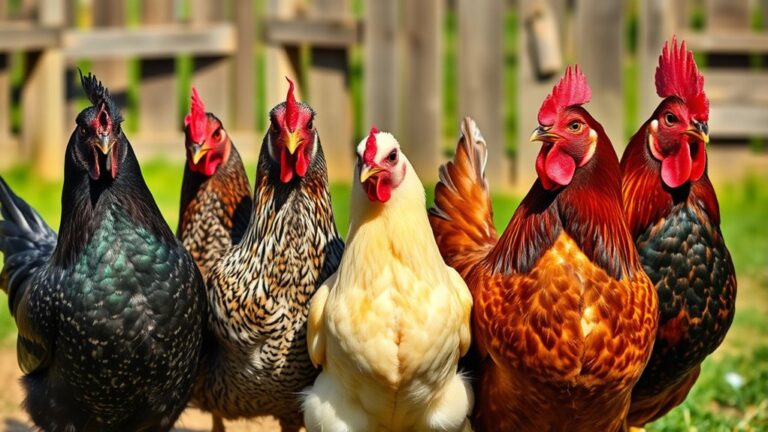
If eggs matter most, pick reliable layers like Leghorns, Rhode Island Reds, or Australorps. If you want birds with character and hardiness, consider heritage breeds, which often adapt well and can live longer than high-production hybrids.
You’ll also want to match the breed to your climate, because some chickens handle heat better while others do best in cold weather. Check how much space you have, how noisy the birds are, and whether you’d like calm hens that are easy to handle.
Buy from a reputable hatchery or local breeder, and choose active chicks with clear eyes and clean feathers. Starting with the right birds makes every other step easier, and it helps you enjoy poultry keeping from day one.
Set Up a Safe Chicken Coop

Once you’ve picked the right birds, the next step is giving them a secure place to live. Build your coop with sturdy materials, a raised floor, and a layout that fits your flock’s size. Good coop design gives each hen room to move without crowding, while coop ventilation keeps fresh air flowing and reduces moisture buildup. Make sure windows and vents are screened so pests can’t get in.
Focus on predator protection by using strong latches, buried wire around the perimeter, and solid walls that stop raccoons, dogs, and foxes. Inside, add nesting boxes in a quiet, dim corner so hens feel safe when laying eggs. Perches should be smooth and easy to clean, and the floor should dry quickly after rain or washing.
Before you move chickens in, walk around the coop and check for gaps, sharp edges, or weak spots. A secure coop helps your flock stay healthy, calm, and productive.
Gather Feeding and Watering Essentials

Next, gather the feeding and watering basics before your chickens arrive so you can keep their routine simple and consistent. Choose a sturdy feeder that keeps feed clean and reduces waste, and place it where your flock can reach it easily.
Buy a waterer that’s easy to fill, clean, and tip-resistant, because clean water matters every day. Set up extra containers if you have more than a few birds, since crowding can lead to spills and stress.
Choose a waterer that’s easy to fill and clean, and add extras if your flock is larger.
Stock a quality feed suited to your chickens’ age and purpose, and store it in a dry, sealed bin to prevent pests and spoilage. Plan your feeding routines now so you can offer feed at the same times each day and check supplies before they run out.
Learn basic watering techniques, too, such as replenishing water often and scrubbing containers regularly. When you prepare these essentials in advance, you’ll make daily care smoother and help your flock stay healthy and settled.
Care for Baby Chicks
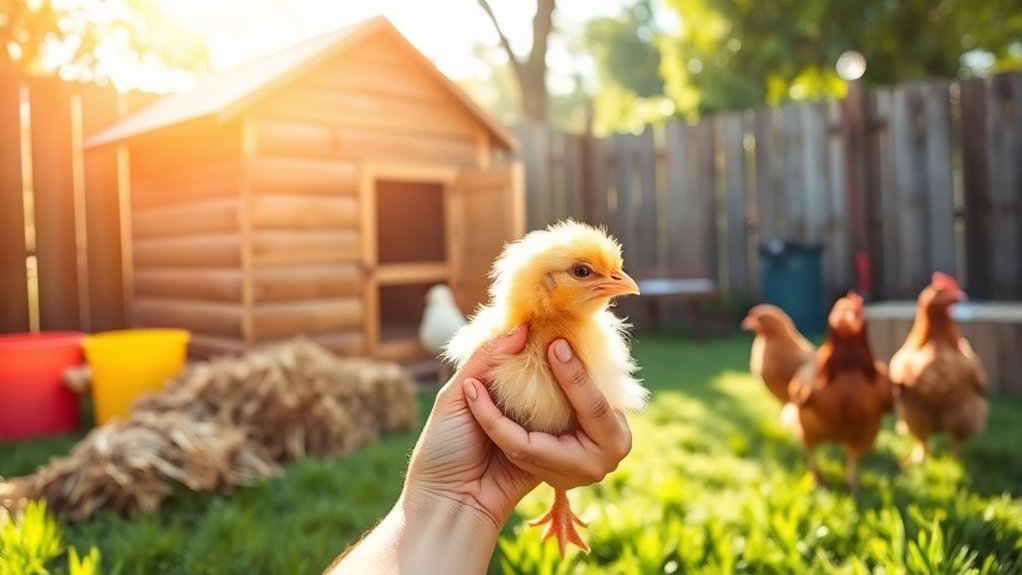
First, set up a warm, draft-free brooder with clean bedding, steady heat, and easy access to food and water. It’s important to keep the space dry and secure so your chicks can settle in safely.
Make sure to check on them often. Look for signs that they’re alert and eating well, and keep an eye out for any signs of illness. Catching problems early can make all the difference.
Brooder Setup Basics
A well-set brooder gives your chicks a safe, warm, and clean place to grow during their first few weeks. Use a sturdy box, tote, or pen with high sides, then line it with absorbent brooder bedding such as pine shavings.
Keep the brooder temperature steady with a heat lamp or plate, and lower it gradually each week as the chicks grow. Place feed and fresh water where they can reach them easily, but keep the containers low enough to prevent spills.
Make sure the setup stays dry, draft-free, and roomy so chicks can move away from heat if needed. Check the brooder daily, replace dirty bedding, and clean up wet spots right away.
Good setup helps your chicks stay comfortable and thrive from day one.
Chick Health Monitoring
How do you know if your chicks are thriving? You’ll see bright eyes, steady movement, and enthusiastic feeding. Track behavioral signs daily: if they huddle, pant, or sleep too much, check temperature and lighting.
Meet nutritional needs with fresh starter feed and clean water, and note growth milestones like weight gain and feathering. Watch for droppings, sneezing, or limping, then act fast to support disease prevention.
Follow your vaccination schedule exactly, and ask your vet about parasite control if you spot mites or worms. Use strong biosecurity measures: wash hands, clean boots, and isolate new birds before mixing them in.
Reduce environmental stressors by keeping bedding dry, drafts low, and the brooder quiet. Careful monitoring keeps chicks healthy and growing strong.
Monitor Chicken Health Daily
Keep a close eye on your flock every day so you can catch problems early. Watch each bird for feather conditions, bright eyes, and steady breathing. Notice behavioral signs like hiding, limping, puffing up, or missing the feeder. When you spot changes, act fast so a small issue doesn’t spread.
| Check | What to look for |
|---|---|
| Feathers | Smooth, clean, no bald patches |
| Eyes | Bright, open, and clear |
| Appetite | Eating and drinking normally |
| Movement | Active, balanced, and alert |
| Behavior | Calm, social, and curious |
You should also listen for unusual coughing or sneezing and feel for sudden weight loss when you handle birds. Keep notes on what’s normal for your flock, because small differences matter. Daily observation helps you protect egg production, reduce stress, and catch illness before it becomes serious.
Collect Eggs and Clean the Coop
Once your hens start laying, collect eggs at least once or twice a day to keep them clean, reduce breakage, and discourage egg-eating. Gently pick up each egg, check for cracks, and brush off light dirt with a dry cloth if needed.
Store eggs with the pointed end down in a cool, dry place, and use proper egg storage practices so they stay fresh longer. Clean nesting boxes often so hens have a sanitary place to lay, and replace soiled bedding before it builds up.
Store eggs pointed end down in a cool, dry place to help them stay fresh longer.
For coop maintenance, scrape droppings from roosts, remove wet litter, and add fresh bedding as needed. You should also wash waterers and feeders regularly to limit odor and mess.
A tidy coop helps eggs stay cleaner, keeps your flock more comfortable, and makes daily care quicker. By staying consistent, you’ll protect egg quality and keep your chicken area manageable and pleasant.
Avoid Common Chicken-Keeping Mistakes
Even experienced chicken keepers make mistakes, but you can avoid many of them with a little planning and consistency. Watch for poor coop spacing, skipped feed checks, and dirty water, because these problems stress birds fast.
Learn chicken behavior so you can spot bullying, lethargy, or sudden noise early. Respect flock dynamics, since adding new hens too quickly can trigger fights and egg loss. Check your birds daily, keep predators out, and don’t overfeed treats.
| Mistake | Why It’s Risky | What to Do |
|---|---|---|
| Crowded coop | Stress and pecking | Give enough space |
| Dirty water | Illness spreads | Refresh daily |
| No quarantine | Disease enters flock | Separate new birds |
You’ll do better when you stay observant, adjust routines, and act before small issues become big ones. Keep records of feed, eggs, and health changes so you can improve each week.
Frequently Asked Questions
How Many Chickens Should a Beginner Start With?
Start with 3 to 6 chickens so you can learn without getting overwhelmed. You’ll watch chicken breeds for temperament and egg output, and you’ll see how flock dynamics settle before you add more.
A small group makes feeding, cleaning, and health checks manageable. If your local rules allow, choose a few hardy hens and skip a rooster at first. You’ll build confidence and avoid costly mistakes early.
Do I Need a Rooster for Hens to Lay Eggs?
No, you don’t need a rooster for your hens to lay eggs; hens lay on their own, like clocks ticking in a sunny coop.
A rooster can add benefits, such as flock alerts and fertility if you want chicks. Without one, your hens still produce eggs for eating.
Watch hen behavior, since calm hens often lay more steadily. Give them good feed, water, and nesting boxes, and you’ll get reliable eggs.
What Permits or Local Rules Apply to Backyard Chickens?
You’ll usually need to check your city’s chicken zoning and local ordinances before you buy birds. You may need a permit, limit the number of hens, or follow setback rules for coops.
Some places ban roosters, require secure enclosures, or set sanitation standards. Call your zoning office, HOA, or animal control, and read the rules first so you don’t face fines, complaints, or forced removal later.
How Do I Keep Chickens Safe From Neighborhood Predators?
You keep chickens safe by using predator-proofing techniques and sturdy, safe housing. Lock birds in a coop at night, add hardware cloth over windows and vents, and bury fencing 12 inches deep to stop digging.
Use strong latches that raccoons can’t open, and remove food scraps that attract pests. Install motion lights and check for holes often.
If you let chickens free-range, supervise them closely and bring them in before dusk.
When Can I Add New Chickens to an Existing Flock?
You can add new chickens once they’ve completed a 2 to 4 week quarantine and look healthy, then introduce them slowly. Use integration methods like side-by-side housing, supervised mingling, and separate feeding spots to ease flock dynamics.
Your birds may need time to sort out pecking order politics, so don’t rush the process. Start at dusk if you can; it often softens the social spotlight and helps everyone settle.
Conclusion
Raising chickens can be easier than you think when you start with the right birds, a secure coop, and daily care. Did you know a healthy hen can lay about 250 eggs a year? That means your effort can pay off in fresh eggs and happy backyard activity.
Keep watching your flock, clean the coop often, and avoid common mistakes. With a little routine, you’ll raise chickens with confidence and enjoy the rewards of raising chickens for beginners.