Can Chickens Eat Potatoes?
If you’re a chicken owner, you’ve probably wondered what treats are safe to share with your feathered friends. You’re not alone—many people struggle with figuring out which foods are okay and which can be harmful. Can Chickens Eat Potatoes.
Finding safe and healthy options to keep your chickens happy without risking their health is a common challenge.
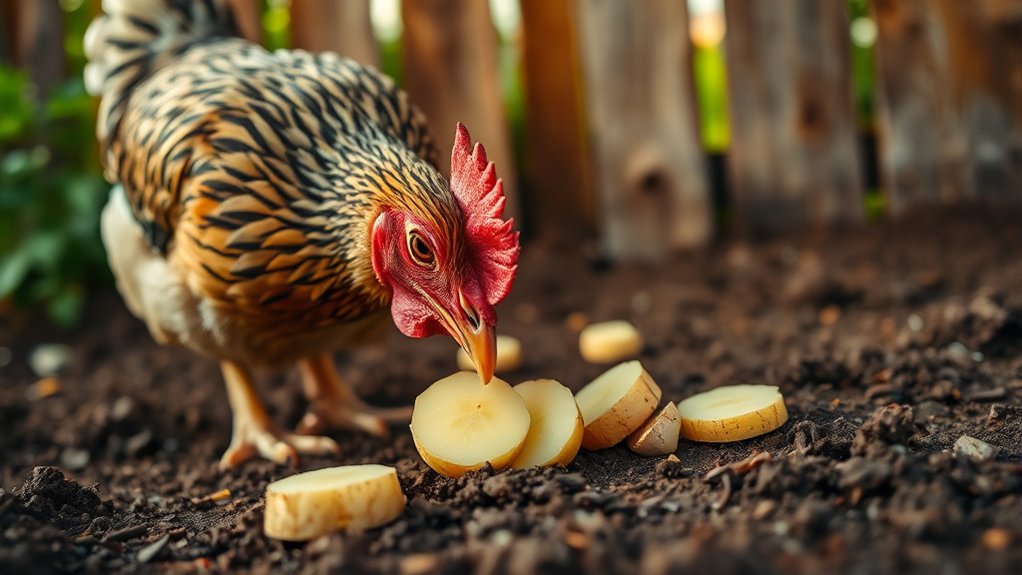
Yes, you can feed chickens potatoes, but only cooked, plain, and in small amounts.
Raw potatoes, green skins, sprouts, leaves, and stems can contain solanine, which is toxic. Peel away any green or bruised parts, cook the flesh until soft, and let it cool before serving.
Cut it into small pieces so it’s easy to peck. Keep potatoes as an occasional treat, not a staple, and you’ll soon see the safest way to offer them.
Key Takeaways
- Yes, chickens can eat cooked, plain potatoes as an occasional treat, not a main food source.
- Never feed raw, green, sprouted, or damaged potato parts because they contain toxic solanine.
- Avoid potato leaves and stems, which are toxic to chickens.
- Serve potatoes fully cooked, cooled, and cut into small pieces without seasoning or additives.
- Limit treats like potatoes to about 10% of the flock’s daily diet and watch for digestive upset.
Can Chickens Eat Potatoes Safely?
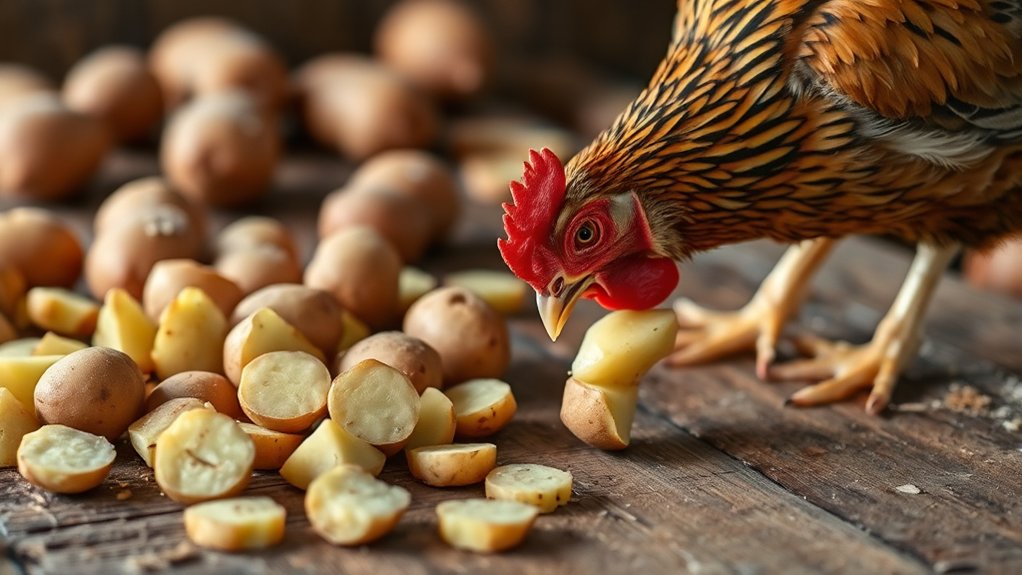
Yes, chickens can eat potatoes safely, but only if you serve them cooked and plain. You should treat potatoes as an occasional addition, not a main part of chicken nutrition.
Cooked potatoes can give your flock extra energy, and they can fit into a balanced feeding plan when you use them as safe treats. Offer small pieces so your birds can peck and swallow them easily, and mix them with their regular feed if you want variety.
Cooked potatoes can offer extra energy as an occasional treat, especially when served in small, easy-to-peck pieces.
You don’t need to season them because plain food keeps things simple and helps you avoid unnecessary additives. If you’re looking for a budget-friendly option, potatoes can work well as an occasional snack that your chickens enjoy.
Just keep in mind that treats should stay limited, so their feed still provides the nutrients they need for steady growth, strong eggs, and healthy daily activity.
Which Potato Parts Chickens Should Avoid

You should avoid feeding chickens raw green potato skins because they can contain harmful compounds. Also, it’s best to skip sprouted potato eyes, as well as the leaves and stems of the potato plant. These parts aren’t safe for your flock. Instead, stick to properly prepared potato flesh to keep your chickens healthy.
Raw Green Potato Skins
Raw green potato skins should stay out of a chicken’s feeder because they can contain solanine, a natural toxin that nightshade plants produce. When you offer these skins, you risk green potato toxicity, which can upset chicken digestion and leave birds feeling weak or off-feed.
You might notice loose droppings, reduced appetite, or general discomfort after a hen pecks at contaminated peel. Even small amounts can irritate your flock, so it’s smarter to skip raw green skins entirely.
If you’re preparing potatoes for chickens, peel away any green, bruised, or bitter-looking areas first. Cooked, plain potato flesh is a different matter, but the skins themselves aren’t worth the risk. Keep your birds safe by choosing clean, fully ripe feed instead.
Sprouted Potato Eyes
Sprouted potato eyes are another part chickens should avoid, since the sprouts and the area around them can carry higher levels of solanine, especially when the potato has been sitting too long. If you see eyes beginning to swell, break, or turn green, don’t feed that potato to your flock.
The sprouted dangers go beyond poor taste, because toxins can upset digestion and make birds feel unwell. Even though potatoes can offer a few nutritional benefits when cooked and prepared properly, the sprouted parts aren’t worth the risk.
You should discard any potato with active eyes rather than trim them and hope for the best. Keep your chickens safe by choosing fresh, clean feed and treating questionable potatoes as waste, not treats, for their well-being.
Potato Leaves And Stems
Potato leaves and stems should stay far away from your chickens, since the green parts of the potato plant contain solanine and other natural toxins that can make birds sick. You’re protecting them by keeping these scraps out of the coop and compost reach.
Potato toxicity rises when chickens peck at wilted vines or fresh clippings, so don’t toss them into the run.
| Hazard | Risk |
|---|---|
| Green leaves | Poisoning |
| Stems and vines | Digestive upset |
| Fallen trimmings | Hidden danger |
For plant safety, inspect your garden waste before sharing it with your flock. If you’re unsure, throw it out. A little caution now can spare you a frantic vet visit later, and your birds’ll stay healthier.
Are Raw Potatoes Safe for Chickens?

Generally, you shouldn’t feed chickens raw potatoes because they contain solanine, a natural toxin that can make birds sick. When you offer raw potato pieces, you risk raw potato toxicity, especially if the skin is green, sprouted, or damaged.
Even small amounts can upset chicken digestive health and lead to lethargy, poor appetite, diarrhea, or weakness. You should treat raw potatoes as a poor snack choice and keep peels, eyes, and trimmings out of the coop.
If you’re sorting kitchen scraps, check potatoes carefully and remove anything soft, green, or sprouting. Your flock can peck through many safe foods, but raw potatoes don’t belong on the menu.
Protecting your birds starts with avoiding risky ingredients, and potatoes are a clear example. If you want to reduce waste, save them for other uses and give your chickens safer treats instead.
Why Cooked Potatoes Are the Better Choice
Cooked potatoes are a much safer option for chickens because heat breaks down the solanine found in raw potatoes and makes the food easier to digest. You also give your flock a softer texture that’s kinder on their beaks and digestive systems.
When you choose cooked potatoes, you keep more of the food’s natural value available for your birds to use, which supports better nutrient retention than serving them raw. The cooked benefits go beyond safety: chickens can peck, swallow, and process the food more easily, so they’re less likely to waste it.
If you want a simple treat that fits into a balanced diet, cooked potatoes can work well in moderation. They shouldn’t replace their regular feed, but they can add variety without the risks tied to raw potatoes. By offering them cooked, you make the snack more practical, more digestible, and generally more suitable for your chickens.
How to Prepare Potatoes for Chickens
Before you feed potatoes to your chickens, make sure to wash them well. You’ll also want to peel off any green or sprouted parts—those can be harmful.
Next, cook the potatoes thoroughly until they’re soft and easy for your chickens to digest. It’s best to serve them plain, without any salt, butter, or seasoning. That way, your chickens get a safe and tasty treat!
Wash and Peel
Give potatoes a quick rinse under running water to remove dirt, then peel away any green skin or damaged spots before offering them to your chickens. You can use simple washing methods, like rubbing each potato with your hands or a vegetable brush, to clear away soil and grit.
After that, use careful peeling techniques to remove any discolored areas, sprouts, or blemished patches. If you spot a potato that looks badly green or rotted, don’t use it at all.
Clean, peeled potatoes help you reduce unwanted contaminants and make the food safer for your flock. Keep the pieces plain and free of seasoning so your chickens get only the potato itself. A little prep goes a long way toward feeding them responsibly.
Cook Thoroughly
Always cook potatoes fully before feeding them to your chickens, since raw potatoes and especially any green parts can contain solanine, which is harmful to birds. You can boil, bake, or steam them until they’re soft all the way through, then let them cool before serving.
Cooking breaks down tough starches and makes the potato easier for your flock to digest, so they can better use the nutritional benefits. Stick to plain cooked varieties like white or sweet potatoes, and avoid anything that still feels firm or underdone.
If you prepare a batch for your birds, check that each piece is tender and safe to eat. Fully cooked potatoes can be a useful occasional treat, not a main feed, and they’re best offered in manageable pieces.
Serve Plain
Serve potatoes plain so you can keep them safe and easy for chickens to eat. Skip salt, butter, oil, garlic, and spices because these extras can upset digestion and reduce nutritional benefits. Offer cooled, cooked potato pieces in small amounts, and mix them with feed only as an occasional treat.
| Prep step | Why it matters | Tip |
|---|---|---|
| Peel if needed | Removes dirt | Wash well first |
| Cook fully | Softens texture | Boil or bake |
| Cool before serving | Prevents burns | Let them rest |
| Cut small | Easier to peck | Match flock size |
These serving suggestions help you control portions and keep the treat simple. When you serve potatoes plain, you support safer feeding and let your chickens enjoy the starch without unnecessary additives.
How Much Potato Can Chickens Eat?
A small amount of cooked potato can be an occasional treat for chickens, but it shouldn’t make up more than a tiny part of their diet. You can offer a few bites once in a while, not a full serving, and you should keep the main focus on a balanced chicken diet.
Potato nutrition is limited for poultry, so think of potatoes as a snack, not a staple. If you feed too much, you can crowd out the feed they need for protein, vitamins, and minerals.
A good rule is to keep treats, including potato, to no more than 10% of what they eat each day. That way, you support steady growth, egg production, and overall health.
When you’re unsure, give less rather than more, and watch how your flock responds after eating.
Potato Skins, Peels, and Sprouts Explained
You should be careful with potato skins because they might have dirt, chemicals, or other stuff that isn’t safe for chickens. If you decide to use peels, make sure they’re plain, clean, and fully cooked. Raw or seasoned potato parts can upset your flock’s health. Also, it’s best to avoid sprouts and green spots since they contain solanine, a toxin that can make chickens sick.
Potato Skins Risks
While plain, cooked potato flesh can be fine in moderation, potato skins, peels, and especially sprouts can pose more risk for chickens. You should treat them with caution because potato toxicity rises when green spots or sprouts show up. Good skin preparation means removing damaged areas, but you may still want to skip skins altogether if you can’t inspect them closely.
| Part | Risk | Action |
|---|---|---|
| Skin | Moderate | Check for green areas |
| Peel | Higher | Remove if stained |
| Sprout | High | Discard immediately |
Your flock can peck at scraps fast, so don’t leave questionable pieces within reach. If you’re unsure, choose safer treats instead of gambling with potato skins.
Peel Safety Basics
Potato peels, skins, and sprouts aren’t uniformly safe for chickens, and the difference matters. You can offer clean, cooked peels in small amounts, but you should skip anything green, damaged, or moldy. Good peel preparation helps you lower risk and make treats easier to peck. Potato skins can add skin nutrition, yet they shouldn’t replace a balanced feed.
- Wash and cook peels before serving.
- Cut away bruised or green spots.
- Give only tiny portions as an occasional treat.
You’ll also want to avoid thick, raw scraps that can sit in the crop too long. Keep portions modest and watch how your flock responds. If chickens ignore the peels, remove them promptly and stick with safer foods.
Sprouts And Solanine
Though potato skins and peels can be fine when cooked, potato sprouts are a different matter because they can contain higher levels of solanine, a natural toxin that can upset a chicken’s digestive system. You should skip any potato with green patches, eyes, or shoots since those signs point to sprout toxicity and stronger solanine effects.
If you feed chickens cooked potato flesh, keep it plain and remove all sprouts, skins, and peels that look green or bitter. Don’t offer raw potatoes because they’re harder to digest and may worsen stomach upset.
Even small amounts of spoiled or sprouting potato can cause problems, so inspect every piece before you share it. When in doubt, choose safer treats like grains, leafy greens, or cooked squash instead.
Signs Potatoes Upset Your Chickens
If potatoes upset your chickens, you’ll usually notice it pretty quickly. Watch for changes in chicken behavior after they peck at potatoes or potato scraps. Mild stomach upset can show up as loose droppings, reduced appetite, or extra quiet birds that hang back from the flock.
Watch for loose droppings, reduced appetite, or unusually quiet chickens after they eat potatoes.
In more serious cases, potato toxicity may cause weakness, tremors, droopy wings, or trouble standing.
- Digestive trouble: You may see watery poop, less interest in feed, or a swollen-looking crop.
- Energy drop: Your chickens might slow down, stop scratching, or isolate themselves.
- Neurologic signs: You could notice wobbling, shaking, or odd head movements.
If you spot these signs, remove the food at once and keep a close eye on the flock. Fresh water helps, but you should also check whether the potatoes were raw, green, or sprouted, since those forms cause the biggest problems for chickens.
Other Safe Kitchen Scraps for Chickens
You’ve got plenty of safer kitchen scraps to offer chickens besides potatoes. You can share vegetable scraps like carrot tops, lettuce ends, cucumber peels, and broccoli stems, as long as they’re fresh and clean.
Chickens also enjoy fruit peels from apples, pears, or melons, but you should skip anything moldy or overly sugary. Small amounts of grain leftovers, such as plain oats or cooked grains, can add variety to their diet.
If you have dairy products, offer only tiny bits of plain yogurt or cheese, since too much can upset their digestion. You can also give cooked pasta and rice remnants, but keep them unseasoned and serve them sparingly.
These scraps should complement their regular feed, not replace it. By choosing simple, wholesome leftovers, you help your flock stay interested in their meals while avoiding the risks that come with questionable foods.
Best Treat-Feeding Tips for Chickens
When you feed treats to chickens, keep them to a small part of the diet so their regular feed still does the heavy lifting. You’ll help your flock stay healthy by offering treats sparingly and choosing options that add interest without upsetting balance.
Use treat variety to keep birds engaged, but don’t let snacks crowd out complete feed. Watch feeding frequency, too, because daily extras can quickly become too much. A good rule is to offer treats after they’ve eaten their main ration.
- Pick small portions so chickens finish them fast and don’t waste feed.
- Serve safe, simple foods, and avoid salty, sugary, or spoiled leftovers.
- Adjust feeding frequency based on age, weather, and activity, and always provide fresh water.
If you want to give potatoes, make sure they’re fully cooked and plain, since raw or green potato parts can be harmful. Treats should support your flock, not replace balanced nutrition.
Frequently Asked Questions
Can Chickens Eat Mashed Potatoes With Butter or Milk?
You shouldn’t feed chickens mashed potatoes with butter or milk. Plain, cooked potatoes can be okay in small amounts, but added dairy can upset their digestion and add unnecessary fat.
The mashed potato benefits for chickens are minimal, while butter health risks include spoilage, excess calories, and messy droppings. If you want to treat them, offer plain cooked potatoes sparingly and keep their main diet balanced with feed, grains, and fresh water.
Do Chickens Like Potatoes Better Warm or Cold?
You’ll usually find that chickens prefer potatoes warm if they’re soft, but they can eat them cold too. Your potato preparation matters more than temperature, so serve plain, cooked potatoes only.
Their texture preference often leans toward mash or small chunks because they’re easier to peck and swallow. Avoid butter, milk, salt, or seasoning. Let the potatoes cool enough to avoid burns, then offer a little as a treat.
Can Baby Chicks Eat Potatoes Too?
No, you shouldn’t feed baby chicks potatoes. Their digestive systems need starter feed for proper chick nutrition, and potatoes can upset chick safety, especially if they’re green, raw, or seasoned.
You might think a tiny bite won’t matter, but chicks are delicate and need balanced protein, vitamins, and grit-free food. Stick with approved chick feed, clean water, and safe treats only when they’re older and stronger.
Are Sweet Potatoes Safer Than Regular Potatoes?
Yes, sweet potatoes are safer than regular potatoes for your chickens. You can offer cooked, plain sweet potato as a treat, and it adds benefits like vitamins and fiber.
Regular potato risks are higher because raw potatoes, especially green parts and sprouts, contain solanine, which can harm birds. If you feed either one, keep it plain, fully cooked, and in small amounts so your flock stays healthy and happy.
Can Potatoes Be a Daily Chicken Treat?
A little goes a long way: you shouldn’t make potatoes a daily chicken treat. You can offer small, cooked, plain pieces occasionally, but they shouldn’t replace regular feed.
Potato nutrition isn’t balanced enough for chickens, and too much can hurt chicken health. You’ll do best if you treat potatoes as an occasional snack, not a routine staple, and you’ll keep your flock healthier that way.
Conclusion
So, can you feed chickens potatoes? Yes, but only when you choose wisely. Stick to cooked, plain potatoes and skip the green parts, sprouts, and raw peels.
Think of it like offering your flock a warm, safe snack instead of a risky one. When you prep potatoes the right way, you help keep your chickens happy, healthy, and pecking contentedly in the coop.
Treats should nourish, not trouble, your feathered friends. Remember, when it comes to feeding chickens potatoes, thoughtful preparation is key to their well-being.