Can Chickens Eat Avocado?
If you’re a chicken owner, you’ve probably wondered about safe and healthy treats for your flock. You’re not alone—many people struggle with figuring out what snacks are good for their birds without risking their health.
Finding safe options that your chickens will enjoy can feel tricky, especially when it comes to feeding them human foods like avocado. Can Chickens Eat Avocado.
You shouldn’t feed chickens avocado except for tiny amounts of ripe flesh on rare occasions, and only as a treat, not a staple. The skin, leaves, and pit contain persin, which can cause digestive upset, weakness, breathing trouble, and even collapse.
If your birds eat avocado, remove the rest right away and watch them closely.
Safer treats include leafy greens, berries, melon, and cooked oats, and there’s more to know before you offer any snack.
Key Takeaways
- Chickens can eat avocado only in tiny, occasional amounts of ripe flesh, not as a regular food.
- Avoid the skin, pit, and leaves, which contain toxic persin and can harm chickens.
- Watch for weakness, drooping wings, lethargy, loss of appetite, or breathing trouble after ingestion.
- If symptoms appear, remove avocado, provide water, and contact a veterinarian if the bird worsens.
- Safer treats include leafy greens, berries, melon, pumpkin, oats, and a small amount of cracked corn.
Can Chickens Eat Avocado?
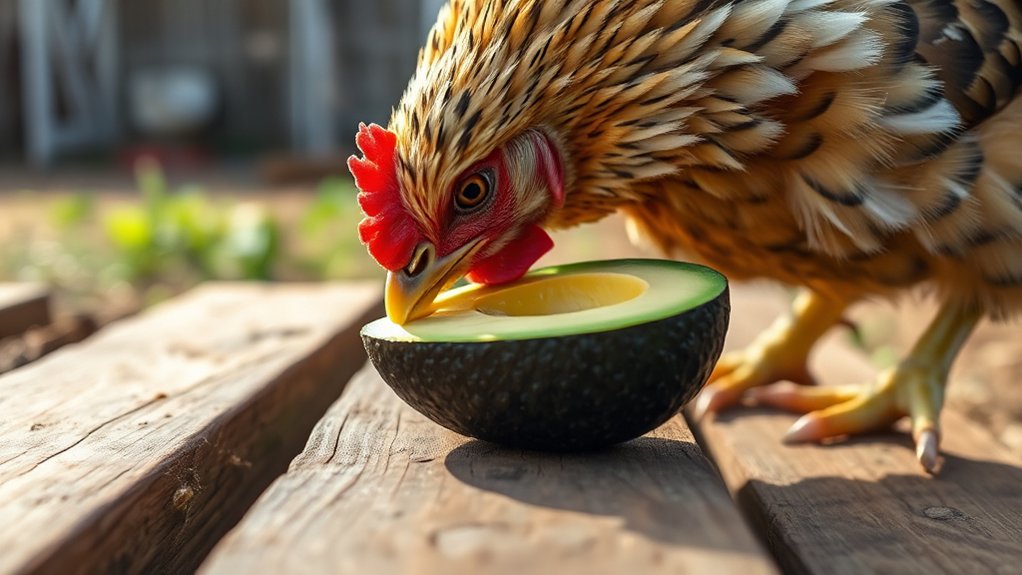
Yes, chickens can eat avocado, but only in very small amounts and with caution. If you’re managing a chicken diet, treat avocado as an occasional treat, not a staple. Offer a tiny piece of ripe flesh, and watch how your birds handle it.
Chickens can eat avocado in very small amounts, as an occasional treat—not a regular part of their diet.
You should focus on balanced feed, fresh water, and safe treats that support overall health. When you think about fruit safety, keep in mind that variety matters more than quantity. A small serving can add interest to your flock’s routine without replacing nutritious feed.
Remove any uneaten bits quickly so you don’t attract pests. If your chickens already enjoy other fruits, introduce avocado slowly and keep portions minimal. Always observe each bird for changes in behavior or appetite after feeding.
When in doubt, choose simpler treats and prioritize a consistent diet that keeps your flock thriving and active.
Why Avocados Are Dangerous
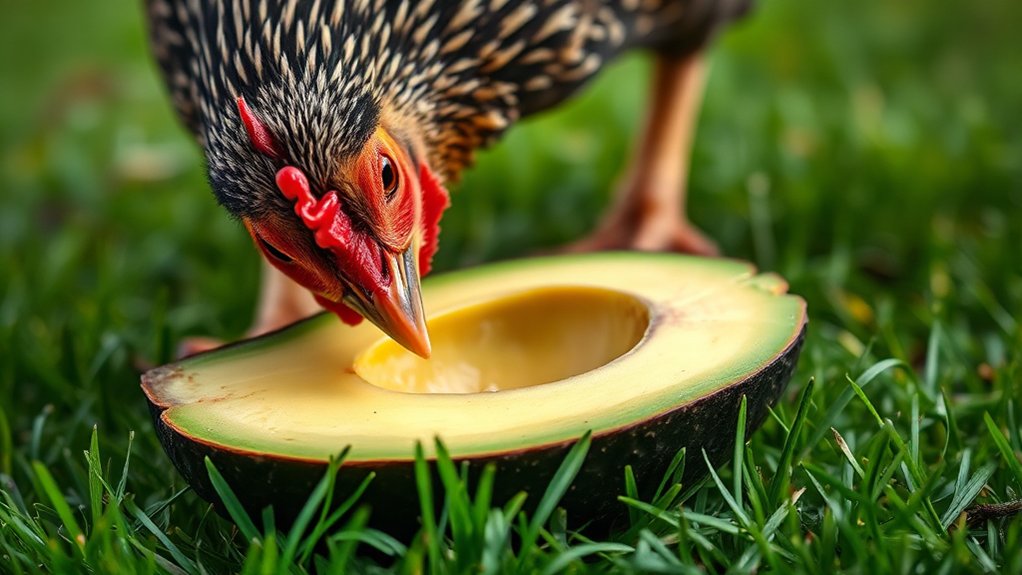
Avocados can be dangerous for chickens because the fruit, skin, leaves, and pit contain persin, a toxin that can make birds sick. When you feed avocado, you risk digestive upset, weakness, breathing trouble, and, in severe cases, death.
Chickens’ bodies don’t process this compound safely, so even small amounts can cause problems, especially if your birds already have health issues. You should also keep in mind that high-fat treats like avocado can crowd out balanced chicken nutrition and leave less room for better foods.
Instead, choose safer avocado alternatives such as leafy greens, peas, squash, berries, or cooked oats in moderation. These options support energy, vitamins, and hydration without exposing your flock to unnecessary risk.
If you want to keep your chickens healthy, focus on a varied diet designed for poultry and use treats sparingly. Avoid guessing with foods that seem healthy to you, because chickens need simple, safe choices every day.
Which Avocado Parts Are Toxic?

Not every part of an avocado is safe for chickens, and the risky parts include the flesh, skin, leaves, and pit. You should treat every avocado variety with caution because toxic compounds can appear throughout the plant and may vary by type and ripeness.
If you’re offering scraps, keep your flock away from peels, stems, and any discarded bits that could end up in the run. The pit also matters since it’s large, hard, and can create choking hazards.
- Skin: often carries the highest concern in kitchen scraps.
- Leaves: birds may peck at fallen foliage in the yard.
- Pit: a tough center that chickens shouldn’t reach.
- Trimmed fruit: even small leftovers can attract curious pecking.
You’ll protect your birds best by removing all avocado waste promptly and choosing safer treats instead.
Is Avocado Flesh Safe for Chickens?
Avocado flesh is the part most people assume is safe, but you shouldn’t offer it to chickens unless you’re certain it’s free of the toxic compounds found in the plant. Even then, you should treat it as an occasional novelty, not a staple. Chickens don’t need avocado for balanced nutrition, so any avocado benefits are minor compared with safer treats. Their preferences often lean toward grains, greens, and insects anyway.
| Factor | Your takeaway | Best practice |
|---|---|---|
| Flesh only | Safer than peel or pit | Inspect carefully |
| Serving size | Keep it very small | Use sparingly |
| Nutrition | Limited value for hens | Choose other snacks |
If you still want to test it, start with a tiny amount and watch what your flock chooses. A bird that ignores it is telling you something useful: their taste matters, and you don’t need to force a food they may simply dislike.
What Happens If Chickens Eat Avocado?
If your chickens happen to eat avocado, it’s important to keep an eye on them because there are some toxicity risks, especially from the skin, pit, and leaves. You might notice symptoms like weakness, drooping, trouble breathing, or even a drop in appetite. If you spot any of these signs, don’t wait—act quickly and get in touch with a vet.
Avocado Toxicity Risks
Even a small amount of avocado can pose a risk to chickens because parts of the fruit contain persin, a natural toxin that can make birds sick. You should avoid offering the pit, skin, or leaves since those parts carry the highest danger.
Even the flesh can be a poor choice if your flock eats too much at once. Instead, focus on safer avocado alternatives that support poultry nutrition without adding unnecessary risk.
- Offer chopped greens.
- Serve plain oats.
- Give berries in moderation.
- Use commercial feed as the base.
When you choose treats carefully, you protect your birds and keep their diet balanced. Small, thoughtful swaps help you avoid accidental exposure and support steady flock health.
Symptoms To Watch
Once a chicken has eaten avocado, you may notice signs of illness within a few hours. Watch for drooping wings, weakness, loss of appetite, diarrhea, and trouble breathing. You might also see behavioral changes like lethargy, unsteady walking, or a bird that isolates itself from the flock.
For symptom identification, check whether your chicken stops scratching, drinks less, or seems unusually quiet. In severe cases, the comb may look pale, and the bird can collapse. Don’t wait if symptoms worsen; remove the food source, offer clean water, and contact a poultry vet quickly.
Early action matters because toxins can affect each bird differently, so close observation helps you respond before the problem becomes life-threatening.
Signs of Avocado Poisoning
Although avocado poisoning is uncommon in chickens, you should watch closely for sudden changes in behavior after they eat any part of the fruit. For quick symptoms identification, focus on how your birds act, eat, and move after avocado exposure. You may notice:
Watch for sudden changes in behavior after avocado exposure, especially how your chickens act, eat, and move.
- Drooping wings or a hunched stance.
- Loss of appetite or refusal to drink.
- Weakness, stumbling, or trouble standing.
- Pale comb, labored breathing, or sudden lethargy.
These signs can appear within hours and may worsen fast if the bird has eaten more than a small amount. You should also look for messy droppings, isolation from the flock, and unusual quietness.
A chicken that seems off, even slightly, deserves close observation because early changes often tell you more than dramatic symptoms do. Trust your instincts, note what you saw, and keep tracking any new behavior.
What to Do If Your Chicken Ate Avocado
If your chicken ate avocado, remove any remaining fruit right away and separate the bird from the flock so you can watch it closely. Check the coop and run for peel, pit, and scraps, then offer clean water and a calm, shaded place to rest.
Keep an eye on droppings, breathing, appetite, and energy for the next day or so, and note any changes. If you see weakness, tremors, diarrhea, or trouble standing, call a poultry vet promptly for guidance.
Good chicken care means acting fast, staying observant, and reducing stress. Don’t give extra treats while you monitor the bird. When your flock seems healthy again, choose safer avocado alternatives such as leafy greens, peas, or chopped cucumber instead.
Also clean your hands and any bowls that touched the fruit, since residue can spread. With quick action and careful follow-up, you’ll give your chicken the best chance to recover well.
How Much Avocado Is Too Much?
You should keep avocado treats small because only a tiny amount is safe for your chicken at a time. Too much can upset their digestion. So, watch for signs like loose droppings, reduced appetite, or low energy. If you notice any of those signs, cut back right away. Think of avocado as an occasional snack, not a regular part of their diet.
Safe Portion Sizes
When you feed avocado to chickens, keep portions small because this fruit is rich and can quickly add too much fat to their diet. For safe portion sizes, use portion control and follow simple feeding guidelines so avocado stays a rare treat, not a staple.
A few tiny bites of peeled, ripe flesh is enough for a small flock, and you should offer it only once in a while.
- Give a teaspoon-sized amount per bird.
- Mix it with their usual feed.
- Remove the pit and skin first.
- Limit treats to occasional servings.
That approach helps you share avocado without crowding out the balanced nutrition your chickens need every day.
Signs Of Overfeeding
Too much avocado can upset a chicken’s diet, so watch for clear signs of overfeeding like loose droppings, reduced interest in regular feed, or a drop in energy. If you notice these changes, cut back right away and return to their normal ration.
Avocado should stay a treat, not a daily snack, because overfeeding causes digestive stress and can throw off balance in the flock. You might also see messy feathers around the vent, sluggish movement, or less curiosity during foraging.
Keep an eye on appetite and droppings for a day or two after feeding. Protect chicken health by offering small amounts only and removing any leftover pieces quickly. If symptoms continue, stop avocado entirely and consult a poultry expert.
Safe Treats for Chickens Instead
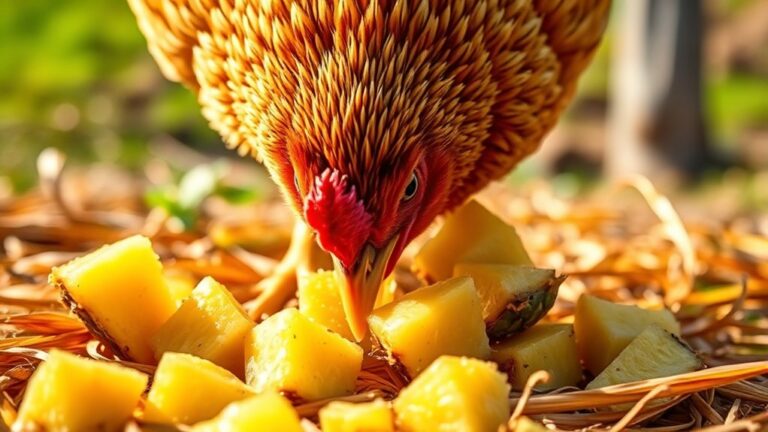
Instead of avocado, offer your chickens treats that are both nutritious and easy to digest, like leafy greens, berries, cucumber, pumpkin, cooked oats, or small amounts of corn. These healthy snacks give your chicken favorites with real nutritional benefits and support dietary balance.
Use treat variety to keep things interesting:
- Fresh spinach, kale, or romaine for quick vegetable options.
- Blueberries, chopped strawberries, or melon as safe fruits.
- Steamed pumpkin or plain cooked oats for soft, soothing bites.
- A little cracked corn for extra energy during natural foraging.
Follow simple feeding guidelines and keep treats as extras, not the main meal. You’ll help your flock’s health by choosing foods that are easy to peck, digest, and enjoy. Rotate choices so your birds stay curious without overdoing any single treat. By offering thoughtful alternatives, you can skip avocado and still give your chickens satisfying, wholesome rewards.
Best Feeding Tips for a Healthy Flock
Feeding your chickens well goes beyond choosing safe treats, so it helps to build a simple routine that supports their overall health. Give them a complete layer feed or age-appropriate ration as the foundation, then offer fresh water all day.
You should keep treats to a small share of the diet to protect nutritional balance and avoid picky eating. Offer grains, greens, and kitchen scraps sparingly, and always remove spoiled food before it attracts pests.
Watch your flock’s body condition, egg production, and droppings because these clues show whether their diet needs adjustment. Keep feeding frequency consistent since irregular meals can stress birds and lead to overeating.
Provide grit if they eat anything besides prepared feed, and add oyster shell for laying hens that need extra calcium. Finally, store feed in a dry, sealed container so it stays fresh and safe for your flock.
Frequently Asked Questions
Can Chickens Eat Guacamole Safely?
You shouldn’t feed chickens guacamole safely, because it often contains guacamole ingredients that can upset chicken digestion. Avocado flesh itself can pose risks, and added onion, garlic, salt, lime, or spices make it worse.
If you want to treat your flock, offer plain veggies instead. You’ll keep them healthier by avoiding dips and spreads meant for people. Stick to simple, fresh foods, and always check ingredients before you share anything.
Are Avocado Pits Dangerous for Baby Chicks?
Yes, you should treat avocado pits as a real threat to baby chick safety. They’re basically tiny hazards with giant trouble written all over them. Avocado toxicity can make you extra cautious, and for good reason.
You shouldn’t let chicks peck at the pit or any avocado scraps near it. Keep pits out of reach, clean up fast, and choose safer treats so you protect their delicate little systems.
Can Chickens Be Around Avocado Trees?
Yes, you can keep chickens around avocado trees if you manage access carefully. You should prevent them from pecking fallen leaves, bark, or fruit because avocado toxicity can harm birds.
Tree shade can help keep your flock cool, but you’ll want to fence off low branches and clean up debris often. If you notice odd behavior or weakness, separate them and call a vet right away.
Do Chickens React Differently to Ripe Avocado?
Yes, they can. Ripe avocado’s ripeness effects may change how much your chickens notice the fruit, but avocado toxicity doesn’t disappear. You’ll see some birds peck enthusiastically while others ignore it, yet you shouldn’t assume it’s safe.
A stitch in time saves nine, so you’re better off keeping avocado away. If your flock eats any, watch for weakness, diarrhea, or breathing trouble and call a vet quickly.
Can Cooked Avocado Be Safer for Chickens?
Cooked avocado isn’t necessarily safer for your chickens because cooking doesn’t remove avocado toxicity. You can’t rely on cooked benefits to make it a good treat.
The pit, skin, and flesh can still pose risks, and too much fat can upset your birds’ digestion. If you want to offer a snack, choose safer foods instead and keep avocado out of their diet. Watch your flock closely if they’ve eaten any.
Conclusion
In short, you shouldn’t feed your chickens avocado. Even a small amount of pit, skin, or leaves can be risky, and it’s just not worth gambling with your flock’s health.
If you want to keep your birds happy and thriving, stick to safer treats like leafy greens, berries, or chopped vegetables. Your chickens will thank you with better energy, stronger health, and eggs that feel like pure gold when you avoid feeding them avocado.