Can Chickens Eat Cucumbers?
If you’ve ever wondered whether cucumbers are a safe and healthy treat for your chickens, you’re not alone. Many chicken owners struggle with finding tasty snacks that won’t upset their flock’s diet or health.
It’s important to know which foods can be enjoyed in moderation without causing problems.
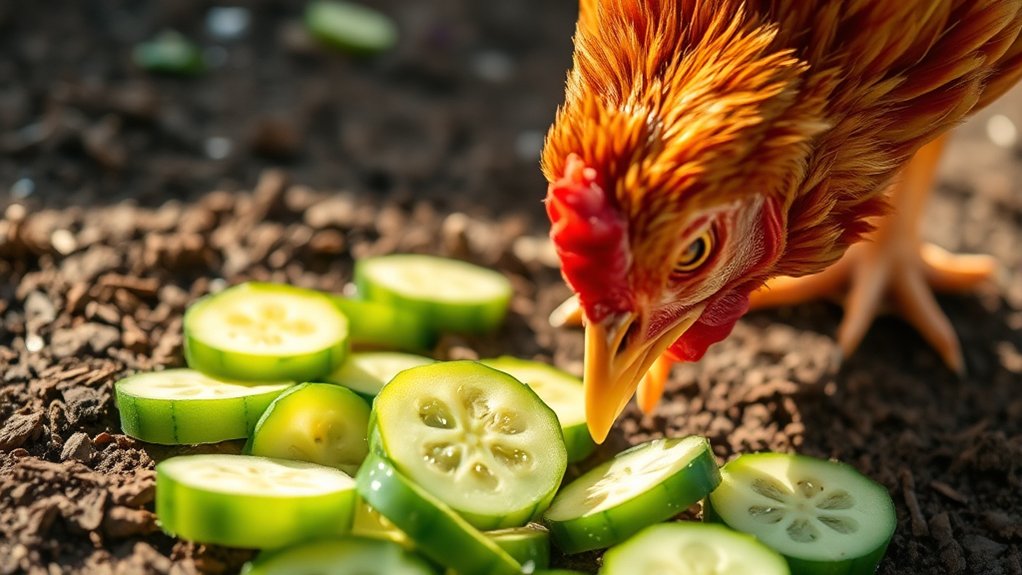
Yes, you can feed chickens cucumbers in moderation. Wash them well, cut them into small pieces, and remove any spoiled, salty, seasoned, or pickled parts. Can Chickens Eat Cucumbers.
Cucumbers are a revitalizing treat with lots of water, so they can help keep your flock hydrated on hot days.
Keep them as an occasional snack, not a main food, and always rely on complete feed first.
If you want the details, there’s more to know just ahead.
Key Takeaways
- Yes, chickens can eat cucumbers safely in moderation as an occasional treat.
- Wash cucumbers well and cut them into small pieces before feeding.
- Avoid salted, seasoned, pickled, moldy, or slimy cucumbers.
- Cucumbers provide hydration and variety, but they should stay under 10% of the diet.
- Offer only a few bite-sized pieces a few times a week alongside complete feed.
Can Chickens Eat Cucumbers Safely?

Yes, chickens can eat cucumbers safely in moderation. You can offer small slices as a cool treat, and most birds will peck at them without trouble. Keep portions modest so you don’t crowd out their balanced feed.
Chickens have simple digestion, so you should introduce any new food slowly and watch how they respond. If you notice loose droppings or a drop in appetite, cut back.
Introduce new foods slowly and watch your chickens for changes; loose droppings or less appetite mean it’s time to cut back.
You’ll get the best cucumber benefits when you serve fresh, clean pieces and remove anything moldy or slimy. Wash the skin first, since dirt or pesticides can cause problems.
Avoid seasoned, salted, or pickled cucumbers, because those extras can upset your flock. Treat cucumbers as an occasional supplement, not a main food. When you feed them this way, you support variety without risking your birds’ health.
What Cucumbers Offer Chickens
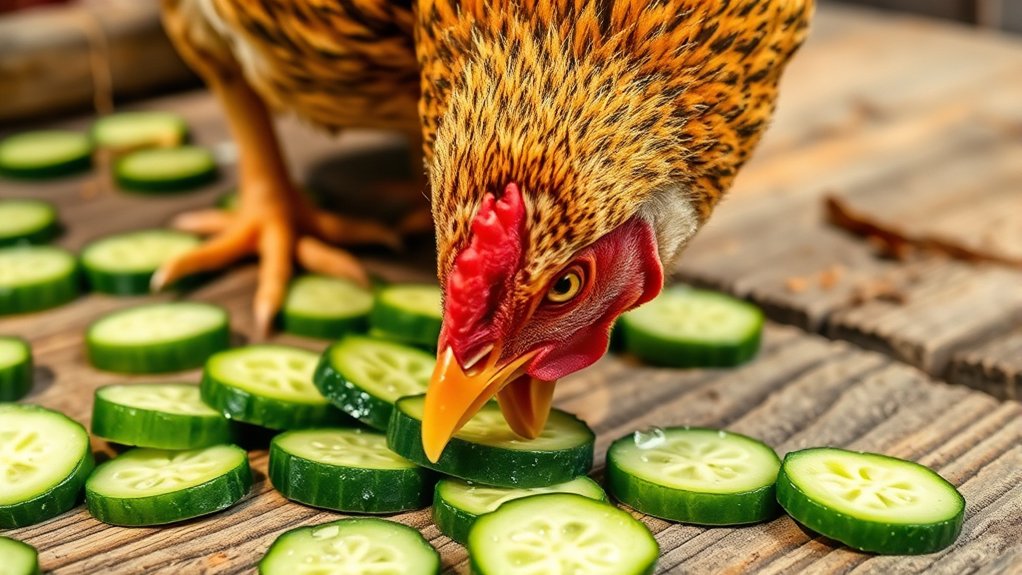
Cucumbers can give your chickens a light, invigorating snack with a high water content that helps them stay hydrated, especially on hot days. You also get a low-calorie option that adds variety without loading their diet with extra sugar or fat.
Their nutritional benefits are modest, but they do include small amounts of vitamins and minerals that support overall wellness. Because cucumbers are mostly water, they work well as a hydration source when your birds need a cool, rejuvenating bite.
They can also support digestive health by offering a gentle texture that’s easy to peck and digest. If you want treat alternatives to richer snacks, cucumbers fit nicely into the rotation and can help keep bored hens interested in their feed routine.
Use them as a supplement, not a staple, so your flock still gets balanced nutrition from their regular feed.
How to Prepare Cucumbers for Chickens
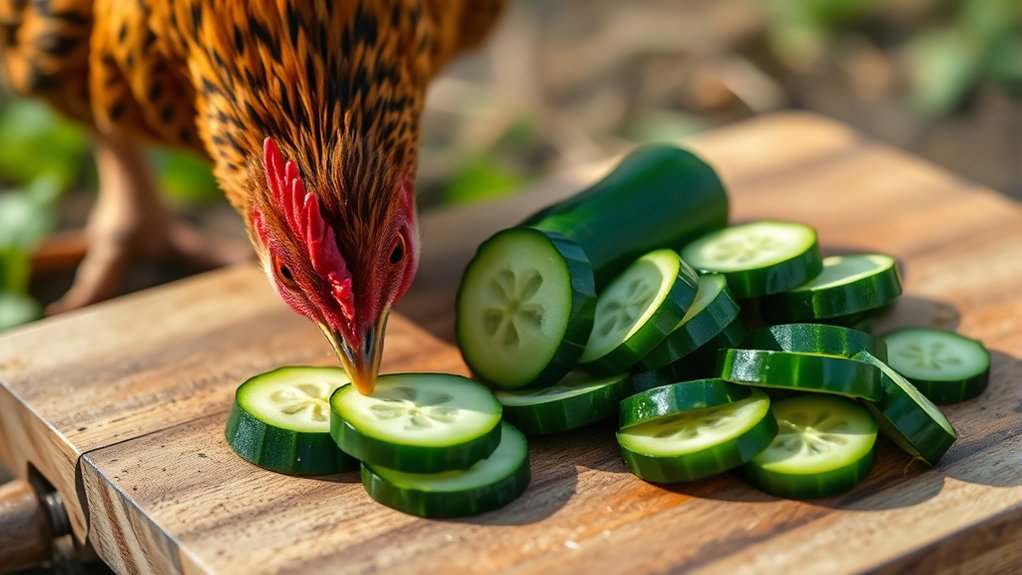
Before you give cucumbers to your chickens, make sure to wash them thoroughly. This helps get rid of any dirt, pesticide residue, or other stuff that might be on the skin.
Once they’re clean, go ahead and cut the cucumbers into small, manageable pieces. That way, your birds can peck at them safely. It also makes the snack easier to eat and helps prevent choking.
Washing Cucumbers Thoroughly
Even fresh cucumbers can carry dirt, residue, or bacteria on the skin, so you should wash them well before offering them to your chickens. Use cool running water and rub each cucumber with your hands to improve cucumber cleanliness. If you see stubborn grime, gentle washing techniques help remove it without leaving soap behind.
A clean cucumber gives you peace of mind and keeps your flock safer. Focus on the outer surface, since that’s where most contaminants hide before the treat reaches the coop.
- Hold the cucumber under a steady stream of water.
- Rotate it slowly and scrub away soil.
- Pat it dry with a clean towel.
This quick routine takes little time, but it makes a meaningful difference before you share cucumbers with curious birds.
Cutting Into Manageable Pieces
Cutting cucumbers into smaller pieces makes them easier for your chickens to peck, swallow, and enjoy without struggling. You can slice them into thin rounds, half-moons, or small chunks, depending on your flock’s size. Smaller birds usually do better with bite-sized pieces, while larger hens can handle slightly bigger cuts.
Remove any tough ends, and if you’re using seedy cucumber varieties, you may want to scoop out excess seeds for a softer texture. This simple step supports chicken health by reducing the risk of choking and making the snack easier to digest.
If you freeze cucumber pieces lightly on hot days, you can offer a cool treat, but keep portions moderate. Always serve fresh pieces and discard anything slimy, bitter, or overripe right away.
How Much Cucumber Can Chickens Eat?
You can definitely give cucumbers to your chickens as a treat. Just be sure to keep the portions small so they don’t fill up on cucumbers instead of their regular feed. A good rule of thumb is to offer only a few bite-sized pieces per chicken at a time, rather than a whole serving.
Also, try to limit cucumber treats to just a few times a week. That way, your flock stays balanced and healthy without overdoing it on the cucumbers.
Portion Size Guide
When feeding cucumbers to chickens, portion size matters more than the vegetable itself. You should use portion control so treats stay balanced and your flock stays enthusiastic. Offer cucumber in serving suggestions like crisp spears, thin rounds, or small chopped cubes. Start with a few bites per bird, then watch how they peck and scatter it.
- A handful of slices for a small flock looks like bright green coins on the ground.
- Quartered spears fit neatly in a feeder and make pecking easy.
- Finely chopped pieces mix with other treats like a cool summer salad.
Keep pieces manageable so your chickens can eat them without waste. Smaller servings also help you avoid crowding at the dish and keep your coop tidy and calm.
Feeding Frequency Limits
Cucumbers should stay an occasional treat, not a daily staple, because too much can dilute a chicken’s balanced diet and lead to loose droppings. You can offer small amounts once or twice a week, depending on your flock’s overall feed and treats.
Keep cucumbers under 10% of their total intake so you protect dietary balance. If you use feeding schedules, place cucumber days between protein-rich meals and varied greens, not alongside multiple watery snacks.
Watch your birds’ droppings and appetite; if they seem gassy or sluggish, cut back. Always prioritize a complete layer or grower feed since that’s where they get most nutrients. Fresh water should always be available, especially when you serve juicy treats.
Best Ways to Serve Cucumbers
One of the easiest ways to offer cucumbers to chickens is to slice them into small, manageable pieces so they’re simple to peck at and less likely to cause waste. You can also chill the slices first for a crisp treat that may encourage interest on hot days, supporting chicken hydration.
Cucumbers’ mild flavor makes them a handy snack, and their cucumber health benefits fit nicely into a varied flock diet when you serve them as an occasional supplement, not a replacement for feed. Try these serving ideas:
- Place slices in a shallow dish so hens can gather around easily.
- Scatter pieces across clean ground to mimic natural foraging.
- Hang a whole cucumber in a secure feeder for a fun pecking challenge.
Keep portions modest, and remove any leftovers before they spoil. That way, you’ll give your birds a invigorating, low-effort treat they can enjoy without cluttering the coop or yard.
Can Chickens Eat Cucumber Seeds and Peel?
You can feed chickens cucumber seeds, and they’re generally safe in small amounts. The peel is good too—it adds a bit of extra fiber and nutrients, so there’s no need to take it off. Just be sure the cucumber is clean and free of pesticides before giving it to your chickens.
Cucumber Seeds Safety
Yes, chicken can safely eat cucumber seeds and peel in moderation. You don’t need to worry about cucumber toxicity from the seeds; they’re non-toxic and easy for most birds to digest. In fact, the small seeds can offer minor benefits, like added moisture and a bit of fiber, while giving your flock a crunchy treat.
- Picture your hens pecking at cool green slices in a dusty yard.
- Imagine tiny seeds scattered like beads across the flesh.
- Envision a curious hen lifting her head after a fresh bite.
Keep portions modest so treats don’t crowd out feed. If you notice loose droppings or reduced appetite, cut back and watch how your birds respond. Fresh, washed cucumber pieces work best.
Peel Nutritional Benefits
Cucumber peel can be a healthy, low-calorie treat for chickens because it adds extra fiber, water, and a few trace nutrients without much sugar or fat. You’ll get the best peel benefits when you wash the cucumber first and slice the peel into manageable strips. The peel’s nutritional value isn’t huge, but it can support hydration and give your flock a crunchy snack.
| Part | Benefit | Note |
|---|---|---|
| Peel | Fiber | Helps digestion |
| Peel | Water | Supports hydration |
| Peel | Trace nutrients | Adds small extras |
| Peeling | Low sugar | Safer treat |
| Fresh peel | Crunch | Chickens enjoy it |
Feed only small amounts, and don’t let peels replace balanced feed. If you notice diarrhea or picky eating, cut back and offer less often.
When Cucumbers Are Bad for Chickens
Cucumbers can be a poor choice for chickens if they’re spoiled, moldy, or treated with pesticides, since these can upset digestion or expose birds to harmful chemicals. You should inspect every slice before you feed it, because bad produce can trigger cucumber toxicity concerns and digestive issues in your flock.
If you notice a sour smell, slimy skin, or fuzzy spots, don’t offer it. Wash fresh cucumbers well, and only share clean pieces in small amounts.
- A green slice with dark mold spots on a feed tray
- A wilted cucumber lying beside a muddy coop bucket
- A flock pecking at fresh, crisp chunks under sunlight
You can avoid problems by tossing questionable scraps and choosing firm, unblemished cucumbers instead. That way, you keep treats safe and your chickens comfortable after eating.
Can Chicks Eat Cucumbers?
Young chicks can eat cucumbers in tiny amounts, but you should treat them as an occasional snack, not a staple. You can offer a few soft, seedless pieces once they’re pecking well and eating their regular starter feed reliably.
Keep the pieces very small so they’re easy to handle and don’t crowd out better food. Cucumbers don’t offer much nutritional value for growing chicks, so think of them as a hydrating treat rather than a meal.
Watch chick behavior after offering cucumber. If they lose interest, peck excessively, or seem chilled from damp bedding, remove the scraps quickly. Always wash the cucumber first and avoid seasoning, oils, or dips.
You should also skip any moldy or wilted bits. If your chicks are very young, start with just a taste and see how they respond before offering more.
Cucumbers Vs. Other Chicken Treats
Compared with many chicken treats, cucumbers are more of a hydrating filler than a nutrient-dense snack. In your chicken nutrition plan, that makes them useful on hot days, but not as rich as leafy greens, seeds, or insects.
In a treat comparison, cucumbers win for crunch and moisture, while carrots offer more beta-carotene and mealworms pack far more protein. You can think of cucumbers as the cool, green option that refreshes without loading extra calories. They’re best when you want a light reward, not a full supplement.
- A sliced cucumber glistening in the sun beside a dusty water bowl.
- Bright orange carrot sticks and wriggling mealworms in separate little piles.
- A curious hen pecking at pale green rounds on a weathered board.
If you want variety, rotate treats and keep cucumbers as a simple, occasional add-on.
How Chickens Show They Like Cucumbers
Once you offer cucumbers, your chickens make their opinion pretty obvious: they’ll rush over, peck enthusiastically at the slices, and keep coming back for more if they like the taste and texture. You’ll notice this chicken behavior fast: enthusiastic steps, quick bites, and relaxed body language around the bowl.
Some birds grab pieces and run off, while others stand nearby, waiting for their turn. If they prefer the cooler, crunchier bits, they’ll peck the flesh first and leave the peel. Their food preferences often show in how long they linger and whether they return after scratching around.
| Sign | What it means |
|---|---|
| Fast approach | They’re interested |
| Repeated pecking | They enjoy it |
| Sharing calmly | They feel comfortable |
| Ignoring scraps | It’s not a favorite |
Watch for these cues, and you’ll learn which treats they truly like.
Frequently Asked Questions
Can Chickens Eat Pickled Cucumbers?
Yes, you can offer chickens pickled cucumbers occasionally, but you shouldn’t make them a regular treat. The pickling process adds vinegar, salt, and spices that can upset their digestion and raise sodium intake.
Fresh cucumbers give better cucumber benefits, like hydration and light nutrients, without the extra additives. If you do share pickled cucumbers, choose plain pieces in tiny amounts and make sure they’re not too salty or seasoned.
Are Cucumber Flowers Safe for Chickens?
Yes, you can give chickens cucumber flowers, and they’re safe in moderation. Picture a garden banquet where the flock nibbles sunshine; the blooms won’t betray them.
You don’t need to worry about cucumber toxicity from the flowers themselves. They can even offer flower benefits like variety, enrichment, and a little extra moisture.
Still, you should feed them clean, pesticide-free blossoms and treat them as a small snack, not a staple.
Do Cucumbers Help Chickens Stay Cool?
Yes, cucumbers can help your chickens stay cool because they’re mostly water and make a revitalizing snack. You can offer chilled slices as summer treats to support chicken hydration on hot days.
They won’t replace fresh water though, so keep plenty available. Feed cucumbers in moderation since too much can upset their balance. If you want an easy way to beat the heat, cucumbers work well.
Can Chickens Eat Cucumber Vines or Leaves?
Yes, you can let chickens nibble cucumber vines or leaves, but don’t treat them like a gourmet banquet. You should offer only clean, pesticide-free plants in small amounts because cucumber toxicity can rise with wilted or treated greenery.
The good news? The vines provide modest vine nutrients, but your flock won’t write poetry about them. Watch for upset crops, and keep their main feed as the real star of the show.
Should Cucumbers Replace Regular Chicken Feed?
No, you shouldn’t replace regular chicken feed with cucumbers. You can offer cucumbers as a treat, but they don’t provide the full nutritional benefits your chickens need for healthy growth, egg production, and energy.
Follow feeding guidelines by keeping treats to a small portion of the diet. Make sure your flock still gets a balanced layer or starter feed, fresh water, and varied supplements when appropriate.
Conclusion
So, yes, you can give your chickens cucumbers as a cool, crunchy treat in moderation. Think of them as an invigorating rainstorm on a hot day, not the whole meal but a welcome splash of variety.
Slice them up, keep portions small, and watch your flock peck happily like little feathered gardeners. Just avoid moldy or spoiled pieces, and remember treats should never crowd out their main feed.
A little cucumber can go a long way, so always keep in mind that chickens can eat cucumbers safely as part of a balanced diet.