Can Chickens Eat Garlic Safely?
If you’re a chicken owner, you’ve probably wondered about the best ways to keep your flock healthy and happy. You’re not alone—many people struggle with finding safe, natural supplements to boost their chickens’ well-being without risking their health. Can Chickens Eat Garlic.
Garlic is often talked about as a potential option, but is it really safe for chickens?
Yes, you can feed chickens garlic safely in small amounts, but it should stay a minor treat, not a staple.
Start with a tiny pinch mixed into regular feed, and use fresh, clean garlic only. Raw cloves are stronger, while powdered garlic blends more easily.
Watch for loose droppings, low appetite, or droopy behavior, and stop if you notice trouble.
With the right amount, garlic can be a simple flock-friendly boost, and there’s more to know.
Key Takeaways
- Chickens can eat garlic safely in small, occasional amounts as a supplement, not a staple food.
- Use fresh, clean garlic and introduce it slowly to avoid digestive upset or reduced appetite.
- Finely minced raw garlic or a small amount of powdered garlic can be mixed into feed.
- Too much garlic may cause droopy posture, loose droppings, quietness, or refusal to eat or drink.
- Remove garlic and contact a poultry vet if symptoms persist or worsen.
Can Chickens Eat Garlic Safely?

Yes, chickens can safely eat garlic in small amounts. You can offer it as a flavor boost, not a staple, and many keepers use it to add variety to a flock’s diet.
Your chickens may enjoy the taste, but chicken preferences vary, so watch how each bird responds. If they ignore it, don’t force it; you’ve got plenty of garlic alternatives, like herbs or other safe treats, that can keep their diet interesting.
Your chickens may enjoy garlic, but preferences vary—watch their response and offer alternatives if they pass.
You should also make sure the garlic is fresh and clean, since spoiled food can upset digestion. Mix it into feed sparingly or offer tiny pieces alongside regular ration.
When you introduce any new food, start slowly and observe your birds for changes in appetite or droppings. That way, you can support healthy eating habits while keeping mealtime simple, safe, and balanced for your flock.
How Much Garlic Chickens Can Eat
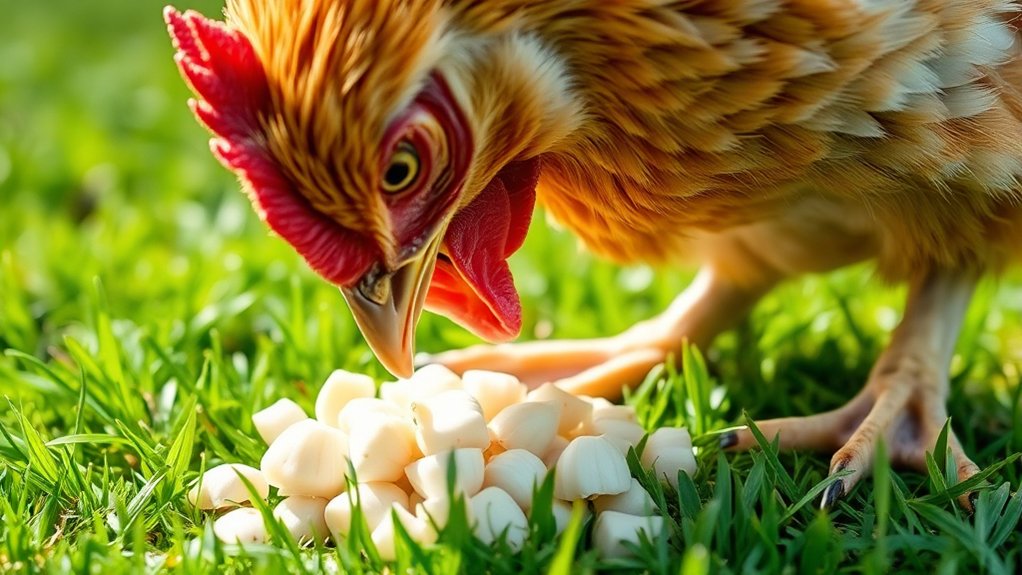
Start with very small amounts of garlic, since too much can irritate a chicken’s digestive system and throw off the balance of its diet. You should treat garlic as a minor supplement, not a main feed ingredient.
A tiny pinch for a few birds is enough to begin testing garlic quantity without overwhelming them. Watch how your flock responds because chicken preferences vary and some birds may ignore it while others peck enthusiastically.
If your chickens seem fine, you can keep portions modest and occasional rather than daily. Always keep the rest of their diet balanced with quality feed, fresh water, and normal treats in moderation.
When you increase garlic, do it slowly and observe droppings, appetite, and activity. If you notice loose droppings, reduced eating, or unusual behavior, cut back right away. Small, careful servings help you use garlic safely while respecting each bird’s tolerance.
Best Ways to Feed Garlic to Chickens

You can feed chickens fresh minced garlic by mixing it into their regular feed. It’s a good idea to start with small mixed portions so they can adjust easily, and you can keep an eye on how they respond. Just remember to keep the amount modest and consistent—this way, garlic becomes a simple, natural part of their diet without any fuss.
Fresh Minced Garlic
Fresh minced garlic can be an easy way to offer chickens garlic, but it works best in small amounts and mixed into their regular feed. You should mince it finely so your birds don’t pick out large pieces, and you can spread it evenly through a mash or crumble.
Fresh garlic has a stronger bite than some other garlic types, so watch your flock’s chicken preferences and see how they respond. If they seem hesitant, reduce the amount or blend it with a feed they already enjoy. Always use clean, fresh cloves and discard any moldy bits.
Because the flavor is potent, you don’t need much to make it useful. Keep your approach simple, and you’ll make feeding garlic easier for you and more appealing for them.
Small Mixed Portions
Small mixed portions usually work best because they let you add garlic without overwhelming your flock. You can blend a tiny amount into their regular feed, then watch how they react. Keep portion control tight so each bird gets only a light taste, not a strong dose.
If you want extra variety, you can mix garlic with chopped greens or mild mixed herbs to improve acceptance. This approach helps you spread the flavor evenly and reduces waste. Always introduce garlic gradually, and don’t change too many things at once.
If your chickens eat it enthusiastically and stay active, you’re on the right track. If they ignore it or seem off, cut back and simplify the mix next time.
Raw Garlic vs. Powdered Garlic
Raw cloves bring a stronger, sharper garlic punch, while powdered garlic offers a milder flavor that blends more evenly into feed or treats. When you compare them, the main difference is control: raw pieces can vary in bite, and powdered forms can hide more easily in a mix.
Raw cloves hit harder, while powdered garlic blends milder and more evenly into feed.
For your flock, you should handle both carefully and keep portions tiny. Watch for freshness, because stale powder loses quality fast and wet cloves can spoil. If you’re weighing raw garlic benefits against powdered garlic risks, think about how each form fits your feeding routine and how easily you can measure it without overdoing it.
- A sliced clove looks bold and aromatic.
- A dusting of powder disappears into mash.
- Fresh garlic feels moist; powder feels dry.
- Small mistakes with either form can add up quickly.
Benefits of Garlic for Chickens
Garlic can be a useful add-on for your chickens’ diet because it may support overall wellness, help keep feed more appealing, and offer a natural boost when used in tiny amounts. When you use it sparingly, you can add variety to the flock’s routine without changing their main ration.
Garlic also brings some nutritional value, including compounds that make it a popular supplement in small poultry diets. You might notice better feed interest when you mix a little into feed or treats, especially if your birds seem picky.
Many keepers also value garlic for its potential immune support, which makes it a common choice in backyard flocks. Even so, you should treat it as a minor addition, not a staple. Keep portions modest, and focus on a balanced diet first so your chickens get the nutrients they need every day.
How Garlic May Support Chicken Health
When you use garlic in small amounts, it may help support your flock’s health by offering compounds that can encourage overall resilience and well-being. You can think of it as a simple supplement that fits into a balanced feeding routine, not a cure-all.
Garlic’s natural sulfur compounds may act as an immune boost, helping your birds stay alert and ready to handle everyday stress. It can also serve as a gentle digestive aid, encouraging normal appetite and smooth feed use.
Garlic’s sulfur compounds may support immunity and digestion, helping your birds stay active and eat well.
- You may notice brighter, more active hens.
- You can mix tiny amounts into feed or water.
- Your flock may benefit from added variety.
- You can use it alongside clean housing and good nutrition.
When you pair garlic with solid care, you give your chickens another layer of support without changing their whole diet.
Risks of Feeding Chickens Garlic
Even helpful additions can cause problems if you overdo them, and garlic is no exception. When you feed chickens too much garlic, you raise the risk of garlic toxicity, especially if you keep offering it daily or in large amounts.
Garlic contains compounds that can irritate the gut and place stress on red blood cells when intake climbs too high. You may also trigger digestive issues like loose droppings, reduced appetite, or a gassy, uncomfortable crop.
Young birds and small breeds can be more sensitive because even modest portions count for more in their diet. If you rely on garlic as a supplement, you should keep it occasional and modest, not a major feed ingredient.
You also shouldn’t mix garlic with other strong additives unless you know the total amount stays safe. Careful moderation helps you avoid unnecessary problems and keeps garlic from shifting from a helpful treat to a risky one.
Signs Garlic Is Upsetting Your Chickens
If garlic isn’t agreeing with your chickens, you’ll usually notice changes quickly. Watch for garlic toxicity signs such as droopy posture, loss of appetite, or messy droppings after they’ve eaten it.
Watch closely for garlic toxicity signs like droopy posture, poor appetite, or messy droppings after eating it.
You may also see chicken behavior changes like hesitation at the feeder, extra quietness, or sudden aggression in the flock. A bird that normally scratches and pecks may instead stand apart, fluff its feathers, or keep its eyes half-closed.
- Refuse feed or water
- Move less than usual
- Show pale combs or weak footing
- Have loose stools or vomiting-like motions
You should act fast if these signs show up together since they point to discomfort rather than a simple mood shift. Remove the garlic source, offer clean water, and keep a close eye on the birds.
If symptoms linger, contact a poultry vet promptly.
Garlic Tips for Young and Adult Chickens
Once you know how to spot garlic discomfort, you can use it more carefully by age. With young chickens, keep portions tiny because their chicken digestion is still developing and they can react faster to strong foods. You should offer only a small amount of garlic and watch appetite, droppings, and energy afterward. If anything seems off, stop and wait.
Adult chickens usually handle garlic better, but you still need moderation. You can mix a little fresh or dried garlic into their diet, yet avoid making it a daily heavy habit. Too much can irritate the gut and raise garlic toxicity concerns, especially if your birds already eat richly or seem stressed.
Always introduce garlic slowly, so you can judge tolerance clearly. By matching the amount to age and watching each bird, you help support safe feeding without pushing their limits.
Garlic Feeding Tips for Backyard Flocks
For a backyard flock, you’ll get the best results by keeping garlic simple and consistent. Mix a small amount into feed or water a few times a week, not every meal. Watch how your hens eat, scratch, and droppings change so you can adjust fast.
Use fresh, minced garlic sparingly, and skip anything moldy or heavily processed. If your birds seem picky, try garlic alongside other chicken treats to encourage interest without overdoing it.
- Start with tiny portions and increase only if your flock stays healthy.
- Offer garlic after feed so birds don’t fill up on extras.
- Rotate garlic with garlic alternatives like herbs or pumpkin seeds.
- Keep fresh water nearby and stop if appetite drops.
You should treat garlic as a supplement, not a staple. Balance matters more than quantity, and a calm routine helps your flock stay comfortable.
Frequently Asked Questions
Can Chicks Eat Garlic Clippings From the Garden?
Yes, you can offer chicks tiny amounts of garlic clippings from the garden, but you should keep it very limited. Too much garlic can upset chick health, especially for young birds with sensitive digestive systems.
Garlic benefits may include mild immune support, but fresh clippings can be strong, so chop them finely and mix sparingly with feed. You shouldn’t rely on garlic as a staple, just an occasional treat.
Does Garlic Affect the Taste of Chicken Eggs?
No, you probably won’t notice a garlic taste in your eggs. Here’s the twist: even if you feed your hens garlic, their egg flavor usually stays the same.
You may enjoy garlic benefits for the birds, but the flavor doesn’t normally pass into the shell’s contents. If anything changes, it’s subtle.
Can Garlic Be Mixed With Other Chicken Supplements?
Yes, you can mix garlic with other chicken supplements if you keep the formulas balanced. You should watch the garlic dosage so you don’t overdo it, because too much can upset digestion.
Garlic benefits may support immunity and appetite, but it shouldn’t replace a complete supplement plan. You’ll want to pair it with vitamins, minerals, or probiotics only when the total mix stays safe for your flock.
Is Garlic Safe for Chickens During Winter?
Yes, garlic can be safe for your chickens during winter when you use it sparingly. You can add small amounts to support winter nutrition and may notice garlic benefits like better appetite and possible immune support.
Don’t overdo it, though, because too much garlic can upset their digestion. Mix it into feed or water occasionally, and always keep fresh water available so your flock stays healthy and comfortable.
Can Chickens Eat Garlic Peelings and Skins?
Yes, you can offer chickens small amounts of garlic peelings and skins, but don’t make them a main treat. Why not give a tiny bit and see how they do? You’ll still want to follow garlic feeding guidelines because too much can upset their digestion.
While garlic health benefits may sound appealing, the peels and skins add little nutrition. Keep them clean, fresh, and occasional, and always provide a balanced feed.
Conclusion
In the end, you can offer garlic to your chickens in small, sensible amounts and still keep their routines running smoothly. Used with care, it may support your flock’s natural defenses and add a little variety to their feed.
Just watch for any hints of tummy trouble or reluctance at mealtime. When you introduce it slowly and keep portions modest, you’ll help your birds enjoy garlic’s benefits without ruffling their feathers.
So yes, chickens can eat garlic safely when given thoughtfully and in moderation.