Can Chickens Eat Bread?
Many chicken owners wonder about the best treats to give their flock without risking their health. If you’ve ever asked yourself, “Can chickens eat bread?” you’re not alone. Many people struggle to balance treats and nutrition, wanting to spoil their birds without causing harm.
Yes, chickens can eat bread in small amounts as an occasional treat, but it shouldn’t replace their regular feed. You should give only plain, unseasoned bread, torn into tiny pieces, and avoid garlic, raisins, xylitol, mold, or salty added ingredients.
A little once or twice a week is enough. Bread offers little nutrition, so your birds do better with balanced feed and healthier treats.
There’s more to know about safe serving and portion sizes.
Key Takeaways
- Chickens can eat bread in small amounts as an occasional treat.
- Bread is low in nutrients and should never replace balanced chicken feed.
- Plain white or whole grain bread is safest if it’s unseasoned and free of harmful ingredients.
- Tear bread into tiny pieces and offer it only once or twice a week.
- Remove moldy or stale leftovers, and watch for signs of overfeeding or digestive trouble.
Can Chickens Eat Bread Safely?

Yes, chickens can eat bread safely in small amounts, but it should only be an occasional treat. You should treat it as a snack, not a staple, because bread nutrition is limited compared with a balanced feed.
Bread gives your flock energy from carbohydrates, but it doesn’t supply enough protein, vitamins, or minerals to support strong growth and egg production. If you offer it too often, you may crowd out better foods and weaken overall nutrition.
You also need to take into account chicken digestion, since large pieces or too much dry bread can make it harder for them to swallow and process comfortably. Always keep portions small, and make sure the bread doesn’t replace their normal diet.
When you use bread sparingly, your chickens can enjoy it without problems, and you can keep their feeding routine healthy and simple.
Which Bread Types Are Safe for Chickens?
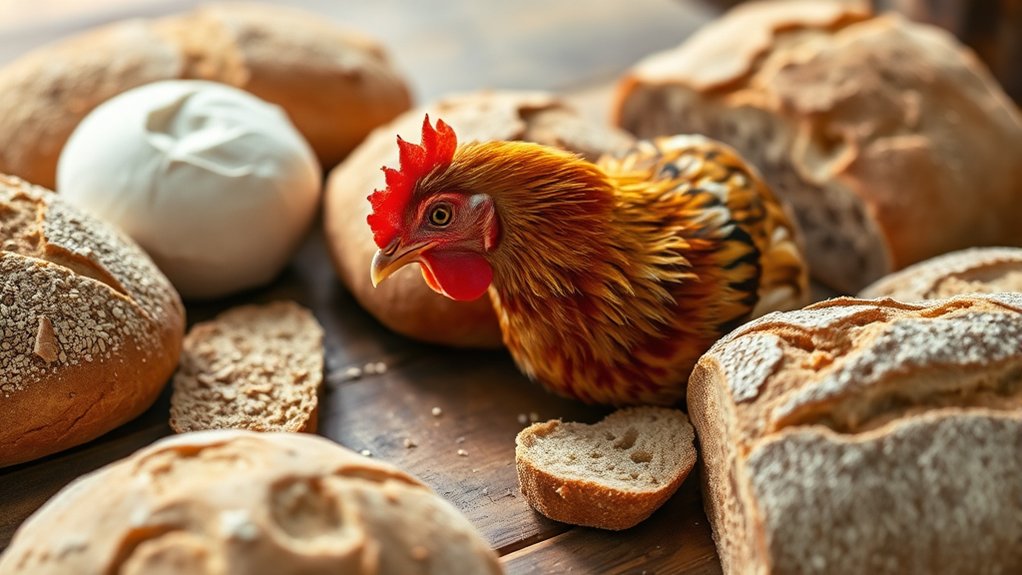
You can give chickens small pieces of plain white bread now and then. It’s easy for them to peck at and eat, so it works well as an occasional treat. Whole grain bread is okay too, as long as it’s plain and doesn’t have any added sugar, salt, or seeds that could upset their diet. Just stick to simple, unseasoned bread to keep their treats safe and balanced.
Plain White Bread
Plain white bread is one of the safer bread options you can offer chickens in small amounts, as long as it’s plain and doesn’t contain added sugar, seeds, raisins, garlic, or other seasonings. You can break it into tiny pieces so your flock eats it easily and doesn’t waste food.
Its soft bread texture makes it simple for chickens to peck and swallow, especially when you use it as an occasional treat. Still, you shouldn’t rely on it for nutrition, since its nutritional value is low compared with balanced feed.
If you offer it, keep portions small and feed it sparingly so it doesn’t replace healthier foods. Always make sure fresh water is available, and remove any leftovers before they spoil.
Whole Grain Options
Whole grain breads can be a better choice than highly processed loaves, but they still need to be served plain and in moderation. You can offer small bites of simple whole wheat or multigrain bread, especially if it’s free from salt, sugar, seeds, and seasoning. These choices provide some whole grain benefits, but they shouldn’t replace your chicken’s regular feed.
- Choose plain whole wheat bread.
- Pick unsalted, unseasoned slices.
- Tear it into tiny pieces.
- Serve it as an occasional treat.
You’ll also want to avoid moldy, stale, or enriched loaves with additives. If you’re looking for healthy grain alternatives, bread is still less ideal than grains like oats or cracked corn. Keep treats rare, and your flock can enjoy them safely.
How Much Bread Can Chickens Eat?

How much bread chickens can eat depends on their overall diet, but it should always stay limited. You can offer only a small piece as an occasional treat, not a daily snack.
Good portion control helps you keep servings tiny, especially if you’re using bread to hand-feed or reward your flock. A torn crust, a bite-sized cube, or a few crumbs is usually enough for one chicken. If you have several birds, split the treat so each one gets a little.
Keep feeding frequency low, too; once or twice a week is plenty for most flocks. You should also watch how your chickens react after eating bread. If they seem overly interested or push aside their usual feed, cut back.
Dry bread works better than anything heavily seasoned or sugary, and you should always serve it plain. By keeping amounts small, you can let your chickens enjoy bread without overdoing it.
Why Bread Shouldn’t Replace Chicken Feed
Even though bread can be an occasional treat, it shouldn’t replace a balanced chicken feed because it lacks the full nutrition your flock needs to stay healthy. When you rely on bread, you crowd out the protein, vitamins, minerals, and amino acids that support egg production, strong feathers, and steady growth. Good chicken nutrition depends on a complete ration, not filler foods that leave gaps.
- Feed a quality layer or starter mix daily.
- Offer bread only as a small snack.
- Use bread alternatives like oats, cooked rice, or chopped greens.
- Keep fresh water available so your birds digest food well.
If you let bread become the main dish, you may notice weaker birds, lower laying, and less energy. Keep treats occasional, and let proper feed do the real work.
White, Whole Wheat, or Multigrain Bread?
If you’re picking bread for your chickens, white bread doesn’t offer much nutrition and can quickly end up being just empty filler. Whole wheat bread is a bit better—it has more fiber and nutrients—but it still shouldn’t replace a balanced feed. Now, when it comes to multigrain bread, you’ll want to check the ingredients first because “multigrain” doesn’t always mean it’s healthier.
White Bread Risks
White bread can fill a chicken’s crop quickly, but it offers little nutrition and can crowd out more useful foods. When you check white bread nutrition, you’ll see mostly refined starch, salt, and sometimes sugar. So it shouldn’t become a regular treat.
Follow bread feeding guidelines by keeping portions tiny and infrequent. Too much can leave your flock less interested in feed, and stale or moldy bread can upset digestion.
- Offer only a small bite.
- Skip bread with butter, jam, or seasoning.
- Remove leftovers before they spoil.
- Keep it as an occasional snack, not a meal.
You’ll protect your chickens better by choosing nutrient-dense feed first and saving white bread for rare moments.
Whole Wheat Benefits
Whole wheat bread usually makes a better occasional choice because it keeps more of the grain’s fiber and nutrients than white bread. You’ll notice better nutritional value, and the higher fiber content can support digestive benefits when you offer only a small piece.
It can also serve as a quick energy source for active chickens, but it shouldn’t replace their balanced feed. When you compare cost, whole wheat often costs a bit more than white bread, so use it sparingly.
Follow simple feeding guidelines: give tiny amounts, limit treats, and keep bread as a minor add-on. For chicken health, choose plain slices without butter, sugar, or salt, and avoid making bread a regular habit in your flock’s diet.
Multigrain Ingredient Check
When you’re checking multigrain bread for chickens, the ingredient list matters more than the label. “Multigrain” can sound healthier, but it doesn’t always mean whole grains. Some loaves still rely on refined flour, added sugar, or extra salt.
You want simple, recognizable ingredients and no sweeteners or oils. Look for modest multigrain benefits, not marketing hype. The best loaves use fiber sources like oats, barley, or flax. Even then, treat bread as a small snack, not a staple.
- Choose bread with whole grains first.
- Skip sugar, raisins, garlic, and onion.
- Check sodium before you share.
- Offer tiny torn pieces only.
Can Chickens Eat Moldy or Stale Bread?
Stale bread is usually fine for chickens in small amounts, but moldy bread is not safe and should be avoided. When you offer dry, old bread, keep the portion tiny and use it as an occasional treat, not a staple.
Chickens can peck at stale pieces without much trouble, but you should still watch for stale dangers, like hard crusts that can be awkward to swallow. Mold, on the other hand, can cause mold effects that may upset your flock’s digestion and make them feel unwell.
If bread smells musty, shows spots, or feels damp, toss it out right away. You don’t need to gamble with your birds’ health when fresher food is easy to provide. A small amount of plain stale bread won’t hurt most chickens, but anything moldy belongs in the trash, not the coop.
Bread Ingredients Chickens Should Never Eat
You should watch out for harmful bread additives like onions, garlic, raisins, or xylitol since they can make chickens sick. Also, avoid giving your flock raw dough because it can expand in their crop and ferment inside their body. It’s best to stick to plain bread without any risky ingredients so you don’t put your birds at unnecessary risk.
Harmful Bread Additives
Some breads look harmless, but certain additives can make them unsafe for chickens. When you read labels, watch for flavorings, preservatives, and coatings that raise additive concerns and reduce the nutritional impact of the treat. You shouldn’t share bread with long ingredient lists.
- Onion or garlic powder can irritate your flock.
- Artificial sweeteners may upset digestion and add no value.
- Excess salt can strain your birds’ system.
- Seed coatings or seasoning blends can hide unwanted extras.
You can offer plain bread only as an occasional snack, and you should keep portions small. If a loaf includes ingredients you can’t identify, skip it. Your chickens do best with simple, fresh foods, not processed bread packed with extras.
Toxic Dough Ingredients
Even if the bread itself seems plain, raw dough can be dangerous for chickens because the yeast keeps fermenting in their crop and can expand, cause discomfort, and lead to serious health problems.
You should also avoid dough with toxic additives like garlic powder, onion powder, xylitol, chocolate, or artificial sweeteners. These ingredients can upset digestion, damage blood cells, or trigger poisoning, even in small amounts.
If you let chickens peck at uncooked batter, you risk ongoing dough fermentation in their warm crop, which can create painful bloating and weakness.
Always check labels before sharing scraps, and never offer dough that contains salt, spices, alcohol, or mold. When in doubt, keep it out of the coop.
How to Serve Bread to Chickens Properly
When you offer bread to chickens, keep the portions small and treat it as an occasional snack rather than a staple. Use simple bread serving techniques so your flock can peck safely and you can follow chicken feeding guidelines without overdoing it. Tear the bread into tiny pieces, so each bird gets a fair share and doesn’t gulp down a large chunk.
Keep bread as an occasional treat, and tear it into tiny pieces so every chicken can peck safely.
- Choose plain bread with no seasonings or spreads.
- Break it into bite-sized bits before you scatter it.
- Mix it with their regular feed only in small amounts.
- Remove any leftovers before they get stale or wet.
Serve bread by hand or on a clean surface, and keep water nearby so your chickens can swallow easily. If the bread feels dry, lightly moisten it, but don’t soak it until it turns mushy. By serving it this way, you keep treat time simple, controlled, and easy to manage.
Better Treats Than Bread for Chickens
| Treat | Benefit |
|---|---|
| Leafy greens | Vitamins and fiber |
| Berries | Antioxidants and hydration |
| Pumpkin | Fiber and enrichment |
| Cooked oats | Easy energy |
| Mealworms | Protein boost |
You can also serve small amounts of scrambled egg or plain yogurt for extra protein. Just keep portions modest so treats stay balanced with their regular feed.
When you pick nutrient-rich options, you give your chickens more flavor, more variety, and better overall nutrition than bread alone.
Signs Your Chickens Ate Too Much Bread
Too much bread can quickly show up in your flock’s behavior and droppings. If you’ve given too many slices, watch for overfeeding signs that point to digestive issues. Bread fills your chickens without adding much nutrition, so they may act off within hours or a day.
- You’ll notice watery or unusually sticky droppings.
- Your birds may seem bloated, sluggish, or less interested in scratching.
- They might skip balanced feed and beg for more bread.
- You could see crop discomfort, reduced egg laying, or mild diarrhea.
If you spot these signs, cut bread back right away and offer fresh water plus their regular feed. A short break from treats usually helps their digestion settle. If symptoms continue, or if a chicken stops eating, check with a poultry vet. Watching closely helps you catch problems early and keep your flock healthy.
Frequently Asked Questions
Can Chickens Eat Bread Crusts?
Yes, chickens can eat bread crusts in small amounts, but you should treat them as an occasional snack, not a staple. Choose plain bread types and avoid crusts with salt, sugar, garlic, or mold.
Crust benefits are limited, though they can give your flock a bit of energy and something to peck at. You’ll keep your chickens healthier if you offer crusts sparingly alongside balanced feed, fresh water, and greens.
Can Chicks Eat Bread?
Yes, you can offer chicks bread, but it shouldn’t be a regular food. About 90% of a chick’s growth depends on balanced starter feed, so chick nourishment matters more than treats.
For bread safety, give only tiny, plain, soft pieces, and moisten them if needed. You shouldn’t use salted, moldy, or seasoned bread since it can upset digestion and crowd out better nutrition for healthy development.
Can Chickens Eat Bread Daily?
No, you shouldn’t feed chickens bread daily. It has low nutritional value and can crowd out the balanced feed they need for health, egg production, and growth.
If you offer bread, keep it as an occasional treat, not a staple. Follow feeding guidelines by making most of their diet a quality layer or flock feed, with fresh water and limited extras.
Too much bread can cause poor nutrition and unhealthy weight gain.
Can Chickens Eat Bread With Butter?
Not really. If you feed your chickens bread with butter, you’re adding extra fat they don’t need. Plain bread offers little nutrition, and butter can upset digestion or encourage weight gain.
Why risk their health for a snack? You can give small amounts of plain bread occasionally, but keep butter away. Stick to balanced feed, grains, and healthy treats so your flock stays active, productive, and thriving.
Can Chickens Eat Bread in Winter?
Yes, you can feed chickens bread in winter, but you shouldn’t rely on it. In cold weather, your flock needs better winter nutrition to stay warm and healthy.
Bread fills them up without offering much protein, vitamins, or minerals. Offer bread only as an occasional treat, and choose bread alternatives like oats, sunflower seeds, cracked corn, or leafy greens instead.
Clean water and balanced feed matter most.
Conclusion
So, can chickens eat bread? Yes, but only as an occasional treat, not a meal. Think of bread like confetti at a parade: fun in small amounts, but a mess if it takes over the whole street.
One flock owner I knew learned this fast when her hens ignored feed for bread scraps and slowed down. Keep bread plain, limit portions, and stick with balanced feed so your chickens stay healthy and happy.
In conclusion, chickens can eat bread, but always in moderation to maintain their health and well-being.