10 Tips How to Keep Chickens Warm in Winter
Keeping your chickens warm during the cold winter months can feel like a constant challenge. You’re not alone—many people struggle with protecting their flock from the chill while ensuring they stay healthy and comfortable.
Finding the right balance between warmth, ventilation, and care is key, and a few simple changes can make a big difference.
To keep chickens warm in winter, you should start with a draft-free coop, seal gaps, and add insulation while still keeping high ventilation.
Keep bedding deep, dry, and fluffy, and raise roosts off the cold floor. Feed extra calories, protect water from freezing, and check combs and wattles for frostbite.
Use petroleum jelly on clean skin if needed, and reserve heat lamps for extreme cold only, because a few smart tweaks can make a big difference.
Key Takeaways
- Seal coop gaps and insulate walls and ceiling to block drafts while keeping high ventilation above the roosts.
- Use deep, dry bedding like straw or pine shavings to trap heat and keep the coop comfortable.
- Block winter winds with tarps or panels, and raise roosts so chickens stay off cold floors.
- Provide extra calories, fresh unfrozen water, and monitor birds daily for frostbite or illness.
- Use petroleum jelly on clean combs and wattles. Only use heat lamps if absolutely necessary and make sure they’re safely secured.
Start With a Draft-Free Coop
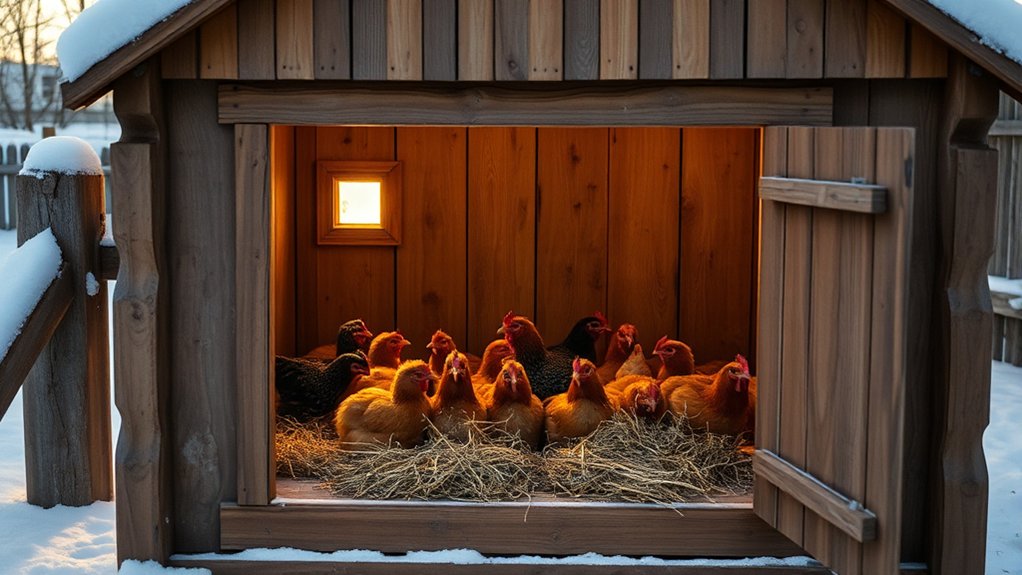
A draft-free coop helps your chickens stay warm by trapping body heat without letting cold wind sweep through at night. You should inspect your coop design for gaps around doors, windows, vents, and wall joints, then seal anything that lets air rush straight through bird-level openings.
Keep airflow moving high above the roosts with smart ventilation strategies, because stale moisture can chill birds fast and raise health risks. Aim for controlled airflow, not gusts.
You can use snug-fitting latches, tight roof edges, and solid siding to block the worst drafts while still allowing fresh air to escape near the roofline. Check the coop at dusk, when breezes feel stronger, and stand inside to find leaks you might miss outside.
If you notice cold air hitting the roosts, adjust the layout before winter deepens. That simple prep gives your flock a calmer, warmer night.
Add Insulation to the Coop

Once your coop is draft-free, you can add insulation to help it hold heat through long winter nights. Choose insulation materials that suit your setup, such as rigid foam boards or reflective panels, and cover them so your chickens can’t peck at exposed edges.
Install insulation on the walls and ceiling, but don’t block coop ventilation, because fresh air still has to move out moisture and ammonia. If you live in a very cold area, you can insulate the north side more heavily and leave the sunny side brighter.
Secure every panel tightly so wind can’t shift it or create gaps. You should also check that doors and windows still open easily after you add insulation. A well-insulated coop won’t replace good management, but it can reduce heat loss and help your flock stay more comfortable when temperatures drop.
Keep Bedding Deep and Dry
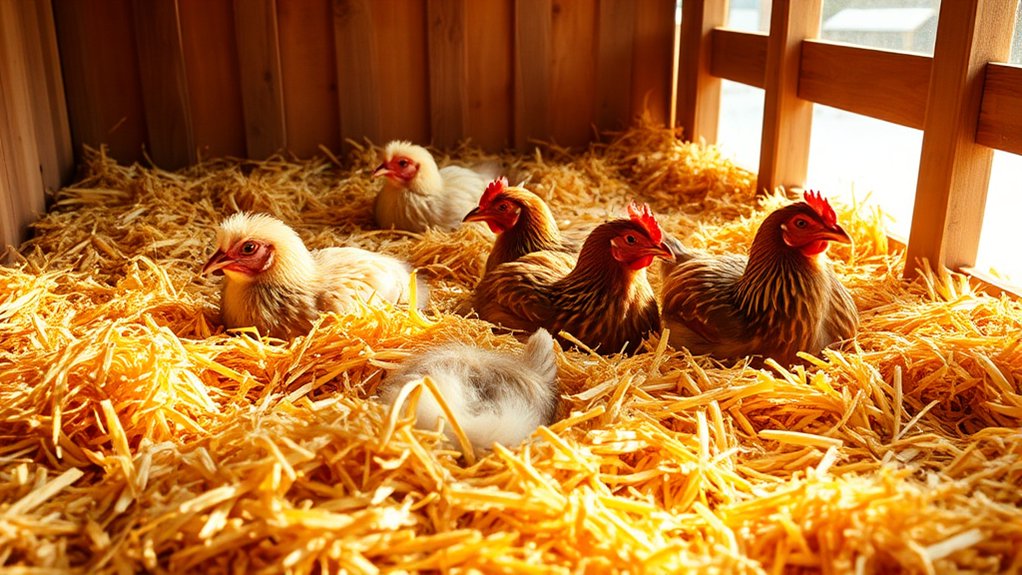
Keep the coop bedding deep enough to trap warmth and dry enough to protect your flock’s feet and lungs. You can build a thick layer with straw, pine shavings, or other safe bedding materials, then fluff it often so it stays insulating.
Good moisture management matters because damp litter chills birds fast and encourages odor and illness. Remove wet spots under roosts, refresh soiled patches, and add fresh bedding before the coop feels muddy or compacted. Deep litter works best when you keep it loose and dry, not packed down.
Keep the coop litter dry and fluffy to guard against chills, odor, and illness.
- Check the bedding daily for wetness.
- Replace dirty sections before they spread.
- Add clean bedding to maintain loft and comfort.
When you keep the floor clean and airy underfoot, your chickens can rest better and conserve body heat all winter.
Vent the Coop Without Creating Drafts
Good ventilation helps your coop stay dry and healthy, but you don’t want cold air blowing directly on your birds. Use smart ventilation strategies that let moist air escape high up while keeping breezes away from roosting areas.
Watch chicken behavior: if your flock fluffs up, huddles, or avoids one side of the coop, adjust openings.
| Venting choice | Why it helps |
|---|---|
| High vents | Release damp air safely |
| Covered openings | Block snow and direct wind |
| Opposite-side flow | Moves air without a draft |
You can add small vents under the eaves, then cover them with hardware cloth and a solid lip or hood. Check the coop on windy days and feel for air movement at bird level.
If you notice a chill, close part of the opening and keep the rest active. This balance keeps moisture down, protects feathers, and helps your flock stay comfortable through cold nights.
Raise Roosts Off the Cold Floor
Raise your roosts a few inches higher so your chickens aren’t perched directly over the coldest part of the coop floor. This simple change helps their feet stay warmer overnight and reduces heat loss from contact with frozen bedding or concrete.
Good roost design should give each bird enough space to settle comfortably, with rounded edges that support their toes without pressure points. If your coop elevation is low, even a small lift can improve comfort and keep air circulation moving beneath the birds instead of around them.
Good roost design gives each bird room to settle comfortably, with rounded edges that support their toes without pressure points.
- Place roosts well above damp litter.
- Match height to your birds’ size and ability.
- Check stability so the perch doesn’t wobble.
You’ll also make cleanup easier because droppings fall away from the floor more cleanly. Keep the layout simple, sturdy, and easy to reach so you can inspect it often and adjust it as winter conditions change.
Block Winter Wind With Tarps or Panels
When winter winds cut through the coop, you can block drafts with tarps, plastic sheeting, or rigid panels on the exposed sides. Place them where prevailing gusts hit hardest, but leave one side open for fresh air so moisture doesn’t build up.
Secure every edge tightly with screws, staples, or bungee cords so the cover won’t flap loose in a storm. For windbreak installation, check that panels sit above bedding level and don’t cover vents or doors you need to use daily.
Choose durable tarp materials that resist tearing, UV damage, and freezing temperatures. Clear away sharp edges before you fasten anything, because rough spots can rip fabric fast. If you use clear plastic, it can let in light while still cutting the chill.
Inspect your barriers after each storm, and replace damaged sections quickly so your coop stays calmer, drier, and easier for your chickens to handle through winter.
Feed Extra Calories for Winter Warmth
Cold weather makes chickens burn more energy to stay warm, so you can help them by offering a slightly richer diet during winter. Increase their regular feed a little and choose a balanced layer ration that supports steady energy without overdoing treats.
During winter feeding, you can also give high calorie snacks like cracked corn, sunflower seeds, or plain oats in small amounts late in the day, when they’ll use that extra fuel overnight.
Offer high-calorie snacks like cracked corn or oats in small amounts late in the day.
- Feed more, but keep the base diet complete.
- Offer treats sparingly so they don’t replace nutrition.
- Watch body condition so you can adjust portions as needed.
You should still keep the flock active by encouraging scratching and foraging, since movement helps them stay warm. A modest boost in calories can make winter feel easier for your birds and help them maintain condition until spring returns.
Keep Water From Freezing
Water is one of the first things to freeze in winter, so you’ll need to check it often and keep it available all day. Use water heaters to slow freezing in metal or heavy-duty plastic drinkers, and choose insulated containers to hold warmth longer between checks.
Set the waterer in a sheltered spot out of wind, but still make sure your chickens can reach it easily. If temperatures stay low, replace icy water with fresh water several times a day and break up slush before it turns solid.
You can also raise the container slightly to keep bedding and droppings out of it, which helps it stay cleaner and work better. Avoid overfilling, since ice expansion can crack the container.
When you clean the waterer, refill it right away so your flock never goes thirsty. Consistent access to liquid water helps chickens eat, digest, and stay comfortable through cold weather.
Prevent Frostbite on Comb and Wattles
Keep an eye on your chickens’ combs and wattles for early signs of frostbite, like pale, swollen, or darkened skin. It’s important to catch these symptoms early. You can protect these exposed areas by giving your birds extra shelter from wind and damp cold. If it gets really chilly, you might want to apply a thin layer of petroleum jelly carefully to help guard against frostbite. Just make sure to do it gently so they stay comfortable.
Spot Early Frostbite Signs
When frostbite starts to develop, a chicken’s comb and wattles may turn pale, gray, or even bluish. Then they can become swollen, hard, or brittle. You need early detection so you can act before damage spreads.
Check your flock daily, especially after cold, windy nights. Watch for a droopy posture or reluctance to move. Frostbite prevention depends on noticing subtle changes fast because chickens often hide discomfort.
- Look closely at skin color and texture.
- Feel for stiff, cold, or puffy areas.
- Separate any bird that seems injured or unusually quiet.
If you spot these signs, you can track the problem and reduce stress. Quick attention helps you protect your birds and avoid lasting harm.
Protect Comb And Wattles
Because a chicken’s comb and wattles stick out and have little insulation, they’re the first spots to suffer in freezing weather. You can cut frostbite risk by checking these areas every day, especially after damp, windy nights.
Keep birds in a dry, draft-free coop so cold air doesn’t hit their faces directly. If a hen or rooster roosts near a leaky wall or open vent, move them to a warmer spot.
Good comb care also means watching for redness, swelling, or pale patches before damage spreads. For wattle protection, make sure your birds can eat and drink without crowding, since moisture and stress can worsen exposure.
A calm, sheltered environment helps their exposed skin stay healthy and intact through winter.
Apply Petroleum Jelly Carefully
A thin layer of petroleum jelly can help shield a chicken’s comb and wattles from drying out in freezing weather. You should use petroleum jelly application only on clean, dry skin, and rub it on gently so you don’t trap moisture. This small step supports winter chicken care by reducing wind burn and helping prevent frostbite.
- Inspect combs and wattles each morning for pale, hard, or swollen spots.
- Apply a light coating before the birds go outside, then recheck after damp conditions.
- Pair this with dry bedding, draft control, and fresh water to keep your flock comfortable.
Don’t overapply; a greasy buildup can collect dirt and hide early damage.
Use Heat Lamps Only When Necessary
Heat lamps can help in extreme cold, but you should use them only when your flock truly needs extra warmth. Before you plug one in, check your coop’s insulation, bedding, and ventilation.
Good housing often provides enough protection, so you may not need added heat at all. If you do use a lamp, hang it securely, keep it far from litter, and inspect cords daily for damage.
Good housing may be enough, but if you use a heat lamp, hang it securely and check cords daily.
Follow heat lamp safety rules every time, because a loose bulb or faulty wire can start a fire fast. Also, keep in mind that sudden temperature changes can stress chickens, so avoid overheating the coop.
You can often choose safer alternative heating methods, like blocking drafts, adding deep bedding, or using windbreaks outside the run. Watch your birds closely; if they’re active, eating, and roosting comfortably, you’re probably doing enough already.
Frequently Asked Questions
How Can I Tell if My Chickens Are Too Cold?
You can tell your chickens are too cold if they huddle tightly, puff up their feathers, or keep moving less than usual. Watch their winter behavior closely: lethargy, shivering, and reluctance to leave the coop are warning signs.
Check feather health too, because damaged or wet feathers can’t insulate well. If combs or feet look pale or feel very cold, you should act quickly to warm and protect them.
Do All Chicken Breeds Need the Same Winter Care?
No, you don’t need to give every breed the same winter care. For example, your Orpingtons may fluff up and handle frost well, while Silkies often need extra help because they’re less cold hardy.
Breed differences matter, so you should watch each flock’s winter adaptations, adjust bedding, and use gentle heat sources only when needed. You’ll keep birds safer when you match care to their cold hardiness.
What Temperature Is Unsafe for Backyard Chickens?
Below 20°F, you should treat temperatures as unsafe for backyard chickens, especially if wind or moisture adds stress. You can protect chicken health by checking combs, feet, and behavior daily. You should provide a dry winter shelter with good ventilation but no drafts.
If you notice shivering, lethargy, or frostbite, act fast. Chickens can handle cold, but you’ve got to keep them dry, fed, and out of harsh wind.
How Often Should I Check on Chickens During Winter Nights?
Check on them once before bed and once early morning; you don’t need to hover all night. Build a simple nighttime routine so you can spot issues fast, especially during cold weather.
Make sure they’re dry, secure, and have enough bedding and water. If temperatures plunge or you’ve had a storm, add one extra visit. You’ll sleep better knowing they’re safe, and they’ll handle the night just fine.
Can Chickens Stay Outside in Snow All Day?
Yes, chickens can stay outside in snow all day if you’ve got hardy breeds and proper shelter nearby. You should watch their cold tolerance, though, because snow exposure can chill combs, toes, and feet fast.
You’ll want dry bedding, windbreaks, and unfrozen water available. If your birds seem lethargic, huddle tightly, or refuse to move, bring them into a safer, warmer area before frostbite becomes a problem.
Conclusion
Winter can feel like the long road through Narnia, but your flock can still stay cozy if you keep their coop dry, draft-free, and well fed. With deep bedding, safe ventilation, and unfrozen water, you give your chickens the best chance to weather the cold without trouble.
Watch for frostbite, use heat only when needed, and you’ll help them stay healthy, snug, and ready to greet the first spring thaw. Following these tips is key to keeping chickens warm in winter and ensuring they thrive through the cold months.