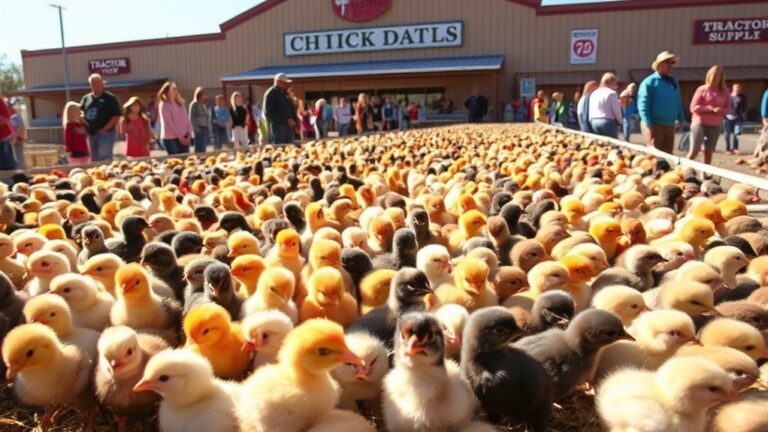
Backyard Chickens for Beginners: 7 Essential Steps
If you’ve ever wanted to raise your own chickens but felt overwhelmed by where to start, you’re not alone. Many people struggle with choosing the right breeds and setting up a proper space for their flock.
Backyard chickens for beginners can seem tricky, but with the right guidance, you’ll be clucking confidently in no time.
Start by choosing breeds that fit your goals, like Leghorns for eggs or Buff Orpingtons for calm pets.
Next, check local rules, zoning, and any permit limits before you set up space.
Build a dry, well-ventilated coop with nest boxes, roosts, and a secure run.
Feed chicks and hens the right diet, give fresh water, and handle them gently.
Lock up at dusk, watch for illness, and you’ll be ready for the next smart step.
Key Takeaways
- Choose chicken breeds that match your goals, space, and temperament preferences, such as egg layers, dual-purpose birds, or friendly pets.
- Check local ordinances, zoning rules, noise limits, and permit requirements before bringing chickens home.
- Pick a coop site with sunlight, shade, drainage, and easy access for cleaning and daily maintenance.
- Build a secure coop with nesting boxes, roosts, ventilation, predator-proof locks, and a safe run.
- Feed chickens properly, monitor their health daily, socialize them gently, and protect them from predators.
Choose the Best Backyard Chicken Breeds

Choosing the right backyard chicken breeds makes the rest of your setup easier, so start by thinking about your goals: eggs, meat, pets, or a mix of all three. If you want steady egg production, look at dependable layers like Leghorns, Australorps, or Rhode Island Reds.
If you prefer a calmer flock, choose friendly breeds such as Buff Orpingtons or Plymouth Rocks. For a dual-purpose option, many heritage breeds give you both decent meat and solid laying habits, while also fitting well into small backyard flocks.
You should also think about climate, because some birds handle heat or cold better than others. Match breed size and temperament to your space, and avoid picking chickens just because they look cute. When you choose birds that fit your needs, you’ll spend less time correcting problems and more time enjoying fresh eggs, healthy hens, and a flock that suits your routine.
Check Local Rules and Prepare Your Space

Before you bring chickens home, it’s a good idea to check your local ordinances. That way, you’ll know the rules about flock size, setbacks, and permits. Once you’re clear on that, pick a spot for the coop that has good drainage, plenty of sunlight, some shade, and is easy to get to for cleaning. Take a walk around your yard and fix up any hazards you find. Your birds will need a safe space right from the start.
Local Chicken Ordinances
Even if your hens seem harmless, local chicken rules can shape everything from how many birds you can keep to where you can place the coop. Check your city, county, and HOA rules before you buy chicks.
Chicken zoning may limit flock size, ban roosters, or require permits, while noise regulations can affect how close your birds may live to neighbors.
Call the zoning office or read the ordinance online so you don’t miss setbacks, licensing fees, or sanitation standards.
Once you know the rules, measure your yard and mark the area you can legally use. Clear debris, level the ground, and plan for drainage, access, and fencing so your future flock starts in a compliant, safe, and organized space.
Coop Placement Basics
Now that you know the rules, pick a coop spot that fits your yard and keeps your hens comfortable, safe, and easy to manage. Aim for steady sunlight exposure in the morning, light afternoon shade, and good drainage considerations so rainwater won’t pool under the coop.
Choose level ground, then clear grass, roots, and debris before you set anything up. A simple plan helps you compare options:
| Spot | Sunlight | Drainage |
|---|---|---|
| Near fence | Morning sun | Usually fair |
| Open corner | More sun | Check runoff |
| Raised area | Balanced light | Best drainage |
Leave room to open doors, refill feeders, and clean efficiently. Keep the coop close enough for daily care, but far enough from windows or patios that noise won’t bother you.
Yard Safety Checklist
Check your local rules first, then prepare the yard so your hens can live safely and your neighbors stay happy. Call your city or county office, and confirm setbacks, permit limits, noise rules, and flock size.
Next, walk your property and remove backyard hazards like broken glass, toxic plants, standing water, loose wire, and gaps under sheds. Install chicken proof fencing around the run and seal openings wide enough for raccoons, dogs, or hawks to exploit.
Lock gates with sturdy latches, and add a covered top if predators fly in. Protect garden beds, compost, and pools with barriers. Keep feed in sealed bins, and store tools where hens can’t reach them.
A careful yard setup cuts risks, protects your birds, and makes daily care easier for you.
Build a Weatherproof Coop and Secure Run
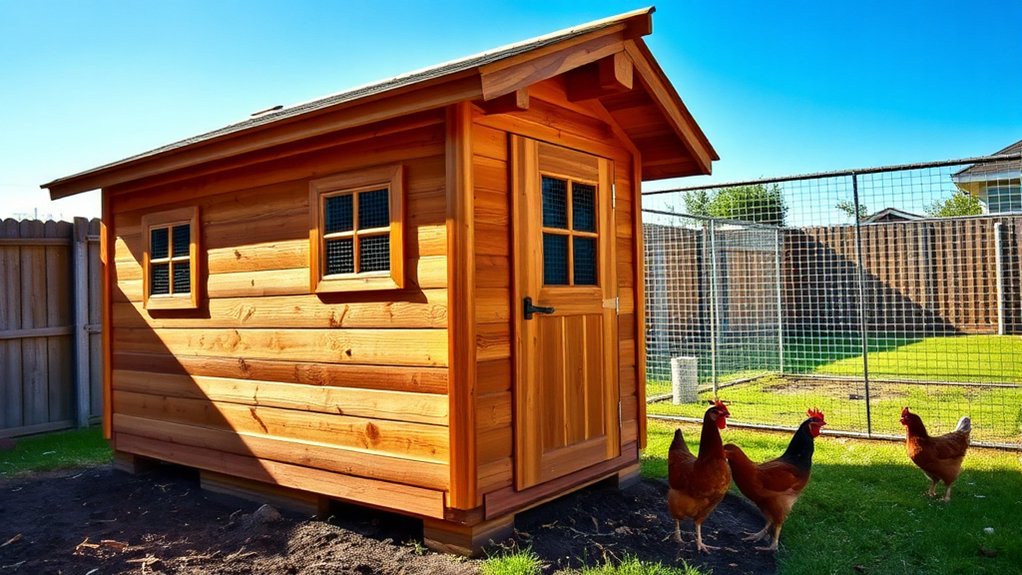
You’ll want a coop that stays dry, cool, and well-ventilated so your chickens stay healthy all year round. It’s important to use weather-resistant materials and build it sturdy to keep out rain, wind, and harsh sun.
Next, you’ll want to create a predator-proof run. Use strong wire, secure locks, and make sure there are no easy gaps for any unwanted visitors to sneak in. That way, your chickens will be safe and sound.
Coop Ventilation Basics
Good ventilation keeps your coop dry, reduces odors, and helps prevent respiratory problems, even in cold or rainy weather. You should plan for ventilation types that match your coop’s size and climate, such as ridge vents, soffit openings, or screened windows placed high on the walls.
These openings let stale air escape while keeping drafts off your chickens roosting below. The airflow importance is simple: fresh air removes moisture from droppings, bedding, and breath, which helps protect combs, lungs, and feet.
You don’t need huge gaps; you need steady, controlled exchange. Check that warm air can rise and exit naturally, and adjust openings seasonally if needed. If you notice damp walls or strong smells, improve ventilation right away.
Predator-Proof Run
A predator-proof run gives your chickens a safe place to scratch, stretch, and sunlight-bathe without constant risk from hawks, raccoons, dogs, and other threats. You should plan your run design with strong fencing, buried edges, and a roof or cover that blocks climbing and flying predators.
Add security measures like latches that lock tightly, a small access door, and hardware cloth on every opening. Keep the layout simple so you can inspect corners fast and spot damage early.
Picture your flock under:
- taut wire mesh
- a shaded dust bath
- a low coop doorway
- buried apron fencing
- a secured gate latch
Walk the perimeter daily, fix gaps immediately, and remove hiding spots near the fence so predators can’t sneak close.
Weather-Resistant Materials
Even the best coop and run need materials that can handle rain, sun, wind, and freeze-thaw cycles without rotting or warping. Choose rot-resistant lumber, exterior-grade plywood, and galvanized hardware so you can protect every seam and edge.
Seal joints with exterior caulk, then paint or stain all exposed surfaces for extra defense. Install waterproof roofing, like metal panels or quality shingles, with proper overhangs to shed water away from walls.
Inside, add insulation materials that stay dry and won’t crumble, such as rigid foam sealed behind smooth panels. For the run, use coated wire and pressure-treated posts anchored above soggy ground.
When you build with durable, weatherproof components, you’ll reduce repairs, keep the coop drier, and give your chickens a safer, more comfortable home year-round.
Add Nest Boxes, Roosts, and a Run Area
To keep your flock comfortable and productive, give the coop a few essentials: nest boxes for laying, roosts for sleeping, and a secure run for exercise. Place one nest box for every three hens, and keep the nest box design simple, dark, and easy to clean.
Give your flock the basics: nest boxes, roosts, and a secure run for comfort and productivity.
Set roosts higher than the boxes, but not so high that birds can’t jump safely. The right roosting height helps them settle without injury. Outside, build a run with sturdy fencing, shade, and dry footing so your chickens can scratch, dust-bathe, and stay protected.
- Soft straw lined nest boxes
- Smooth wooden roost bars
- A fenced run with sunlight
- A shaded corner for hot afternoons
- Space for dust bathing and pecking
Check doors, latches, and wire often. Add these features before your first birds arrive, and you’ll make daily care easier while giving your flock a calm, healthy home.
Feed Chickens for Healthy Growth and Eggs
Once your coop and run are ready, feed becomes the next big piece of healthy chicken care. Give your flock a quality layer or starter feed that matches their age, because balanced nutrition supports steady growth, strong feathers, and reliable eggs. Chicks need higher protein, while adult hens do best on layer pellets with added calcium.
Keep fresh water available at all times, and refresh it daily so they’ll keep eating well.
Set a simple feeding schedule, and offer feed at the same times each day. This helps chickens stay active and reduces waste. You can also provide scratch grains sparingly as a treat, but don’t let treats replace complete feed.
Avoid moldy leftovers and stale grain, since they can upset digestion. If you free-feed, use a feeder that stays clean and dry.
Watch your birds closely, and adjust portions if they’re leaving too much behind or acting hungry. Good feeding habits now will pay off with healthier hens and better eggs later.
Handle, Tame, and Socialize Your Flock
Gentle, regular handling helps your chickens learn that you’re safe and predictable, which makes daily care much easier. Start slowly and let them approach you first. Offer treats from your hand, speak softly, and keep your movements calm. These chicken bonding techniques build trust without stress.
A hen pecking grain from your palm
Soft clucks in a quiet coop
Feathers settling as you stroke her back
A chick stepping onto your boot
Birds gathering around you at dusk
Pick up each bird securely, supporting its body and feet, then set it down quickly. Use positive reinforcement when they stay relaxed, such as a favorite snack or gentle praise. Short, frequent sessions work better than long ones.
Let different family members participate so your flock recognizes multiple voices and hands. When you socialize them this way, your chickens become easier to manage, less fearful, and more comfortable around everyday activity in your yard.
Prevent Predators and Keep Chickens Healthy
While your flock settles into a routine, you’ll need to protect it from predators and stay ahead of health problems. Lock your coop at dusk, reinforce vents with hardware cloth, and bury fencing to stop raccoons, foxes, and dogs. Keep feed in sealed bins so you don’t attract mice or rats, and collect eggs often to reduce egg theft.
Give your birds a dry run, clean bedding, and plenty of space to limit stress and pecking.
Watch daily for droopy posture, coughing, mites, limping, or reduced appetite. Isolate any bird that looks off, and call a poultry vet if symptoms linger. Fresh water, balanced feed, and clean dust baths support flock health.
Wash hands after handling birds, and sanitize tools to protect food safety when you gather eggs or clean the coop. Rotate pasture if you can, and remove spoiled feed, standing water, and droppings regularly.
Small habits like these keep your chickens safer and healthier.
Frequently Asked Questions
How Many Chickens Should a Beginner Start With?
Start with 3 to 6 chickens. You’ll learn faster with a small flock, and you can still collect enough eggs for your household. Choose calm chicken breeds that fit your climate and goals.
Make sure your coop size gives each bird at least 3 to 4 square feet inside, plus outdoor run space. With fewer birds, you’ll manage feeding, cleaning, and health checks more easily while you build confidence.
When Do Chicks Begin Laying Eggs?
Chicks usually begin laying eggs at about 18 to 24 weeks old, though chick growth, breed, and care can shift that timeline. You’ll often see pullets start egg production sooner in small, fast-maturing breeds, while larger breeds may take a bit longer.
Make sure you provide balanced feed, clean water, and enough light, and you’ll help your birds mature well and lay strong, healthy eggs on schedule.
Can Backyard Chickens Live With Other Pets?
Yes, backyard chickens can live with other pets if you manage introductions, supervise pet interactions, and watch chicken behavior closely. You’ll want calm dogs, non-predatory cats, and secure fencing so everyone stays safe.
Introduce pets slowly, separate them at first, and give your chickens escape space. You should never trust instincts alone; you need training, patience, and constant monitoring to keep your flock and other pets peaceful.
How Noisy Are Hens Compared to Roosters?
Hens are much quieter than roosters, so you’ll usually notice only brief clucks, cackles, and alerts. Roosters crow loudly and often, especially at dawn, while hens keep their noise levels lower and more predictable.
Still, hen behavior can get louder when they’re laying, excited, or startled. If you want a calmer flock, you’ll likely prefer hens because they’re far less likely to disturb neighbors or wake you early.
What Should I Do With Chicken Manure?
You should collect chicken manure often and store it in a dry, covered bin so odors don’t spread and flies stay away. Mix it with carbon-rich bedding, like straw or leaves, then let it age before using it.
Composting benefits your garden by turning waste into rich, crumbly fertilizer. Never spread fresh manure on edible crops; let it break down first, and you’ll feed your soil safely and naturally.
Conclusion
With these seven steps, you’re ready to start your backyard flock with confidence. Choose hardy breeds, set up a safe coop, and feed your chickens well so they thrive and lay regularly.
Spend time handling them gently, and you’ll build a calm, friendly flock. Stay alert for predators and health issues, and your birds will reward you with eggs and charm.
In this tiny renaissance of backyard living, you’ve got everything you need to begin your backyard chickens for beginners journey.