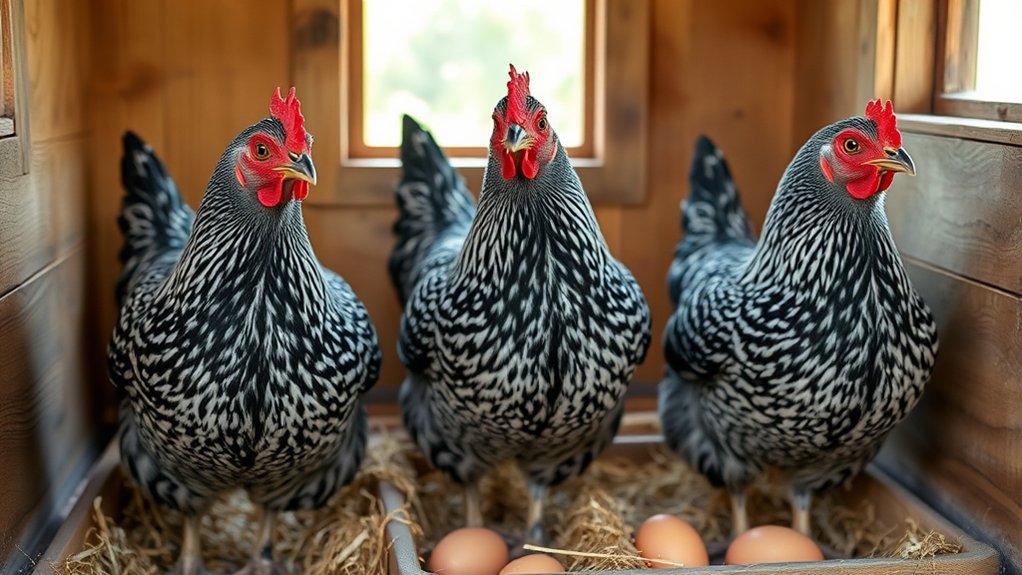
3 Key Facts About Barred Plymouth Rock Egg Production
If you’ve ever tried raising Barred Plymouth Rock hens, you know how tricky it can be to keep their egg production consistent. You’re not alone—many people struggle with understanding what affects their laying patterns and how to manage these changes effectively.
You can expect a Barred Plymouth Rock hen to lay between 200 and 250 eggs annually if you provide a balanced diet rich in protein and calcium.
Their egg production slows down during molting, a natural process when hens regrow feathers.
Seasonal changes also affect laying, with more eggs in spring and summer due to longer daylight.
Understanding these factors helps you manage your flock better and maintain steady egg production throughout the year. There’s more to learn about their laying habits and care.
Key Takeaways
- Barred Plymouth Rock hens typically lay 200 to 250 eggs annually with steady production supported by balanced nutrition.
- Egg production in Barred Plymouth Rocks decreases or stops during their natural annual molting period.
- These hens produce eggs with firm texture and rich yolks, indicating high nutritional value and quality.
- Egg laying peaks in spring and summer because of longer daylight hours. Shorter days reduce production.
- Supplemental lighting can help maintain consistent egg production during fall and winter months for this breed.
How Many Eggs Can You Expect From Barred Plymouth Rocks?
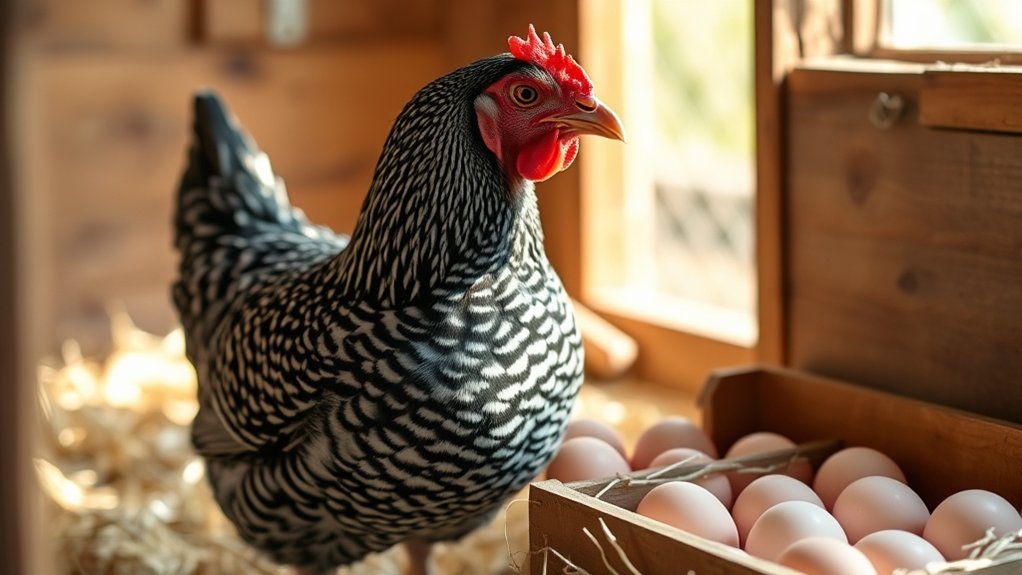
Although individual hens may vary, you can generally expect a Barred Plymouth Rock hen to lay around 200 to 250 eggs per year. To maintain this steady production, you’ll need to meet their feeding requirements with a balanced diet rich in protein, calcium, and essential nutrients. Proper nutrition supports consistent egg laying and overall health.
Be aware that molting patterns will temporarily affect egg production. During molting, which usually happens annually, hens shed old feathers and focus energy on regrowth, causing a natural pause in laying. You’ll notice fewer or no eggs during this period, but production typically resumes afterward.
Why People Love Barred Plymouth Rock Eggs

Understanding the egg production of Barred Plymouth Rocks gives you a solid foundation for appreciating why their eggs are so popular. People love these eggs because they offer impressive nutritional benefits, including a good balance of protein, vitamins, and minerals that support a healthy diet.
When you crack open a Barred Plymouth Rock egg, you’ll notice the rich yolk color and firm texture, which contribute to a delightful flavor profile that’s both creamy and mildly sweet. This makes their eggs perfect for everything from simple breakfasts to gourmet dishes.
You’ll also appreciate that these eggs tend to have a consistent size and quality, making them reliable whether you’re cooking or baking. The combination of taste, nutrition, and dependability means you’re not just getting eggs, you’re getting a wholesome, flavorful ingredient that improves every meal.
That’s why Barred Plymouth Rock eggs have earned a special place in many kitchens.
How Barred Plymouth Rocks’ Egg Laying Changes With the Seasons
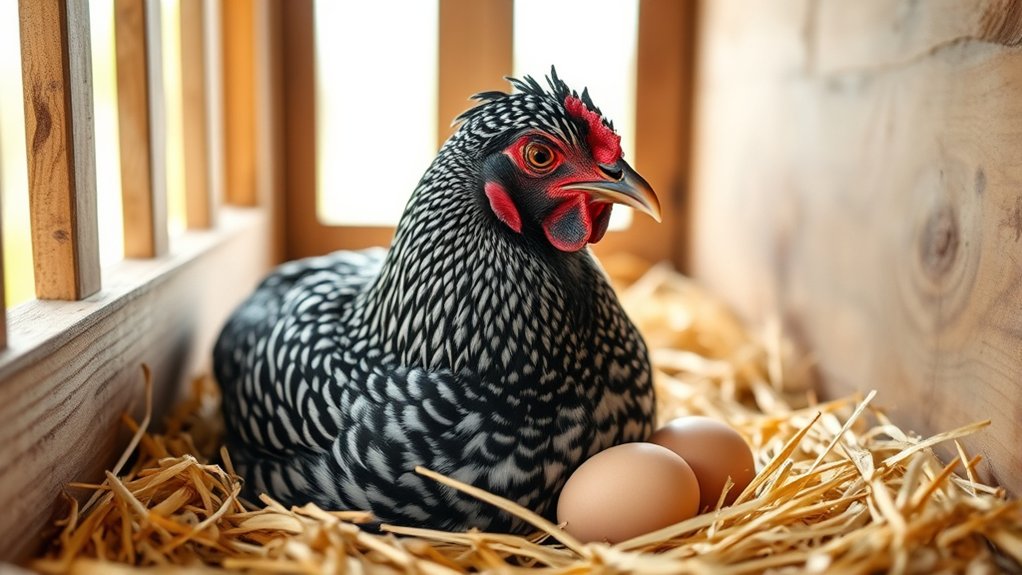
Because daylight and temperature directly affect their biology, Barred Plymouth Rocks lay eggs at different rates throughout the year. You’ll notice their egg production peaks during longer days in spring and summer when seasonal daylight variations provide more light. This extended light exposure triggers their reproductive system, encouraging consistent laying.
As daylight shortens in fall and winter, their egg laying naturally slows. You’ll also see a molt impact on laying during late summer or early fall. When they molt, hens shed old feathers and grow new ones, which demands energy, so they temporarily reduce egg production.
Understanding these seasonal patterns helps you manage expectations and care for your flock accordingly. You can provide supplemental lighting in darker months to maintain steady laying if desired, but be mindful of their natural cycles. Adapting to these changes ensures your Barred Plymouth Rocks stay healthy and productive year-round.
Frequently Asked Questions
What Do Barred Plymouth Rock Chickens Eat for Optimal Egg Production?
You should follow consistent feeding schedules to meet your Barred Plymouth Rock chickens’ nutritional requirements for ideal egg production. Provide a balanced diet rich in protein, calcium, and essential vitamins.
Offer layer feed formulated specifically for egg-laying hens, supplemented with grit and oyster shell for strong eggshells. Fresh water is a must.
Feeding them at regular times guarantees they stay healthy and productive, helping you maintain steady egg production throughout the year.
How Long Do Barred Plymouth Rock Hens Typically Live?
Barred Plymouth Rock hens typically live around 6 to 8 years, but with proper feeding schedules, you can help extend their lifespan. Consistent nutrition and balanced diets play a big role in their health and longevity.
You should also consider factors like living conditions, disease prevention, and stress reduction. Keeping their environment clean and providing regular care will help your hens stay productive and healthy for as long as possible.
Can Barred Plymouth Rocks Be Raised in Small Backyard Coops?
Yes, you can raise Barred Plymouth Rocks in small backyard coops. Just make sure your coop design includes proper ventilation and enough space for them to move comfortably.
Don’t forget predator protection. Secure all openings with hardware cloth and lock doors firmly to keep foxes, raccoons, and other threats out. With a well-planned coop, you’ll enjoy healthy, happy hens even in limited spaces.
What Colors Are Barred Plymouth Rock Eggs?
Barred Plymouth Rock eggs typically come in a light brown color, but you might notice some color variation depending on factors like diet and environment. Eggshell pigmentation plays a key role in this, giving each egg its unique shade.
While mostly consistent, slight differences in pigmentation can make the eggshells appear a bit darker or lighter. When you collect eggs, expect mostly soft brown tones with subtle variations in color.
How Do Barred Plymouth Rocks Compare to Other Breeds in Temperament?
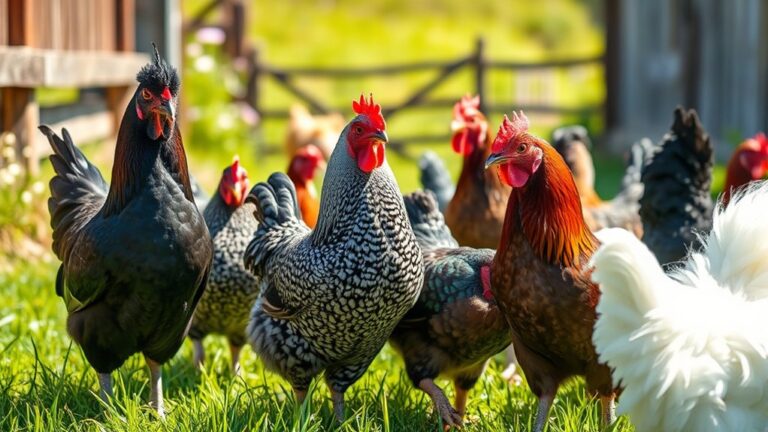
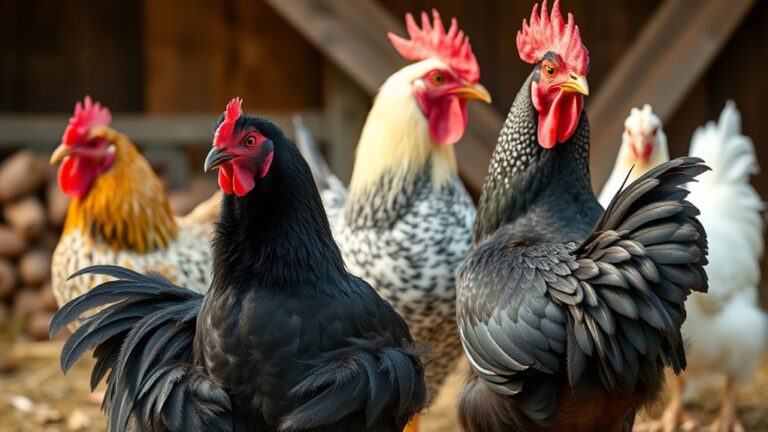
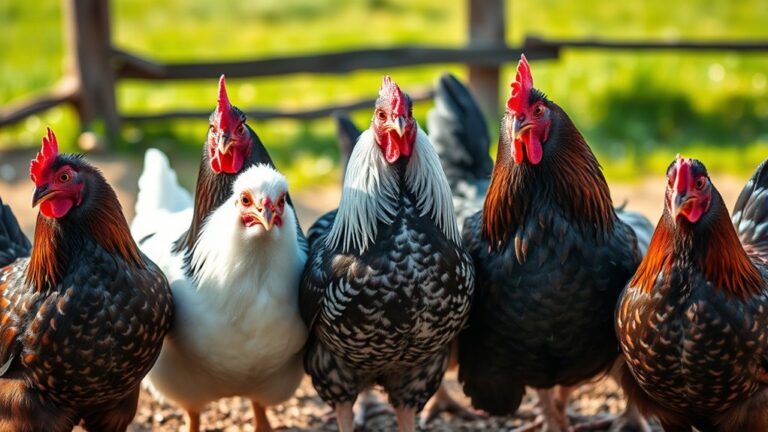
You’ll find Barred Plymouth Rocks are particularly friendly, making them a great choice if you want a calm flock. Their feather coloration, a striking barred pattern, reflects a breed history rooted in hardiness and docility.
Compared to other breeds, they’re less skittish and more social, which makes handling easier. If temperament matters to you, their balanced personality pairs well with their attractive look and historic background, standing out among many breeds.
Conclusion
You can expect around 200 to 280 eggs per year from Barred Plymouth Rocks, which is pretty impressive for a dual-purpose breed. This means you’re not just getting great eggs but also a hardy, friendly bird that adapts well to different seasons.
Knowing their seasonal laying patterns helps you plan better and enjoy a steady supply. So, if you want reliable egg production with a charming chicken, Barred Plymouth Rocks are a smart choice.