How to Measure Barred Rock Chicken Egg Size Accurately
Measuring the size of your Barred Rock chicken eggs accurately can feel tricky, and you’re not alone if you’ve struggled with it. Many chicken keepers want to track egg size to monitor their flock’s health or improve productivity but don’t know the best way to do it. Getting precise measurements is easier than you think once you have the right tools and techniques.
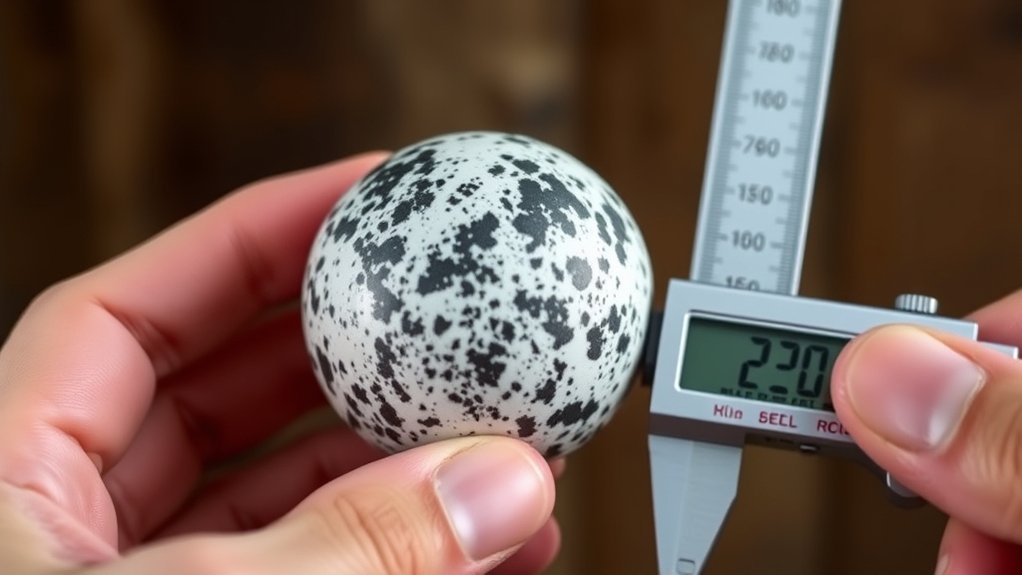
To measure your Barred Rock chicken eggs accurately, use a precise caliper or digital scale to record their length, width, and weight consistently. Clean and calibrate your tools before use, then measure length from tip to base and width at the widest point.
For volume, gently submerge the egg in water and note the displaced amount.
Keep notes on feed and nest box placement, as these affect size. Understanding these details helps improve your flock’s productivity and health insights.
Key Takeaways
- Use a precise caliper or a specialized egg measuring tool to measure the egg’s length and width accurately.
- Weigh eggs on a calibrated digital scale for consistent measurement of egg weight.
- Measure eggshell thickness with a micrometer to assess shell quality and size variations.
- Record measurements consistently, noting the egg’s date, nest box location, and any diet changes.
- Use water displacement in a graduated container to determine egg volume for precise size assessment.
Why Measuring Barred Rock Egg Size Matters
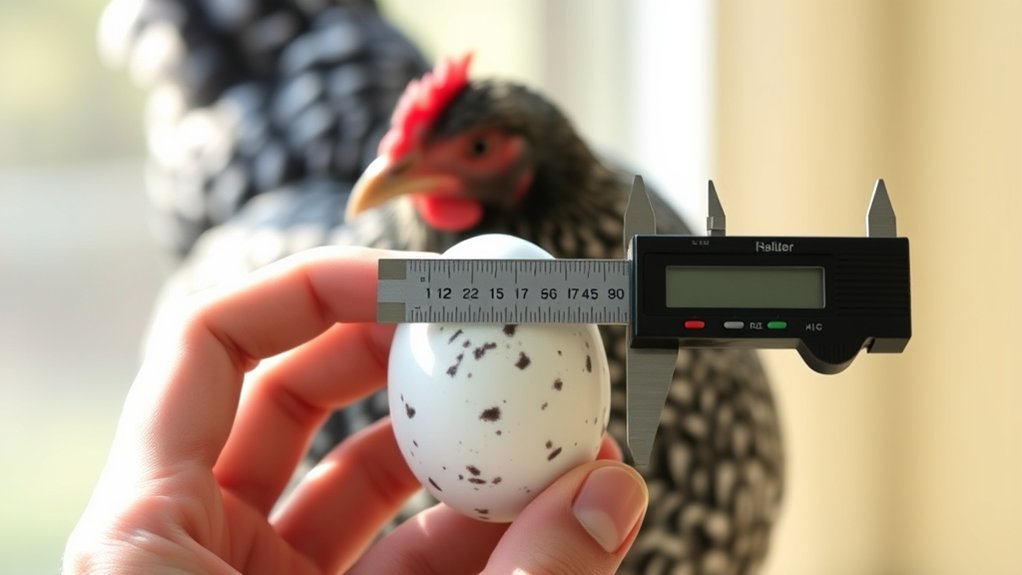
Although it might seem trivial, measuring your Barred Rock chicken’s egg size matters because it directly affects your flock’s productivity and market value. When you keep track of egg size, you can better understand the nutritional content each egg provides, guaranteeing you meet dietary needs or customer expectations.
Larger eggs often contain more nutrients, which can be a selling point if you market your eggs.
Additionally, egg size plays a vital role in egg incubation success. If you know the size range of your eggs, you can adjust incubation settings like temperature and humidity more accurately, increasing hatch rates.
Smaller or irregularly sized eggs might require special attention during incubation to ensure healthy chick development.
What Tools You Need for Accurate Egg Measurement
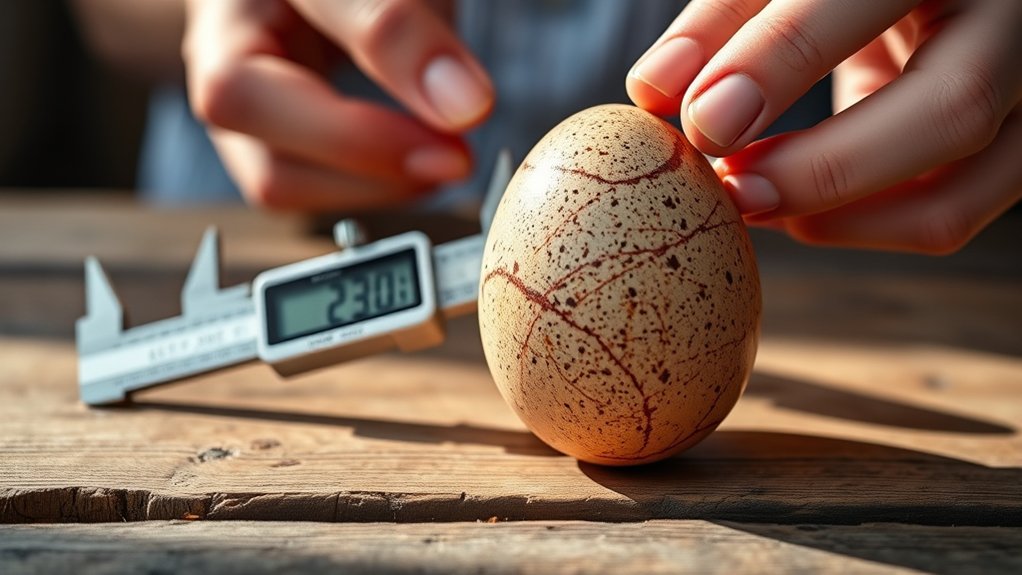
To measure Barred Rock chicken eggs accurately, you’ll need the right tools on hand. Start with a precise caliper or a specialized egg measuring device to gauge the egg’s length and width. This helps you understand size variations influenced by hen age, as younger hens often lay smaller eggs with thinner shells.
A micrometer can be handy for evaluating egg shell thickness, which varies depending on the hen’s diet and maturity. Don’t forget a quality digital scale for weighing eggs, but we’ll explore scales later.
Using these tools together gives you a clear picture of each egg’s size and quality. Keep your equipment clean and calibrated for consistent results.
Picking the Best Scale for Your Barred Rock Eggs
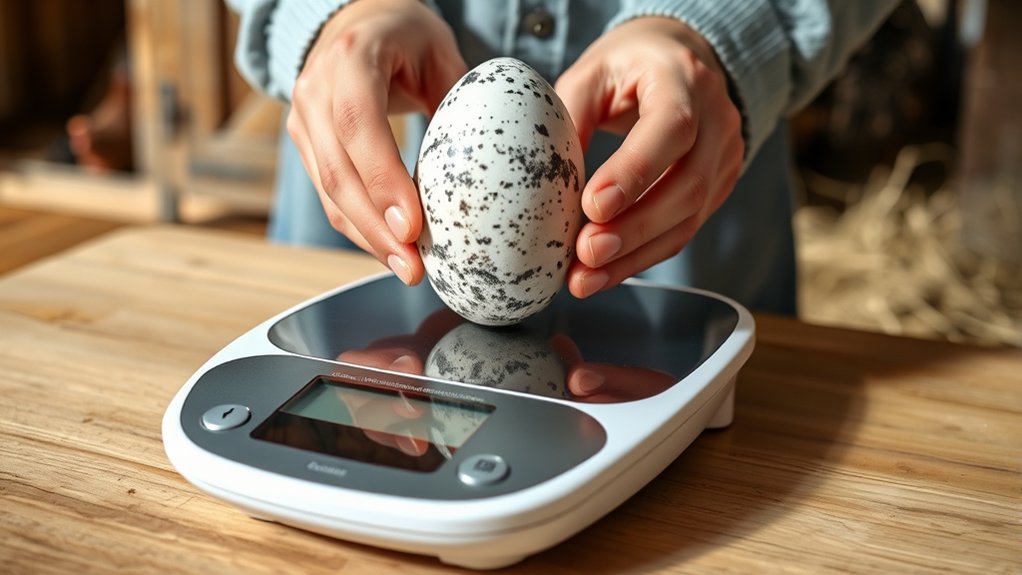
When you choose a scale for your Barred Rock eggs, accuracy and ease of use should be your top priorities. A precise scale helps you with egg grading, ensuring you classify each egg according to size consistently. This consistency also reflects the quality of hen nutrition, as healthier hens produce eggs with more uniform weight.
Look for a scale with a minimum 0.1-gram accuracy and a stable platform to avoid measurement errors.
Here’s a quick comparison of popular scales:
| Scale Type | Key Feature |
|---|---|
| Digital Pocket | Portable, accurate |
| Kitchen Scale | Larger platform |
| Laboratory Scale | High precision |
| Mechanical Scale | Durable, no batteries |
| Smart Scale | App connectivity |
Choose the one that fits your routine and budget. Remember, accurate weighing is essential for reliable egg grading and tracking how hen nutrition influences egg size.
Step-by-Step Guide to Measuring Egg Length and Width
First, grab your measuring tools—something like a caliper or a ruler works great to make sure your measurements are accurate. Then, gently position the egg so you can measure its length from the tip all the way to the base. After that, find the egg’s widest point to measure its width. Finally, jot down each measurement carefully to keep a consistent record of your Barred Rock eggs.
Preparing Measurement Tools
Although measuring egg size might seem straightforward, having the right tools prepared guarantees accuracy and consistency. Start by gathering a digital caliper or a precise ruler for measuring the egg’s length and width.
Confirm your caliper can handle delicate surfaces without damaging the eggshell, as eggshell thickness can vary and affect measurement precision. You’ll also want a soft cloth to clean the egg gently before measuring, avoiding dirt that might skew results.
Since eggshell thickness links to nutrient content, accurate size measurements help track egg quality over time. Finally, have a flat, stable surface ready to hold the egg steady during measurement. Preparing these tools beforehand will make your process smoother and your data more reliable.
Recording Egg Dimensions
With your tools ready and the egg gently cleaned, you can begin recording the egg’s length and width accurately. Place the egg on a flat surface and use a caliper or ruler to measure the longest part of the egg for its length.
Next, measure the widest part for the width. Note these dimensions carefully, as they help track changes influenced by factors like eggshell thickness and hen age. Younger hens usually lay smaller eggs with thinner shells, while older hens produce larger eggs with thicker shells.
How to Measure Barred Rock Egg Size Using Volume Displacement
When you want an accurate measurement of a Barred Rock chicken egg’s size, volume displacement offers a reliable method. Fill a graduated container with water and note the initial level. Gently submerge the egg without touching the sides, then record the new water level.
The difference gives you the egg’s volume in milliliters, reflecting its true size. This approach accounts for variations like eggshell thickness, which can affect other measurement methods.
Keep in mind that hen age influences egg size and shell density. Older hens often lay larger eggs with slightly thinner shells, impacting volume readings. By using volume displacement, you get a precise measurement regardless of these factors.
This method helps you compare eggs accurately, ensuring you understand size variations within your Barred Rock flock. It’s a straightforward, effective technique for anyone focused on detailed egg size assessment.
Common Egg Measurement Mistakes to Avoid
Measuring Barred Rock chicken eggs accurately requires careful attention, or you risk skewing your results. Common mistakes can lead you to misjudge egg size, especially if you overlook factors like eggshell composition and hen age patterns. For example, eggshell thickness varies with hen age, impacting volume measurements if you’re not consistent.
Avoid these pitfalls:
- Using cracked or dirty eggs, which alters volume and weight.
- Ignoring temperature effects that change eggshell density.
- Measuring eggs immediately after collection without letting them stabilize.
- Overlooking variations caused by different eggshell composition in older hens.
- Relying solely on length and width without considering shape irregularities.
What Affects Barred Rock Egg Size?
Although many factors influence egg size, understanding what affects Barred Rock eggs can help you predict and manage their quality better. Genetics play a major role; your bird’s breed lineage determines the potential size range of its eggs. Barred Rocks, known for medium to large eggs, inherit traits that set a baseline for egg dimensions.
However, environmental influences also markedly impact egg size. Temperature, lighting, and nutrition directly affect your hen’s egg production. For instance, insufficient protein or calcium can lead to smaller or weaker eggs. Stress from overcrowding or poor coop conditions might also reduce egg size.
What Your Barred Rock Egg Size Says About Health
Because egg size often reflects a hen’s health, paying attention to your Barred Rock’s eggs can give you valuable insights into her well-being. Larger or smaller eggs than usual might signal changes in her diet, stress levels, or overall condition. You should also note that nutritional content and egg color variations often correlate with her health.
Here’s what your Barred Rock’s egg size and appearance might tell you:
- Small eggs could mean she’s young or lacking nutrients.
- Very large eggs might indicate overfeeding or reproductive issues.
- Consistent size suggests good health and balanced nutrition.
- Changes in egg color variations can point to diet shifts or illness.
- Abnormal shell texture or thickness often signals calcium or vitamin deficiencies.
How to Record and Track Egg Measurements Over Time
When you start tracking your Barred Rock’s egg measurements regularly, you’ll gain valuable data to spot trends and detect potential health issues early. Begin by setting up a simple log. Use a notebook or a digital spreadsheet to record each egg’s size, weight, and the date laid.
Note the specific nest box placement, as changes here can affect egg size and hen comfort. Consistent placement helps you identify environmental impacts on egg quality.
Include details about feed supplementation, since diet directly influences egg development. Record any changes in feed type or quantity alongside measurements to see correlations.
Regularly review your data to catch size fluctuations that might signal health problems or nutritional gaps. This methodical tracking not only informs your care routine but also helps maintain your flock’s overall well-being.
Using Egg Size Data to Boost Flock Productivity
If you track egg size data carefully, you can make smarter decisions that boost your flock’s productivity. Understanding how egg size relates to nutritional content and breed genetics helps you maximize feeding and breeding strategies. Larger eggs often indicate better nutrition or favorable genetics, so monitoring size trends guides improvements.
Use egg size data to:
- Adjust feed formulations to improve nutritional content for ideal egg growth.
- Select hens with genetics that consistently produce preferred egg sizes.
- Identify underperforming birds for targeted care or replacement.
- Schedule breeding to improve size and overall flock quality.
- Monitor environmental factors impacting egg size and adjust conditions.
Frequently Asked Questions
What Is the Average Lifespan of a Barred Rock Chicken?
You can expect a Barred Rock chicken to live around 6 to 8 years, depending on factors like hen nutrition effects. Proper nutrition not only supports their health but also influences egg size classification by promoting consistent egg quality.
To keep your hen healthy and laying well, provide a balanced diet rich in vitamins and minerals. This care extends their lifespan and maintains ideal egg production throughout their years.
How Often Do Barred Rock Chickens Lay Eggs?
Barred Rock chickens typically lay eggs five to six times a week, giving you a steady egg production frequency. You’ll notice their egg size classification usually falls into the large category, perfect for most recipes.
Keep in mind, their production slows down during molting or colder months. To get consistent egg size classification, track their laying patterns regularly, so you can plan accordingly and enjoy fresh eggs almost daily.
What Are Common Diseases Affecting Barred Rock Chickens?
You’ll face common diseases like Marek’s, coccidiosis, and avian influenza. You’ll watch for respiratory infections, parasites, and bacterial illnesses.
To maintain genetic health and support disease prevention, you’ll keep your flock clean, vaccinate regularly, and provide balanced nutrition. You’ll isolate sick birds promptly and monitor their behavior closely.
Can Barred Rock Chickens Adapt to Cold Climates?
Yes, your Barred Rock chickens have excellent cold tolerance and adapt well to winter conditions. Their dense feathers and hardy nature help them stay warm during chilly weather.
You should still provide shelter that blocks wind and moisture to support their winter adaptation. By ensuring they have dry bedding and access to unfrozen water, you’ll keep them comfortable and healthy even in colder climates.
How Do You Sex Barred Rock Chicks Accurately?
To sex Barred Rock chicks accurately, you need to observe their feather patterns and vocalization differences. Females typically have more defined barring on their wings and bodies, while males show lighter, less consistent feather patterns.
Also, listen closely. Males usually have deeper, louder vocalizations, whereas females sound softer and higher-pitched. Combining these clues early on helps you tell genders with confidence before they grow bigger.
Conclusion
Measuring your Barred Rock eggs accurately can truly transform your flock’s care. Did you know the average Barred Rock egg weighs about 57 grams? Tracking this helps you spot health changes early and boost productivity.
With the right tools and methods, you’ll confidently monitor egg size, ensuring your hens stay healthy and productive. Keep measuring, recording, and using that data. You’ll see your flock thrive like never before by accurately measuring Barred Rock chicken egg size.