Can Chickens Eat Broccoli?
If you’ve ever wondered what healthy treats you can safely give your chickens, you’re not alone. Many chicken owners struggle to find snacks that are both nutritious and enjoyable for their flock.
It’s important to know what’s safe and beneficial, so your chickens stay happy and healthy without upsetting their diet. Can Chickens Eat Broccoli.
Yes, chickens can eat broccoli, and you can give it as a healthy treat in small amounts. Broccoli offers vitamins A, C, and K, plus fiber and hydration, but it shouldn’t replace their main feed.
You can serve it raw or lightly cooked, plain, and chopped into bite-sized pieces. Feed it once or twice a week and remove leftovers quickly.
If you want the details, there’s more to know about portions, prep, and safe feeding.
Key Takeaways
- Yes, chickens can eat broccoli as an occasional treat, not a main food source.
- Broccoli provides vitamins, fiber, water, and antioxidants that can support chicken health.
- Serve broccoli raw or lightly cooked, washed, chopped, and without salt or seasoning.
- Keep treats under 10% of daily intake and feed small amounts once or twice weekly.
- Watch for loose droppings or reduced appetite, and stop or reduce broccoli if these occur.
Can Chickens Eat Broccoli?
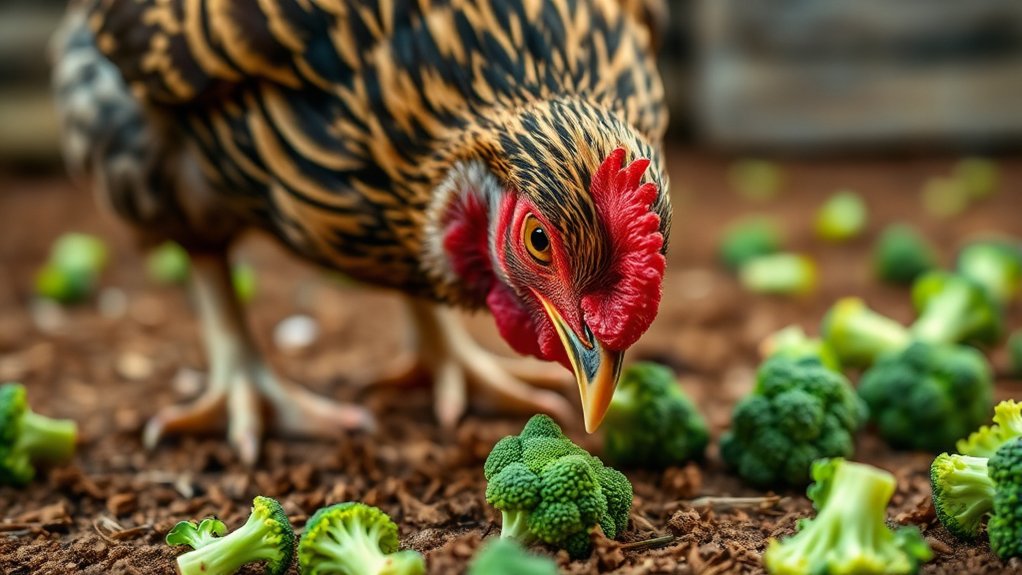
Yes, chickens can eat broccoli, and it can be a healthy treat when you feed it in moderation. You can offer it raw or lightly cooked, but avoid seasoning, butter, or sauces.
Broccoli benefits your flock as a varied treat, not a staple, so serve small amounts alongside their regular feed. You should watch how your birds react because chicken preferences vary a lot. Some hens peck at florets enthusiastically, while others ignore them or prefer chopped stems.
If you want to encourage interest, you can mix broccoli with other safe greens or hang a piece for pecking enrichment. Always remove leftovers before they spoil since fresh treats work best.
Broccoli Nutrition for Chickens

Broccoli brings a useful mix of nutrients to your chickens, including vitamins A, C, and K, plus fiber and minerals that support overall health. When you offer it, you’re adding a food with solid nutritional value that can complement their regular feed.
Broccoli offers chickens a nutritious boost of vitamins, fiber, and minerals to complement their regular feed.
The leafy florets and stems each contain water, plant compounds, and trace nutrients, so your flock gets a varied bite. You don’t need large amounts to notice broccoli benefits in a balanced diet, because even small servings add diversity.
The fiber can also help keep digestion moving normally, while the vitamins support basic body functions. Because broccoli is low in calories, it won’t crowd out the nutrients your chickens need from a complete ration.
Use it as a supplement, not a replacement, so your birds still get the protein, energy, and minerals they rely on every day.
Why Broccoli Can Benefit Chickens

Beyond basic nutrition, broccoli can be a smart treat for chickens because it adds variety, hydration, and extra plant compounds to their diet. You can use it to support chicken health in small ways that feel practical, not fancy. The crunchy stalks and tender florets give your flock something new to peck, which may keep feeding time interesting.
- It offers broccoli benefits like vitamins and minerals that complement ordinary feed.
- Its high water content can help your birds stay refreshed on warm days.
- The fibrous texture encourages natural foraging behavior and keeps chickens active.
- Antioxidants and plant compounds may support overall chicken health as part of a mixed diet.
When you rotate broccoli with other safe greens, you give your chickens a broader range of textures and nutrients. That variety can make their diet more engaging while still staying simple and manageable for you.
How Much Broccoli Chickens Can Eat
You can give your chickens small amounts of broccoli as a treat, but it shouldn’t be their main food. They still need to get most of their nutrition from a balanced feed. It’s best to offer broccoli only a few times a week to keep things balanced. Keep an eye out for any signs that you might be overdoing it, like loose droppings, a drop in their appetite for regular feed, or less interest in their usual meals.
Safe Broccoli Portions
Even though broccoli is safe for chickens, it should only make up a small part of their diet. Treats should stay under about 10% of their daily food intake. You can offer a few small florets or chopped stems as a supplement, not a meal.
Different broccoli varieties work well, but you should watch chicken preferences and choose the form they seem to eat most enthusiastically.
- Start with a bite-sized amount.
- Mix it with their usual feed.
- Remove any leftovers before they spoil.
- Keep portions small enough that grit and balanced feed still lead the way.
This approach helps you give broccoli safely without crowding out the nutrients your flock needs for steady health and egg production.
Feeding Frequency Limits
Broccoli works best as an occasional treat, not a daily staple, so feeding it once or twice a week is usually plenty for most chickens. Keep your feeding schedule simple and consistent, and use portion control to keep treats balanced with their regular feed.
| Frequency | Portion | Use |
|---|---|---|
| Once weekly | Small handful | Good for most flocks |
| Twice weekly | Few florets | Works for active birds |
| More often | Reduce amount | Keep treats limited |
You can offer broccoli raw or lightly steamed, but don’t make it the main snack. A modest amount lets your chickens enjoy variety without crowding out their normal diet.
If you’re unsure, start small and watch how your flock handles each serving. Consistency matters more than size when you plan treat time.
Signs Of Overfeeding
Too much broccoli can upset a chicken’s normal diet, so it helps to watch for signs that the treat amount is getting out of hand. You may notice overfeeding symptoms like loose droppings, reduced appetite for feed, or a swollen crop. Keep portion control tight and offer broccoli only as a small add-on, not a meal replacement.
- Watch for diarrhea after treats.
- Check if hens skip their balanced feed.
- Notice crop fullness that lasts too long.
- Cut back if birds seem sluggish or picky.
If you spot these changes, scale back broccoli and return to a steady, nutrient-rich ration. Fresh water and regular feed should always come first, with veggies staying a small bonus.
Raw or Cooked Broccoli for Chickens?
Whether you serve broccoli raw or lightly cooked, chickens can eat it safely in moderation. Your broccoli preparation choice depends on what your flock prefers and what’s easiest for you.
Raw florets give birds a crunchy treat that keeps their natural texture, while gentle cooking softens stems and can make older birds or small chicks nibble more easily. You don’t need fancy cooking methods; steaming or blanching works well, and you should skip salt, oil, and seasoning.
| Form | Texture | Best Use |
|---|---|---|
| Raw florets | Crunchy | Quick snack |
| Lightly steamed | Soft | Easier chewing |
| Chopped stems | Firm | Waste reduction |
| Mixed pieces | Varied | Foraging enrichment |
You can offer either form as part of a varied diet, but keep broccoli as a treat, not a staple. Rotate it with other vegetables so your chickens stay interested and balanced.
How to Serve Broccoli Safely
First, you’ll want to wash the broccoli thoroughly to get rid of any dirt and leftover pesticides. After that, chop it into small pieces so your chickens can eat it safely and easily. You can serve it raw, or if you prefer, lightly cook it for a simple, chicken-friendly treat.
Wash Thoroughly First
Before you offer broccoli to chickens, wash it thoroughly to remove dirt, pesticide residue, and any hidden debris. You should use simple cleaning techniques that keep the vegetable safe and appealing.
Rinse the florets under cool running water, then rub the surface gently with your hands. If you prefer other washing methods, soak the broccoli briefly in clean water and swish it to lift grit from tight spots.
- Check the stems and florets for soil.
- Rinse until the water runs clear.
- Shake off excess water before serving.
- Inspect again for any remaining debris.
Clean broccoli helps you reduce contamination risks and gives your flock a fresher treat.
Chop Into Small Pieces
Chop broccoli into bite-sized pieces so chickens can peck at it safely and easily. You’ll reduce the chance of choking and make it simpler for every bird to grab a share.
Keep the chop size small enough that combs and beaks don’t have to wrestle with tough stems, but not so tiny that the pieces scatter and waste. This feeding technique works well when you spread the broccoli on a clean tray, scoop it into a shallow dish, or toss it lightly into the run.
If you have younger chickens, cut the pieces even finer so they can eat without struggle. Watch how your flock reacts, and adjust the chop size if needed.
Small, manageable pieces help you serve broccoli in a practical, chicken-friendly way.
Serve Raw Or Lightly Cooked
Broccoli can be served raw or lightly cooked, and both options are safe for chickens when you keep it plain and simple. You can offer it straight from the garden or soften it briefly to make chewing easier. Keep your broccoli preparation free of salt, oil, butter, or seasonings since chickens need clean food.
Good feeding techniques also mean giving small portions so your flock can peck without waste.
- Rinse the broccoli well.
- Cut it into bite-size pieces.
- Serve it raw for a crunchy treat.
- Steam it lightly, then cool it before serving.
Watch how your birds respond and remove leftovers quickly. Fresh, simple broccoli fits a balanced treat routine and helps you serve greens safely.
Which Broccoli Parts Chickens Can Eat
Chickens can eat most parts of broccoli, including the florets, stems, and leaves, as long as you serve them in manageable pieces. You can offer the tender florets first since they’re easy to peck and usually the most appealing.
Chickens can eat most broccoli parts, including florets, stems, and leaves, if you serve them in manageable pieces.
The stems are fine too, but you should chop them into small chunks or shred them so your flock can handle them better. Don’t overlook the leaves; chickens often enjoy them, especially when you mix them with other greens.
Different broccoli types can vary a bit in texture, so you may notice your birds favor some parts over others. That’s normal because chicken preferences differ from flock to flock.
You can experiment with raw or lightly cooked pieces and see what your birds choose. If they leave tougher bits behind, cut them smaller next time and keep serving portions simple.
Risks of Feeding Chickens Too Much Broccoli
Even healthy treats can cause problems if you overdo them, and broccoli is no exception. If you feed your chickens too much, you may trigger digestive issues like loose droppings, gas, or reduced appetite.
Broccoli also contains compounds that can contribute to broccoli toxicity when it makes up too much of the diet, especially in birds with sensitive systems.
- Limit broccoli to a small treat, not a staple.
- Watch your flock after feeding it for changes in behavior.
- Cut back if you notice crop discomfort or messy droppings.
- Balance treats with their regular feed so nutrition stays steady.
You should keep portions modest and occasional. Too much broccoli can crowd out the balanced feed your chickens need for energy, growth, and egg production.
When you offer it sparingly, you lower the risk of digestive upset and help your birds enjoy the treat safely.
What Not to Serve With Broccoli
You shouldn’t serve broccoli with high-oxalate foods because too much oxalate can mess with your chickens’ nutrient balance. Also, avoid salty seasonings since they can stress your chickens’ kidneys and cause dehydration. And don’t forget to keep any toxic garden plants out of their food—that way, your flock stays safe while they eat.
High-Oxalate Foods
When you’re serving broccoli to chickens, avoid pairing it with other high-oxalate foods like spinach, beet greens, or Swiss chard, since those can add to the overall oxalate load in the diet. You’ll reduce high oxalate concerns and support better calcium absorption when you keep the menu balanced.
Broccoli works best as a modest treat, not a heavy mix with leafy greens that already carry more oxalates.
- Offer broccoli alone or with low-oxalate vegetables.
- Limit spinach, beet greens, and Swiss chard.
- Rotate treats so no single food builds up.
- Watch for a varied diet that supports health.
Salty Seasonings
Salty seasonings can turn a healthy broccoli treat into a poor choice for chickens, since excess sodium strains their system and offers no real nutritional benefit. You should skip garlic salt, onion salt, and seasoned blends, because chickens don’t need those additives on fresh broccoli.
Even small amounts can change the seasoning effects and make a simple snack less safe. If you want to add flavor, choose plain, unsalted broccoli or use safe salt alternatives like chopped herbs in tiny amounts, but keep it minimal.
You’ll protect your flock better by serving broccoli plain and letting it stay a crisp, nutrient-rich treat. When you avoid heavy seasoning, you reduce waste, support healthy hydration, and keep mealtime simple for your birds.
Toxic Garden Plants
Some garden plants can make broccoli a risky addition to your chickens’ diet, especially if they nibble on nearby leaves, stems, or trimmings. You should keep broccoli away from toxic plants that grow in your yard because chickens can peck at dangerous scraps while foraging.
Watch for garden hazards like these:
- Rhubarb leaves, which can upset digestion.
- Nightshade plants, including tomato and potato foliage.
- Foxglove, which contains potent heart toxins.
- Azaleas and rhododendrons, both highly poisonous.
If you feed broccoli, serve it in a clean area and remove any unknown greenery first. You’ll protect your flock by checking your garden beds, compost pile, and fence line for toxic plants before they roam.
Signs Chickens Tolerate Broccoli Well
If you introduce broccoli in small amounts, you can tell your chickens tolerate it well by watching their behavior and droppings. They should peck enthusiastically, eat steadily, and act normal afterward. You may notice they pick through different broccoli types, and their chicken preferences can show up quickly: some birds like florets, while others nibble stems or leaves.
Healthy chickens usually stay active, keep their appetite for feed, and don’t seem sluggish, bloated, or uncomfortable after eating broccoli.
Check their droppings over the next day. If the stools look close to normal, with no watery mess, unusual color, or mucus, that’s a good sign their digestion handled the treat well. You can keep offering broccoli as an occasional snack, but always in moderation.
If you see loose droppings, reduced appetite, or odd behavior, cut back and watch closely.
Frequently Asked Questions
Can Chickens Eat Broccoli Sprouts Safely?
Yes, you can feed chickens broccoli sprouts safely in moderation. You’ll want to wash them first and offer them as a treat, not a staple.
Broccoli nutrition gives them vitamins and fiber, but your flock may ignore them if they prefer other greens. Watch chicken preferences and start with a small amount to see how they react.
Too much of any treat can upset their diet, so keep portions limited.
Is Broccoli Soup Okay for Chickens?
No, you shouldn’t give chickens broccoli soup. You risk turning a simple snack into a culinary disaster. Soup ingredients often include salt, onions, garlic, cream, or spices, and those can upset your birds’ digestion or harm them.
Plain broccoli benefits chickens more when it’s raw or lightly cooked without additives. If you want to treat them, offer small, clean pieces of broccoli and fresh water instead.
Can Baby Chicks Have Broccoli?
Yes, you can give baby chicks tiny amounts of broccoli, but only as an occasional treat. Chop it very finely and offer it sparingly so it won’t crowd out chick nutrition.
Broccoli benefits include vitamins and fiber, but chicks need starter feed for balanced growth. Don’t add seasoning, oil, or soup.
Watch how they react, and if they seem bloated or ignore it, cut back right away.
Does Broccoli Change Egg Flavor?
Usually, broccoli won’t noticeably change egg flavor. You’ll still get the same mild taste unless you feed your hens a lot of strong-flavored foods overall.
Egg nutrition stays solid, too, because broccoli adds vitamins and minerals without harming quality. If you notice shifts, they’re usually subtle and tied to your hens’ whole diet, not broccoli alone.
Try feeding it as a treat, and you’ll keep flavor profiles pretty consistent.
Can Chickens Eat Broccoli Every Day?
Yes, you can feed chickens broccoli every day, but keep it as a sidekick, not the star. Broccoli benefits your flock with vitamins, fiber, and hydration, yet too much can upset their diet balance.
Follow feeding guidelines by offering small, chopped amounts alongside their regular feed. Think of broccoli as a green bonus, not the whole banquet. Variety keeps your chickens healthier, happier, and pecking with enthusiasm.
Conclusion
In the end, yes, you can feed your chickens broccoli in moderation. This veggie gives them vitamins, fiber, and a healthy treat they’ll usually enjoy.
Just don’t overdo it, and keep the portions small so their diet stays balanced. You know the old saying: too much of a good thing can be a bad thing.
Watch how your flock reacts, and you’ll know whether broccoli suits them well. Remember, when it comes to feeding chickens broccoli, moderation is key.