Why Is My Chicken Sneezing?
If you’ve ever heard your chicken sneezing and felt concerned, you’re definitely not alone. Many chicken owners struggle with understanding why their birds sneeze and what it could mean for their health.
It’s frustrating when you want your feathered friends to be happy and healthy but aren’t sure what’s causing that irritating noise.
Your chicken is probably sneezing because something is irritating its airways, like dust, ammonia, dry bedding, poor ventilation, or even a foreign object.
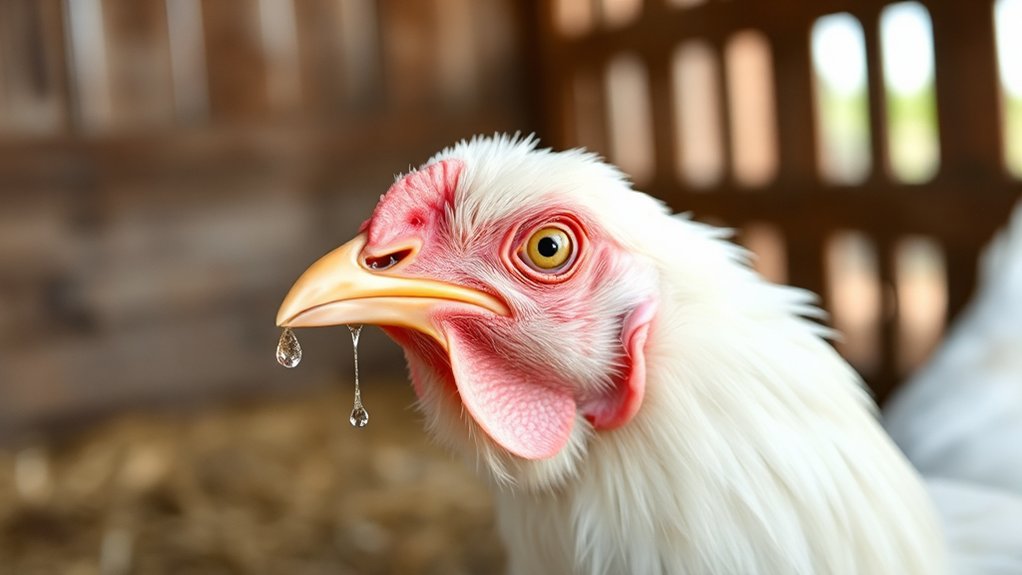
Mild sneezing can also happen with seasonal changes, but watch closely for nasal discharge, watery eyes, coughing, open-mouth breathing, or tail bobbing, since those can point to a respiratory illness.
If you keep going, you’ll find out what else to look for and how to help your bird feel better.
Key Takeaways
- Chickens sneeze from respiratory irritation caused by dust, ammonia, dry bedding, or foreign objects.
- Persistent sneezing can signal a respiratory infection, especially if paired with nasal discharge or watery eyes.
- Severe signs like coughing, open-mouth breathing, or tail bobbing need prompt attention.
- Isolate sick birds immediately to reduce spread and monitor them in a clean, dry space.
- Prevent sneezing by keeping the coop clean, ventilated, low-dust, and free from overcrowding.
Why Is My Chicken Sneezing?
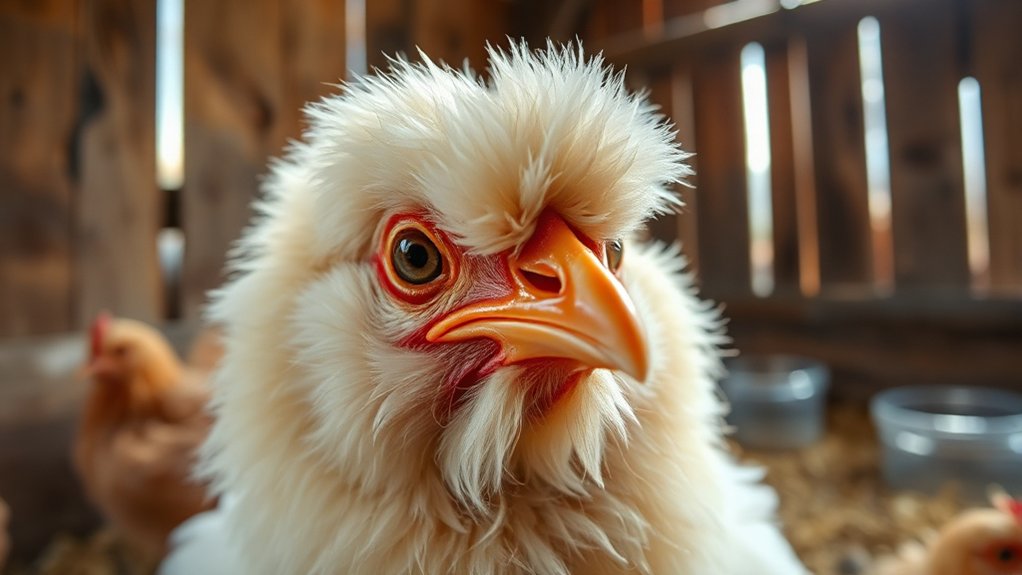
If your chicken keeps sneezing, it’s usually a sign that something is irritating its respiratory system. You should watch for changes in chicken behavior, since a bird that sneezes may also seem quieter, less active, or less interested in pecking.
Sneezing isn’t always serious, but it does tell you something’s off. Pay attention to how often it happens, whether it comes with head shaking, nasal discharge, or open-mouth breathing, and whether one bird or several birds are affected.
Those details help you narrow down likely sneezing triggers and decide how urgent the problem is. You can’t diagnose the cause from one sneeze alone, but repeated sneezing means you shouldn’t ignore it.
Instead, observe the flock closely, note any patterns, and act quickly if the sneezing worsens or spreads. Early attention can help you protect your chickens and keep the issue from becoming harder to manage.
Common Irritants That Cause Sneezing

Common irritants are often the simplest reason a chicken starts sneezing. You may notice the problem after you stir up litter, bedding, or feed, especially in a dry coop. Fine particles can irritate your bird’s nose and make sneezing more frequent.
Poor airflow can also trap odors, and ammonia buildup from droppings can sting sensitive airways.
| Irritant | What you may notice |
|---|---|
| Dust exposure | Sneezing after scratching, cleaning, or dust baths |
| Ammonia buildup | Strong smell, watery eyes, and frequent sneezes |
| Dry bedding | More airborne particles inside the coop |
You can reduce irritation by keeping the coop clean, changing bedding often, and improving ventilation. Use low-dust materials when possible, and avoid sweeping aggressively when your chickens are nearby.
If the sneezing eases after these changes, you’ve likely found the trigger.
Common Chicken Sneezing Causes
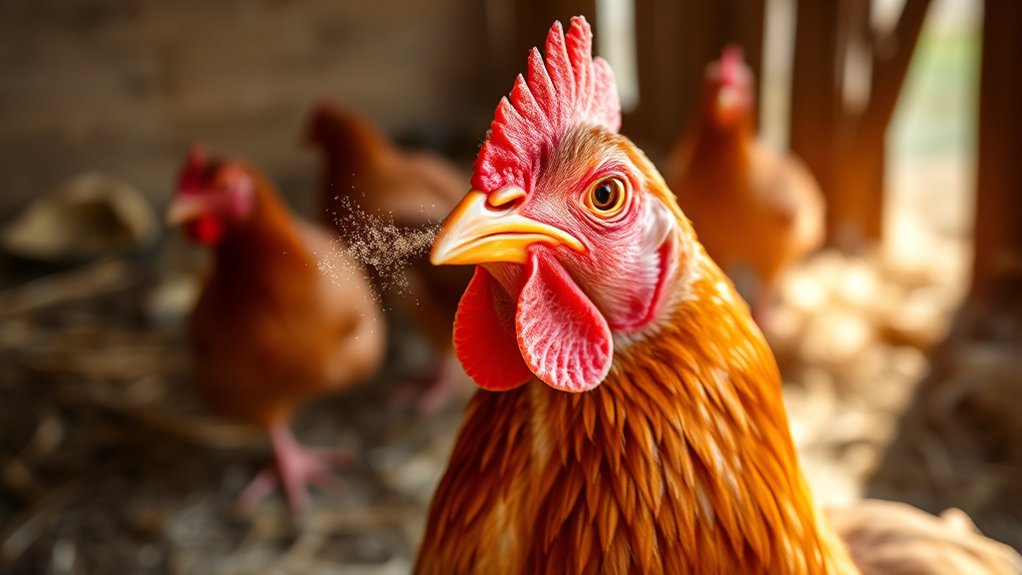
When your chicken keeps sneezing, the cause isn’t always simple dust or bedding. You may be dealing with mild nasal irritation from dry air, but pests, moldy feed, and poor coop ventilation can also trigger sneezing.
Sometimes a foreign object, like a bit of litter or feed, gets lodged in the nostril and causes repeated sneezes. Seasonal changes can dry out the airways, while ammonia buildup from droppings can irritate sensitive tissues fast.
If you keep multiple birds, crowding can spread germs and increase stress, which makes sneezing more likely. Focus on sneezing prevention by keeping bedding fresh, feeding clean grain, and improving airflow without creating drafts.
Good respiratory health starts with a clean, dry coop and regular checks for damp spots, mold, and buildup around roosts. When you understand these common causes, you can act early and reduce repeated sneezing before it becomes a bigger problem.
Warning Signs of a Respiratory Illness
A few sneezes can be harmless, but persistent sneezing often points to a respiratory illness, especially if you notice nasal discharge, watery eyes, wheezing, coughing, or a drop in appetite.
You should also watch for open-mouth breathing, tail bobbing, and a hunched posture, because these signs mean your chicken is struggling to get enough air. If you see mucus around the nostrils or hear crackling sounds, take the problem seriously.
Stress factors such as crowding, sudden weather changes, and poor ventilation can weaken your bird’s defenses and make symptoms worse. Dusty bedding, ammonia buildup, and damp litter also create unhealthy environmental conditions that irritate the airways.
When your chicken stops eating, isolates itself, or acts weaker than usual, don’t wait. Quick observation helps you respond before the illness progresses and affects the rest of the flock.
Respiratory Infections to Watch For
Several respiratory infections can cause sneezing in chickens, and each one may bring its own pattern of symptoms. You might be dealing with infectious bronchitis, which often spreads fast and can cause noisy breathing, watery eyes, and reduced egg quality.
Mycoplasma gallisepticum can also trigger sneezing, especially when environmental factors like dust, poor airflow, or ammonia irritate the flock’s airways.
Newcastle disease and avian influenza are more serious viral pathogens that may start with mild sneezing before adding swelling, weakness, or discharge.
Coryza can produce a foul smell, facial puffiness, and thick mucus, while laryngotracheitis may cause coughing and neck stretching.
Because many infections overlap, you can’t rely on sneezing alone to identify the problem. Watch for clusters of symptoms, changes in appetite, and slower egg laying so you can narrow down the likely cause and protect the rest of your flock.
When to Isolate a Sneezing Chicken
If your chicken’s sneezing is paired with nasal discharge, watery eyes, swelling, coughing, rattling breaths, or a drop in appetite or egg production, isolate it right away. Move the bird to a separate, dry, well-ventilated space and keep its food and water out of reach of the flock.
Good isolation methods help you limit spread while you watch for changes. Use dedicated tools, wash your hands before and after contact, and avoid returning the chicken to the coop until it’s clearly better or a vet says it’s safe.
Use dedicated tools, wash your hands, and keep the chicken isolated until it’s clearly better or a vet approves.
If sneezing is mild and you know the likely sneezing triggers, such as dust, bedding, ammonia, or cold drafts, you can often correct the environment before isolating. Still, if you’re unsure, err on the side of caution.
Separating a bird early protects the rest of your flock and gives you a cleaner way to monitor what’s happening.
How to Check for Other Symptoms
Once you’ve isolated the bird, take a close look for other signs that can tell you whether the sneezing is a minor irritation or part of a bigger problem. Check the eyes, nose, and mouth for discharge, swelling, or crusting. Listen for wheezing, rattling, or open-mouth breathing, and watch whether the chicken shakes its head or coughs.
Notice if it’s eating, drinking, and moving normally, since reduced appetite or lethargy often points to illness. Examine the feathers and skin for mites, injury, or irritation that might trigger sneezing. Look at the comb and wattles for paleness or discoloration, and check droppings for changes that suggest infection or stress.
Keep a simple symptom assessment log so you can track what you see over time. Good health monitoring helps you spot patterns, compare one bird with the flock, and decide whether the problem seems isolated or more serious.
Home Care for Mild Sneezing
For mild sneezing, start with simple home care that reduces irritation and helps your chicken recover. Move your bird to a clean, dry coop or pen with good airflow and no drafts. Replace dusty chicken bedding with fresh, low-dust bedding, and remove droppings daily to keep the area cleaner.
Check humidity levels, since air that’s too dry can irritate the breathing passages while damp air can worsen mess and odors.
Check humidity levels, since air that’s too dry or too damp can irritate your chicken’s breathing.
- Offer clean water at all times.
- Keep feed free of dust and mold.
- Wash feeders and drinkers regularly.
- Watch your chicken for improvement over a few days.
You can also reduce stress by keeping handling gentle and avoiding crowding. If the sneezing eases after these changes, your chicken likely needed better environmental care.
Focus on comfort, cleanliness, and steady routines so your bird can rest and recover.
When to Call a Vet
Call a vet if your chicken’s sneezing lasts more than a few days, gets worse, or comes with other symptoms like nasal discharge, swollen eyes, wheezing, open-mouth breathing, lethargy, or a drop in appetite or egg laying. These signs can point to an infection or other problem that needs prompt treatment.
You should also seek help if more than one bird shows symptoms, since the issue may be spreading through your flock and affecting chicken health. A vet can examine your chicken, identify likely sneezing triggers, and decide whether testing or medication is needed.
Don’t wait if your bird seems weak, can’t eat well, or struggles to breathe, because respiratory trouble can worsen quickly. Quick action gives your chicken the best chance to recover and helps you protect the rest of your flock from a more serious outbreak.
How to Prevent Chicken Sneezing
Keeping your coop clean, dry, and well-ventilated is one of the best ways to prevent chicken sneezing. You can protect chicken health by reducing dust, ammonia, and mold, which irritate sensitive airways. Use these sneezing prevention steps:
- Replace wet bedding often and scrub feeders and waterers weekly.
- Improve airflow without creating drafts, especially in cold weather.
- Quarantine new birds for at least 30 days before mixing flocks.
- Feed a balanced diet and provide fresh water every day.
You should also avoid overcrowding since stress weakens immunity and makes respiratory issues more likely. Check your flock regularly for discharge, rattling breaths, or head shaking, and act fast if you notice changes.
Good biosecurity matters too, so wash your hands, clean boots, and limit visitors in the coop. With consistent care, you’ll lower irritation, support strong chicken health, and keep sneezing from becoming a bigger problem.
Frequently Asked Questions
Can Chickens Sneeze From Dust in Bedding?
Yes, chickens can sneeze from dust in bedding. You should check your bedding materials because dry straw, shavings, or dirty litter can kick up dust and irritate their airways.
If you suspect dust allergies, switch to a low-dust option, improve ventilation, and replace damp or soiled bedding often. You’ll help your flock breathe easier and reduce sneezing by keeping the coop clean, dry, and well-aired each day.
Is Chicken Sneezing Contagious to Other Birds?
Yes, chicken sneezing can be contagious if you’re dealing with sneezing causes like respiratory infections. About 1 in 5 backyard flocks gets a respiratory issue each year, so you shouldn’t ignore it.
You’ll want to separate the bird, improve ventilation, and watch the others closely for coughing, nasal discharge, or reduced appetite. If more birds start sneezing, call a vet quickly to protect your flock.
How Long Should Mild Sneezing Last?
Mild sneezing should last only a few days if you’re managing your bird’s environment well. You should watch the sneezing duration closely and support respiratory health with clean bedding, good ventilation, and fresh water.
If the sneezing lasts more than a week, worsens, or comes with discharge, you should contact a vet. Quick recovery usually means your chicken’s irritation is minor, but lingering signs can point to infection or stress.
Should I Separate a Sneezing Chicken Immediately?
Yes, you should separate a sneezing chicken right away if you can. One tiny sneeze can feel like a whole alarm bell, and you don’t want stress factors spreading or crowding the flock.
Isolation helps you protect respiratory health, watch for other symptoms, and clean the coop without panic. Keep the bird warm, observe closely, and call a vet if sneezing continues or worsens quickly.
Can Seasonal Changes Make Chickens Sneeze?
Yes, seasonal changes can make your chickens sneeze. You may notice more dust, pollen, or damp bedding, which can irritate their airways and trigger allergy symptoms like sneezing or watery eyes.
Watch for coughing, nasal discharge, or lethargy, since those signs point more toward respiratory infections. Keep the coop clean, dry, and well ventilated, and you’ll help reduce irritation and spot illness early.
Conclusion
If your chicken sneezes once, you can blame dust, hay, or some other feathered-life inconvenience. But if the sneezing keeps up, watch for goopy eyes, wheezing, or a grumpy bird refusing treats.
You don’t need to play detective forever. Clean the coop, check for irritation, and call a vet if things look off. A little prevention now can save you from a backyard drama series later.
Taking these steps will help keep your flock healthy and happy. So, if you’re wondering why is my chicken sneezing, be proactive to avoid bigger problems down the road.