How to Identify the Difference Between Hen and Chicken
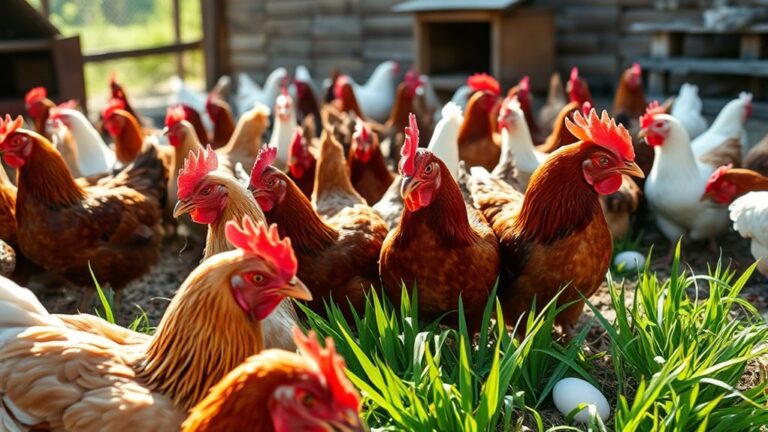
Trying to figure out how to identify the difference between hen and chicken can be tricky, especially if you’re new to raising poultry or just curious. You’re not alone—many people struggle with telling them apart because they often look quite similar. But understanding these differences is important if you want to care for your birds properly or just avoid common mix-ups.
You can tell a hen from other chickens by looking for smaller combs and wattles, rounder bodies, and softer, muted feather patterns.
Hens often show nesting behavior like arranging straw and sitting quietly in nests, unlike roosters who crow and have larger, more vibrant features.
Hens focus on egg-laying and nurturing chicks.
If you want to recognize these differences clearly and avoid common mix-ups, there’s more to learn about their unique traits and behaviors.
Key Takeaways
- A hen is a mature female chicken that shows nesting behavior. Meanwhile, “chicken” refers to the whole species, including males and chicks.
- Hens have smaller, less vibrant combs and wattles compared to roosters and other chickens.
- They also have softer, rounder body shapes with subdued feather colors and less elaborate tail feathers.
- Behavioral cues like egg-laying, nest building, and nurturing chicks point to a hen. These are different from general chicken behaviors.
- Size alone doesn’t tell you if it’s a hen. Instead, look for grooming habits, nesting activity, and other physical traits to identify them accurately.
Defining Chicken and Hen: Key Differences

Although many people use the terms interchangeably, a hen is actually a specific type of chicken. When you spot a hen, you’re looking at a mature female chicken, often recognized by her nesting behavior.
Hens instinctively create and return to nests to lay and incubate eggs. This behavior sets them apart from roosters and young chickens. You’ll also notice hens spend time on feather grooming, keeping their plumage clean and orderly to maintain insulation and attract mates.
Chickens, on the other hand, refer to the entire species, including males, females, and chicks. So, every hen is a chicken, but not every chicken is a hen.
Understanding these distinctions helps you identify them correctly in a flock. Next time you observe a chicken, watch for that nesting behavior and feather grooming. It’s a clear sign you’re looking at a hen.
How Age Affects Hen and Chicken Identification

When you observe chickens at different stages of life, their age plays a crucial role in how you identify them. Age-related development changes their feathers, comb size, and behavior. This makes it easier or harder to tell hens from other chickens.
For instance, young chicks don’t show clear gender traits. But as they mature, mating behavior and physical features become more distinct, especially in hens.
| Age Stage | Physical Traits | Behavior Indicators |
|---|---|---|
| Chick | Fluffy down feathers | No mating behavior |
| Juvenile | Developing comb and feathers | Beginning to show social cues |
| Adult Hen | Full comb, mature feathers | Clear mating behavior, nesting |
Size and Shape Differences Between Hens and Other Chickens
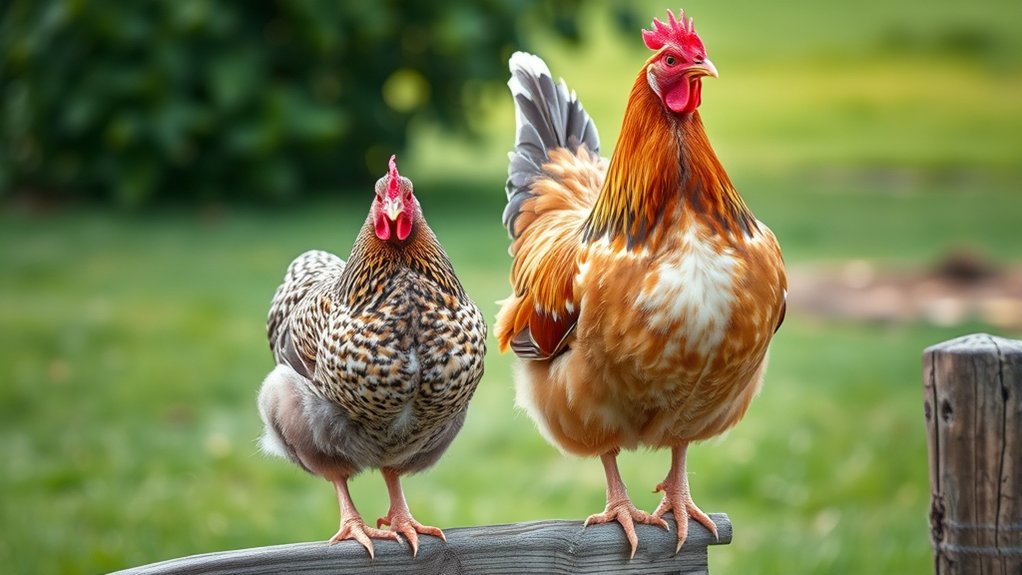
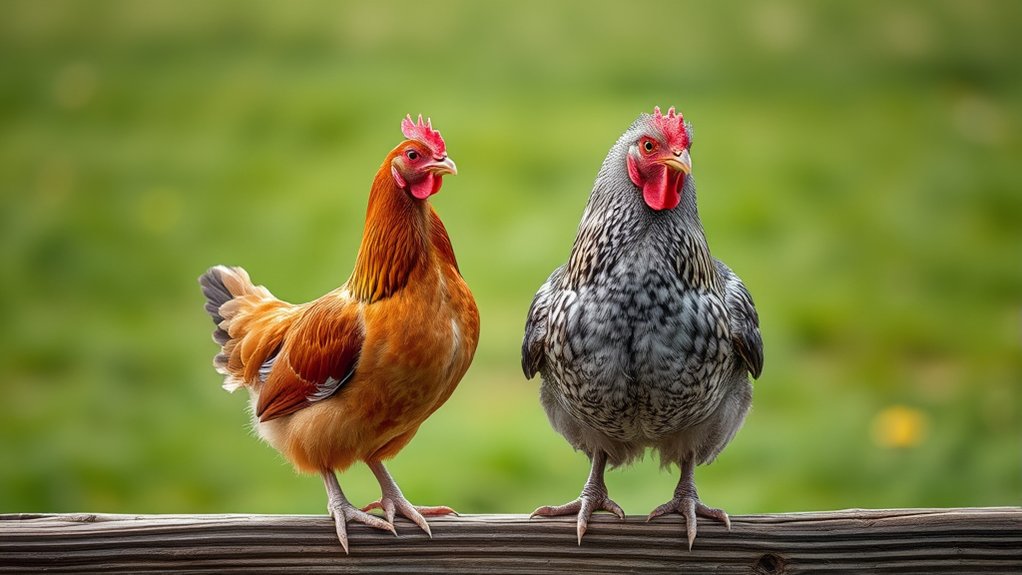
You’ll notice hens usually have a smaller, rounder body compared to other chickens. Their feathers tend to be softer and less pointed, which makes them look a bit fluffier. Also, if you take a close look at their combs and wattles, you’ll see they’re often less pronounced than those of other chickens.
Body Size Comparison
How can you tell hens apart from other chickens just by looking at their size and shape? Hens generally have a more compact and rounded body compared to roosters or younger chickens. Their size can also be influenced by factors like hen diet and chicken housing, which affect their growth and overall health.
Well-balanced hen diets promote a sturdy, consistent build, while proper chicken housing ensures they develop in a safe, comfortable environment. Roosters, on the other hand, tend to be larger with more elongated bodies. When comparing, you’ll notice hens usually weigh less and have a less pronounced chest and tail.
Paying attention to these subtle but clear size differences helps you quickly distinguish hens from other chickens without confusion.
Feather Shape Variations
Although size and shape help differentiate hens from other chickens, examining feather shapes offers even clearer clues. When you look closely, you’ll notice that hens tend to have softer, rounder feathers compared to the sharper, more pointed feathers of roosters or younger chickens.
Feather coloration also varies subtly, often appearing more muted in hens. Pay attention to the wingspan too, as hens generally have shorter, rounded wings suited for brief flights.
- Hens’ feathers are more uniformly rounded and smooth.
- Feather coloration in hens is usually less vibrant.
- Wingspan in hens tends to be shorter and more compact.
- Tail feathers in hens are less pronounced and more rounded.
Comb And Wattle Differences
Since combs and wattles play essential roles in chicken physiology and communication, observing their size and shape can help you tell hens apart from other chickens. Comb and wattle functions include regulating body temperature and signaling health or dominance.
Hens usually have smaller, rounder combs and wattles compared to roosters, whose are larger and more pronounced. Wattle color variations often range from pale pink to bright red, reflecting age and robustness.
| Chicken Type | Comb Size | Wattle Characteristics |
|---|---|---|
| Hen | Small, rounded | Smaller, pale to bright red |
| Rooster | Large, pointed | Large, vivid red |
| Young Chicken | Tiny or absent | Small, less colorful |
Gender Differences Among Chickens: Roosters and Hens
You’ll notice that roosters and hens have distinct physical traits that set them apart. And their behaviors? Well, those differ too, making it easier for you to tell them apart. Plus, their vocalizations are pretty unique, so that helps you figure out which is which without much trouble.
Physical Traits Comparison
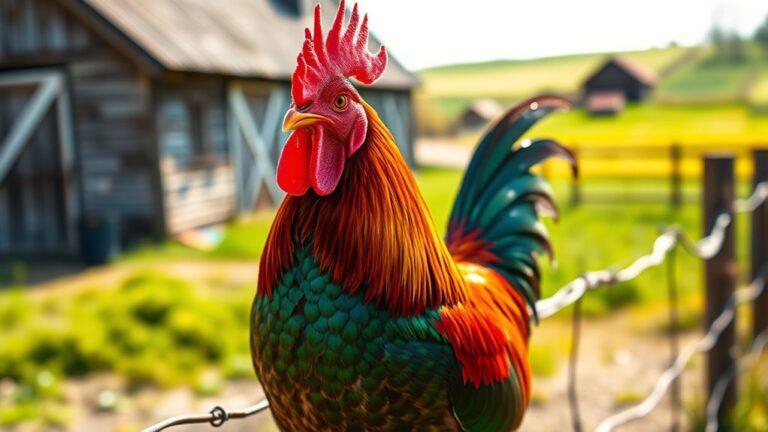
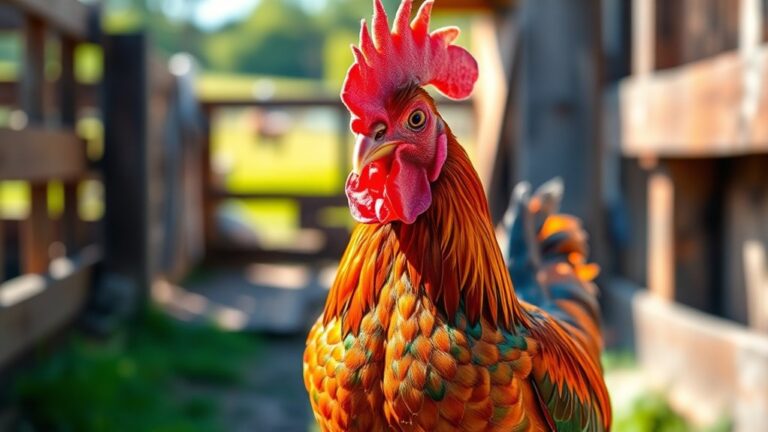
When you compare roosters and hens, you’ll notice clear physical differences that help you tell them apart. Roosters have larger combs and wattles, which are more vibrant in color. Their tail feathers are longer and more curved, giving them a striking silhouette.
Hens, on the other hand, tend to have smaller, duller combs and shorter tails. These physical traits are linked to their roles. Hens often display broodiness behavior, essential for egg incubation techniques, where they sit on eggs to keep them warm.
Here’s a quick breakdown:
- Roosters: larger, brighter combs and wattles
- Roosters: longer, curved tail feathers
- Hens: smaller combs and wattles
- Hens: physical build suited for sitting and incubating eggs
Recognizing these differences helps you identify hens and roosters easily.
Behavioral Differences Explained
How do roosters and hens act differently beyond their physical traits? You’ll notice their behavior is shaped by genetic factors and environmental influences. Roosters often display protective and territorial behaviors. Hens focus more on nesting and caring for chicks. These differences help maintain flock dynamics.
| Behavior Aspect | Rooster | Hen |
|---|---|---|
| Territoriality | Highly territorial, defends area | Less territorial, stays within nest |
| Social Role | Protects flock, leads group | Nurtures offspring, forages |
| Activity Level | More active and alert | More focused on egg-laying and care |
Understanding these behaviors helps you identify their gender accurately without relying solely on looks.
Vocalization Distinctions
Although both roosters and hens make sounds, their vocalizations serve different purposes and can help you tell them apart. Understanding their vocal communication is key to recognizing gender differences. Roosters use loud, distinctive calls to assert dominance and attract hens during breeding behaviors. Hens, on the other hand, produce softer clucks mainly for communication within the flock.
Pay attention to these vocal distinctions:
- Roosters crow loudly to mark territory and signal presence.
- Hens cluck gently to communicate comfort or alert others.
- Roosters’ calls often precede mating rituals.
- Hens emit specific calls when laying eggs or signaling alarm.
Distinct Feather Patterns and Colors of Hens
Because hens display a wide range of feather patterns and colors, you can often identify them by examining these characteristics closely. Hens typically have softer, more rounded feathers compared to roosters. Their colors can range from muted browns and tans to striking speckled or barred patterns.
Pay attention to feather grooming habits. Hens usually maintain smooth, well-kept feathers since they preen frequently to keep their plumage in top condition.
Molt patterns offer another clue. Hens undergo a more gradual molt, replacing feathers over several weeks, which results in a patchy but orderly appearance. This contrasts with other chickens, especially roosters, who molt less frequently and more abruptly.
Behavioral Traits That Help Identify Hens
What behaviors should you watch for when trying to identify a hen? Observing behavioral traits can give you clear clues. Hens often show distinctive nesting behaviors, preparing cozy spots for their eggs.
You’ll also notice diet differences since hens tend to forage methodically, focusing on grains and insects to support egg production.
Here are key behaviors to look for:
Nesting behaviors: Hens spend time arranging straw or leaves in quiet spaces.
Protective instincts: They may become alert or defensive around their nesting area.
Foraging patterns: Hens peck and scratch the ground more deliberately than other chickens.
Social interaction: Hens often maintain close contact with their chicks or flock mates.
How Egg-Laying Habits Distinguish Hens From Other Chickens
How can you tell a hen apart from other chickens just by their egg-laying habits? Hens have specific egg-laying behavior and nesting habits that set them apart. While all female chickens can lay eggs, hens lay regularly and seek out safe, quiet nesting spots.
Other chickens, like pullets or roosters, either don’t lay eggs or do so irregularly. You’ll notice hens consistently return to their nesting area, showing strong nesting habits, unlike other chickens who roam freely without focusing on one spot.
Here’s a quick comparison:
| Aspect | Hens |
|---|---|
| Egg Laying Behavior | Regular, daily or near-daily |
| Nesting Habits | Select and use specific nests |
| Egg Quantity | Higher egg production |
| Purpose | For reproduction and brooding |
Distinct Physical Traits of Adult Hens
You can spot adult hens by taking a close look at their feather patterns and colors. They usually have softer, more muted tones. Also, check out their comb and wattle—hens tend to have smaller, less pronounced ones. Another thing to notice is their body size and shape; hens are generally more rounded and compact compared to other chickens.
Feather Patterns and Colors
Although hens and roosters may share similar body shapes, their feather patterns and colors often reveal clear differences. When you observe feather color variations, hens usually display more subdued, earthy tones compared to the vivid shades roosters sport. This subtlety helps hens blend into their surroundings.
You’ll also notice a greater pattern diversity in hens, such as mottled or speckled feathers for camouflage, soft rounded feather edges, uniform less glossy plumage, and blended colors rather than stark contrasts.
These traits make hens distinct and easier to identify. Paying attention to these feather details lets you quickly tell hens apart from other chickens without relying on size or shape alone.
Comb and Wattle Differences
Two key physical traits that help distinguish adult hens from roosters are their combs and wattles. The comb and wattle importance lies in their size and color, which often signal gender and health.
Hens usually have smaller, less vibrant combs and wattles, while roosters boast larger, brighter ones. Wattle color variations also indicate age and robustness, with red being common but paler shades suggesting different conditions.
| Trait | Hen |
|---|---|
| Comb Size | Small, subtle |
| Comb Color | Pale to moderate red |
| Wattle Size | Small, less pronounced |
| Wattle Color | Varies, often duller red |
Understanding these differences helps you identify hens quickly and appreciate their unique features.
Body Size and Shape
How can you tell a hen apart from a rooster just by looking at their body? Adult hens usually have distinct body size and shape traits that reflect their diet variations and nesting behaviors. Here’s what to notice:
Hens tend to have a rounder, fuller body shape, supporting egg production and nesting. They’re generally smaller and less muscular than roosters, who need bulk for dominance.
Hens show a more compact frame, which helps them stay safe while nesting. Their feathers are softer and less elaborate since they don’t display like roosters.
Mistakes People Make When Mixing Up Hens and Chickens
Why do so many people confuse hens with chickens? It’s easy to mix them up if you don’t consider their unique roles shaped by historical domestication. Hens are adult female chickens specifically raised for egg-laying, which affects their nutritional needs, unlike young or male chickens. Overlooking these facts leads to common mistakes.
Here’s a quick look at errors people often make:
| Mistake | Why It’s Problematic |
|---|---|
| Calling all chickens hens | Ignores age and gender differences |
| Assuming same diet | Overlooks hens’ specific nutritional needs |
| Ignoring historical roles | Misses why hens were selectively bred |
| Confusing size with type | Size varies, not always indicative |
| Neglecting behavior | Hens and chickens act differently |
Don’t fall into these traps. Understanding hens means appreciating their distinct purpose and needs, not just lumping them with all chickens.
Tips for Spotting Hens in Your Backyard Flock
When you’re checking your backyard flock, pay close attention to physical traits and behaviors that set hens apart. Hens often show specific signs that make them easier to identify among chickens. One key behavior is their consistent feather grooming, which keeps their plumage neat and clean.
You’ll also notice hens engaging in nesting behaviors, like scratching around a quiet spot or settling into a nesting box.
Look for these tips to spot hens in your flock:
- Smaller combs and wattles compared to roosters
- Regular feather grooming that keeps feathers sleek
- Frequent nesting behaviors, such as sitting in nests or gathering materials
- Softer, rounder body shapes with less pronounced tail feathers
Frequently Asked Questions
Can Hens and Chickens Crossbreed With Other Bird Species?
You can’t really expect hens or chickens to crossbreed with other bird species because bird hybridization between such distant species is extremely rare. Cross species breeding usually happens between very closely related birds, like different types of ducks or pigeons.
Chickens belong to the genus Gallus, so they’re genetically too different from most other birds for successful hybridization. You won’t see viable offspring from hens and unrelated bird species in nature or captivity.
What Diseases Commonly Affect Hens Versus Other Chickens?
Imagine your flock as a tiny world where diseases play the villain. Hens often face issues like egg production drops due to infectious bronchitis, while other chickens might struggle more with Marek’s disease affecting feather coloration and causing paralysis.
You’ll also see coccidiosis hitting younger chickens harder. By keeping a close eye on symptoms and maintaining good hygiene, you’ll protect your birds and keep their feathers bright and eggs plentiful.
How Do Feeding Requirements Differ Between Hens and Roosters?
You’ll notice feeding habits differ between hens and roosters because their nutritional needs vary. Hens need more calcium to support eggshell production, so you should provide them with calcium-rich feed.
Roosters require more protein and energy to maintain muscle mass and activity levels. Adjusting their diets accordingly ensures both stay healthy and active.
You’ll want to tailor feeding habits to meet these specific nutritional needs for maximum care.
Are Hens More Prone to Predators Than Other Chickens?
You might notice hens seem more vulnerable to predators, but that’s partly coincidence. They often stay closer to the ground where predator behavior targets easier prey. Still, hens aren’t defenseless; their defense mechanisms include alert calls and flocking tightly for protection.
While all chickens face risks, hens’ nesting habits can increase exposure. So, you’ll want to boost coop security and watch predator behavior carefully to keep your hens safe.
What Is the Average Lifespan of a Hen Compared to Other Chickens?
You’ll find that hens typically live around 5 to 10 years, depending on breed and care, while other chickens like roosters might have a similar or slightly shorter lifespan.
Egg production affects their longevity since hens slow down after molting patterns, which can stress their bodies. If you keep hens healthy through these cycles, they’ll stay productive and live longer than chickens raised only for meat or show purposes.
Conclusion
When you spot a hen, think of her as the heart of your backyard flock, quietly nurturing life and order. Unlike the broader term “chicken,” she symbolizes care and continuity, standing apart with her gentle size, distinct feathers, and steady egg-laying rhythm.
By learning these subtle signs, you’ll not only tell hens from other chickens but also appreciate the deeper story they tell. Understanding how to identify the difference between hen and chicken reveals nature’s quiet strength and nurturing spirit.