Can Chickens Eat Pineapple?
If you’re a chicken owner, you’ve probably wondered what kinds of treats are safe and healthy for your flock. You’re not alone—many people struggle with knowing which fruits or snacks can add variety without harming their birds. Can Chickens Eat Pineapple.
Finding tasty, nutritious options that your chickens will love can feel tricky, but it doesn’t have to be.
Yes, chickens can eat pineapple in moderation as an occasional treat. You should offer fresh, bite-sized pieces after their regular feed, and keep treats to a small amount once or twice a week.
Avoid the skin, core, moldy fruit, and canned pineapple with syrup or added sugar. Pineapple can add vitamins, hydration, and variety, but it shouldn’t replace a balanced diet.
If you keep going, you’ll see the best ways to serve it safely.
Key Takeaways
- Yes, chickens can eat pineapple in moderation as an occasional treat, not a staple food. Serve small, fresh pieces after regular feed, about 1–2 times weekly.
- Remove the tough skin, spiky leaves, and woody core before feeding. Pineapple offers vitamins, water, and fiber, but too much can cause digestive upset.
- Avoid canned, sugary, fermented, or moldy pineapple; fresh fruit is the safest option.
Can Chickens Eat Pineapple?
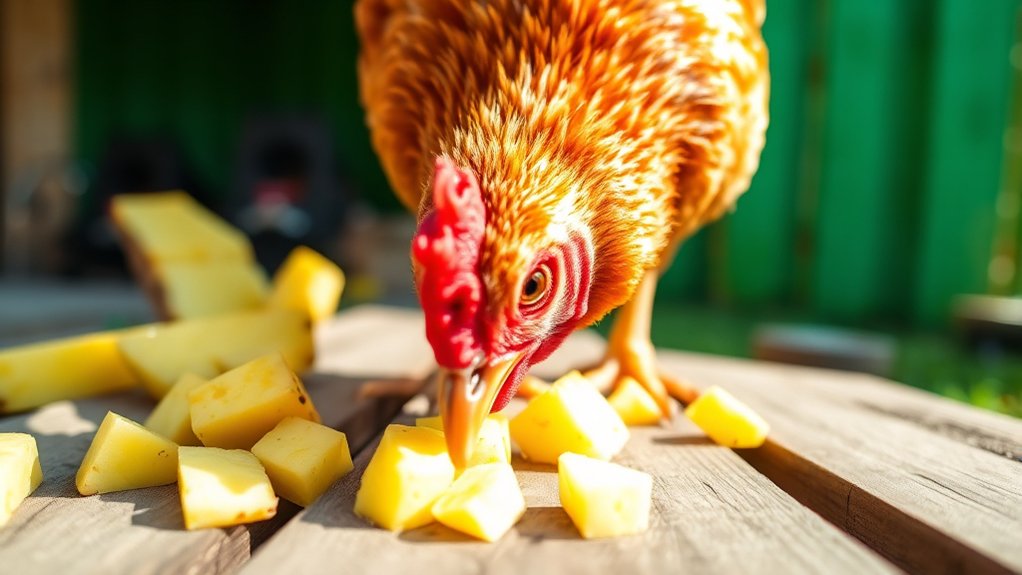
Yes, chickens can eat pineapple in moderation. You can offer small, fresh pieces as an occasional treat, but don’t make it a staple. Different pineapple varieties work, yet you should skip anything moldy, fermented, or heavily processed.
Yes, chickens can eat pineapple in moderation as an occasional treat, but it shouldn’t be a staple.
Your flock’s chicken preferences may vary, so watch how each bird reacts and stop if you notice loose droppings or refusal to eat it. Keep feeding frequency low; a few bites once or twice a week is plenty for most backyard chickens.
Always remove the tough core and spiky skin, then chop the fruit into manageable pieces to reduce choking risk. If you want to mix things up, choose treat alternatives like berries, melon, cucumber, or leafy greens.
Those options help you avoid overdoing sugary snacks while still giving your chickens variety. Offer pineapple only after their regular feed so they stay balanced and satisfied.
Nutritional Benefits of Pineapple for Chickens

When you offer pineapple to your chickens, you’re giving them a little boost of vitamins and minerals that help support their overall health. It’s also a great way to keep them hydrated, since pineapple contains lots of water. Plus, the fiber in pineapple can aid their digestion and keep things moving smoothly in their system. So, it’s a tasty treat that’s good for them in more ways than one!
Vitamin And Mineral Boost
Pineapple can give your chickens a small vitamin and mineral boost, especially from vitamin C, manganese, and traces of other nutrients that support overall health. You’re not relying on it as a staple, but it can round out their diet with helpful micronutrients.
Pineapple also offers variety that may support vitamin absorption when paired with a balanced feed, and it can act as one of the occasional mineral sources in a mixed diet.
| Nutrient | Why it matters |
|---|---|
| Vitamin C | Supports normal body functions |
| Manganese | Helps enzyme activity |
| Folate | Aids cell maintenance |
| Potassium | Supports basic nerve function |
| Trace minerals | Add nutritional variety |
Keep portions small, and think of pineapple as a supplement, not a replacement for complete chicken feed.
Hydration And Fiber Benefits
A few small pineapple pieces can offer chickens a mild hydration boost because of the fruit’s high water content. This is especially helpful on warm days. You can use pineapple as one of several hydration sources, but you shouldn’t rely on it alone. Fresh water still matters most.
The fruit also adds gentle fiber that can support digestion when you feed it in moderation. Different fiber types in pineapple may help move food through the gut, though too much can upset balance.
- Offer tiny, bite-sized chunks
- Mix pineapple with other treats
- Watch droppings and appetite
You should keep portions small and occasional so your flock enjoys the benefits without overdoing sugar or fiber.
How Much Pineapple Is Safe for Chickens?
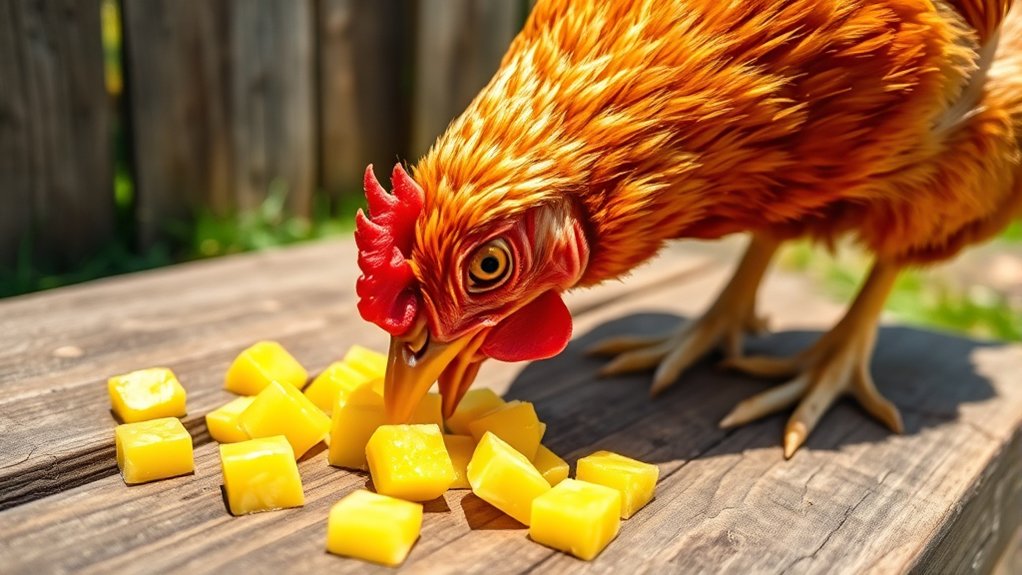
How much pineapple is safe for chickens? You should keep it to a small treat, not a staple. A few bite-size pieces per bird, once or twice a week, usually works well. Watch your flock’s chicken preferences and adjust pineapple portions to match their appetite and digestion.
| Flock size | Safe serving | Frequency |
|---|---|---|
| 1 chicken | 1–2 small pieces | 1–2 times weekly |
| 3 chickens | 3–6 small pieces | 1–2 times weekly |
| 6 chickens | 6–12 small pieces | 1–2 times weekly |
Too much fruit can crowd out balanced feed and upset your birds’ stomachs. Start with a tiny amount and see how they respond. If they peck enthusiastically and act normal afterward, you can keep offering a modest treat.
If you notice loose droppings or disinterest, cut back. Keep pineapple as an occasional reward, not a daily menu item.
How to Prepare Pineapple for Chickens
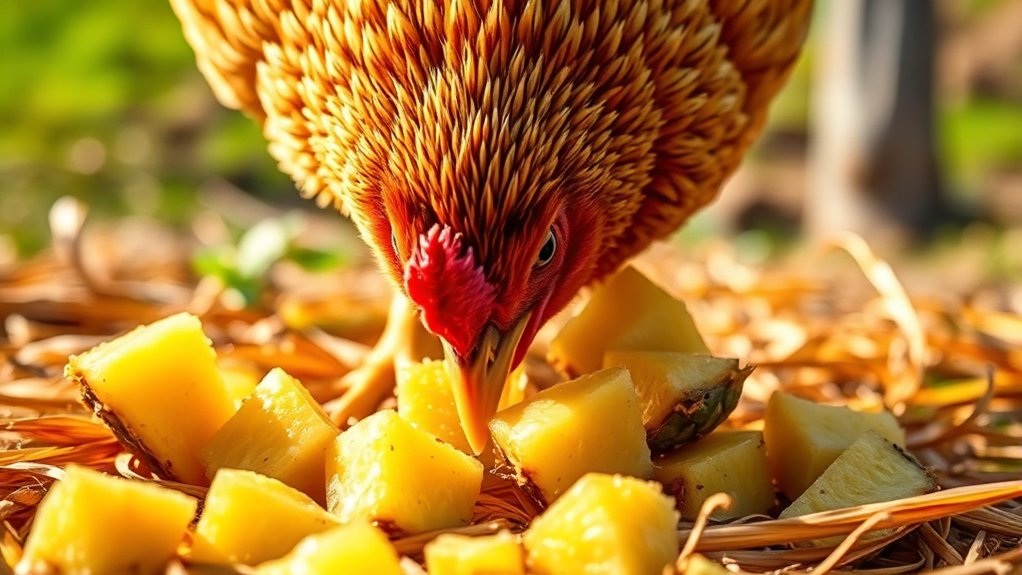
To feed pineapple safely, wash it well, cut away the tough skin and woody core, and offer only the soft fruit in small, bite-size pieces. This simple pineapple preparation keeps feeding easy and helps you control portion size for a safe serving. You can chill the fruit first, but don’t add sugar, salt, or syrup. Serve it plain, and make sure the pieces aren’t so large that your birds have to tear at them.
Chop the pineapple into small chunks. Mix a few pieces with their regular feed. Remove any leftovers before they spoil.
Offer pineapple as a treat, not a daily food. Keep the amount modest so your chickens still eat their balanced ration first. If you notice messy beaks or runny droppings, cut back next time. With careful prep and portioning, you can give your flock a bright, invigorating snack they’ll enjoy.
Can Chickens Eat Pineapple Skin and Core?
Not really. Pineapple skin and core aren’t the best parts to offer chickens. You can give them small amounts, but you’ll want to keep portions modest and textures manageable.
The skin is tough and fibrous, so your flock may peck at it but won’t always digest it well. The core is firmer and less appealing, though some chickens may still sample it. If you decide to share either part, chop it finely and mix it with softer fruit so your birds can handle it more easily.
You should follow basic feeding guidelines and treat pineapple as an occasional snack, not a staple. There’s no common pineapple toxicity issue for chickens from the fruit itself, but overfeeding any sugary treat can upset balance in their diet.
Watch how your chickens respond, and remove leftovers before they spoil. A little is fine; too much isn’t.
Pineapple Parts Chickens Should Avoid
You should avoid offering chickens pineapple leaves, the thorny outer skin, and any moldy or fermented pieces. These parts can be tough to digest, may irritate the crop, and can raise pineapple toxicity concerns if they’re contaminated or spoiled.
When you’re planning treats, keep the edible fruit in small amounts and stick to safe serving sizes so pineapple stays an occasional snack, not a staple.
- Leaves and spiky skin: too fibrous and abrasive
- Moldy fruit: unsafe and never worth the risk
- Fermented scraps: can upset your flock’s diet
You can also skip any heavily treated peel from store-bought fruit, since pesticide residue may linger on the surface. If you want to share pineapple, offer only clean, ripe flesh in modest pieces and remove all unwanted sections first.
That way, you help your chickens enjoy a sweet treat without adding unnecessary problems to their feed routine.
Signs Your Chicken Ate Too Much Pineapple
If you give your chicken too much pineapple, you might start to notice some loose droppings. Along with that, they could get a bit gassy or you might catch a sour smell around the coop.
You may also see that your chicken isn’t as interested in their regular feed. Sometimes, they might drool a little or have an upset, bloated crop.
Keep an eye out for these signs of digestive upset so you can cut back on the pineapple before it becomes a bigger problem.
Digestive Upset Signs
A chicken that’s had too much pineapple may show digestive upset fairly quickly, especially since the fruit’s acidity and sugar can irritate a sensitive crop or gut. You might notice loose droppings, a damp vent, or less interest in feed.
These changes often point to temporary digestive health stress rather than a serious issue, but you should watch your bird’s chicken behavior closely.
- Mild lethargy
- Reduced appetite
- Occasional watery stool
If your chicken still drinks, preens, and acts fairly normal, the upset may pass on its own. Offer clean water and hold back more pineapple for now.
Keeping treats in balance helps protect digestion and keeps your flock comfortable.
Pineapple Overfeeding Symptoms
When a chicken eats too much pineapple, the most common signs are mild digestive upset and a temporary drop in energy. You may notice loose droppings, less interest in feed, or a slightly messy vent.
Keep an eye on overfeeding risks if your bird seems unusually thirsty or sluggish. Pineapple’s acidity and sugar can irritate the crop, so pineapple moderation matters.
| Symptom | What You’ll See | Action |
|---|---|---|
| Loose droppings | Softer, wetter manure | Offer water |
| Low energy | Less scratching, resting more | Watch closely |
| Reduced appetite | Ignoring feed | Pause treats |
If symptoms stay mild, they usually pass on their own. But if your chicken acts weak, stops eating, or worsens, contact a vet quickly.
Fresh Vs. Canned Pineapple for Chickens
Fresh pineapple is usually the better choice for chickens because it contains fewer additives and lets you control exactly what they eat. Canned pineapple often comes packed in syrup or extra sugar that can upset their digestion. When you choose fresh pineapple, you get the best benefits, including natural vitamins and a cleaner treat.
With canned pineapple, you also have to watch for preservatives, added flavorings, and sticky syrup that chickens don’t need.
- Peel the fruit and remove the tough core.
- Cut it into small, easy-to-peck pieces.
- Skip any canned pineapple with syrup or added sugar.
You can offer fresh pineapple as a bright, juicy snack that fits better with a balanced coop menu. Canned pineapple isn’t toxic, but it’s less ideal because the extra sugar can make it harder for your flock to enjoy fruit safely and comfortably.
How Often to Feed Pineapple to Chickens
Pineapple should stay an occasional treat, not a daily staple, for your chickens. You can offer small pieces once or twice a week, depending on your flock’s size and diet. This pineapple frequency helps you avoid overloading them with sugar and acidity while still giving them a tasty reward. Keep portions modest: a few bite-sized chunks per bird is usually enough.
If you notice loose droppings, reduced appetite, or crop upset, cut back and follow stricter feeding guidelines. You should always treat pineapple as a supplement to balanced feed, not a replacement. Watch how your chickens respond after each serving, and adjust the schedule if they seem overly enthusiastic or sensitive.
During hot weather, a small serving can feel invigorating, but moderation still matters. Consistent limits keep your flock healthy and prevent treat habits from crowding out their regular nutrition.
Other Safe Fruit Treats for Chickens
Besides pineapple, you can offer your chickens a variety of other safe fruits as occasional treats, such as berries, melon, apples with the seeds removed, and bananas in small amounts. These choices add fruit variety without crowding out their balanced feed, and they’re easy to serve fresh, chopped, or lightly mashed.
Besides pineapple, chickens can enjoy berries, melon, apples, and small amounts of banana as occasional treats.
- Berries: blueberries, strawberries, and raspberries are small, colorful, and easy to peck.
- Melon: watermelon or cantaloupe gives hydration and a sweet snack.
- Apples and bananas: remove seeds from apples and keep banana portions small.
Stick with treat moderation so you don’t overload your flock with sugar. You can rotate fruits to keep things interesting, but treats should stay under 10% of their daily diet. Offer only clean, ripe fruit, and remove leftovers before they spoil. If you notice loose droppings or reduced feed intake, cut back and return to simpler options.
Frequently Asked Questions
Can Baby Chicks Eat Pineapple?
Yes, you can give baby chicks tiny amounts of pineapple, but only as an occasional treat. You should follow feeding guidelines and keep portions very small because their main diet needs a balanced chick starter.
Pineapple offers some nutritional benefits, like vitamin C and hydration. Yet its acidity and sugar can upset young digestive systems. You’ll want to remove the tough core, chop it finely, and avoid overfeeding.
Does Pineapple Change Egg Taste?
Not usually. You probably won’t notice pineapple changing egg flavor unless you feed it in huge amounts. A hen’s diet can affect egg flavor a little, but pineapple nutrients mostly pass through her system without strongly altering eggs.
If you offer pineapple as an occasional treat, keep her balanced feed as the main diet. That way, you’ll support healthy hens without expecting a noticeable taste difference in the eggs.
Can Chickens Eat Pineapple Leaves?
Yes, you can offer chickens pineapple leaves, but only in small amounts. Think of the leaves as a thorny warning flag: they’re tough, fibrous, and not very appealing.
You should check for leaf toxicity first, since some plants can upset your flock’s digestion. While pineapple benefits come from the fruit, the leaves don’t add much value. Chop them finely, and only feed them as an occasional treat.
Is Frozen Pineapple Safe for Chickens?
Yes, you can offer frozen pineapple to chickens in small amounts, and it can be a revitalizing treat. You’ll get some frozen benefits in hot weather, since the chilled fruit can help them cool off.
It also keeps some nutritional value, including vitamin C and fiber. Just cut it into bite-sized pieces, avoid added sugar, and don’t let treats replace their balanced feed or upset their digestion.
Can Pineapple Help Chickens in Hot Weather?
Yes, pineapple can help chickens in hot weather by adding a little moisture and natural sugar to their snacks. You can offer chilled pieces as one of several pineapple benefits, but it shouldn’t replace real hydration sources.
During heat stress, birds need cool water first, since about 70% of a chicken’s body is water. Use pineapple as a treat, not a cooling cure, and keep shade available too.
Conclusion
So, can chickens eat pineapple? Yes, in small amounts, it’s a sweet, safe treat that can add variety and a little nutrition to your flock’s diet. Just keep it fresh, cut it into bite-sized pieces, and don’t let it replace their regular feed.
If you’ve worried it might be too sugary, that’s fair. But when you offer pineapple as an occasional snack, you’re giving your chickens a fun treat they’ll likely love.
In conclusion, chickens can eat pineapple safely as long as it’s given in moderation. It’s a tasty way to add some excitement to their meals without compromising their health.