10 Types of Chicks at Tractor Supply You Should Know
Choosing the right chicks for your flock can feel overwhelming, especially with so many breeds available. You’re not alone—many people struggle to find the perfect fit for their needs, whether it’s for eggs, meat, or simply a friendly backyard companion. That’s why knowing the types of chicks at Tractor Supply can make a big difference.
At Tractor Supply, you’ll find ten chick types perfect for various needs. Start with beginner-friendly breeds like Rhode Island Reds and Buff Orpingtons if you want hardy, gentle birds.
For egg production, choose Leghorns or Golden Comets.
Need meat and eggs? Dual-purpose Plymouth Rocks fit well.
Fast growers like Cornish Cross are also available.
Small or quiet breeds such as Silkies suit tight spaces.
Colorful Easter Eggers and rare heritage breeds add unique flair.
Keep exploring to uncover which suits your flock best.
Key Takeaways
- Beginner-friendly breeds like Rhode Island Reds and Buff Orpingtons are hardy, gentle, and ideal for new chicken keepers.
- Egg-laying breeds such as Leghorns, Golden Comets, and Rhode Island Reds offer high productivity and a good temperament.
- Dual-purpose breeds like Plymouth Rocks and Rhode Island Reds provide both meat and eggs with balanced nutrition needs.
- Fast-growing meat breeds include Cornish Cross and Freedom Rangers. They require specific feeding and vaccination schedules.
- Rare and colorful breeds like Easter Eggers, Silkies, and Mille Fleur Bantams add visual appeal and support genetic diversity.
Beginner-Friendly Chick Breeds
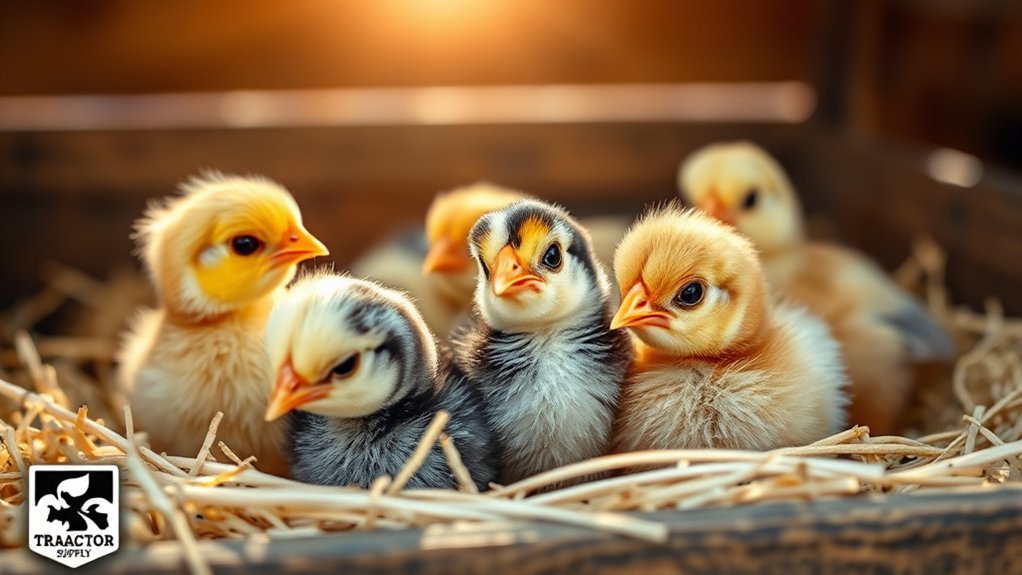
Although raising chicks can seem intimidating at first, choosing beginner-friendly breeds makes the process much easier. You’ll want breeds known for their hardiness and gentle nature, which helps maintain flock health and encourages positive chick socialization.
Breeds like Rhode Island Reds, Buff Orpingtons, and Plymouth Rocks are excellent choices. They adapt well to various environments and are less prone to illness, reducing the stress of managing sick chicks.
Choosing Tractor Supply Chicks for Your Needs
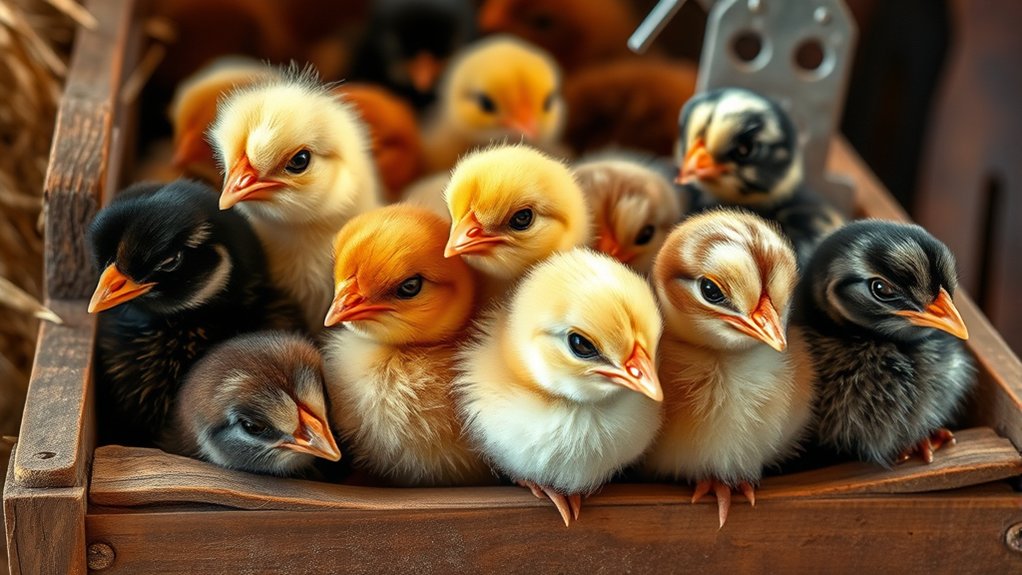
You’ll want to pick chick breeds that fit your goals—whether that’s egg production, temperament, or hardiness. It’s a good idea to think about each breed’s care needs too, so you can make sure you’re ready to provide the right environment and attention. When you match what you can offer with what the chicks need, you’re setting yourself up for success.
Matching Chick Breeds
How do you choose the right chick breed at Tractor Supply to fit your needs? Start by thinking about your goals, like urban farming or enhancing backyard aesthetics. Matching chicks to your lifestyle guarantees success and satisfaction.
- Purpose: Decide if you want egg layers, meat birds, or dual-purpose breeds. This helps guide your breed selection efficiently.
- Space: Urban farming usually means limited space, so pick breeds known for being compact and calm.
- Appearance: For backyard aesthetics, choose colorful or unique plumage breeds that add charm to your outdoor space.
Care Requirements Overview
When selecting chicks at Tractor Supply, understanding their care requirements guarantees you provide a healthy environment from the start. You’ll need to monitor temperature and space carefully, especially as chicks undergo feather development, which affects their insulation needs.
Proper nutrition supports this growth and prepares them for maturity. Be aware that some breeds display early mating behaviors, so separating males and females at the right time prevents unwanted breeding.
Clean water, secure housing, and regular health checks keep your chicks thriving. Tailoring care to each breed’s specific needs ensures they grow strong and healthy, setting the stage for a productive flock.
Top Egg-Laying Breeds
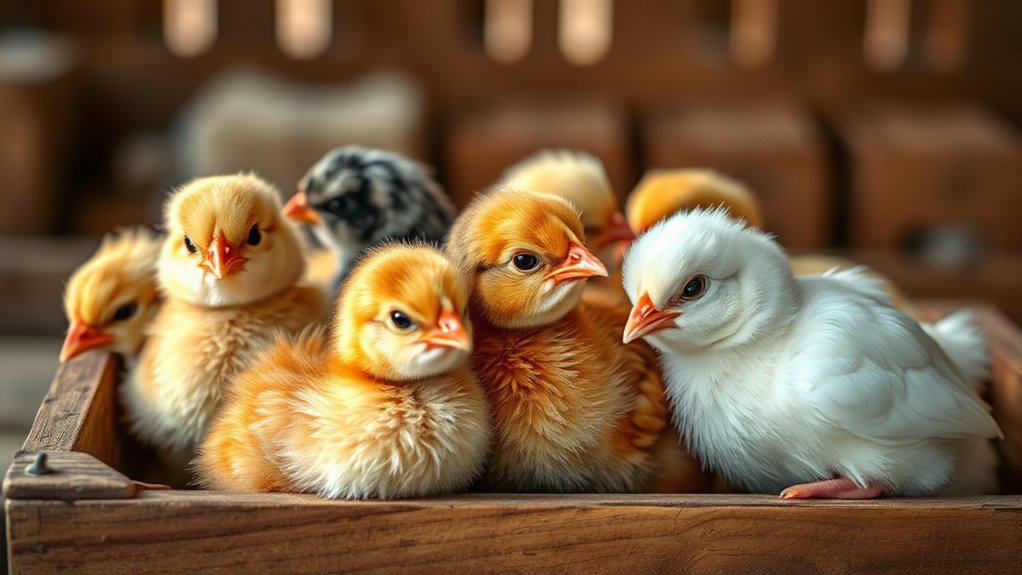
If you want hens that lay plenty of eggs, you’ll want to focus on breeds known for top egg production. But it’s not just about the numbers—temperament matters too. You’ll also need to think about how well they handle your local climate. Knowing these key factors really helps you pick the best chicks for your flock.
Best Egg Production
Looking for chicks that’ll fill your coop with a steady supply of eggs? Choosing breeds known for the best egg production is essential. Especially if you’re into urban farming and want to feed your family fresh eggs daily.
These breeds thrive on organic feed, boosting their health and egg quality.
Here are the top three egg-laying breeds you’ll find at Tractor Supply:
- Leghorns Known for their prolific white egg laying.
- Rhode Island Reds Hardy birds that produce large brown eggs consistently.
- Golden Comets Hybrid layers that start early and lay abundantly.
Selecting these breeds guarantees you get reliable, high-quality eggs while supporting sustainable urban farming practices.
Temperament and Behavior
Egg-laying breeds like Leghorns, Rhode Island Reds, and Golden Comets don’t just stand out for their productivity. They also have distinct temperaments that affect how they fit into your flock. Understanding their personality traits and social behaviors helps you manage them better and create a harmonious environment.
| Breed | Personality Traits |
|---|---|
| Leghorn | Independent, energetic |
| Rhode Island Red | Friendly, assertive |
| Golden Comet | Calm, social |
Leghorns tend to be more independent and often explore on their own. Rhode Island Reds are assertive but friendly, easily establishing the pecking order. Golden Comets are calm and social, making them great companions.
Knowing these differences lets you anticipate interactions and keep your flock balanced and happy.
Climate Adaptability
How well your chickens handle different weather conditions can make a big difference in their health and egg production. When choosing top egg-laying breeds for urban farming, evaluate their climate adaptability to ensure consistent results. Some breeds thrive in cold climates, while others prefer warmer, humid environments. Also, organic feeding supports their overall resilience.
Here are three key points to consider:
1. Cold-Hardy Breeds
These chickens withstand harsh winters, maintaining egg production even in freezing temperatures.
2. Heat-Tolerant Breeds
Ideal for hot, humid areas, they stay active and healthy without stress.
3. Versatile Breeds
Adapt well to varying climates, perfect for urban farmers dealing with unpredictable weather.
Picking the right breed helps you sustain a productive, organic feeding routine all year.
Dual-Purpose Chick Breeds for Eggs and Meat
If you want chickens that provide both eggs and meat, dual-purpose breeds are the perfect choice. These breeds, like Rhode Island Reds and Plymouth Rocks, give you steady egg production and quality meat, making them versatile for any small farm or backyard flock.
When raising dual-purpose chicks, sticking to proper feeding schedules is essential. They need balanced nutrition to support both growth and egg-laying development. Early on, follow recommended brooding techniques. Maintain consistent warmth and clean water to keep chicks healthy and thriving.
As they grow, gradually adjust feeding to meet their changing energy needs. Dual-purpose breeds tend to grow slower than meat-specific chicks but offer longer-term benefits, including hardiness and egg supply. By managing feeding and brooding carefully, you’ll optimize their potential for both eggs and meat, making your flock a valuable, multi-functional asset.
This approach helps you enjoy fresh eggs daily while having a reliable source of meat when needed.
Fast-Growing Meat Chickens
If you’re looking for meat chickens that grow quickly, it’s good to know which breeds are the most popular and how fast they reach market weight. You’ll also want to adjust their feed to support rapid growth without causing health problems. So, let’s take a look at what these fast-growing breeds need to thrive.
Popular Meat Chicken Breeds
When you’re looking for meat chickens that grow quickly and efficiently, a few popular breeds stand out at Tractor Supply. These breeds are known for their excellent feeding habits and adaptable brooding techniques. That makes them ideal for fast growth.
- Cornish Cross The most common meat chicken, prized for rapid weight gain and efficient feed conversion.
- Jersey Giant A larger breed that grows steadily, requiring consistent feeding habits and careful brooding techniques to ensure healthy development.
- Freedom Rangers Known for their ability to thrive in free-range environments, they have slightly slower growth but excellent meat quality.
Understanding these breeds will help you choose the right chick for your needs while optimizing feeding and brooding practices.
Growth Rate Comparison
Choosing the right breed from popular meat chickens like Cornish Cross, Jersey Giant, and Freedom Rangers means understanding how fast they grow. Growth rates impact your feeding schedules and vaccination protocols, so knowing these differences helps you plan better.
| Breed | Time to Market Weight |
|---|---|
| Cornish Cross | 6-8 weeks |
| Freedom Rangers | 9-12 weeks |
| Jersey Giant | 16-20 weeks |
Cornish Cross grow fastest, requiring precise feeding schedules and timely vaccinations to prevent health issues. Freedom Rangers grow moderately and benefit from flexible vaccination protocols. Jersey Giants take longer but are hardier, needing adjusted feeding and vaccination timing.
Knowing these growth rates ensures you manage your chicks effectively for a healthy, productive flock.
Feeding Requirements Tips
Because fast-growing meat chickens like Cornish Cross demand high energy and protein levels, you’ll need to provide nutrient-dense feed formulated specifically for their rapid development. To keep them healthy and growing efficiently, focus on these feeding requirements tips:
- Establish consistent feeding schedules, offering feed multiple times a day to meet their high metabolic demands.
- Use starter and grower feeds with at least 20-24% protein during the early weeks, shifting to finishing feeds to support muscle gain.
- Incorporate nutritional supplements like vitamins, minerals, and electrolytes to boost immunity and overall health.
Hardy and Cold-Resistant Chicks
How do you keep your flock thriving through chilly months? Choosing hardy and cold-resistant chicks is key. These breeds naturally adapt to lower temperatures, making winter care easier for you.
When selecting your chicks at Tractor Supply, notice the feather color varieties. They often indicate specific breeds known for cold tolerance, such as Plymouth Rocks or Wyandottes. Their dense feathering helps them stay warm.
Beyond breed selection, proper chick handling techniques matter. Handle chicks gently but regularly to build trust and reduce stress, which supports their immune systems during cold spells. Also, guarantee they have dry bedding and access to shelter that blocks wind and moisture.
Small-Sized Chick Breeds for Limited Space
If you’re short on space, small-sized chick breeds offer a perfect solution for keeping a flock without overcrowding your yard or coop. These breeds thrive in small coop options and adapt well to space-efficient feeders, making them ideal for limited areas.
Here are three popular small-sized chick breeds to consider:
- Silkie Known for their fluffy feathers and calm nature, Silkies fit well in confined spaces and don’t require large feeders.
- Bantam Bantams are miniature versions of larger breeds, perfect for small coops and limited yards due to their compact size.
- Serama The smallest chicken breed, Seramas are incredibly space-friendly and thrive in cozy environments with minimal feeder space.
Choosing any of these breeds lets you maintain a healthy, happy flock without sacrificing room. Small coop options paired with space-efficient feeders ensure your chicks have everything they need to grow comfortably.
Quiet and Docile Chick Breeds
Small-sized breeds like Silkies and Bantams are great for tight spaces, but you might also want chicks that won’t add noise or stress to your home. Quiet and docile chick breeds are perfect if you’re seeking a peaceful flock. These chicks are known for their silent temperament, making them ideal for backyard setups where noise can be a concern.
Their gentle nature means they’re easy to handle, especially if you’re new to raising chickens or have children involved. Breeds such as the Buff Orpington and the Cochins are popular choices for their calm behavior and quiet demeanor. They won’t squawk loudly or become aggressive, so you can enjoy a tranquil environment.
When selecting chicks at Tractor Supply, look for these breeds if you value a low-maintenance, stress-free flock. Their silent temperament and gentle nature will keep your coop calm and your experience enjoyable.
Colorful and Unique Chick Varieties
Several colorful and unique chick varieties can brighten up your flock and add a splash of personality to your coop. With their colorful plumage and unique feather patterns, these chicks stand out and bring visual interest to your backyard.
Colorful, unique chicks add personality and vibrant charm, making your flock and coop truly stand out.
Here are three varieties you might want to explore:
- Easter Egger Chicks Known for their vibrant plumage and the blue or green eggs they lay, Easter Eggers have unique feather patterns that make each chick distinct.
- Silkie Chicks Their fluffy, almost fur-like feathers and diverse colors give Silkies a striking, soft appearance that’s hard to miss.
- Mille Fleur Bantams These small chicks boast beautiful, speckled plumage in rich reds and whites, making their feather patterns truly one of a kind.
Choosing colorful and unique chick varieties not only livens up your flock but also makes your coop a more engaging and lively space.
Rare and Heritage Breeds Available
Uncovering rare and heritage breeds at Tractor Supply can add a rich history and unique traits to your flock. These breeds often come with stories tied to historical preservation, making your poultry more than just animals—they become living links to the past.
When you choose heritage breeds, you’re supporting genetic diversity, which is *essential* for maintaining resilient and healthy flocks. These breeds tend to have distinct characteristics like hardiness, unique plumage, and sometimes even specific egg colors or flavors.
You’ll find breeds like the Ameraucana, known for blue eggs, or the rare Crevecoeur, prized for its history and appearance. By raising these chicks, you contribute to preserving genetic lines that might otherwise be lost.
Plus, owning heritage breeds often means you’re investing in chickens that adapt well to free-range environments and have strong survival instincts. Tractor Supply makes it easy to access these special breeds, so you can *explore* your flock with both history and diversity.
Frequently Asked Questions
How Do I Care for Newborn Chicks at Home?
You should keep your newborn chicks warm by maintaining their brooder temperature around 95°F, lowering it by 5°F each week. Stick to consistent feeding schedules, offering chick starter feed and fresh water multiple times daily.
Make certain their bedding stays dry and clean, and give them enough space to move away from heat if they get too warm. Regularly monitor their behavior to ensure they’re comfortable and healthy.
What Supplies Do I Need Before Bringing Chicks Home?
Before bringing chicks home, you need warmth, water, and food. These simple essentials make all the difference. You’ll want a brooder with proper bedding options like pine shavings or straw to keep them cozy and dry.
Don’t forget feeders and waterers designed for chicks. Plus, follow feeding guidelines carefully to guarantee they grow healthy. A heat lamp is essential too, so your new chicks stay warm and happy from day one.
How Often Should I Clean a Chick Brooder?
You should clean your chick brooder at least once a week to keep your chicks healthy. Check the bedding materials regularly and replace them if they get damp or soiled.
Maintaining proper brooder temperature helps prevent excessive moisture buildup, which can lead to dirty bedding faster. If you notice a strong odor or wet spots, clean the brooder sooner.
Keeping it clean guarantees your chicks stay comfortable and reduces the risk of illness.
What Are Common Health Issues in Young Chicks?
Common health issues in young chicks include coccidiosis, respiratory infections, and leg problems. You’ll want to focus on nutrition essentials like balanced feed and clean water to support their growth.
Disease prevention is vital; keep their brooder clean, avoid overcrowding, and monitor for signs of illness. Early intervention helps prevent serious problems, so stay vigilant and maintain proper care routines to keep your chicks healthy and thriving.
Can I Mix Different Chick Breeds in One Brooder?
Yes, you can mix different chick breeds in one brooder, but you need to take chick breed compatibility carefully. Some breeds grow faster or have different temperaments, which might cause bullying. Keep a close eye on their interactions.
Also, manage brooder temperature well since different breeds may have varying comfort levels. Adjust the heat gradually to ensure all chicks stay warm and healthy while preventing stress or overheating.
Conclusion
Choosing the right chicks at Tractor Supply is like planting seeds in a garden. You want to pick the ones that’ll grow best for your needs. Whether you’re after egg layers, meat birds, or quiet companions, there’s a breed waiting for you.
By understanding these types, you’ll raise healthy, happy chicks that fit your lifestyle perfectly. So immerse yourself confidently and watch your flock flourish like a well-tended garden in full bloom at Tractor Supply.