10 Stunning Photos of Chicken Breeds
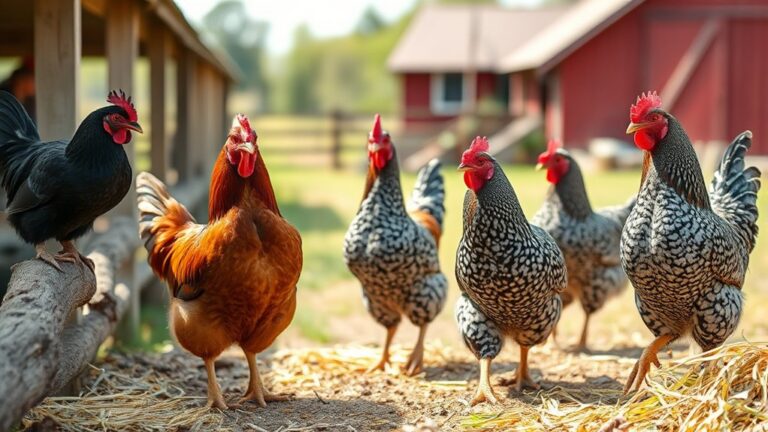
Finding the perfect chicken breed for your backyard flock can feel overwhelming. You want a bird that’s beautiful, productive, and maybe a little unique, but there are so many options out there. If you’ve ever struggled to choose, you’re not alone—many people face this challenge when starting or expanding their flock.
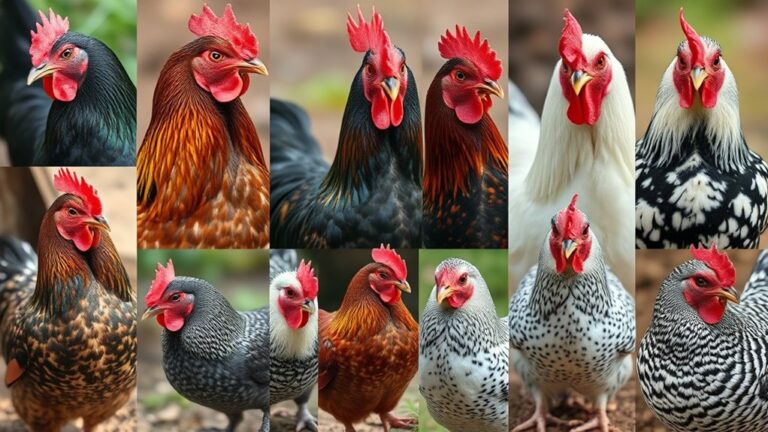
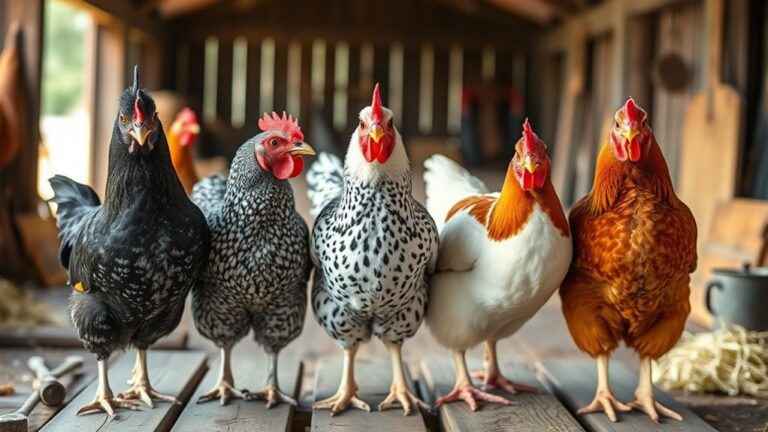
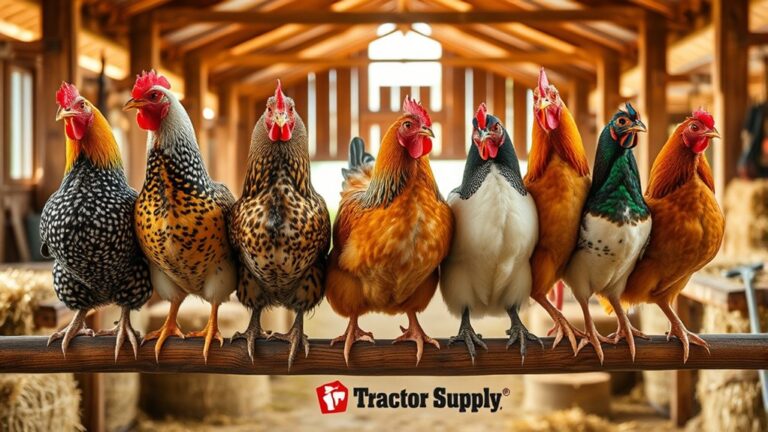
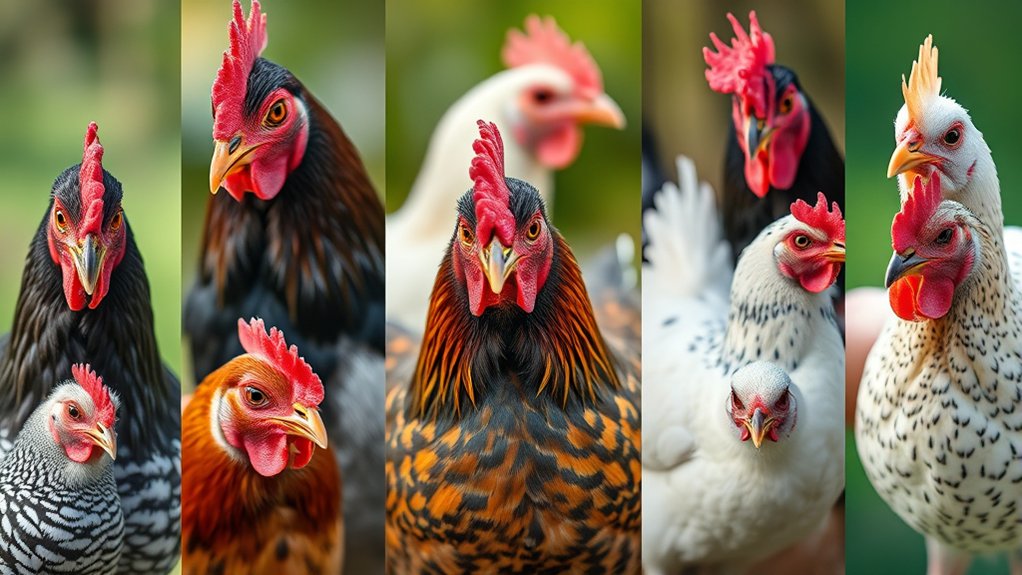
You’ll be enthralled by chicken breeds like the fluffy Silkie, the artistically patterned Speckled Sussex, and the crowned Polish with its unique crest.
Uncover the vibrant Mille Fleur d’Uccle’s mosaic feathers, the imposing Brahma’s size and feathered legs, and the glossy Marans known for dark chocolate eggs.
Orpingtons offer beauty and productivity, while Sebright Bantams bring elegant lacing.
Delve into these stunning chickens, and you’ll uncover fascinating traits and histories behind their eye-catching looks.
Key Takeaways
- Silkie chickens have fluffy, fur-like feathers with unique colors like white, black, and buff. This creates a soft, silky visual effect.
- Polish chickens feature a large, fluffy crest that looks like a crown, giving them a striking and unusual appearance.
- Mille Fleur d’Uccle display intricate feather patterns with white-tipped feathers edged in black and rusty orange. These colors create a vibrant mosaic.
- Barnevelder’s double-laced feathers show sharply defined dark edges framing warm centers. This gives them a textured and elegant look.
- Brahma chickens impress with their large size, dense plumage, and feathered legs. They combine robustness with visual appeal.
Meet the Silkie: The Fluffy Chicken That Steals Hearts
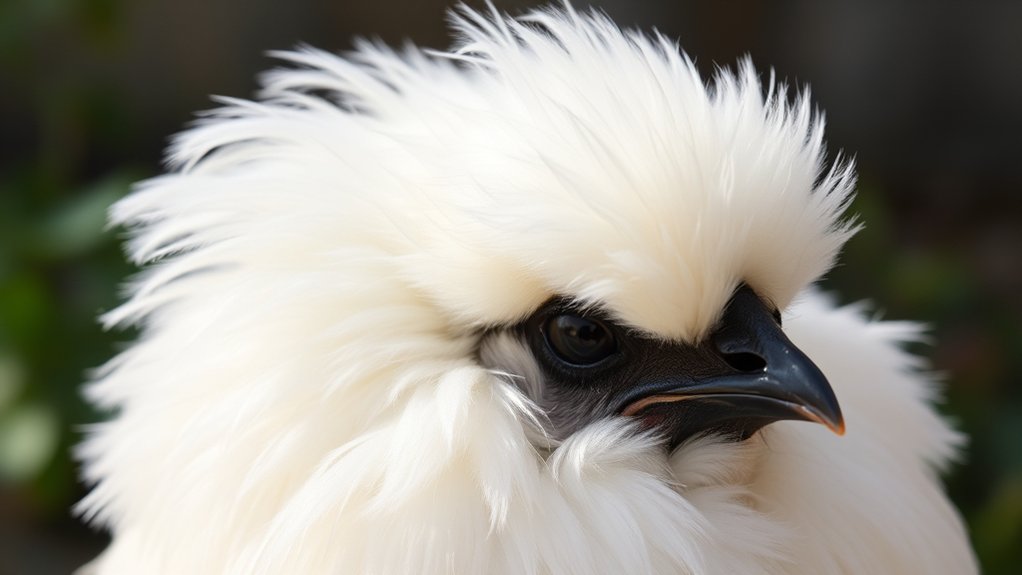
Although you might not expect it, the Silkie chicken immediately captures your attention with its unique fluffy feathers and gentle demeanor. When you see its soft, fur-like feather color ranging from white to black, blue, and even buff, you realize why this breed stands out.
Silkies don’t look like typical chickens because their feathers lack barbicels, giving them that signature silky, fluffy appearance.
As you learn about its breed history, you’ll find Silkies trace back centuries to ancient China, where they were prized for their unusual looks and calm temperament. This breed’s exotic origins explain its distinctive traits, making it a favorite among poultry enthusiasts worldwide.
If you want a chicken that’s both a pet and a showpiece, the Silkie offers a perfect mix of charm and history, wrapped in a soft, colorful coat that’s impossible to resist.
Why the Speckled Sussex Chicken Has Unique Feather Patterns
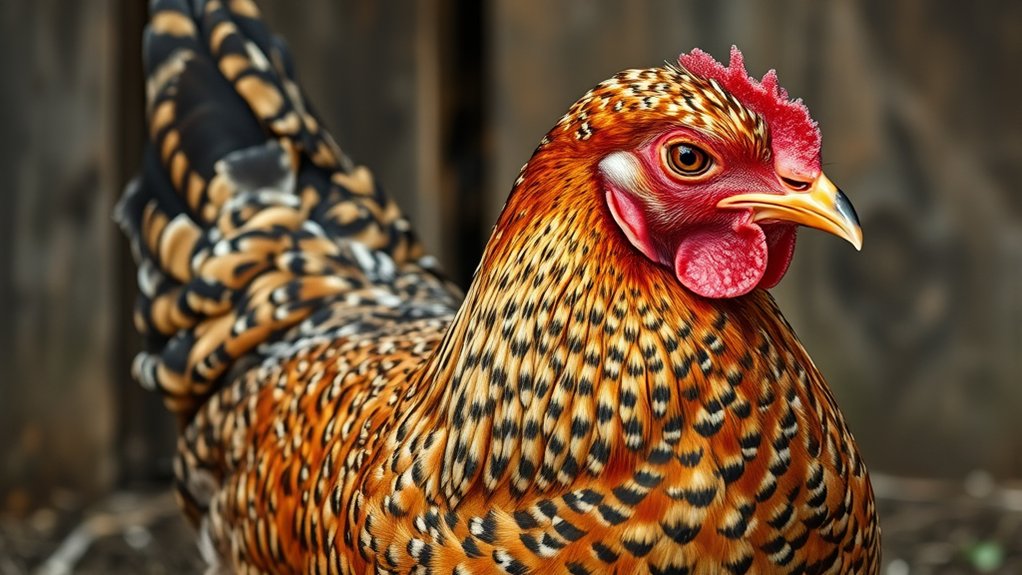
When you notice the Speckled Sussex chicken, its striking feather patterns immediately catch your eye. These unique markings come from complex feather genetics that control color distribution and spotting.
Unlike solid-colored breeds, the Speckled Sussex displays a beautiful mix of base colors with speckles that create an almost artistic effect. Breeders have carefully selected chickens with distinct spotting traits, refining these breeding patterns over generations to improve the breed’s signature look.
The Speckled Sussex’s unique speckles result from generations of careful breeding for distinct, artistic feather patterns.
As you observe, you’ll see how the combination of dark and light feathers isn’t random but a result of genetic factors influencing pigment placement. The interplay of dominant and recessive genes shapes the speckled appearance, making each chicken slightly different yet unmistakably Sussex.
Understanding these feather genetics helps you appreciate why the breed stands out among others, showcasing nature’s artistry through well-established breeding patterns.
Why the Polish Chicken’s Crest Turns Heads
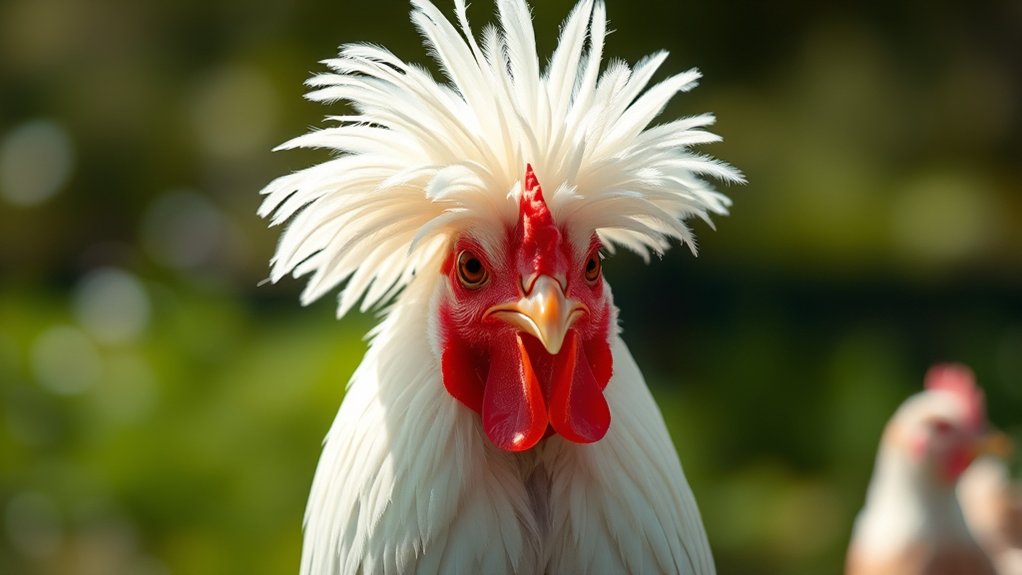
You’ll notice the Polish chicken’s crest really stands out with its unique feather formation that almost looks like a fluffy crown. It’s pretty eye-catching, right? But this striking feature isn’t just for show—it actually plays a role in how the bird interacts with others. So, let’s take a closer look at how this crest influences the Polish chicken’s behavior and makes it truly unforgettable.
Unique Feather Formation
One of the most eye-catching features of the Polish chicken is its unique feather formation, especially the large, fluffy crest that sits atop its head. When you look closely, you’ll notice how the feather coloration varies, often displaying striking contrasts that amplify the crest’s visual impact.
These color patterns aren’t just random. They change subtly with molting patterns, which refresh the feathers seasonally. As the Polish chicken molts, old feathers shed and new ones grow in, sometimes altering the crest’s shape and intensity of color.
This natural cycle keeps the bird looking fresh and vibrant year-round. By understanding these details, you’ll appreciate how the Polish’s feather formation isn’t just for show. It’s a dynamic feature shaped by nature’s rhythms.
Crest’s Role In Behavior
The Polish chicken’s striking crest doesn’t just catch your eye. It plays a key role in its behavior and social interactions. That impressive feather arrangement influences how these birds communicate and navigate their environment.
You’ll notice the crest affects:
- Vision: The feathers often cover their eyes, so they rely more on other senses.
- Social cues: The crest signals mood or status to other chickens.
- Foraging: The unique beak structure helps them peck effectively despite limited sight.
Because the crest partially obstructs their view, Polish chickens adapt by using their beak structure and other senses to investigate safely.
Understanding these traits helps you appreciate how the crest shapes their daily behavior. It’s more than just a fancy hairstyle; it’s essential for their survival and social life.
Meet the Araucana: The Colorful Chicken Breed
Araucanas boast striking colors and unique features that make them stand out in any flock. You’ll notice their distinct tufts of feathers near the ears and tufted tails, giving them a charming, almost exotic appearance. One of the most fascinating aspects is their color variations. They come in shades ranging from black and white to blue and silver, adding plenty of visual interest to your backyard.
When it comes to egg production, Araucanas are quite special. They lay blue-green eggs, which many find intriguing and beautiful. While they aren’t the highest layers compared to some commercial breeds, their consistent medium-sized egg output makes them a delightful addition if you want something unusual and practical. Plus, their hardy nature means you won’t have to worry much about upkeep. If you’re after a colorful, unique breed that offers both beauty and functional egg-laying, the Araucana fits the bill perfectly.
Why the Sebright Bantam’s Plumage Is So Elegant
Although you might be drawn to many chicken breeds for their colors, the Sebright Bantam’s plumage stands out for its intricate pattern and shine. You’ll notice its feathers boast a unique lacing effect, where each feather has a distinct edge of contrasting color. This isn’t just luck but a result of precise feather coloration genetics.
To keep this elegance intact, plumage maintenance is vital. Here’s why the Sebright’s feathers are so striking:
- Genetic Feather Coloration: The breed’s genes control the exact pigment placement, creating that signature metallic sheen and clear, defined lacing.
- Feather Structure: Each feather’s shape enhances light reflection, making the plumage appear glossy and vibrant.
- Regular Plumage Maintenance: You need to guarantee clean, healthy feathers by minimizing dust and parasites, which helps maintain the Sebright’s elegant look.
When you care for your Sebright Bantam properly, its stunning plumage will always capture attention.
What Makes the Barnevelder Chicken’s Double-Laced Feathers Special
When you admire the Barnevelder chicken, you’ll quickly notice its feathers’ distinctive double-laced pattern, which sets it apart from other breeds. This unique look comes from the feather density combined with an extraordinary color contrast.
Each feather features two sharply defined dark edges that frame a rich, warm center, creating a striking visual effect. The dense layering of feathers ensures these patterns don’t just appear on the surface but cover the bird uniformly, giving it a lush, textured appearance.
Two dark edges frame a warm center, with dense feathers creating a lush, textured, uniform pattern.
This feather density also adds to the bird’s resilience, protecting it in various weather conditions. The color contrast between the dark lacing and the lighter inner parts makes the Barnevelder’s plumage appear almost three-dimensional, mesmerizing anyone who sees it.
When you look closely, you realize this breed’s double-laced feathers aren’t just beautiful, they’re a perfect blend of form and function, making the Barnevelder truly special.
Meet the Vibrant Mille Fleur d’Uccle Chicken
If you’re drawn to chickens with vibrant, eye-catching plumage, the Mille Fleur d’Uccle won’t disappoint. This Belgian bantam breed is famous for its stunning feather coloration that looks like delicate speckles of gold and black, giving it a jewel-like appearance. When you see one, you’re instantly captivated by its unique style.
Here’s what makes the Mille Fleur d’Uccle stand out:
- Feather coloration: Its distinct “mille fleur” pattern features tiny white-tipped feathers edged in black and rusty orange, creating a vibrant mosaic effect.
- Friendly personality: These chickens are known for their gentle, curious nature, making them great pets.
- Egg production: While not prolific layers, they do provide small, cream-colored eggs consistently. They’re perfect if you want some fresh eggs alongside their beauty.
If you want a breed that combines charm with a splash of color, the Mille Fleur d’Uccle is a top choice.
Why the Brahma Chicken’s Large Size and Feathering Impress
While the Mille Fleur d’Uccle charms with its delicate patterns, the Brahma chicken commands attention with its impressive size and feathering. You’ll be amazed by how its dense plumage and striking feather coloration create a majestic appearance.
This breed’s adaptability means it thrives in various climates, making it a reliable choice for many poultry keepers.
Here’s a quick look at why the Brahma stands out:
| Feature | Description | Benefit |
|---|---|---|
| Size | Large, robust frame | Impressive presence |
| Feather Coloration | Varied shades, including light, dark, and buff | Eye-catching beauty |
| Feathering | Thick, smooth, feathered legs | Provides insulation |
| Breed Adaptability | Tolerant to cold and heat | Easy to maintain year-round |
You’ll appreciate how the Brahma combines beauty and practicality effortlessly.
The Striking Look of Marans Chickens That Lay Dark Chocolate Eggs
Because Marans chickens produce some of the darkest chocolate-colored eggs you’ll find, their striking appearance often captures the attention of poultry enthusiasts. When you look at a Marans, you’ll notice their rich, glossy feathers and strong build that complements their unique eggs.
To keep them healthy and maintain that egg color intensity, you should focus on a few key factors:
- Chicken diet: Provide a balanced diet rich in minerals and pigments to improve both feather shine and egg color.
- Coop design: Guarantee your coop offers enough space, ventilation, and clean nesting boxes to reduce stress and promote consistent laying.
- Regular care: Keep them clean and handle them gently to boost their vibrant look and egg quality.
Why the Orpington Chicken Is a Favorite for Beauty and Eggs
Marans chickens impress with their rich egg color and glossy feathers, but Orpingtons bring a different kind of charm to your flock. You’ll love the Orpington’s fluffy, rounded appearance that adds beauty to any backyard or urban farming setup.
These chickens aren’t just eye candy. They’re reliable layers of large, light brown eggs, making them a practical choice for your egg basket.
When you focus on poultry nutrition, Orpingtons respond well to a balanced diet, which boosts their egg production and keeps their plumage vibrant. They adapt well to various environments, thriving in confined urban spaces or larger farms.
Their calm temperament makes them easy to handle, ideal if you’re new to urban farming or raising chickens for both aesthetics and egg supply. Choosing Orpingtons means you get a perfect blend of beauty, productivity, and ease of care, enhancing your flock’s overall appeal and sustainability.
Frequently Asked Questions
How Do I Care for Chickens in Different Climates?
You’ll need to focus on climate adaptation by adjusting your chickens’ shelter requirements. In cold climates, insulate their coop and provide extra bedding to keep them warm.
In hot areas, guarantee proper ventilation and shade to prevent overheating. Always offer fresh water and adjust feeding schedules based on temperature.
What Are the Common Health Issues in Backyard Chickens?
Did you know up to 60% of backyard chickens face parasites at some point? Common health issues include mites and lice, which affect chicken feathering and cause discomfort. You should regularly check their feathers and skin.
Also, improper beak trimming can lead to eating difficulties and infections. Keep an eye on your flock’s behavior and appearance, and maintain cleanliness to prevent these problems from taking hold in your backyard chickens.
How Do Chicken Breeds Differ in Egg Production Rates?
Chicken breeds differ in egg production rates based on breed size and genetics. If you choose larger breeds, they often lay bigger eggs but fewer in number. Smaller breeds typically produce more eggs consistently.
Egg color also varies by breed. Some lay white, brown, or even blue eggs. Knowing this helps you pick a breed that fits your egg needs, whether you want quantity, size, or unique colors for your backyard flock.
What Is the Best Diet for Ornamental Chickens?
The best diet for ornamental chickens includes a balanced mix of high-quality poultry feed tailored to their age and breed. You should stick to consistent feeding schedules to keep their digestion steady.
Incorporate nutritional supplements like calcium and vitamins to support feather health and egg production. Fresh water is essential too.
How Do I Safely Introduce New Chickens to My Flock?
To safely introduce new chickens, start by quarantining them for two weeks to prevent disease spread. Then, use a separate enclosure nearby so they can see and get used to each other, easing flock dynamics.
Gradually allow supervised interactions to help establish the new pecking order. Watch for aggressive behavior and intervene if needed. This careful approach helps manage pecking order conflicts and keeps your flock harmonious.
Conclusion
You’ve just taken a whirlwind tour through a colorful world where feathers tell stories and each chicken breed shines like a gem in the sun. Whether it’s the Silkie’s fluffy charm or the Marans’ rich, dark eggs, these birds aren’t just farm animals—they’re living works of art.
So next time you see a chicken, remember you’re looking at a masterpiece painted by nature’s own brush. Every chicken breed has its own unique beauty and story waiting to be discovered.