7 Kinds of Chickens With Pictures
Choosing the right chickens for your flock can feel overwhelming. You want birds that are hardy, friendly, and great layers, but with so many breeds out there, it’s hard to know where to start. You’re not alone—many people struggle to find chickens that fit their lifestyle and climate perfectly.
If you’re picking chickens, consider Rhode Island Reds for hardiness and great laying, or fluffy Bantams for small spaces and friendly personalities. Heritage breeds resist disease and last long, while Leghorns and Sussex excel as egg-layers.
For families, Silkies and Buff Orpingtons offer gentle temperaments. Want a flock that stands out visually? Check out Mille Fleur d’Uccles or Barnevelders with their striking feather patterns.
You’ll find plenty of options to suit your style and climate.
Key Takeaways
- Rhode Island Reds are hardy, friendly, and excellent egg layers, making them popular for backyard flocks.
- Fluffy Bantams are small, space-efficient chickens with insulating feathers and lively, friendly personalities.
- Leghorns are top egg layers known for high production and reliability in various conditions.
- Silkies and Buff Orpingtons are gentle, docile breeds ideal for families and urban environments.
- Mille Fleur d’Uccle and Barnevelder have striking feather patterns that add visual appeal to any flock.
Top Chicken Breeds for Backyard Chicken Keepers
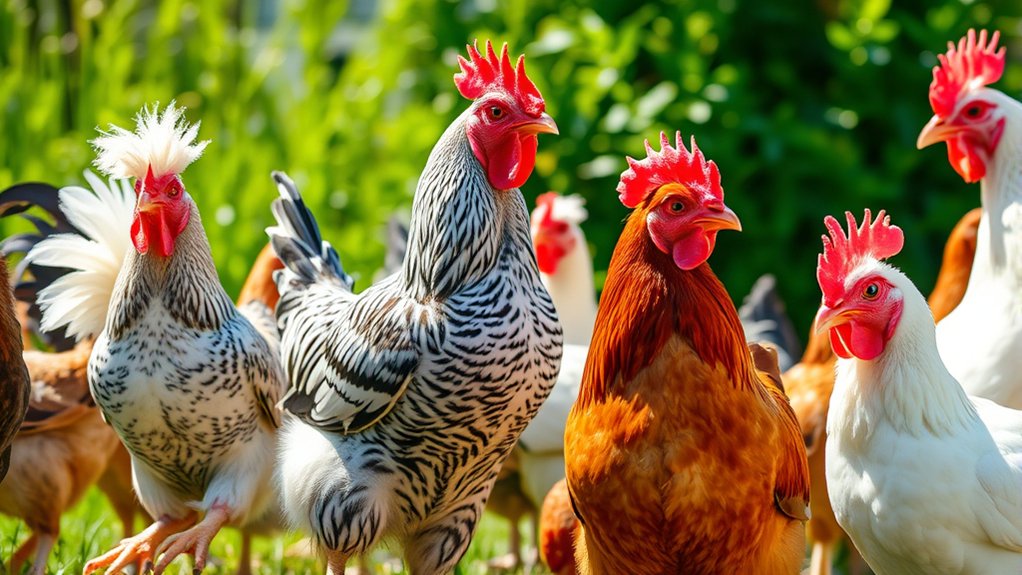
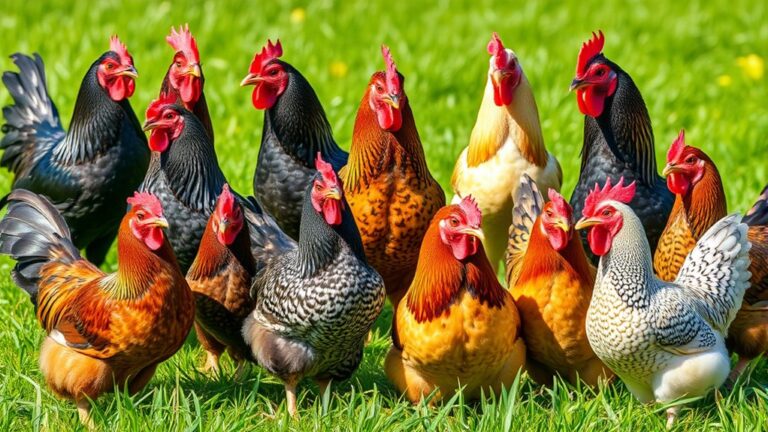
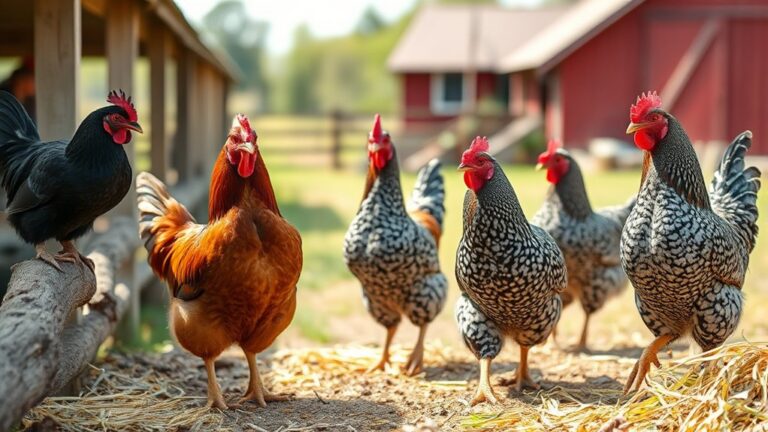
If you’re new to raising chickens, choosing the right breed is key to a successful backyard flock. You’ll want birds that suit your climate, space, and goals. Popular breeds like Rhode Island Reds and Plymouth Rocks are hardy, friendly, and great layers.
You should also consider their mating behaviors; some breeds are more docile and social, making them easier to manage. Understanding these behaviors helps you maintain harmony and prevent aggression.
Furthermore, each breed has specific nutritional needs based on size and activity level. For example, larger breeds require more protein to support growth and egg production. Paying attention to their diet ensures your chickens stay healthy and productive.
Fluffy Bantam Chickens: Small but Full of Personality
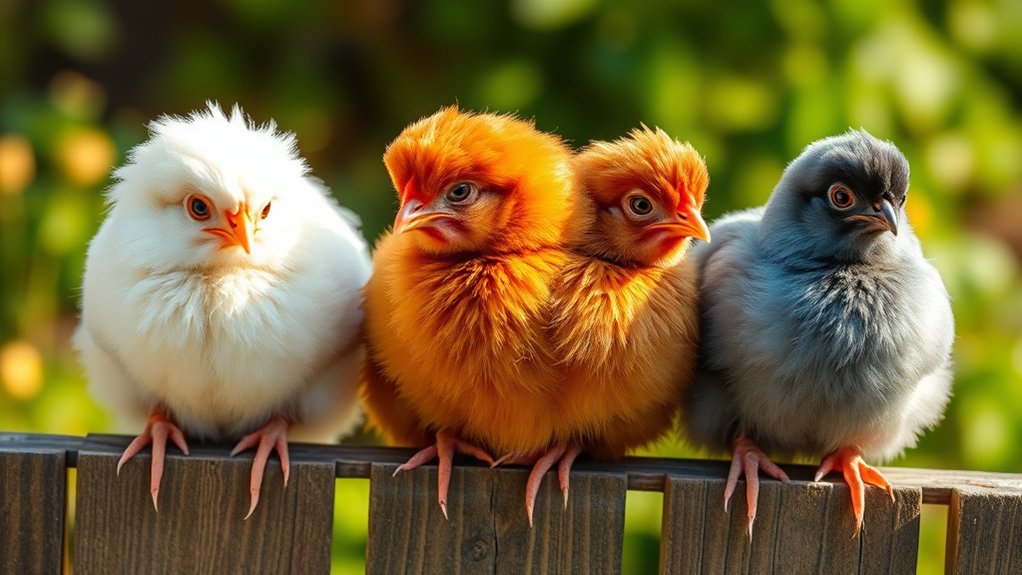
Fluffy Bantam Chickens pack a lot of charm into their small size, making them a favorite for backyard enthusiasts who want personality without taking up much space. You’ll immediately notice their feather fluffiness, which gives them a soft, rounded appearance that’s hard to resist.
These chickens aren’t just about looks. They boast lively personality traits, from curiosity to friendliness. They often enjoy interacting with you and can become surprisingly affectionate pets.
Their compact size means they don’t need a large coop, so they’re perfect if you’re limited on space. Plus, their feather fluffiness offers some insulation, helping them stay comfortable in cooler weather.
If you want a chicken breed that combines adorable looks with engaging behavior, Fluffy Bantams fit the bill perfectly. They’re lively, manageable, and bring a lot of joy without demanding much room or effort. You’ll find they’re a delightful addition to any backyard flock.
Hardy Heritage Chicken Breeds Built to Last
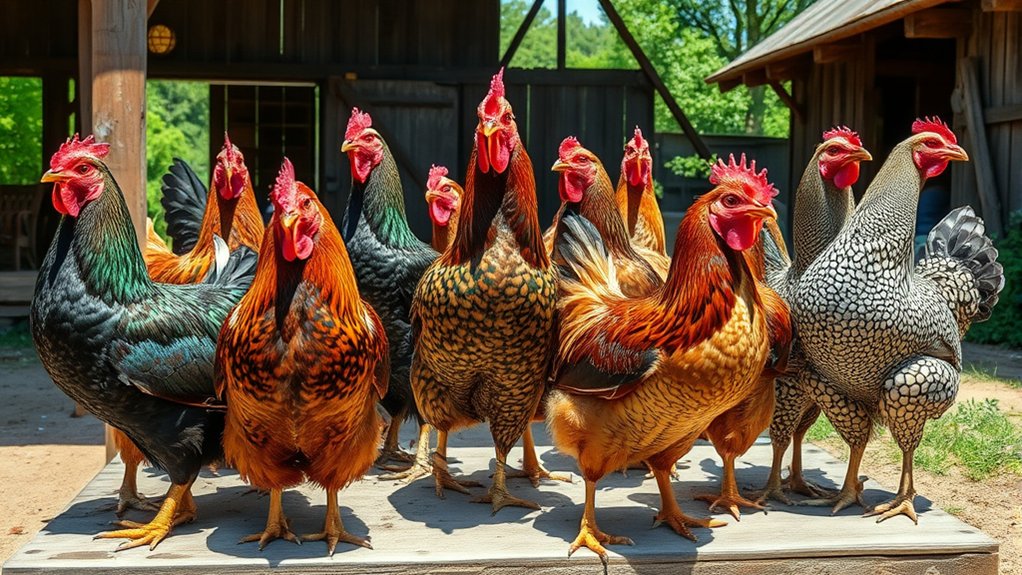
Though they may take a bit longer to mature, hardy heritage chicken breeds reward you with resilience and longevity that modern hybrids often lack. When you choose these breeds, you’re investing in heritage resilience. That means they adapt well to varied climates and resist disease naturally.
Their breed longevity ensures you can keep them thriving for years, making them a smart choice for sustainable poultry keeping.
Here’s a quick look at some popular hardy heritage breeds:
| Breed | Key Traits |
|---|---|
| Plymouth Rock | Cold-hardy, docile |
| Sussex | Dual-purpose, friendly |
| Orpington | Large, calm, heat-tolerant |
| Rhode Island Red | Tough, excellent foragers |
These breeds are built to last, giving you a reliable flock that withstands the test of time while maintaining strong health and productivity. You’ll appreciate their enduring qualities in your backyard or farm.
Egg-Laying Champion Breeds for Fresh Eggs
Several chicken breeds stand out as egg-laying champions, consistently delivering fresh eggs to your kitchen. If you want reliable layers, consider breeds like the Leghorn, Rhode Island Red, and Sussex. These hens can lay upwards of 250 eggs per year, making them perfect for anyone focused on steady egg production.
To maximize output, follow egg production tips such as providing balanced feed, clean water, and a well-lit coop. Regularly collecting eggs also encourages hens to keep laying.
Choosing these breeds offers more than quantity; their eggs provide excellent nutritional benefits, rich in protein, vitamins, and minerals. Fresh eggs from your own chickens often taste better and contain higher nutrient levels than store-bought options.
Friendly and Docile Chicken Breeds for Families
If you’re looking for chickens that are easy to handle and get along well with kids, you’re in the right place. These breeds are known for their gentle nature, making them perfect for families. They’re calm, approachable, and really friendly. So, let’s take a look at some of the best docile chicken breeds you can bring into your home.
Gentle Temperament Breeds
Choosing the right chicken breed can make all the difference when you want a friendly and calm addition to your family. Gentle temperament breeds are known for their easygoing nature, making them perfect if you want chickens that interact well with people.
These breeds typically show mild rooster behavior, meaning they’re less aggressive and more manageable around kids. You’ll also notice their chicken vocalizations tend to be softer and less frequent, creating a peaceful environment in your backyard.
Breeds like Silkies, Buff Orpingtons, and Cochins are excellent examples. They’re approachable and patient, making daily care enjoyable. By selecting these gentle breeds, you’ll foster a harmonious flock where both you and your chickens feel comfortable and connected.
Ideal Family Pets
What makes a chicken a perfect family pet? You want a breed that’s friendly, docile, and easy to handle. These traits are ideal for kids and beginners. Breeds like Silkies and Buff Orpingtons fit this well.
When raising chickens in the city, urban coop considerations become essential. You’ll need a compact, secure coop that keeps your birds safe and reduces noise.
Also, think about organic feeding options to keep your flock healthy and produce clean, nutritious eggs. Offering organic grains and fresh kitchen scraps supports their well-being without chemicals.
Chicken Breeds With Striking Feather Colors and Patterns
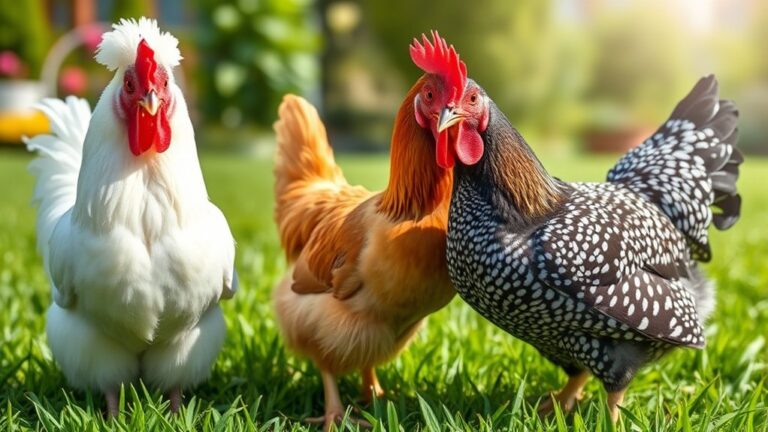
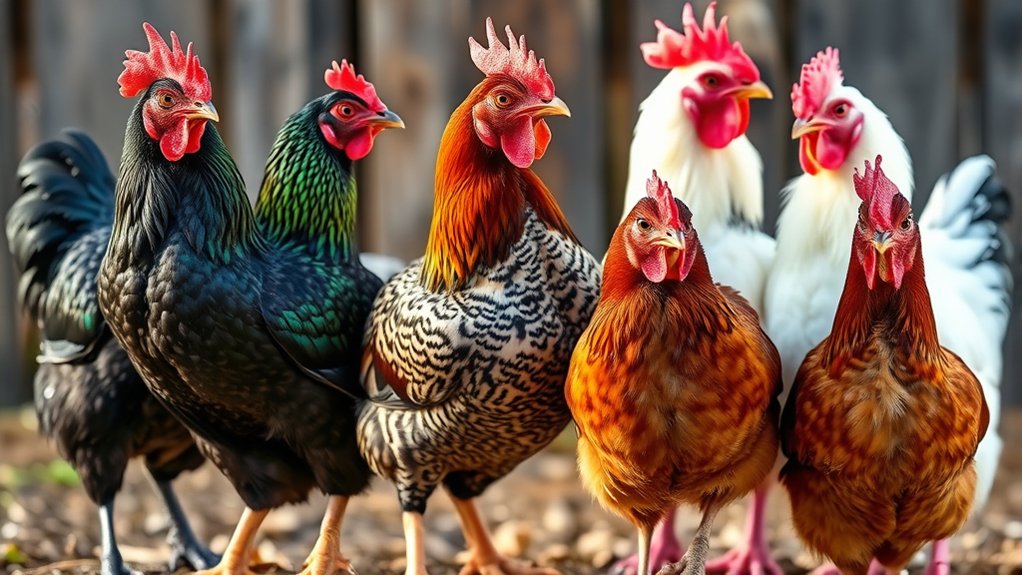
Several chicken breeds stand out because of their striking feather colors and patterns, catching the eye in any flock. When you examine feather pattern variations, you’ll find breeds like the Mille Fleur d’Uccle, with its speckled feathers, or the Barnevelder, known for its double-laced plumage. These patterns aren’t random; they result from fascinating color genetics in chickens, which dictate how pigments distribute across feathers.
Understanding color genetics helps you appreciate why some breeds sport iridescent greens or rich golds, while others display unique mottled or barred designs. If you want a flock that’s both lively and visually captivating, choosing breeds with distinct feather patterns is a smart move. Not only do they add beauty, but they also help you identify individual birds quickly.
Picking Chicken Breeds That Thrive in Your Climate
When you’re picking chicken breeds, it’s a good idea to think about how they’ll handle the weather where you live. Some breeds do better in the heat, while others are built to thrive in colder climates. Choosing the right breed can really help keep your flock happy, healthy, and laying eggs all year long.
Climate Adaptability Factors
How well your chickens adapt to the local climate can make or break your flock’s health and productivity. Understanding climate impact is key when choosing breeds. Different chickens face unique adaptability challenges, such as humidity, rainfall, or seasonal fluctuations.
You want breeds that handle these conditions without stress, which affects egg production and disease resistance. Look for chickens with traits suited to your environment, like feather density or foraging habits. Also, consider how your climate influences shelter needs and feeding routines.
Breed Heat And Cold Tolerance
Choosing chicken breeds that can handle the temperature extremes in your area directly impacts their well-being and productivity. When selecting chickens, consider breeds with strong cold climate resilience if you live in chilly regions.
Conversely, breeds with effective heat tolerance strategies suit hot climates better.
To help you decide, keep these points in mind:
- Thick feathering and smaller combs offer better cold climate resilience.
- Breeds with large combs and lighter plumage usually have improved heat tolerance.
- Behavioral traits, like dust bathing and seeking shade, improve heat tolerance strategies.
Frequently Asked Questions
How Do I Build a Safe Chicken Coop?
To build a safe chicken coop, you’ll want sturdy materials and secure locks to keep predators out. Consider your chickens’ roosting preferences by installing perches at varying heights inside.
Include well-ventilated nesting box choices that offer privacy and comfort for egg-laying. Make sure the coop has good drainage and easy access for cleaning. By focusing on these details, you’ll create a cozy, secure home your chickens will love.
What Do Chickens Eat for a Balanced Diet?
You’ll want to meet your chicken’s dietary needs by providing a mix of nutritious chicken feed, grains, and fresh greens. Make certain their feed contains essential protein, vitamins, and minerals to keep them healthy and laying eggs.
You can also supplement with kitchen scraps, insects, and occasional treats, but avoid anything toxic. Fresh water is vital, too.
Keeping their diet balanced ensures your chickens stay active and thriving.
How Often Should I Clean the Chicken Coop?
You should clean your chicken coop at least once a week to keep your flock healthy and happy. Did you know that a dirty coop can increase the risk of respiratory issues by 30%?
While cleaning, don’t forget proper coop ventilation to reduce moisture and ammonia buildup. Also, collect eggs daily to prevent them from getting dirty or cracked.
Regular maintenance guarantees a fresh, safe environment for your chickens and better egg quality.
What Are Common Chicken Health Issues?
You’ll often see common chicken health issues like respiratory infections, mites, lice, and worms. To keep your flock healthy, you should prioritize chicken vaccination and maintain a regular parasite control routine.
Vaccinations protect against diseases like Marek’s and Newcastle, while parasite control prevents infestations that cause discomfort and illness. Staying proactive with these steps helps you avoid costly problems and keeps your chickens thriving.
How Do I Protect Chickens From Predators?
You might feel like a medieval knight guarding your flock, but to protect chickens from predators, install predator-proof fencing around their coop. Make sure it’s buried a foot underground to stop digging animals.
For nighttime security, use sturdy locks and consider motion-activated lights or alarms. Secure all openings tightly, and lock chickens inside the coop before dark. These steps keep your feathered friends safe from unwanted visitors.
Conclusion
No matter your backyard dreams, there’s a perfect chicken breed waiting for you, whether you want fluffy bantams full of charm, hardy heritage birds, or egg-laying champions. Choosing the right breed isn’t just about looks or productivity; it’s about finding a feathered friend that fits your lifestyle and climate.
So, why settle for less? Welcome the cluck that calls to you and watch your flock—and happiness—grow with every sunrise. When it comes to choosing the right chicken breed, there’s truly something for everyone.