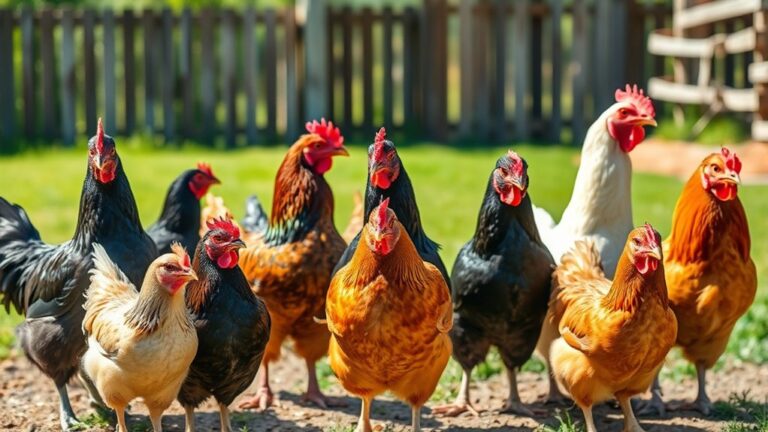
Top 5 Poultry Breeds With Pictures
Choosing the best poultry breeds can feel overwhelming, especially with so many options out there. You’re not alone—many people struggle to pick the right birds that fit their needs, whether for eggs, meat, or appearance.
That’s why we’ve put together this guide to the top 5 poultry breeds to help make your decision easier and more enjoyable.
If you want the best poultry breeds, start with Leghorns or Anconas for white eggs, and Golden Comets or Rhode Island Reds for brown eggs.
For meat, Cornish Cross and Jersey Giants deliver quality growth.
To add beauty, choose Silkies or Polish with their unique feathers and colors.
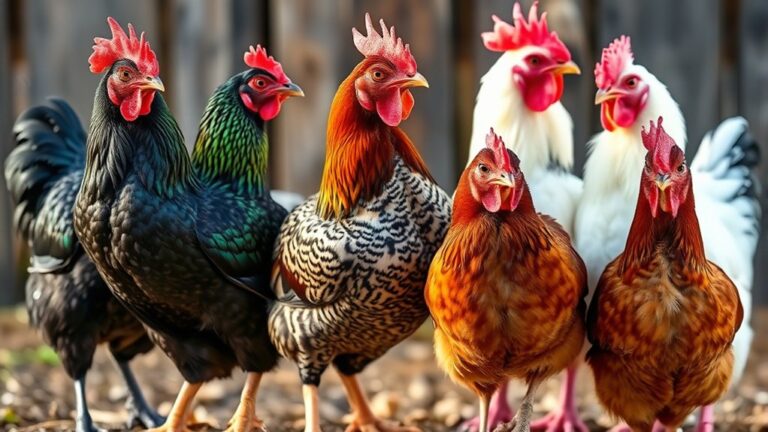
Each breed has distinct features you can spot quickly.
Keep exploring, and you’ll uncover even more tips on choosing the perfect flock for your needs.
Key Takeaways
- Leghorn and Golden Comet top egg-laying breeds, producing up to 300 eggs annually with white and brown varieties.
- Cornish Cross and Broad Breasted White Turkeys excel in meat production with fast growth and quality meat.
- Silkie and Polish are popular ornamental breeds known for unique feathers and distinctive crests.
- Sussex and Rhode Island Red serve as dual-purpose breeds, offering both egg production and meat quality.
- Visual traits like feather color, patterns, and body shape aid quick identification of poultry breeds.
How to Choose the Right Poultry Breed for Your Flock
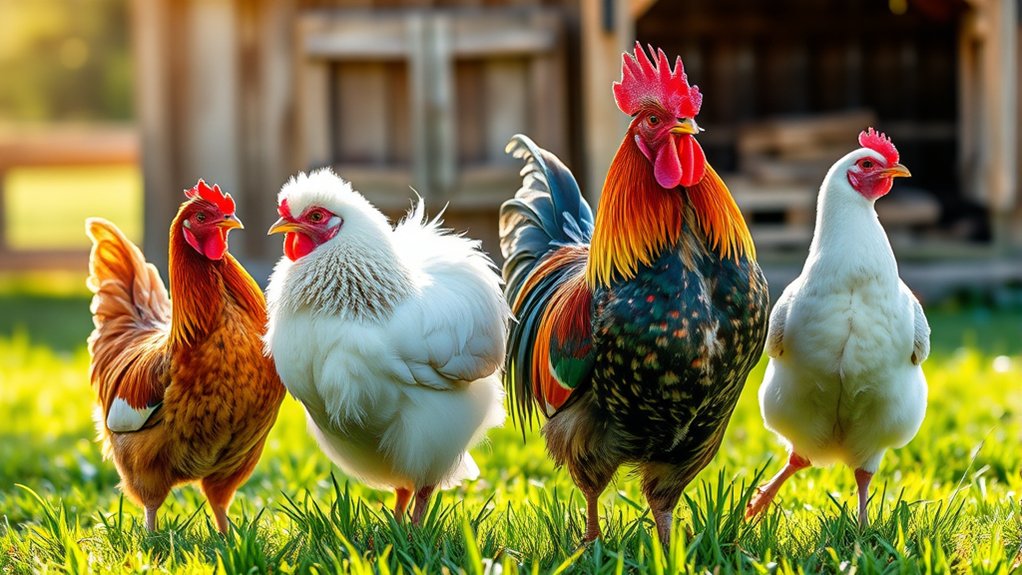
Although choosing the right poultry breed might seem overwhelming, focusing on your flock’s purpose and environment will make the decision easier. First, consider what you want from your birds, whether it’s meat, eggs, or ornamental value. This goal shapes which breeds fit best.
Next, think about your local climate suitability. Some breeds thrive in hot, humid areas, while others prefer cooler temperatures. Selecting a breed adapted to your climate reduces stress and health issues for your flock.
Feeding habits also play an essential role. Some breeds are efficient foragers and need less supplemental feed, which can save you money. Others require higher-quality diets to maintain productivity. Understanding these habits helps you manage costs and nutrition effectively.
Top Egg-Laying Poultry Breeds for Maximum Production
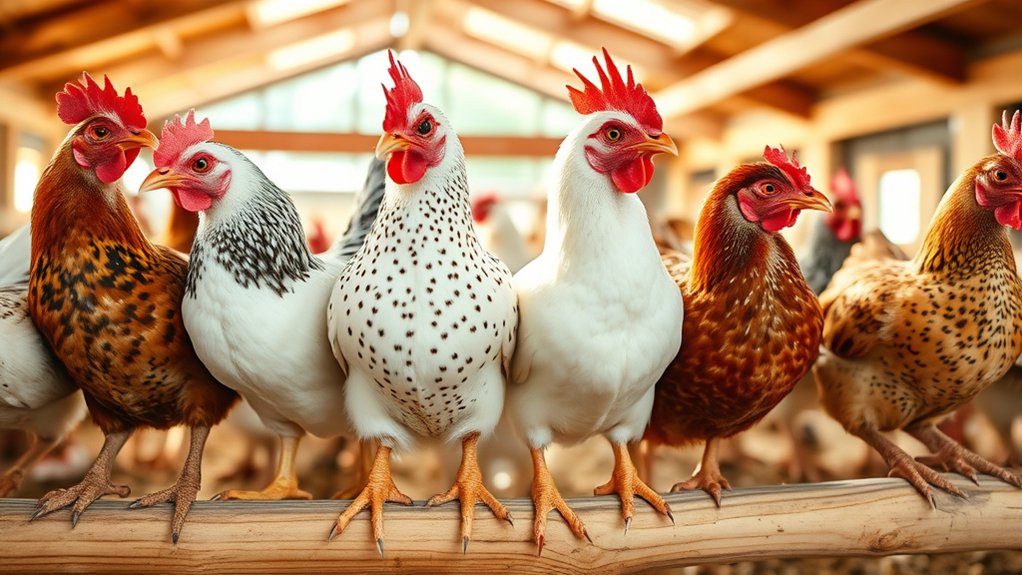
When you want to maximize egg production, choosing the right poultry breed is essential. Understanding egg production statistics and poultry breed history helps you pick birds that lay consistently and efficiently. Some breeds have been selectively bred for generations to optimize egg-laying abilities, making them your best bet for a productive flock.
Maximize egg production by selecting breeds with proven, consistent, and efficient laying abilities through informed choices.
Here are the top egg-laying poultry breeds for maximum production:
- Leghorn: Known for high egg production, often exceeding 280 white eggs annually.
- Rhode Island Red: Hardy and reliable, laying up to 250 brown eggs per year.
- Sussex: A dual-purpose breed with strong laying capabilities, producing about 250 eggs annually.
- Ancona: A Mediterranean breed with impressive egg numbers, around 280 white eggs yearly.
- Golden Comet: A hybrid breed famed for rapid maturity and up to 300 brown eggs annually.
Selecting any of these breeds ensures you get excellent egg production backed by proven poultry breed history and solid egg production statistics.
Best Meat-Producing Poultry Breeds for Quality Growth
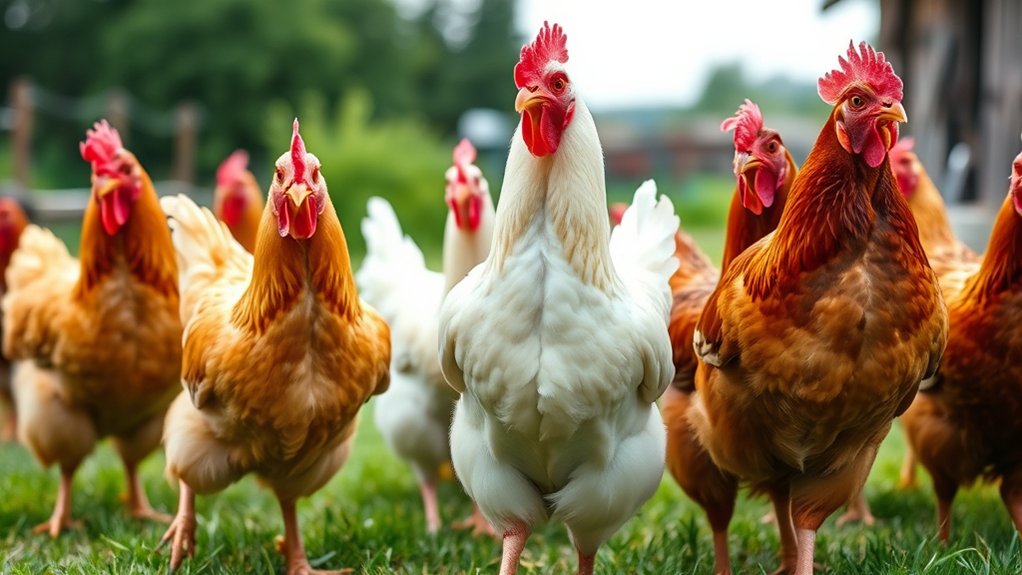
Which poultry breeds deliver the best meat quality and growth rates? When focusing on meat production, you’ll want to evaluate breeds like Cornish Cross, Broad Breasted White Turkeys, and Jersey Giants. These breeds excel due to their efficient feeding habits, converting feed into muscle quickly, which supports rapid, quality growth.
Understanding breeding variations helps you select the right strain; for example, Cornish Cross grows exceptionally fast but requires careful feeding management to avoid health issues. Meanwhile, heritage breeds like the Jersey Giant grow slower but offer richer flavor and robustness.
You’ll need to balance growth speed with feeding habits to optimize both quality and yield. Selecting breeds with proven meat-producing genetics ensures you get the most from your flock. By mastering these feeding and breeding factors, you’ll raise poultry that meets your meat production goals effectively and sustainably.
Ornamental Poultry Breeds That Beautify Your Coop
If you want to add charm and personality to your flock, ornamental poultry breeds offer vibrant colors, unique feather patterns, and striking appearances. They can transform any coop into a visual delight. These breeds showcase an impressive variety of color patterns and feather types, making your poultry area a true spectacle.
Consider these ornamental breeds to beautify your coop:
- Silkie: Known for their fluffy, fur-like feathers and calm demeanor.
- Polish: Famous for their stunning crests and bold color patterns.
- Frizzle: Unique for their curled feathers that create a frizzled effect.
- Sebright: Small with intricate laced feather varieties and metallic sheen.
- Dutch Bantam: Compact size with striking black-and-white color patterns.
Choosing these breeds not only enhances your flock’s aesthetics but also adds diversity to your poultry collection. Their eye-catching feathers and patterns make everyday coop visits more enjoyable.
Quick Ways to Identify These Poultry Breeds at a Glance
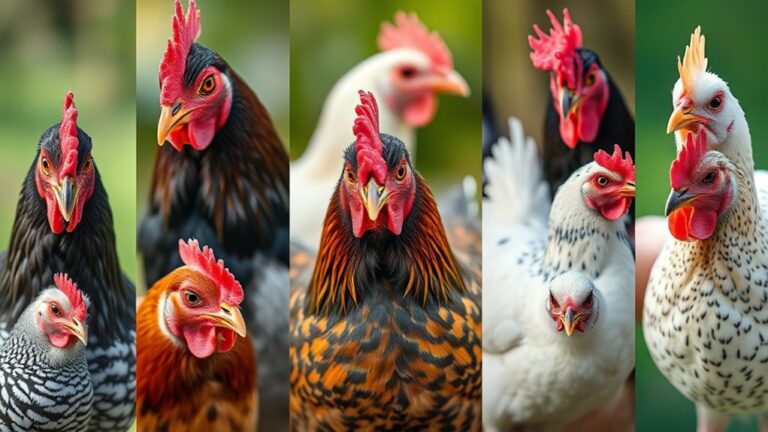
Three simple features can help you quickly identify common ornamental poultry breeds without confusion. Focus on color variation, feather patterns, and body shape to distinguish each breed at a glance. Color variation often highlights unique breed characteristics, while feather patterns give you visual clues about their identity.
By training your eye on these features, you won’t need to memorize every detail.
Here’s a quick reference table to get you started:
| Breed | Color Variation | Feather Patterns |
|---|---|---|
| Silkie | White, black, blue | Fluffy, soft, silk-like |
| Polish | White, black, mottled | Crest of feathers on head |
| Sebright | Gold or silver | Laced feather pattern |
| Bantam | Various | Compact, smooth feathers |
Use this guide to spot breeds quickly and appreciate their unique beauty in your flock.
Frequently Asked Questions
What Is the Average Lifespan of Common Poultry Breeds?
You can expect common poultry breeds to live around 5 to 10 years on average. Their lifespan often depends on factors like egg production and feather color variations, which sometimes hint at breed health and genetics.
If you’re raising chickens for eggs, keep in mind that high-producing layers might have shorter lifespans due to the strain of constant egg-laying. Taking good care of their diet and environment helps you enjoy their vibrant feathers and steady egg supply longer.
How Do Poultry Breeds Differ in Climate Adaptability?
Like a seasoned traveler adjusting to new lands, poultry breeds differ in climate adaptability through their genetic diversity. You’ll find that breeds bred in colder regions have thicker feathers, while those from warmer climates handle heat better.
Breeding selection plays a key role here, shaping traits that help chickens thrive where they live. So, when selecting breeds, consider how their genetics match your environment to keep your flock healthy and productive.
What Are the Common Health Issues for Different Poultry Breeds?
You’ll often see common health issues like respiratory infections, parasites, and egg binding affecting different poultry breeds. These problems can impact egg production and sometimes alter feather coloration, making your birds look dull or patchy.
Some breeds are more prone to specific illnesses due to genetics or environment, so keep an eye on their behavior and appearance. Regular check-ups and good hygiene help you maintain healthy, vibrant poultry.
How Much Space Is Needed per Bird for Each Breed?
Like Goldilocks finding the perfect fit, you’ll want about 2-3 square feet per bantam and 4-5 square feet for larger breeds. This space guarantees they meet their feeding requirements comfortably and prevents overcrowding.
Don’t forget, bedding preferences vary. Soft straw suits some, while pine shavings work best for others. Giving your birds enough room keeps them healthy, happy, and stress-free, just like a fairytale with a happy ending.
Can These Poultry Breeds Be Raised Together in One Flock?
Yes, you can raise these poultry breeds together, but you need to ensure mixed breed compatibility carefully. Some breeds might be more aggressive or dominant, so watch their behavior to keep peace in your flock.
Also, keep in mind that different breeds may require a breed specific diet to thrive. Providing balanced nutrition tailored to each breed ensures they stay healthy and productive when raised together in one flock.
Conclusion
Choosing the perfect poultry breed isn’t just a decision; it’s like revealing the secret to poultry paradise! Whether you want egg-laying machines, meat-producing marvels, or stunning ornamental birds, the right breed transforms your flock into a legendary masterpiece.
You’ll spot them from a mile away, and your coop will become the envy of every backyard enthusiast. So go ahead, pick your champions and watch your poultry dreams soar beyond imagination with the top poultry breeds!