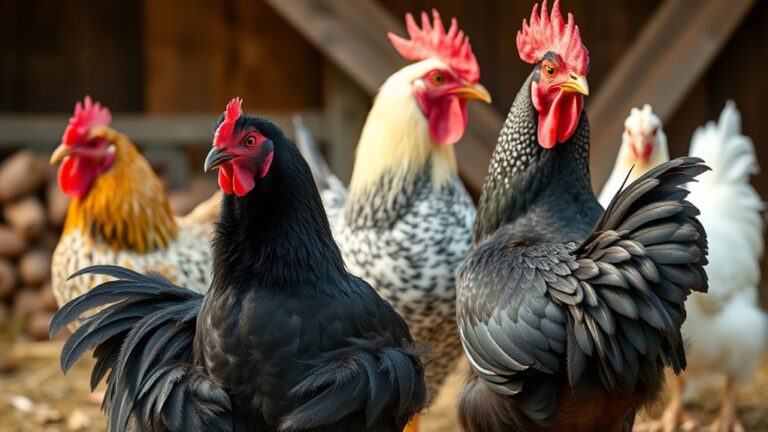
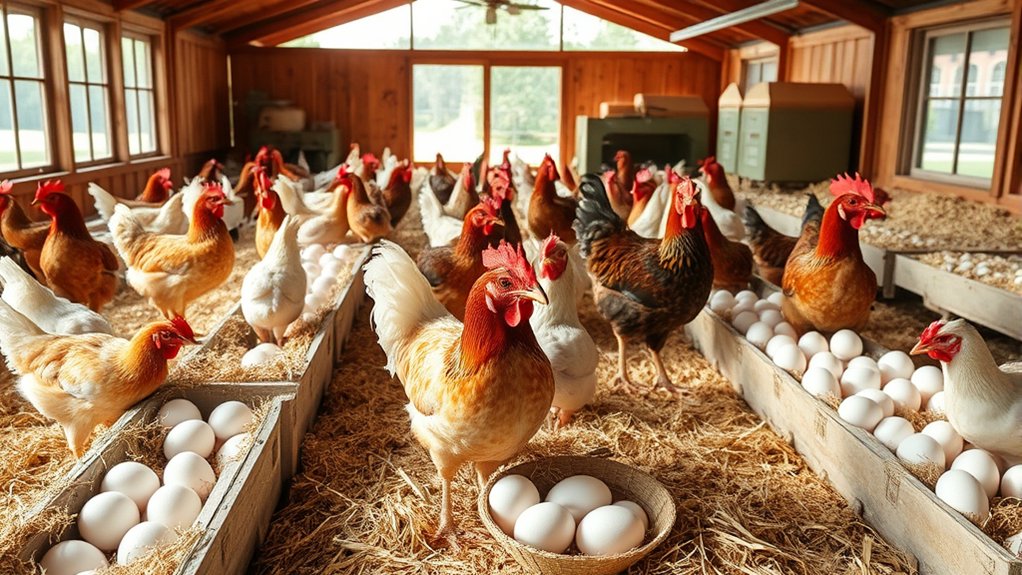
How to Maximize Plymouth Rock Chicken Egg Production
If you’re raising Plymouth Rock chickens, you probably want to get the most eggs possible from your flock. You’re not alone—many people struggle with boosting egg production while keeping their birds healthy and happy. Finding the right balance of care, nutrition, and environment can feel tricky, but it’s definitely achievable with some simple strategies.
To maximize your Plymouth Rock chickens’ egg production, choose strong laying breeds like the Barred Plymouth Rock and provide a balanced diet rich in protein and calcium.
Make sure their coop is spacious, clean, and well-ventilated with cozy nesting boxes.
Maintain 14-16 hours of consistent light daily and reduce stress by limiting noise and handling.
Collect eggs frequently to keep them fresh.
Keep an eye on their health and adjust care as needed. You’ll find several ways to boost your flock’s output even more.
Key Takeaways
- Select Barred Plymouth Rock hens with strong genetics for high egg yield and avoid meat-focused or show breeds.
- Provide a balanced diet rich in protein, calcium, vitamins, and supplements like oyster shells and greens for strong eggs.
- Maintain a spacious, well-ventilated coop with clean nesting boxes and fresh bedding to reduce stress and promote comfort.
- Use consistent lighting of 14-16 hours daily and minimize stress by avoiding loud noises and overcrowding.
- Collect eggs twice daily, monitor production and shell quality, and promptly address health or environmental issues.
Choose the Best Plymouth Rock Breed for Egg Laying
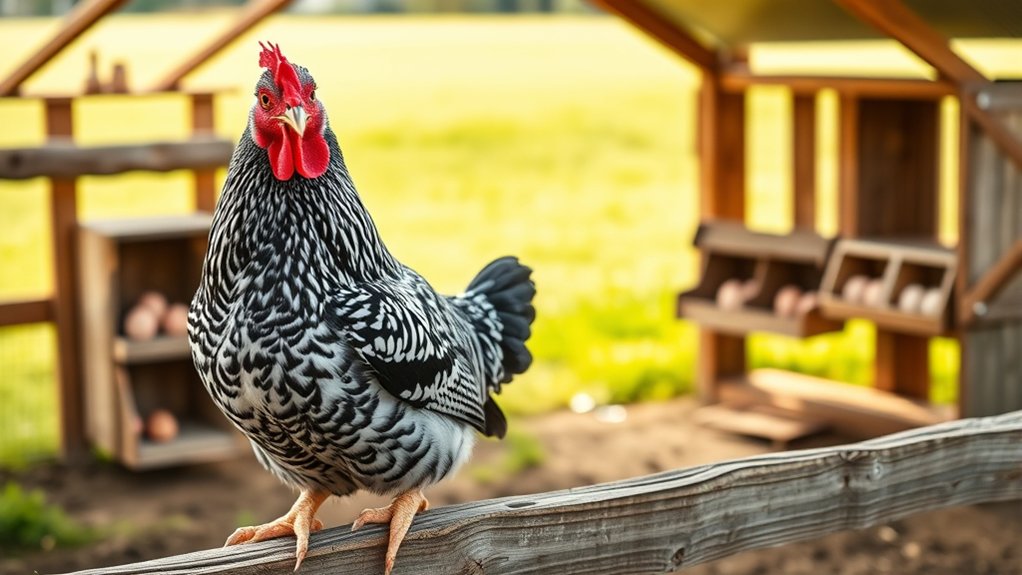
When you want to maximize egg production, choosing the right Plymouth Rock breed is essential. Not all Plymouth Rocks lay eggs similarly, so focusing on genetic traits that favor high egg output gives you an edge.
For instance, the Barred Plymouth Rock is known for consistent laying and hardiness, making it a popular choice. Breed selection should consider factors like egg size, frequency, and the bird’s adaptability to your environment.
You want a breed whose genetic traits include strong laying instincts and good health to reduce downtime. By selecting Plymouth Rocks with proven egg-laying performance, you set a solid foundation for your flock’s productivity.
Avoid breeds that prioritize meat qualities or show characteristics if egg production is your goal. Remember, smart breed selection based on genetic traits directly impacts how many eggs your chickens will give you, so invest time in research and choose wisely.
Provide a Balanced Diet for Plymouth Rock Chickens
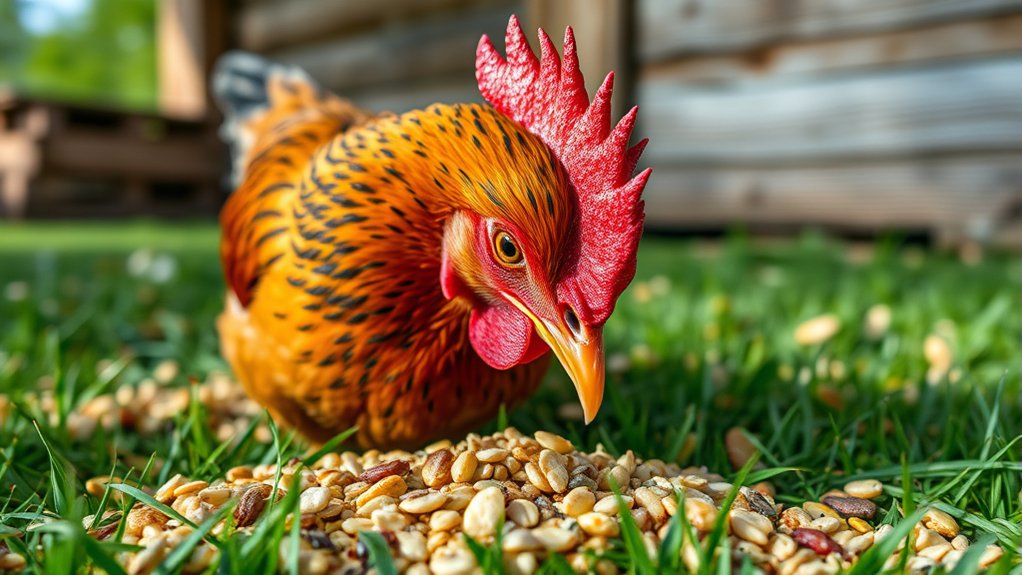
To keep your Plymouth Rock chickens laying consistently, you’ll want to provide them with a balanced diet that’s rich in protein, calcium, and vitamins. These nutrients are key to supporting their health and egg production.
Also, it’s important to stick to a regular feeding schedule. This helps their bodies absorb the nutrients better and keeps them feeling good overall. When you do this, you’re helping your flock stay healthy and productive without causing them any stress.
Essential Nutrient Requirements
Although Plymouth Rock chickens are hardy and adaptable, they won’t reach their full egg-laying potential without a well-balanced diet tailored to their specific nutrient needs. You must focus on providing adequate protein, calcium, vitamins, and minerals to support strong eggshells and consistent production.
Avoid nutrient deficiencies by including quality layers’ feed supplemented with oyster shells or limestone for calcium. Pay attention to feeding frequencies to guarantee your flock receives these nutrients evenly throughout the day without overeating.
Balanced nutrition prevents common setbacks like weak shells or reduced laying. By carefully managing their essential nutrient intake, you’ll help your Plymouth Rocks stay healthy and productive, maximizing their egg output efficiently and sustainably.
Feeding Schedule Tips
Since consistent feeding supports steady egg production, you should establish a regular schedule that meets your Plymouth Rock chickens’ nutritional needs throughout the day. A well-planned feeding schedule with proper nutrient timing ensures your hens get the energy and protein they need for peak laying.
Feed them twice daily, morning and late afternoon, to align with their natural eating habits. Provide fresh water alongside meals to aid digestion and nutrient absorption.
Here are some feeding schedule tips to keep in mind:
- Offer a balanced layer feed rich in calcium and protein
- Supplement with fresh greens or kitchen scraps mid-morning
- Avoid feeding late at night to prevent spoilage
- Provide grit to aid digestion during the day
- Monitor intake and adjust portions seasonally for consistent production
Create Comfortable Housing for Healthy Hens
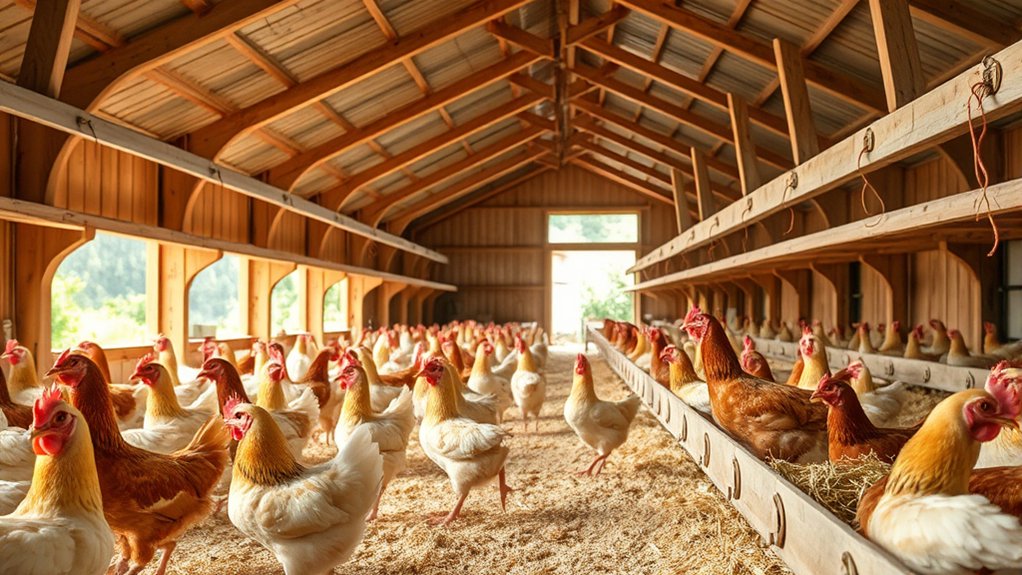
To keep your Plymouth Rock hens healthy and productive, you’ll want to design a coop that offers plenty of space and good protection. It’s important to make sure your coop has proper ventilation so moisture and airflow are controlled without causing drafts. When you create this kind of comfortable environment, it helps reduce stress and keeps your hens laying eggs consistently.
Optimal Coop Design
When you design a coop that prioritizes comfort and safety, your Plymouth Rock hens will stay healthier and lay more eggs. A well-planned coop supports essential behaviors like feather grooming and guarantees water cleanliness, both crucial for their health and productivity. Focus on creating a space that meets their basic needs without overcrowding.
Here’s how to optimize your coop design:
- Provide enough space for hens to move freely and groom their feathers properly.
- Install easy-to-clean waterers to maintain water cleanliness and prevent disease.
- Use smooth, non-toxic materials to avoid feather damage.
- Include sturdy perches for resting and feather maintenance.
- Ensure nesting boxes are cozy and accessible for stress-free egg laying.
Proper Ventilation Techniques
A well-designed coop doesn’t just provide space and comfort. It also needs proper airflow to keep your Plymouth Rock hens healthy and productive. Installing efficient ventilation systems ensures fresh air circulates, reducing ammonia buildup and moisture that can harm your birds.
Focus on airflow management by placing vents strategically. Put them near the roof for hot air to escape and lower down to allow fresh air in. You can use adjustable vents or fans to control airflow depending on the season.
Proper ventilation prevents respiratory issues and keeps hens comfortable, directly impacting their egg production. Remember, stagnant air leads to stress and disease, so regular coop inspections and maintenance of your ventilation systems are essential. Prioritize proper airflow to create a healthy environment that maximizes your hens’ laying potential.
Manage Lighting to Encourage Consistent Egg Laying
Although lighting might seem like a minor factor, it plays a crucial role in regulating your Plymouth Rock chickens’ egg production. These hens rely on light cues to trigger their laying cycles, so managing both natural lighting and artificial illumination is key. You want to provide about 14 to 16 hours of light daily to keep them consistent.
Here’s how to manage lighting effectively:
Maximize natural lighting by placing the coop where sunlight enters freely. Use artificial illumination during shorter days to extend light exposure. Maintain a consistent lighting schedule to avoid confusing your flock. Use soft, warm lights to minimize stress while encouraging laying. Gradually adjust lighting times to mimic natural seasonal changes.
Reduce Stress to Boost Your Flock’s Egg Production
Controlling lighting sets the stage for steady egg production, but keeping your Plymouth Rock chickens calm plays an equally crucial role. Stress reduction is key to maintaining high egg output, so focus on creating a peaceful environment.
Avoid sudden loud noises and limit handling during peak laying times to prevent unnecessary agitation. Providing ample space and clean bedding promotes flock harmony, reducing conflicts that can stress your birds.
Ensure their coop is well-ventilated and free from drafts to keep them comfortable. Introduce new birds slowly to prevent disruptions in social order.
Regularly check feeders and waterers to avoid competition that causes tension. By reducing stress through these practical steps, you’ll help your flock stay healthy and productive.
Watch for Common Diseases and Keep Your Flock Healthy
Because healthy chickens lay more eggs, you need to watch for common diseases that can quickly impact your Plymouth Rock flock. Strengthening avian immunity is key to disease prevention, so focus on keeping your birds strong and resilient.
Regularly inspect your flock for symptoms like lethargy, coughing, or abnormal droppings. Early detection helps you act fast to prevent outbreaks. Maintain clean housing and provide fresh water and nutritious feed to support their immune system.
To keep your flock healthy, remember to:
- Quarantine new birds before introducing them
- Clean and disinfect the coop regularly
- Monitor for parasites like mites and lice
- Vaccinate according to local veterinary advice
- Provide stress-free living conditions to boost immunity
Collect and Handle Eggs to Maintain Freshness and Quality
When you collect eggs promptly and handle them with care, you help preserve their freshness and quality. Aim to gather eggs at least twice a day, especially during warm weather, to prevent dirt buildup and reduce the risk of cracked shells.
During egg collection, use a clean basket lined with a soft cloth to avoid damaging the shells. Avoid stacking eggs too high to prevent breakage.
For shell handling, gently wipe eggs with a dry or slightly damp cloth if necessary, but never wash them immediately after collection since this can remove their protective bloom. Store eggs in a cool, dry place with the pointed end facing down to maintain freshness longer.
Switch Up Feed and Supplements to Keep Hens Laying
If you want your Plymouth Rock hens to keep laying consistently, it’s a good idea to switch up their feed now and then with balanced nutrient profiles that support egg production. You can also add essential vitamin boosters—they really help fill any gaps and improve your hens’ overall health. Just paying attention to what they eat makes sure they get everything they need for strong, steady laying.
Balanced Nutrient Profiles
Although Plymouth Rock chickens thrive on a consistent diet, you’ll want to switch up their feed and supplements regularly to maintain balanced nutrient profiles. This nutrient balance is essential for maximum egg improvement, ensuring your hens lay consistently and produce strong shells.
Rotating feed sources prevents deficiencies and keeps hens interested in their food. Focus on incorporating diverse ingredients that support protein, calcium, and energy needs. Here are five key items to include:
- High-quality grains like corn and wheat
- Protein-rich sources such as soybean meal or fish meal
- Calcium supplements like crushed oyster shells
- Fresh greens and vegetables for vitamins and minerals
- Occasional natural treats like mealworms for extra nutrients
Essential Vitamin Boosters
Since your Plymouth Rock hens rely heavily on vitamins to maintain steady egg production, you’ll want to regularly adjust their feed and supplements to provide essential vitamin boosters. Switching up their diet with herbal supplements like nettle or alfalfa can improve nutrient absorption and strengthen their immune system.
These natural additions help keep your hens healthy and productive without relying solely on synthetic vitamins. During molting management, boosting vitamin intake is vital because hens temporarily stop laying and need extra nutrients to regrow feathers and recover.
Incorporate vitamin-rich greens and high-quality supplements during this phase to support their changeover back to laying. By rotating feed components and including herbal supplements, you’ll keep your Plymouth Rocks in peak condition, ensuring consistent egg production throughout the year.
Use Nesting Boxes Designed for Plymouth Rock Hens
When you provide nesting boxes tailored to Plymouth Rock hens, you promote consistent egg-laying and reduce stress. Choosing the right size and design guarantees your hens feel secure and comfortable, which boosts their productivity.
Keeping nest box cleanliness a priority prevents diseases and keeps eggs safe. Using fresh, soft bedding materials like straw or wood shavings adds comfort and absorbs moisture, maintaining a healthy environment.
To optimize your nesting boxes for Plymouth Rock hens:
- Select boxes sized about 12×12 inches to fit their larger bodies
- Place boxes in quiet, dim areas to reduce disturbances
- Change bedding materials regularly to maintain cleanliness
- Ensure good ventilation without drafts inside the nesting area
- Provide at least one box for every 4-5 hens to prevent overcrowding
Track Egg Production to Spot and Fix Problems Fast
To keep your Plymouth Rock hens laying consistently, you need to track their egg production closely. Monitoring daily egg counts helps you spot drops in quantity or changes in egg shell quality early.
If you notice fewer eggs or thinner shells, it might indicate nutritional deficiencies or health issues. Also, watch for broodiness behavior. Broody hens stop laying to sit on eggs, which can reduce overall production.
Use a simple log to record eggs laid, shell quality, and any broodiness signs. Here’s an example:
| Date | Eggs Laid | Notes on Shell Quality & Behavior |
|---|---|---|
| April 1 | 6 | Strong shells, no broodiness |
| April 2 | 5 | Thin shells noticed |
| April 3 | 4 | One hen showing broodiness |
| April 4 | 5 | Shell quality improving |
| April 5 | 6 | Broodiness resolved |
Tracking this way lets you act fast. You can adjust feed, check health, or separate broody hens to maximize egg output.
Frequently Asked Questions
How Long Do Plymouth Rock Chickens Typically Live?
Plymouth Rock chickens typically live around 6 to 8 years, though good breeding practices can extend their lifespan. If you focus on healthy breeding and proper care, your hens will maintain strong egg production longer.
Keeping them in a stress-free environment with balanced nutrition helps prevent early decline. So, by managing breeding practices carefully, you’ll enjoy your Plymouth Rocks’ egg production for many productive years.
Can Plymouth Rock Chickens Adapt to Cold Climates?
Yes, Plymouth Rock chickens can adapt well to cold climates. Their cold climate resilience comes from their dense feather insulation, which helps keep them warm during harsh winters.
You’ll notice they fluff up their feathers to trap heat, making them quite hardy in chilly weather. Just make sure they have a dry, draft-free coop and plenty of food to maintain energy.
You’ll find they handle cold much better than many other breeds.
What Is the Best Way to Introduce New Hens to the Flock?
Think of introducing new hens like weaving new threads into a tapestry; you want the colors to blend smoothly. To avoid feather pecking, keep the new hens separated but visible to the flock for a few days.
This gradual introduction eases tension and promotes peaceful flock integration. When you finally unite them, watch closely, stepping in if pecking starts. Patience and gentle steps help your flock stay harmonious and strong.
How Often Should You Clean the Chicken Coop?
You should clean your chicken coop at least once a week to maintain a solid cleaning schedule. Regular coop maintenance not only keeps your hens healthy but also prevents odors and pests.
Spot-clean daily by removing droppings and wet bedding, then do a deeper clean weekly. Replace all bedding and scrub surfaces during the deep clean.
Sticking to this routine guarantees a comfortable environment that supports your flock’s well-being and productivity.
What Are the Signs of Molting in Plymouth Rock Hens?
You’ll notice your Plymouth Rock hens start feather shedding, often in patches, leaving them looking a bit ragged. This isn’t just a random occurrence. It signals molting.
Along with this, you’ll see reduced egg production, sometimes stopping altogether. Your hens might seem less active or peck more at their feathers.
Recognizing these signs early helps you adjust care and feeding to support them through this natural, energy-draining phase.
Conclusion
You might worry that maximizing egg production feels overwhelming, but it doesn’t have to be. By choosing the right Plymouth Rock breed, providing balanced nutrition, and creating a stress-free environment, you’ll see your hens lay consistently.
Small changes like managing lighting and using proper nesting boxes make a big difference. Stick with these simple steps, and you’ll enjoy fresh, high-quality eggs regularly without the hassle you feared.
Following these tips will help you maximize Plymouth Rock chicken egg production with ease and confidence.