Can Chickens Eat Peanuts?
If you’re a chicken owner, you’ve probably wondered what treats are safe and healthy for your flock. You’re not alone—many people struggle with figuring out which snacks provide nutrition without causing digestive issues or harm. Can Chickens Eat Peanuts.
Finding the right balance can be tricky, especially when it comes to popular human foods like peanuts.
Yes, you can feed chickens plain, unsalted peanuts in small amounts as an occasional treat. You should avoid flavored, salted, or moldy peanuts, since those can upset digestion or expose your flock to toxins.
Raw or roasted peanuts are both fine if they’re plain, and it’s best to break larger pieces into smaller bits.
Peanuts offer protein and healthy fats, but they shouldn’t replace feed.
If you keep going, you’ll see how to serve them safely.
Key Takeaways
- Chickens can eat plain, unsalted peanuts safely as an occasional treat.
- Peanuts offer protein, healthy fats, and vitamins, but they should not replace regular feed.
- Break peanuts into small pieces to reduce choking risk, especially for chicks.
- Avoid salted, flavored, coated, stale, or moldy peanuts because they can harm chickens.
- Feed peanuts sparingly and stop if you notice digestive issues or lethargy.
Can Chickens Eat Peanuts Safely?

Yes, chickens can eat peanuts safely, as long as you serve them plain, unsalted, and unflavored. You can offer them as an occasional treat, not a daily staple, because your flock still needs a balanced feed.
Peanuts provide protein, healthy fats, and some vitamins, so peanut nutrition can support energy and overall condition when you use them wisely. Break large pieces into smaller bits if you have young birds or smaller breeds, since that helps reduce choking risk.
Peanuts offer protein and healthy fats, but smaller pieces help reduce choking risk for young birds.
Watch your flock’s chicken preferences, because some birds love peanuts while others ignore them. You should also check for shell fragments or mold before feeding, since poor-quality nuts can cause problems.
Keep portions modest and observe how your chickens respond. If a bird has dietary restrictions or health issues, ask a poultry-savvy vet before adding peanuts.
Are Raw Or Roasted Peanuts Better For Chickens?
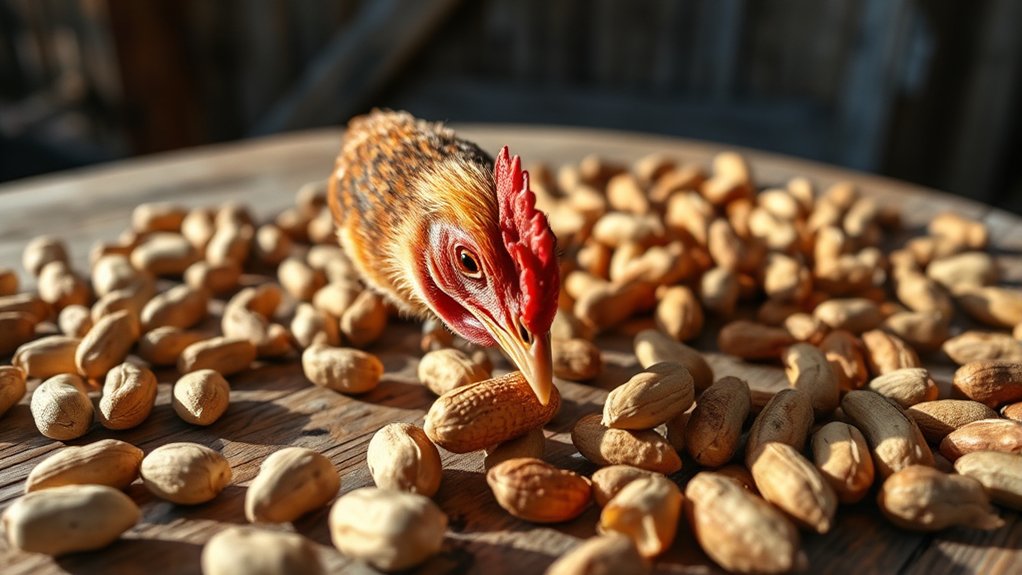
Raw or roasted peanuts can both work for chickens, as long as they’re plain and unsalted. You’ll find that peanut nutrition stays strong in either form, so your choice mostly comes down to texture and how easily your birds can handle them.
Raw peanuts feel firmer, while roasted peanuts often smell richer and may seem more tempting to peck.
- A handful of pale raw peanuts in a feed dish
- Golden roasted peanuts scattered on clean ground
- Curious hens pecking at broken peanut pieces
- A coop feeder with simple, plain treats
If you want easier chewing, lightly roasted peanuts may suit your flock better. If you prefer a less processed option, raw peanuts can still fit your feeding guidelines.
Just make sure the peanuts aren’t flavored, salted, or coated, and offer them as an occasional treat. That way, you keep things safe, simple, and chicken-friendly.
How Many Peanuts Can Chickens Eat?

You should keep peanut servings small because peanuts are best given as an occasional treat, not as a main part of their diet. Usually, a handful shared among your chickens is enough.
It’s also important to keep an eye on how much each bird gets in a day. Try offering peanuts only a few times a week so treats don’t take over their regular feed. That way, you can keep everything balanced and healthy.
Serving Size Basics
Regarding peanuts, moderation is key, since chickens should only get them as an occasional treat, not a main part of their diet. You can think of serving size like a pinch of extra energy, not a bucketful.
Peanut nutrition offers fat and protein, so keep portions small and simple. Serving variations matter too: you might offer a crushed sprinkle, a few shelled pieces, or a tiny handful mixed into feed.
- Picture a chicken pecking at two or three bits.
- Imagine a palm with only a light dusting.
- See a flock sharing a small scatter on clean ground.
- Envision treats disappearing in moments, not lingering.
When you keep portions modest, you help peanuts stay a fun snack, not a heavy meal.
Safe Daily Limits
A few peanuts are plenty for most chickens, and it’s best to keep them as an occasional treat rather than a daily staple. You can offer only a small amount because peanut nutrition is calorie-dense and can crowd out balanced feed.
For most hens, a teaspoon or two of chopped peanuts is enough in a day, while larger birds may handle slightly more. Always watch how your flock handles them, since chicken digestion works best with simple, manageable portions.
Choose plain, unsalted, unseasoned peanuts, and avoid shells if they’re hard or dusty. If you notice loose droppings or reduced appetite, cut back right away.
Keep peanuts as a tiny add-on, not a main snack, so your birds stay healthy and well nourished.
Treat Frequency Guide
Even though chickens can enjoy peanuts, they shouldn’t get them often. You should treat peanuts as an occasional snack, not a daily habit, so you protect nutritional balance and keep their main feed in charge. A small handful for a flock works better than a bowlful for one bird.
- Imagine a few crushed peanuts scattered on clean bedding.
- Picture hens pecking quickly, then walking away to scratch the yard.
- See a feeder with grains, greens, and just a pinch of peanuts.
- Think of treat alternatives like peas, oats, or chopped vegetables.
If you offer peanuts once or twice a week, you’ll usually stay in a safe range. Always watch body weight, droppings, and appetite, and reduce treats if your flock seems less active.
What Benefits Do Peanuts Offer Chickens?
Peanuts can give chickens a handy boost of protein, healthy fats, and key nutrients that support growth, energy, and feather health. When you offer them in moderation, peanut nutrition can complement a balanced feed and add variety to your flock’s diet. The protein supports muscle maintenance and development, while the fats provide concentrated energy that can help active birds stay strong.
Peanuts can boost chickens with protein and healthy fats, supporting growth, energy, and feather health.
You’ll also give your chickens vitamin E and B vitamins, which play a role in overall chicken health and normal body functions.
Peanuts can also make treats more appealing, especially if you use them during training or as enrichment. Their texture encourages pecking and foraging, which can keep your birds mentally engaged.
You can offer crushed, shelled peanuts as an occasional snack, helping your flock enjoy a tasty reward while still relying on their main ration for complete nutrition.
What Are The Risks Of Feeding Peanuts To Chickens?
When you feed peanuts to chickens, you want to be careful about choking hazards and blockages, especially if the nuts are whole. It’s better to break them up into smaller pieces to keep things safe. Also, try to avoid giving them salted or seasoned peanuts because too much salt and added flavors can actually harm your birds. And one more thing—moldy peanuts are a big no-no since they can carry aflatoxins, which are really dangerous for chickens. So, it’s best to stick with fresh, plain peanuts to keep your flock happy and healthy.
Choking And Blockages
Although peanuts can be a protein-rich treat, they also pose a real choking risk for chickens, especially if you feed them whole or in large pieces. You need to watch for choking hazards because a hen’s throat and crop can handle only so much at once.
For blockage prevention, crush or chop peanuts and offer only small amounts. If you toss too many at once, a greedy bird may gulp them fast and strain to swallow.
Picture these risks:
- A hen snapping at a whole peanut
- A chunk lodging in the throat
- A crowded crop slowing digestion
- A bird backing away and struggling
Stay nearby when you feed peanuts, and choose tiny, manageable bits instead.
Salt And Seasoning Risks
Salted or seasoned peanuts aren’t a safe treat for chickens, because extra sodium and spices can upset their digestion and, in larger amounts, even make them sick. You should keep your chicken’s salt intake low, since birds don’t handle excess salt well and can become thirsty, weak, or dehydrated.
Seasoning effects can also irritate the crop and gut, especially if the peanuts contain onion, garlic, chili, or other strong flavorings. Even a small handful of flavored nuts can turn a simple snack into a problem.
If you want to offer peanuts, choose plain, unsalted ones only, and give them sparingly as an occasional treat. That way, you avoid unnecessary stress on your flock and keep feeding safer and simpler overall.
Mold And Aflatoxins
Moldy peanuts are a bigger concern than plain ones because peanuts can carry aflatoxins, which are toxic compounds produced by certain molds. You should never feed chickens peanuts that smell stale, look dusty, or show green or black spots.
Even small amounts can raise aflatoxin exposure and harm the liver, reduce appetite, and weaken egg production. For mold prevention, store peanuts in a cool, dry place and toss any that seem off.
- A cracked shell with fuzz
- A peanut pile damp from rain
- A hen pecking at discolored kernels
- A sealed bin kept off the coop floor
If you want to offer peanuts, choose fresh, clean ones only and inspect every batch before serving.
Can Chickens Eat Salted Or Flavored Peanuts?
Can chickens eat salted or flavored peanuts? You shouldn’t offer them regularly. Salted nuts can overload your birds with sodium, and flavored varieties often include spices, sugar, or additives that don’t fit chicken preferences.
When you compare peanut types, plain, unsalted peanuts are the safer choice every time.
| Peanut type | Suitability |
|---|---|
| Salted peanuts | Avoid |
| Honey-roasted | Avoid |
| Spicy seasoned | Avoid |
| Plain unsalted | Better choice |
| Flavored mixes | Avoid |
You can use this quick guide to steer clear of risky snacks. Even small amounts of salted or flavored peanuts may upset digestion or encourage unhealthy intake.
If you want to treat your flock, pick simple peanut types with no added seasonings. That keeps the snack closer to what chickens can handle and matches their preference for straightforward feed.
How Should You Serve Peanuts To Chickens?
You can serve chickens raw or roasted peanuts, but make sure they’re always unsalted. It’s best to keep the pieces small or chop them up so your birds can eat them safely. That way, they won’t have any trouble chewing or swallowing the peanuts.
Raw Vs. Roasted
When serving peanuts to chickens, roasted is usually the safer choice because it’s easier to digest and less likely to carry unwanted contaminants than raw peanuts. In a nutritional comparison, both forms offer protein and healthy fats, but roasted peanuts often feel gentler during peanut preparation for your flock.
You can imagine a handful of warm kernels, a curious hen pecking at a cracked shell, and a small feeder dotted with golden pieces.
- A tidy scoop of roasted peanuts in a bowl
- A hen inspecting broken bits on clean ground
- A few crushed peanuts mixed into feed
- A calm flock sharing easy-to-chew treats
Unsalted Only
Stick with unsalted peanuts, because added salt can upset a chicken’s fluid balance and isn’t good for regular feeding. You should choose plain peanuts so your flock gets the nutritional value without extra sodium.
Salted snacks, flavored coatings, and seasoned mixes can add unnecessary ingredients that don’t belong in a chicken diet. When you offer peanuts, keep them as an occasional treat, not a staple feed, so you don’t crowd out balanced rations.
Good feeding tips include checking labels, avoiding peanut products with sugar or spice, and storing them in a dry place to prevent spoilage. You can use unsalted peanuts to add variety, but moderation matters.
Small, Chopped Pieces
Chickens can eat peanuts more safely and easily if you serve them in small, chopped pieces. You help protect their beaks and support better chicken digestion when you break the nuts into bite-size bits. Whole peanuts can be hard for smaller birds to manage.
Chopped pieces reduce choking risk while making pecking easier. If you notice any signs of peanut allergies, stop feeding them and watch for unusual swelling, scratching, or weakness.
- Scatter tiny peanut bits on clean ground.
- Mix them with feed for slower eating.
- Offer a light handful in a shallow dish.
- Remove uneaten pieces before they spoil.
Can Chicks Eat Peanuts Too?
Yes, chicks can eat peanuts, but only in very small amounts and only if the peanuts are plain, unsalted, and finely chopped or crushed. You should treat peanuts as an occasional treat, not a staple, because young birds need a balanced starter feed for proper chick nutrition.
Offer tiny bits so your chicks can peck safely, and keep the portions far smaller than you’d give adult chickens. If you want to reward them without risking their growth plan, choose safer peanut alternatives like finely crumbled mealworms, oats, or small bits of greens.
You should always watch how your chicks handle new foods and make sure they can chew and swallow comfortably. Since their beaks and digestive systems are still developing, simple, soft foods work best. Keep treats limited, and let their regular feed do the heavy lifting for healthy development.
What Are The Signs Of Too Many Peanuts?
If your chickens get too many peanuts, you’ll usually notice digestive upset first, such as loose droppings, reduced appetite, or a swollen crop. You might also see sluggish behavior, ruffled feathers, or birds lingering near water instead of scratching.
When peanut overfeeding continues, digestive issues can worsen and make your flock seem uncomfortable after eating. In rare cases, spoiled peanuts can raise concern about peanut toxicity, especially if mold or rancid fats are involved. Watch for these warning signs:
- Droppings that look watery or unusually pale.
- A crop that stays full long after feeding.
- Chickens that peck less and stand apart.
- Birds that act sleepy, tense, or uneasy.
If you notice these signs, stop peanuts and monitor your flock closely for a day or two.
What Treats Can Replace Peanuts?
Instead of peanuts, you can offer treats like chopped vegetables, berries, mealworms, oats, or sunflower seeds in small amounts. These nut alternatives give you healthy snacks that add variety without overloading your flock. You can rotate poultry treats to keep interest high and support balanced feeding.
Choose vegetable options such as cucumber, lettuce, or peas, and add fruit choices like blueberries or watermelon as occasional rewards. For protein sources, mealworms and a few sunflower seeds work well. Grain mixes and oats also fit into a simple treat plan.
| Treat | Benefit | Frequency |
|---|---|---|
| Carrots | Crunchy Vegetable options | Often |
| Berries | Sweet Fruit choices | Occasionally |
| Mealworms | Protein sources | Occasionally |
| Oats | Grain mixes | Often |
| Sunflower seeds | Nut alternatives | Sparingly |
This snack variety helps you keep treats safe, tasty, and useful without relying on peanuts.
Frequently Asked Questions
Can Chickens Eat Peanut Butter?
Yes, chickens can eat peanut butter in small amounts, but you should treat it as an occasional snack, not a staple. Peanut nutrition offers protein and healthy fats, yet peanut butter’s stickiness can make eating messy, and some brands contain salt or sugar.
Follow feeding guidelines by choosing unsalted, plain peanut butter and serving only a tiny smear. You’ll protect your flock’s health while still offering a fun treat.
Do Peanuts Cause Allergies in Chickens?
Peanuts can cause allergies in chickens, though it’s uncommon. You should watch for allergy symptoms like itching, swelling, sneezing, trouble breathing, or sudden weakness after they eat peanuts.
Their peanut nutrition can be useful in small amounts, but you shouldn’t rely on them if your birds react badly. If you notice symptoms, stop feeding peanuts right away and call a poultry vet for guidance and safer treat options.
Can Chickens Eat Peanut Shells?
Yes, you can let chickens peck at peanut shells in small amounts, but you shouldn’t rely on them as feed. Peanut shell benefits are limited: they can provide roughage and foraging fun.
Peanut shell risks include choking, mold, and possible pesticide residue, so you should only offer clean, dry shells. Chop them first if you want to reduce danger, and always keep fresh water and balanced feed available for your flock.
Are Crushed Peanuts Safer for Chickens?
Yes, crushed peanuts can be safer for chickens because you’ll reduce choking risk and make them easier to peck. You’ll still want to follow feeding guidelines since peanuts are high in fat and should stay a treat, not a staple.
They can offer nutritional benefits like protein and healthy fats, but you shouldn’t serve salted, seasoned, or moldy peanuts. Offer only small amounts and watch how your flock handles them.
Can Peanuts Be Fed Daily to Chickens?
No, you shouldn’t feed peanuts daily to chickens. You’ll notice the coincidence: a treat that seems harmless can still crowd out balanced feed.
Peanuts offer nutritional benefits like protein and healthy fats, but they’re best as an occasional snack, not a staple. Follow simple feeding guidelines, keep portions small, and make sure your birds get complete poultry feed first.
Too many peanuts can upset nutrition and invite picky eating.
Conclusion
So, can chickens eat peanuts? Yes, you can offer them in moderation, and they can be a handy treat packed with protein and healthy fats. Just make sure you skip salty, flavored, or moldy peanuts, and serve them chopped so they’re easy to eat.
Think of peanuts as a small bonus, not the whole meal. When you keep portions sensible, you’ll keep your flock happy, healthy, and pecking for more. In conclusion, chickens can eat peanuts safely when given the right way and in moderation.