Can Chickens Eat Pasta?
If you’ve ever wondered what treats are safe and healthy for your chickens, you’re not alone. Many chicken owners struggle to find snacks that are both nutritious and enjoyable for their birds without risking their health.
Pasta is one common question that comes up—can chickens eat pasta safely? Can Chickens Eat Pasta.
Yes, you can give chickens plain, fully cooked pasta in small amounts as an occasional treat. Keep it unseasoned, fully cooled, and cut into small pieces so it’s easy to peck.
Avoid sauces, garlic, onion, salt, and other heavy seasonings, since they can upset your birds. Pasta should only make up a tiny part of the diet, not replace feed.
If you stick around, you’ll see the best types, serving tips, and warning signs.
Key Takeaways
- Yes, chickens can eat plain, fully cooked pasta in moderation as an occasional treat.
- Serve it cooled and cut into small pieces, without sticky sauces or heavy seasoning.
- Avoid pasta with garlic, onion, excess salt, artificial additives, or stuffed and instant varieties.
- Keep portions small so pasta stays under 10% of their total diet.
- Watch for overfeeding signs like sluggishness, loose droppings, a full crop, or reduced appetite.
Can Chickens Eat Pasta Safely?
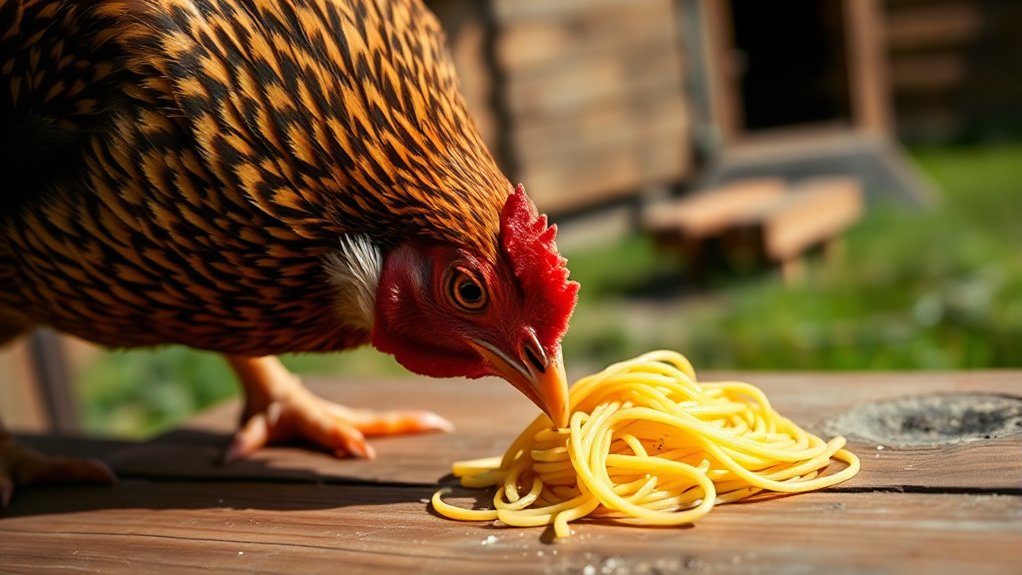
Yes, chickens can eat pasta safely in moderation, as long as it’s plain and fully cooked. You can offer a small amount as an occasional treat, but it shouldn’t replace their balanced feed.
Pasta nutrition mainly provides carbohydrates, so it gives quick energy without much protein, vitamins, or minerals. Because of that, you shouldn’t rely on it for daily nourishment.
Pasta mainly provides carbohydrates, offering quick energy but little protein, vitamins, or minerals.
You also need to think about chicken digestion. Chickens handle cooked starches better than raw, hard foods, but too much pasta can fill them up and crowd out healthier options.
If you feed it, keep portions small so your birds stay interested in their regular diet. You should also avoid adding sauces, butter, salt, or seasonings, since those can upset their digestive system.
When you use pasta sparingly, you can give your flock a harmless treat without causing nutritional imbalance or digestive trouble.
What Kind of Pasta Is Best for Chickens?

The best pasta for chickens is plain, cooked pasta with no sauce, seasoning, or added oil. You can choose simple shapes like spaghetti, penne, or macaroni, as long as the pasta stays soft and easy to digest.
If you want a slightly better option, pick whole grain pasta because it offers more fiber and nutrients than refined pasta. Your flock can also eat gluten free pasta, which works well if you’re avoiding wheat-based products or want a lighter alternative.
Still, you should keep portions small, since pasta isn’t a balanced feed and doesn’t replace their regular diet. Avoid stuffed, flavored, or instant varieties, because they often contain salt, spices, or additives that don’t suit chickens.
When you stick with plain, cooked pasta, you give your birds a simple treat without unnecessary ingredients.
How to Serve Pasta to Chickens

Start by letting the pasta cool completely so you don’t risk burning your chickens’ beaks or mouths. Then break the noodles into small, easy-to-peck pieces and mix in plain vegetables if you want to make pasta preparation simpler and more appealing.
Use clean bowls or scatter the pasta on a dry surface, because your serving methods should keep food easy to reach and easy to clean up. Avoid sticky sauces, heavy seasonings, and oily coatings since they can make the food messy and less suitable for chickens.
- Chop long strands into short sections.
- Serve plain pasta, not seasoned pasta.
- Offer it in a shallow dish or on the ground.
- Remove leftovers before they spoil.
You can also pair pasta with their regular feed so you keep the treat familiar and manageable.
How Much Pasta Can Chickens Eat?
You should keep pasta portions small because it’s really just an occasional treat for your chickens. Just a few plain bites per bird is plenty. You definitely don’t want to replace their regular feed with pasta. It’s best to offer pasta only once in a while, not every day. That way, you won’t mess up their balanced diet.
Serving Size Limits
In the context of serving pasta to chickens, keep the portion small and treat it as an occasional snack rather than a meal. You should use portion control and keep serving suggestions simple so your birds get only a few bites. A chicken’s crop fills quickly, and too much pasta can crowd out balanced feed.
- Offer plain, cooked pasta only.
- Break long noodles into shorter pieces.
- Mix pasta with other safe foods sparingly.
- Remove leftovers before they spoil.
If you’re unsure, start with a teaspoon or two per bird and watch how they handle it. Small servings help you avoid waste and keep the treat easy to manage. Focus on moderation, not bulk, so pasta stays a novelty in the flock’s diet.
Safe Portion Frequency
Even though pasta can be a harmless treat, chickens should only get it once in a while and in very small amounts. You should treat pasta as an occasional snack, not a regular part of their diet.
A few bites for each bird is enough, and you’ll want to keep portion control tight so they still eat their balanced feed first. If you offer pasta too often, you can crowd out the nutrients they need from grains, greens, and protein.
Good frequency guidelines mean giving pasta only on rare days, such as a small reward during training or when you want to use leftovers safely. Stick to plain, cooked pasta, and don’t let treats exceed about 10% of their intake.
Is Raw or Cooked Pasta Better for Chickens?
Regarding pasta for chickens, cooked is the better choice because it’s easier to peck, swallow, and digest. You can offer plain cooked pasta as an occasional treat, and your flock will usually handle it well.
Raw pasta is harder and drier, so it can be tougher for chickens to break down, especially if they gulp food quickly. Soft cooked pasta also lets you mix it with other safe foods without creating a choking risk.
- Serve small, bite-sized pieces.
- Let the pasta cool completely first.
- Keep portions modest so treats don’t replace feed.
- Watch each bird’s reaction after eating.
You don’t need to prepare anything fancy; simple cooked pasta works best. If you choose between raw pasta and cooked pasta, pick the version that’s soft, plain, and easy for your birds to manage.
What Pasta Ingredients Should Chickens Avoid?
When you’re choosing pasta for chickens, avoid anything seasoned, sauced, or heavily processed. You should skip pasta ingredients like garlic powder, onion powder, chili flakes, and excess salt since they can upset your birds’ digestion or create bigger health risks.
Strong herbs and spice blends may also irritate them, so plain noodles are the safer choice. Check labels for harmful additives such as artificial colors, preservatives, and flavor boosters because your chickens don’t need those chemicals in their feed.
You should also avoid pasta made with toxic extras like spinach or tomato powders if they come with heavy seasoning or seasoning packets. Stick to simple, unflavored pasta with a short ingredient list, and keep portions small.
If you can’t pronounce an ingredient or you wouldn’t feed it to your flock directly, leave it out. Clean, plain pasta keeps feeding simple and safer.
Can Chickens Eat Pasta Sauce?
You shouldn’t give chickens most pasta sauces, especially if they have onion, garlic, salt, sugar, or spices in them. Those ingredients can be harmful to your birds.
If you do want to share some sauce, go for a plain, unsalted tomato-based one with no extra seasonings. Just keep the portions really small and think of it as a rare treat, not something you feed them regularly.
Sauce Ingredients To Avoid
Before you share pasta sauce with chickens, check the ingredient list carefully, because many common sauces contain things that can harm them. You should avoid pasta sauce with toxic or irritating ingredients, since chickens handle simple foods best.
Watch for these harmful additives:
- Onion or garlic, which can damage red blood cells
- Excess salt, which may dehydrate your flock
- Sugar-heavy sauces, which offer little nutrition
- Spices, preservatives, or artificial flavors that upset digestion
If you see these ingredients, don’t let your chickens peck at the sauce. Even small amounts can cause problems if you feed them often. Keep their diet simple, and save seasoned pasta sauce for your own plate, not theirs.
Safe Sauce Alternatives
If you want to share pasta-flavored food with chickens, keep it plain and simple. You can offer safe sauce alternatives that skip salt, sugar, garlic, and onions. A little plain tomato purée, mashed pumpkin, or unsalted vegetable broth can add moisture and mild taste without upsetting their diet.
These sauce varieties may give nutritional benefits from vitamins and antioxidants, especially when you mix them with cooked noodles or grains.
| Safe choice | Why it works |
|---|---|
| Plain tomato purée | Mild, familiar flavor |
| Mashed pumpkin | Soft texture, vitamins |
| Unsalted broth | Adds moisture |
Always choose sauces you’d eat with no seasoning, because chickens do best with clean, basic ingredients and simple flavors.
Feeding Amount Guidelines
Even with plain, chicken-safe pasta sauce, portions should stay small because treats should make up only a tiny share of a chicken’s diet. You can offer a spoonful per bird, mixed with feed or plain pasta, but don’t turn it into a meal.
The pasta benefits are modest, so use sauce as an occasional topper, not a staple. Keep these feeding tips in mind:
- Serve only a few bites.
- Limit sauce to low-salt, no-onion, no-garlic recipes.
- Watch for loose droppings or picky eating.
- Adjust portions for flock size and overall diet.
If you want to reward your chickens, choose small servings and keep their balanced feed first. That way, you’ll add variety without crowding out the nutrients they need every day.
Can Chicks Eat Pasta?
Sure, chicks can nibble on plain cooked pasta in small amounts, but it shouldn’t become a regular part of their diet. You should offer it only as an occasional snack because young birds need chick starter first.
Watch their chick behavior closely: if they peck enthusiastically and move on, that’s fine. If they ignore it, don’t push it. Pasta benefits are limited, but a soft texture can be easy for tiny beaks to handle.
Cut noodles into short pieces so they don’t choke.
| Pasta Type | Safe? | Note |
|---|---|---|
| Plain cooked | Yes | Serve soft |
| Salted | No | Skip it |
| Sauced | No | Avoid extras |
| Dry | No | Too hard |
Keep portions tiny and fresh. You’ll help chicks stay curious without crowding out the balanced feed they need for steady growth.
What Are Healthier Treats Than Pasta?
While plain pasta can be an occasional treat, healthier options give your chickens more nutrition with less filler. You can offer healthier alternatives that support feather, bone, and egg health without loading up on empty carbs. Think of treats as small bonuses, not meal replacements, and keep portions modest. Nutritious snacks also help you add variety and encourage natural foraging behavior.
- Chopped leafy greens: Kale, romaine, and dandelion greens provide vitamins and moisture.
- Fresh vegetables: Cucumbers, peas, and shredded carrots add crunch and fiber.
- Fruits in small amounts: Berries, melon, and apple pieces offer sweetness with fewer issues.
- Protein-rich extras: Mealworms, scrambled egg, or plain yogurt can boost nutrition when needed.
You should always serve treats clean, fresh, and appropriately sized. Rotate options so your flock gets interest without relying on one food. By choosing these healthier alternatives, you’ll give your chickens better snacks and better balance.
What Signs Show a Chicken Ate Too Much Pasta?
A chicken that’s eaten too much pasta may seem sluggish, leave food behind, or have droppings that look loose and unusual. You might also notice less interest in scratch feed, more thirst, or a swollen crop.
Watch chicken behavior closely, because overfeeding pasta can crowd out balanced nutrition and slow pasta digestion. If the bird spends more time resting than foraging, or acts bloated after meals, the pasta may be the cause.
| Sign | What it can mean |
|---|---|
| Sluggishness | Too much filler food |
| Loose droppings | Digestive upset |
| Big crop | Slow digestion |
| Less appetite | Full from pasta |
| More thirst | Imbalanced diet |
You should reduce pasta, offer clean water, and return to a regular feed mix. If symptoms last more than a day, contact a veterinarian quickly for advice.
Frequently Asked Questions
Can Chickens Eat Pasta With Cheese?
Yes, you can feed chickens a small amount of pasta with cheese, but keep it occasional. Plain pasta offers little nutrition, and too much cheese can upset their digestion.
You should avoid salty, oily, or heavily seasoned cheese sauces, since cheese safety matters for chickens. Offer only a few bites as a treat, and make sure fresh water and their regular feed stay the main part of their diet.
Does Pasta Affect Egg Production?
Yes, pasta can affect egg production if you feed it too often or in large amounts. You should treat pasta as an occasional treat since its nutritional value is low compared with layer feed.
Too many carbs can crowd out protein, vitamins, and minerals your hens need for steady laying. That can also create an egg quality impact, so keep pasta small, plain, and balanced with a nutritious diet.
Can Chickens Eat Gluten-Free Pasta?
Yes, you can feed chickens gluten-free pasta in moderation. You’ll want to focus on gluten-free benefits only if your flock has sensitivities, but pasta isn’t a necessary feed.
Use smart pasta portioning: offer small, cooked, plain pieces as an occasional treat, not a staple. You should avoid sauces, salt, and seasonings.
Balance it with their regular layer feed, fresh water, and grit so they stay healthy and productive.
Is Whole Wheat Pasta Okay for Chickens?
Yes, you can give whole wheat pasta to chickens in small amounts. It offers some whole wheat benefits, like extra fiber and nutrients, but it shouldn’t replace their regular feed.
You should practice pasta portion control and serve only plain, cooked pasta with no salt, sauce, or seasoning. Too much pasta can upset their diet, so treat it as an occasional snack, not a staple.
Can Chickens Eat Leftover Pasta From Dinner?
Yes, you can offer chickens leftover pasta from dinner, but you’ll want to keep pasta safety in mind. Serve plain noodles only, without sauce, butter, garlic, or salt, since those can upset chicken digestion.
Use small amounts as an occasional treat, not a staple. Check that the pasta isn’t moldy or spoiled, and always provide fresh water. If it’s heavily seasoned, you shouldn’t feed it to your flock.
Conclusion
So, can chickens eat pasta? Yes, but you should only offer it as an occasional treat, not a regular food. Plain, cooked pasta in small amounts is safest, while sauce, salt, and seasonings can cause problems.
For example, if you tossed your flock a handful of plain spaghetti once a week, they’d likely enjoy it without issue. Just keep treats limited and focus on balanced feed so your chickens stay healthy and active.
In conclusion, chickens can eat pasta, but always in moderation and without any harmful additives.