
Plymouth Rock Chicken Vs Barred Rock – 5 Key Differences
Choosing the right chicken breed for your backyard flock can be overwhelming. If you’ve ever struggled to decide between similar breeds or worried about which one will thrive in your space, you’re not alone. Many people face this challenge when trying to balance egg production, temperament, and care needs.
You’ll find Plymouth Rock and Barred Rock chickens share roots, hardiness, and friendly temperaments, but differ in key ways. Barred Rocks have a sharp, evenly barred feather pattern and lay eggs more consistently.
Meanwhile, Plymouth Rocks display varied markings and offer tender meat. Plymouth Rocks tend to be calm and larger, needing more space.
Barred Rocks are energetic and adapt better to smaller coops. Keep exploring to uncover which breed fits your flock best.
Key Takeaways
- Barred Rocks have a distinct, evenly spaced black-and-white barred feather pattern. Plymouth Rocks show varied markings and color varieties.
- Plymouth Rocks are calm and friendly, ideal for families. Barred Rocks, on the other hand, are energetic and assertive in social behavior.
- Barred Rocks lay eggs more consistently with stronger shells. Plymouth Rocks are good layers but less predictable.
- Plymouth Rocks tend to be slightly larger and require more coop space than the more adaptable Barred Rocks.
- Barred Rocks focus more on egg production, while Plymouth Rocks are prized for their tender, flavorful meat quality.
Shared Traits of Plymouth Rock and Barred Rock Chickens
Although Plymouth Rock and Barred Rock chickens have distinct names, they share many traits that make them popular among poultry keepers. You’ll find that both breeds originate from the same historical roots in America, dating back to the mid-19th century. This shared history gives them a strong foundation in hardiness and adaptability, making them reliable for various climates.
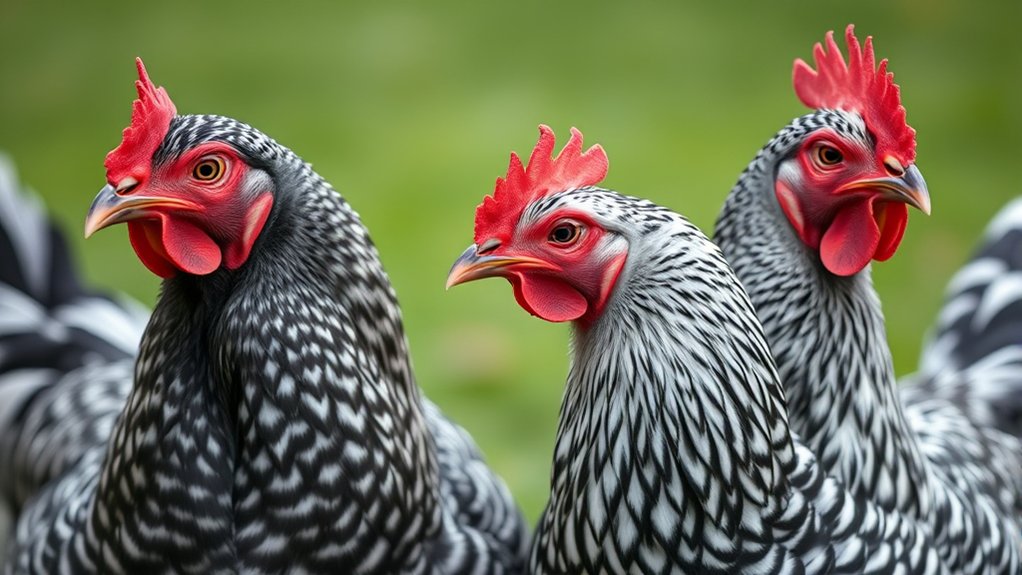
When it comes to feather coloration, both Plymouth Rock and Barred Rock chickens showcase a striking barred pattern, which is a key reason for their appeal. This black-and-white striped feather coloration isn’t just for looks; it helps with camouflage and reflects their shared genetic background. If you’re considering these breeds, you can expect similar temperaments too: friendly, calm, and easy to handle. Their common traits in history, feather coloration, and behavior make them favorites for backyard flocks and small farms alike.
Appearance Differences Between Plymouth Rock and Barred Rock

While Plymouth Rock and Barred Rock chickens share many physical traits, you can spot key differences in their appearance that help distinguish one from the other. These differences mainly involve color variations and feather patterns.
Plymouth Rock and Barred Rock chickens look similar but differ in color and feather patterns.
- Feather Patterns: Barred Rocks display a distinct, evenly spaced black-and-white barred pattern across their feathers. Plymouth Rocks might show a similar pattern but often have more varied markings.
- Color Variations: Plymouth Rocks come in several color varieties like buff, white, and silver-penciled, beyond just barred. Barred Rocks are specifically recognized for their classic barred black-and-white.
- Neck Feathers: Plymouth Rocks tend to have softer, more blended neck feather coloring, while Barred Rocks’ neck feathers show sharper, more defined bars.
- Leg Color: Barred Rocks usually have yellow legs with black stripes, whereas Plymouth Rocks’ leg color can vary slightly depending on the variety.
How Their Temperaments Differ

When you raise Plymouth Rock and Barred Rock chickens, you’ll notice their temperaments offer distinct experiences. Plymouth Rocks tend to be calm and friendly, making them highly suitable for families new to poultry. Their temperament compatibility with other birds is excellent, as they rarely show aggression and enjoy mingling peacefully.
On the other hand, Barred Rocks display more energetic social behavior patterns. They’re curious and assertive, which can lead to a livelier flock dynamic. While they get along with other chickens, their confidence might sometimes push more timid birds aside.
Understanding these temperament differences helps you manage your flock better. If you want a relaxed, easygoing group, Plymouth Rocks are your go-to. But if you prefer a vibrant, interactive bunch, Barred Rocks will fit in well.
Both breeds show good temperament compatibility overall, but their social behavior patterns shape how they interact daily. Knowing this lets you create a balanced, harmonious environment for your chickens.
Egg Production and Meat Quality Compared
Their differing temperaments also influence how you might prioritize egg production and meat quality in your flock. When comparing Plymouth Rock and Barred Rock chickens, you’ll notice their feather patterns and nesting habits impact these traits markedly.
- Egg Production: Barred Rocks tend to lay more consistently thanks to their calm nature and reliable nesting habits. Plymouth Rocks are good layers but might be less predictable due to their slightly more active temperament.
- Egg Quality: Both breeds produce medium to large brown eggs, but Barred Rocks often have a slight edge in shell strength.
- Meat Quality: Plymouth Rocks are prized for their tender, flavorful meat, making them ideal if you want a dual-purpose bird. Barred Rocks also provide quality meat but usually lean more toward egg production.
- Feather Patterns: The distinct barred feather patterns on Barred Rocks don’t just look nice, they also signal their hardiness, which supports steady egg production.
Understanding these differences helps you balance your flock’s egg and meat output effectively.
Choosing the Best Breed for Your Backyard Flock
Deciding between Plymouth Rock and Barred Rock chickens depends on your specific goals for your backyard flock. If you want a hardy, dual-purpose breed that’s easy to care for, either choice works well. However, you should consider feeding requirements and coop space before choosing.
Choosing Plymouth Rock or Barred Rock chickens hinges on your flock goals and available space.
Plymouth Rocks tend to be slightly larger, so they need more coop space to stay comfortable. Barred Rocks, while similar in size, might be a bit more active and benefit from a slightly larger run area.
Both breeds have moderate feeding requirements, but you’ll want to guarantee a balanced diet to support their egg production and overall health. If space is limited, Barred Rocks may adapt better to smaller coops due to their slightly calmer nature.
Ultimately, think about your available space, feeding routine, and what qualities matter most, whether it’s temperament, size, or productivity, to choose the best breed for your backyard flock.
Frequently Asked Questions
What Is the History Behind the Plymouth Rock Chicken Breed?
You’ll find that the Plymouth Rock chicken breed originated in the 19th century in the United States as a result of heritage preservation efforts. Farmers wanted a hardy, dual-purpose bird, so they selectively bred various chickens to achieve this.
The breed gained official breed recognition in 1874, thanks to its popularity and usefulness. Today, you can appreciate its history as a symbol of American poultry heritage and resilience.
Are Plymouth Rock and Barred Rock Chickens Good for Cold Climates?
Yes, you’ll find Plymouth Rock and Barred Rock chickens great for cold climates. Their climate resilience comes from dense feather insulation that keeps them warm during harsh winters.
You won’t have to worry about frostbite or chills because their feathers trap heat effectively. Plus, these breeds handle fluctuating temperatures well, making them reliable if you face unpredictable cold spells.
How Long Do Plymouth Rock and Barred Rock Chickens Typically Live?
You can expect your Plymouth Rock and Barred Rock chickens to strut through life for about 6 to 8 years, like seasoned performers on a rustic stage. Their egg production shines brightest in the first few years, then gently tapers off.
The beautiful barred feather coloration remains a signature look, though it may fade slightly with age. With good care, these hardy hens keep laying and charming your backyard for many seasons.
Do These Breeds Require Special Dietary Supplements?
You don’t need to provide special dietary supplements for these breeds if you meet their basic nutritional needs with a balanced poultry feed. However, you can boost their health by offering supplement types like calcium for strong eggshells, probiotics for digestion, and vitamins A, D, and E.
Paying attention to their diet guarantees they stay healthy and productive without complications from deficiencies or imbalances.
Can Plymouth Rock and Barred Rock Chickens Be Crossbred Easily?
Yes, you can easily crossbreed Plymouth Rock and Barred Rock chickens because they share strong genetic compatibility. Since Barred Rock is actually a variety of Plymouth Rock, you won’t face significant crossbreeding challenges.
This compatibility means their offspring will likely inherit desirable traits from both, simplifying your breeding efforts. Just make sure to monitor their health and growth to guarantee successful results when mixing these two closely related breeds.
Conclusion
Choosing between Plymouth Rock and Barred Rock chickens is like picking the ultimate backyard superstar. They both bring unique charm and value to your flock.
You can’t go wrong with their friendly temperaments, reliable egg production, and tasty meat. Knowing their key differences helps you confidently select the perfect breed.
So get ready to enjoy a backyard chicken experience that’s nothing short of legendary with Plymouth Rock vs Barred Rock.