
7 Essential Steps to Raise Chickens at Home
Many people dream of raising chickens at home but feel overwhelmed by where to start or how to keep their flock healthy and happy. You’re not alone—figuring out the best breeds, proper care, and safe housing can be tricky for beginners.
If you’ve been struggling with these challenges, this guide is here to help simplify the process and get you on the right track.
To raise chickens at home successfully, start by picking breeds that suit your climate and space. Build a secure, well-ventilated coop with predator-proof fencing.
Feed your flock balanced meals and give them fresh water daily.
Keep the coop clean and inspect it often to stay ahead of health and safety issues.
Collect and store eggs carefully to preserve freshness.
Following these basics sets you up well. There’s plenty more to investigate for a thriving backyard flock.
Key Takeaways
- Choose suitable chicken breeds and build a well-ventilated, predator-proof coop in a safe, shaded location. This helps keep your chickens comfortable and secure.
- Provide a balanced diet with quality feed, fresh water, and occasional treats to maintain chicken health. Healthy chickens lay better eggs and stay active.
- Maintain cleanliness by regularly cleaning the coop, feeders, waterers, and changing bedding to prevent disease. A clean environment means happier, healthier birds.
- Collect eggs daily, handle them gently, and store them coolly with the pointed end down for freshness. This simple step keeps your eggs fresh longer.
- Conduct routine inspections and promptly repair coop and fencing to ensure a safe, healthy environment. Staying on top of repairs protects your flock from harm.
Pick the Best Chicken Breeds for Your Backyard

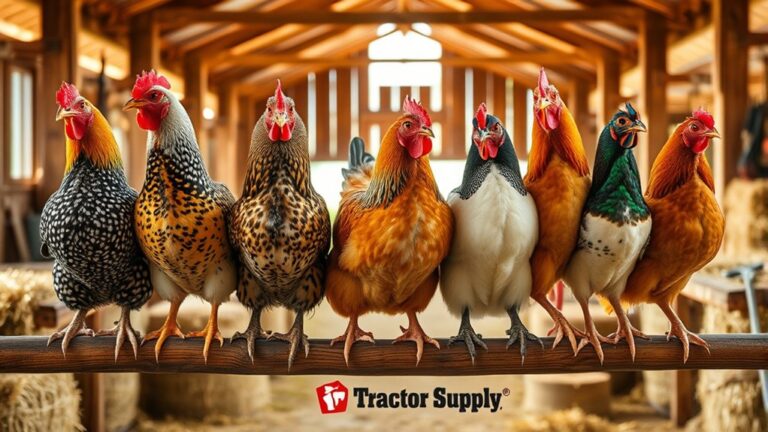
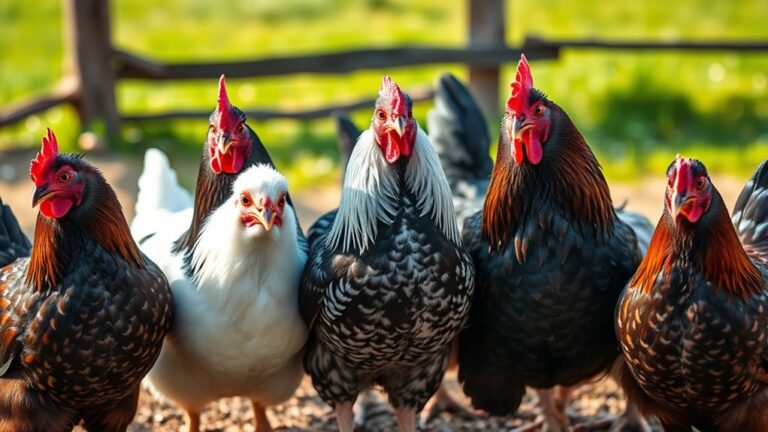
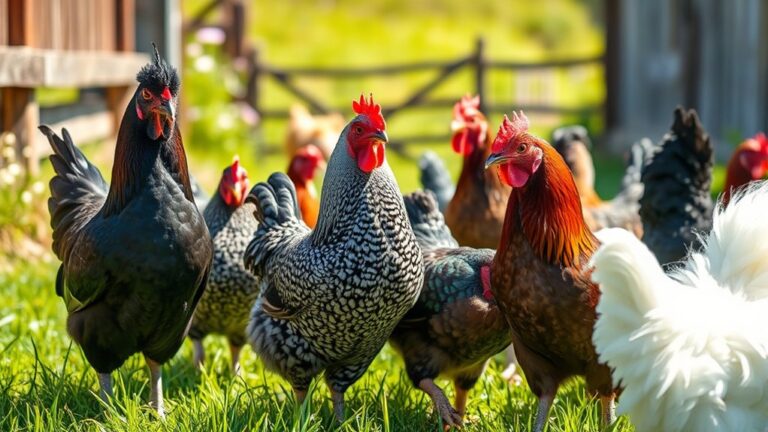
How do you choose the best chicken breeds for your backyard? Start by considering egg production since you’ll likely want a steady supply of fresh eggs. Some breeds, like Leghorns and Rhode Island Reds, are known for laying a high number of eggs consistently.
However, if you prefer a mix of traits, you’ll want to think about breed compatibility. Not all chickens get along well, so selecting breeds that coexist peacefully is vital for a harmonious flock. For example, bantams often do well with larger breeds, but aggressive breeds like some game birds might cause stress.
Also, consider your climate and space since certain breeds handle heat or cold better and need appropriate room to roam. By focusing on egg production and breed compatibility, you’ll create a balanced, productive flock that suits your backyard’s environment and your personal needs.
This thoughtful approach helps guarantee your chicken-raising experience starts off right.
Build a Safe, Cozy Coop Your Chickens Will Love

Although choosing the right breeds is essential, providing a safe, cozy coop is just as important to keep your chickens healthy and happy. Start by ensuring your coop has excellent ventilation to prevent moisture buildup and maintain fresh air. Proper airflow helps reduce respiratory issues and keeps your chickens comfortable year-round.
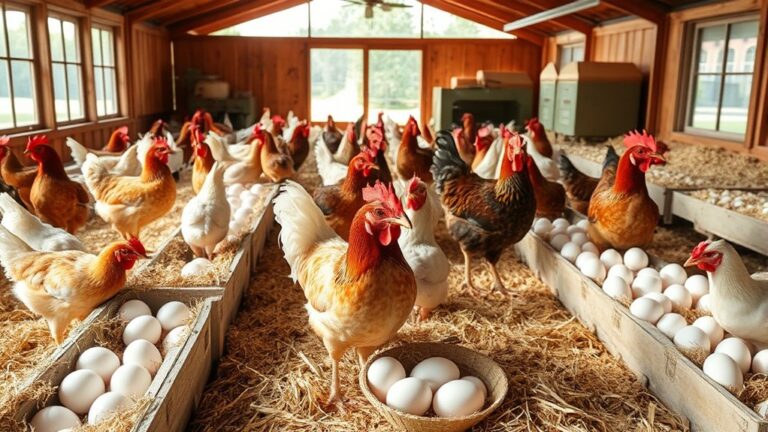
Next, focus on the structure itself. Use sturdy materials and design a space that’s easy to clean. Incorporate nesting boxes and perches to make your chickens feel at home.
Don’t forget to surround your coop with predator-proof fencing to keep out unwanted visitors like raccoons and foxes. Secure fencing prevents predators from digging or climbing in, giving you peace of mind.
Finally, position the coop in a dry, shaded area to avoid extreme temperatures. By building a coop that prioritizes ventilation, comfort, and security, you create a welcoming environment where your chickens can thrive.
Keep Your Chickens Safe From Predators and Bad Weather

Since chickens are vulnerable to both predators and harsh weather, you need to take proactive steps to protect them. Start by installing predator-proof fencing around your chicken run. Use sturdy materials like welded wire mesh with small gaps to keep out raccoons, foxes, and other common threats. Make sure the fence extends underground to prevent digging predators from entering.
Next, invest in a weather-resistant coop that shields your flock from rain, wind, and extreme temperatures. Choose durable materials and guarantee the coop has proper ventilation without drafts. Seal any gaps where cold air or moisture could sneak in. Raising the coop off the ground helps prevent flooding and dampness.
Regularly inspect your fencing and coop for damage, especially after storms or heavy winds. Quick repairs keep your chickens safe and comfortable year-round. By combining predator-proof fencing with a weather-resistant coop, you’ll create a secure environment that lets your chickens thrive in any season.
Provide Your Chickens With Proper Food and Fresh Water Daily
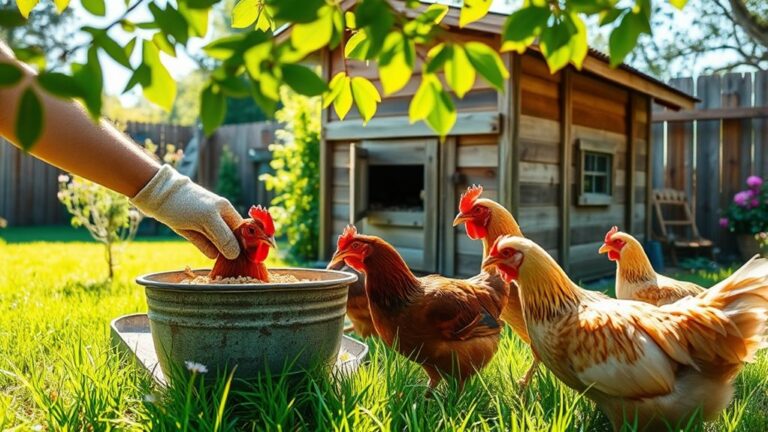
You’ll want to give your chickens a balanced diet to keep them healthy and productive. And don’t forget about fresh water—it’s just as important, so be sure they have access to it every day. Keeping a consistent feeding schedule will really help your flock thrive.
Balanced Diet Essentials
When you provide your chickens with a balanced diet, they stay healthier and lay better eggs. Focus on forage diversity by letting them explore different greens, insects, and grains.
Supplementary feeding with quality pellets or grains fills nutritional gaps, especially in winter or limited space. A varied diet ensures they get essential proteins, vitamins, and minerals.
| Food Type | Benefits |
|---|---|
| Grains | Energy source |
| Greens | Vitamins & minerals |
| Insects | Natural protein |
| Supplementary Feed | Balanced nutrients |
| Grit | Aids digestion |
Hydration Importance Daily
Along with providing a balanced diet, keeping your chickens well-hydrated plays a vital role in their overall health and productivity. You should offer fresh water daily, ensuring it’s clean and free from contaminants.
Good water quality prevents illness and supports digestion. Use hydration techniques like placing multiple water stations around the coop, especially during hot weather, so your chickens can drink whenever they need.
Regularly clean water containers to avoid algae buildup and bacteria growth. Consider using nipple drinkers or automatic waterers to maintain constant access to fresh water.
Feeding Schedule Tips
Although providing fresh water is essential, establishing a consistent feeding schedule guarantees your chickens receive the proper nutrients they need daily. Feed your chickens twice a day, in the morning and late afternoon, to maintain their feeding frequency.
Offer nutritious treats like vegetables or grains sparingly to supplement their diet without overfeeding. Keep their feed fresh and clean to prevent spoilage.
| Time of Day | Type of Feed | Notes |
|---|---|---|
| Morning | Commercial feed | Main meal, balanced nutrition |
| Midday | Fresh water | Always available |
| Late Afternoon | Nutritious treats | Small amounts only |
| Evening | Fresh water | Refill before night |
Stick to this routine to keep your flock healthy and productive.
Provide Basic Care to Keep Your Chickens Healthy
To keep your chickens healthy, you’ve got to make sure they get proper nutrition and always have fresh, clean water. Balanced feed helps them grow strong and keeps egg production steady. And clean water? That’s key to preventing sickness. So, let’s take a closer look at why these basics matter so much for your flock’s well-being.
Proper Nutrition Essentials
When you provide your chickens with balanced nutrition, they stay healthier and lay better eggs. Understanding their natural foraging habits is key; chickens love to peck at grass, insects, and seeds, which supply essential nutrients.
You should supplement their diet with high-quality feed to guarantee they get the right balance of proteins, vitamins, and minerals. Adding nutritional supplements like calcium and probiotics supports strong eggshells and a robust immune system.
Avoid overfeeding treats, as this can disrupt their nutrient intake. By combining natural foraging with appropriate supplements, you’ll maintain your flock’s vitality and productivity. Consistently monitoring their diet helps you adjust as they grow or during different seasons, keeping their nutrition balanced and essential.
Clean Water Importance
Why does clean water matter so much for your chickens? Water quality directly impacts their health and egg production. Without fresh, uncontaminated water, chickens can become dehydrated or sick, reducing their vigor.
Here are hydration tips to keep in mind: always provide clean water, change it daily, and guarantee access throughout the day.
| Hydration Tips | Benefits |
|---|---|
| Change water daily | Prevents bacteria buildup |
| Use clean containers | Avoids contamination |
| Place water in shade | Keeps water cool and fresh |
| Check water levels | Ensures constant availability |
| Monitor water quality | Detects pollutants early |
Establish a Cleaning Routine to Maintain a Healthy Coop
Although keeping your chickens healthy involves many factors, establishing a consistent cleaning routine for your coop plays a crucial role. You need to set a cleaning schedule that fits your lifestyle, whether it’s weekly or biweekly. Regular cleaning helps prevent disease by reducing harmful bacteria and parasites, ensuring your flock stays strong.
Focus on coop sanitation by removing old bedding, droppings, and debris. Scrub surfaces with a mild disinfectant safe for poultry, and let everything dry completely before adding fresh bedding. Don’t forget to clean feeders and waterers regularly, as dirty equipment can quickly spread illness.
Collect and Store Fresh Eggs the Right Way
To keep your eggs fresh and safe, you should collect them daily and handle them with care. Freshly laid eggs have a natural protective coating that helps maintain egg freshness, so avoid washing them unless necessary. Proper egg storage is key to preserving their quality and preventing contamination.
Collect eggs daily and handle gently to preserve their natural protective coating and ensure freshness.
Here are three essential tips for handling and storing your eggs:
1. Collect eggs frequently
Gathering eggs at least once a day prevents them from becoming dirty or damaged.
2. Store eggs in a cool, consistent temperature
Keep them in the refrigerator or a cool spot away from temperature fluctuations to extend their shelf life.
3. Place eggs pointed end down
This helps keep the yolk centered and maintains freshness longer.
Frequently Asked Questions
How Do I Train Chickens to Come When Called?
You can train chickens to come when called by consistently using specific chicken vocalizations, like a soft clucking or a whistle. This way, they associate the sound with food or attention.
Start by calling them and offering treats, reinforcing positive behavior. Understanding the pecking order helps, as dominant chickens may come first. Be patient and reward all birds just as much to encourage everyone to respond to your call over time.
Can Chickens Be Kept With Other Pets Safely?
Yes, you can keep chickens safely with other pets if you take precautions. Make sure your chickens have predator protection, like secure fencing and a well-locked coop with good ventilation to keep them healthy.
Introduce pets slowly and supervise their interactions to prevent stress or aggression. Small pets like cats or dogs can coexist peacefully if trained to respect the chickens’ space and routines.
What Are Signs of Chicken Boredom or Stress?
You might notice your chickens pacing restlessly, pecking at empty spaces, or fluffing feathers anxiously. These are clear stress indicators. When boredom creeps in, hens might over-peck each other or lay fewer eggs.
To keep them happy, focus on hen enrichment like hanging treats, providing dust baths, or scattering grains. These small joys break monotony and ease stress, turning your coop into a lively, comforting home where your chickens thrive.
How Do I Introduce New Chickens to My Flock?
You should introduce new chickens gradually by keeping them separated in a quarantine area for about two weeks. Maintain consistent feeding routines for both groups to reduce stress, and ensure the coop cleanliness is excellent to prevent disease spread.
After quarantine, allow brief, supervised interactions before full integration. This careful process helps your flock adjust smoothly, keeping everyone healthy and happy while avoiding conflicts and illness.
What Are Common Chicken Behaviors Explained?
You’ll notice chickens scratch the ground eagerly, searching for seeds and insects. This shows their natural feeding habits. They also establish a pecking order, where dominant birds assert control by pecking lower-ranked ones gently or firmly.
Watching them cluck softly while dust-bathing or standing alert shows their social nature and need for comfort. By observing these behaviors, you’ll understand their daily rhythms and how they communicate within their flock.
Conclusion
Raising chickens at home is rewarding and surprisingly manageable. Did you know backyard flocks produce about 20% of the U.S. eggs annually? By picking the right breeds, building a safe coop, and maintaining proper care, you’ll enjoy fresh eggs and happy hens.
Keep their environment clean and secure, and you’ll create a thriving backyard flock that benefits your family and the planet. Get started today and experience the joy of raising chickens at home firsthand!