How to Rear Chickens at Home in 3 Easy Steps
Many people dream of raising chickens at home but feel overwhelmed by where to start. You’re not alone if you’ve struggled with finding the right breed or setting up a safe coop.
The good news is, with a few simple steps, you can enjoy fresh eggs and happy, healthy chickens in no time.
To rear chickens at home, start by choosing a breed that fits your space, climate, and goals, like Leghorns for eggs or Orpingtons for calm pets.
Next, set up a secure coop using sturdy materials, proper ventilation, and predator-proofing like hardware cloth and locks.
Finally, feed your chickens balanced, age-appropriate meals, provide fresh water daily, and keep their environment comfortable and safe.
Follow these basics, and you’ll be well on your way to happy, healthy chickens with plenty more tips to investigate.
Key Takeaways
- Choose chicken breeds suited to your space, climate, and goals for egg production or temperament.
- Build a secure, well-ventilated coop with enough space, sturdy materials, and predator-proof locks.
- Provide a balanced diet with age-appropriate feed, fresh water daily, and necessary supplements.
- Protect chickens by locking the coop at night and using strong fencing and hardware cloth.
- Maintain coop cleanliness, ventilation, and regularly check for safety to keep chickens healthy and happy.
Choose the Right Chicken Breed for Your Backyard
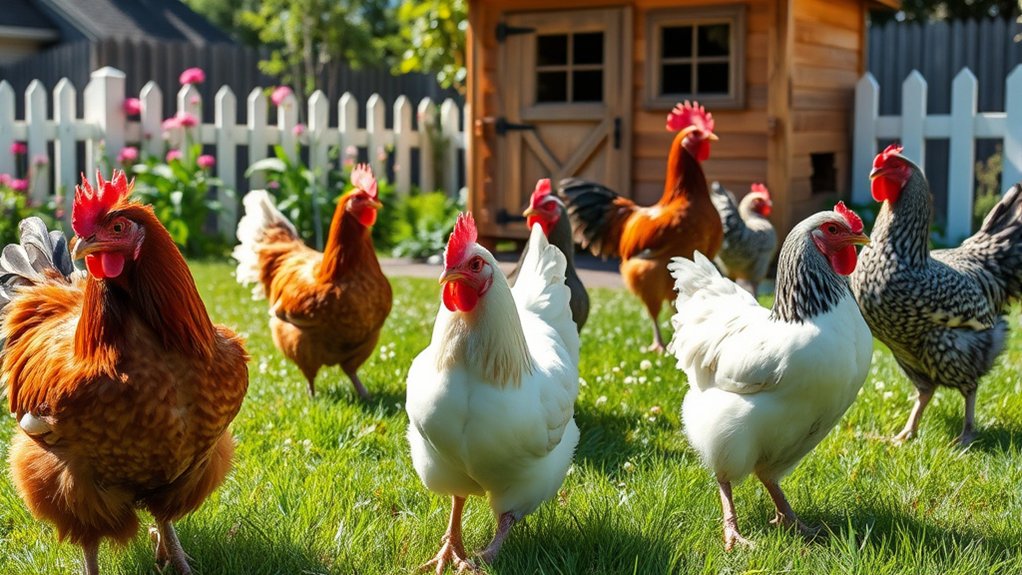
Although many chicken breeds exist, choosing the right one for your backyard depends on your space, climate, and goals. If you want a steady supply of eggs, focus on breeds known for high egg production like Leghorns or Rhode Island Reds. These breeds lay consistently and adapt well to various environments.
On the other hand, if you’re after a breed with a calm temperament and attractive appearance, consider Orpingtons or Silkies. Their breed characteristics make them great pets and easy to handle, especially if you have kids.
Make certain you also account for your local climate; some breeds handle cold better, while others thrive in heat. Selecting the right chicken breed helps ensure your flock stays healthy, productive, and enjoyable.
Take time to research breed characteristics and match them to your backyard setup and personal goals. This way, you’ll get the most out of your chicken-keeping experience.
Set Up a Safe and Comfortable Chicken Coop
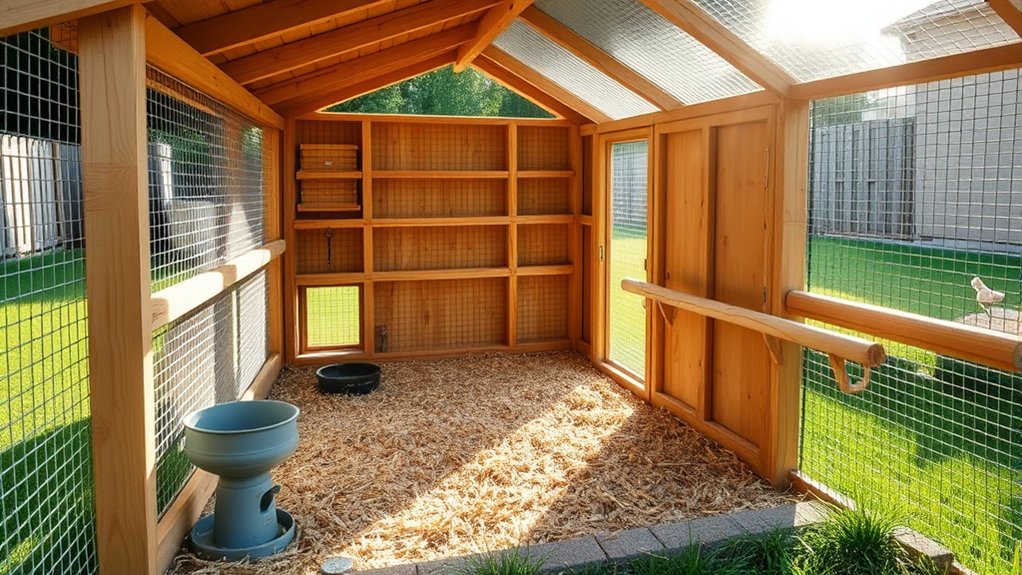
Before your chickens arrive, you’ll want to build or buy a coop that keeps them safe from predators and comfortable in all weather conditions. Start by choosing sturdy materials and secure locks to guarantee predator protection. Make sure the coop is elevated or has a solid foundation to prevent burrowing animals from getting inside. Use hardware cloth instead of chicken wire, as it’s stronger and keeps out raccoons, foxes, and other threats.
Next, focus on ventilation and airflow. Proper ventilation prevents moisture buildup, reducing the risk of respiratory issues and keeping your chickens healthy. Include windows or vents that allow fresh air to circulate without creating drafts, especially during colder months. Ensure the coop has enough space for your flock to move freely, with nesting boxes and perches for comfort. Setting up a safe and comfortable coop is essential for happy, healthy chickens that will thrive in your backyard.
Feed and Care for Your Chickens
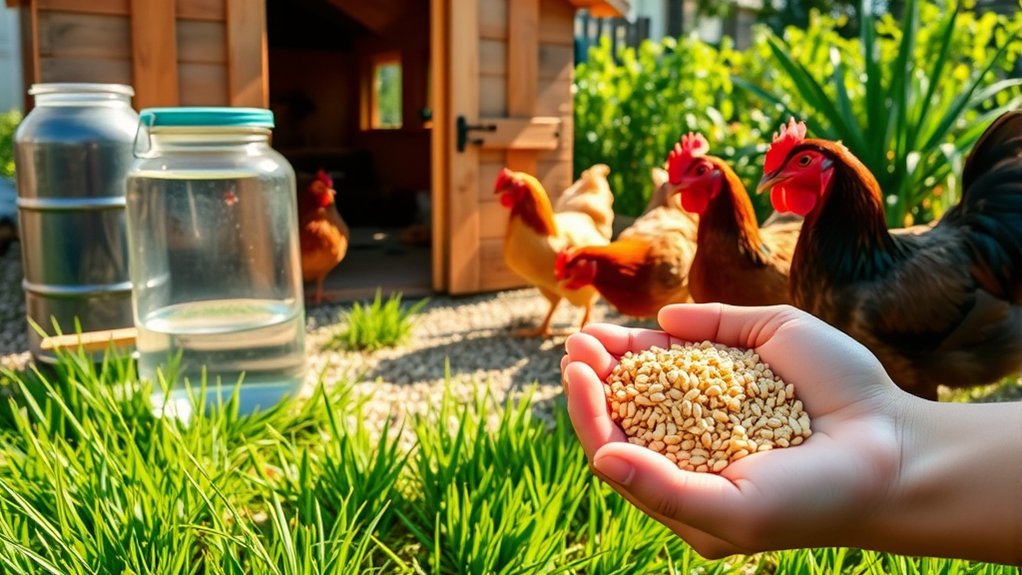
When you start feeding and caring for your chickens, providing a balanced diet and fresh water is essential for their health and productivity. Along with their regular feed, adding nutritional supplements can boost their immune system and egg quality.
Make sure to refresh their water daily and clean feeders to prevent diseases. Don’t forget predator protection. Secure your coop and run with sturdy materials to keep your flock safe.
Here’s a quick guide to feeding and care basics:
| Item | Purpose | Tips |
|---|---|---|
| Balanced Feed | Main nutrition | Use age-appropriate feed |
| Nutritional Supplements | Boost health and eggs | Add vitamins and minerals |
| Fresh Water | Hydration | Change daily, clean containers |
| Predator Protection | Safety | Lock coop at night, use fencing |
Stick to these steps, and you’ll raise healthy, happy chickens in no time.
Frequently Asked Questions
How Do I Protect Chickens From Common Predators?
You can protect your chickens from common predators by installing predator-proof fencing around their coop and run, ensuring no gaps or weak spots. Use hardware cloth instead of chicken wire for extra security.
At night, secure the coop with strong locks and close all openings to keep predators out. Implement nighttime safety measures like motion-activated lights or alarms to deter nocturnal threats.
Regularly check for signs of intrusion to keep your flock safe.
What Are Signs of Illness in Chickens?
You’ll notice signs of illness in chickens like lethargy, decreased appetite, ruffled feathers, coughing, sneezing, or abnormal droppings. Regular health monitoring helps you catch these early.
Also, make certain your flock stays protected through proper chicken vaccination to prevent common diseases. If you spot any unusual behavior or symptoms, isolate the bird and consult a vet promptly to keep your chickens healthy and thriving.
How Often Should Chicken Eggs Be Collected?
You should collect eggs at least twice a day to keep a consistent egg collection schedule. Chickens often lay eggs in the morning, so collecting once mid-morning and once late afternoon works well.
This prevents eggs from becoming dirty or broken and encourages hens to lay more regularly. Understanding your flock’s nesting habits helps you adjust the schedule if they lay at different times. This way, you ensure fresh eggs and a clean nesting area.
Can Chickens Be Trained to Follow Simple Commands?
Yes, you can train chickens to follow simple commands, observe chicken behavior, and apply training techniques consistently. You’ll notice they respond to calls, follow you for treats, and even learn to come when called.
Use repetition, positive reinforcement, and patience to guide their actions. Just like training a dog, you’ll build trust, encourage learning, and enjoy their company more. With the right approach, your chickens can become surprisingly obedient.
What Are the Best Practices for Cleaning a Chicken Coop?
You should clean the chicken coop regularly by removing soiled bedding materials to keep it dry and odor-free. Replace old bedding with fresh straw or wood shavings to maintain comfort. Stick to a consistent cleaning schedule, ideally once a week, to prevent disease.
Also, coordinate cleaning with feeding schedules to minimize stress. Clean before feeding time so chickens stay calm. Proper ventilation and spot cleaning daily will help keep your flock healthy and happy.
Conclusion
Raising chickens at home is like planting a small garden. You nurture them with care and watch them flourish. Just like one gardener who started with three hens and soon enjoyed fresh eggs every morning, you’ll find joy in their company and rewards in their care.
By choosing the right breed, creating a cozy coop, and feeding them well, you’re setting yourself up for a happy, healthy flock. This approach brightens your backyard and your day. Remember, raising chickens at home brings both companionship and fresh eggs right to your doorstep.