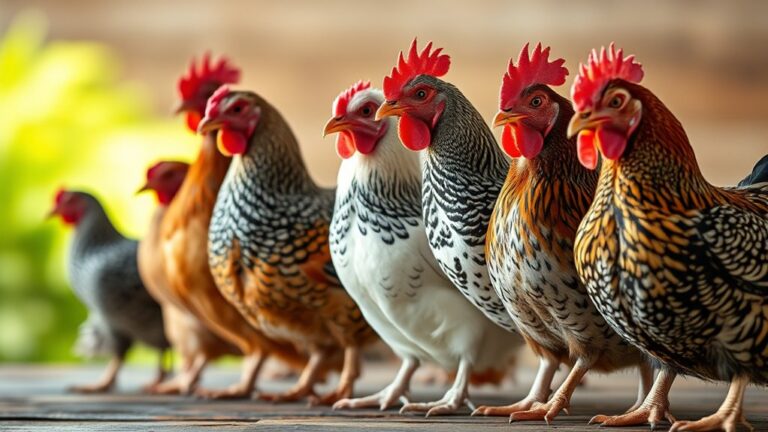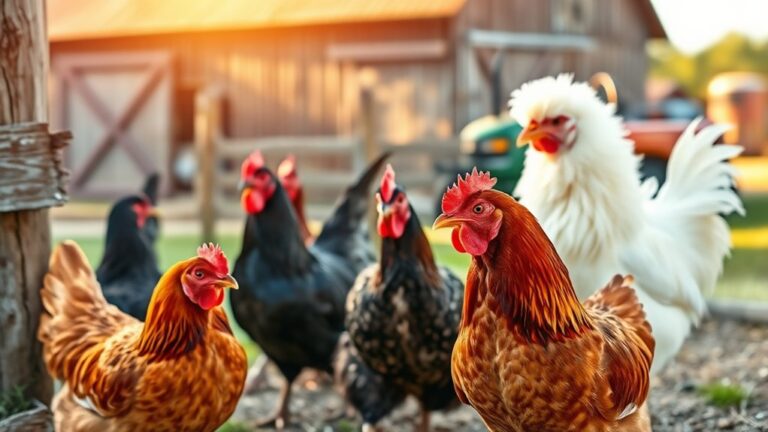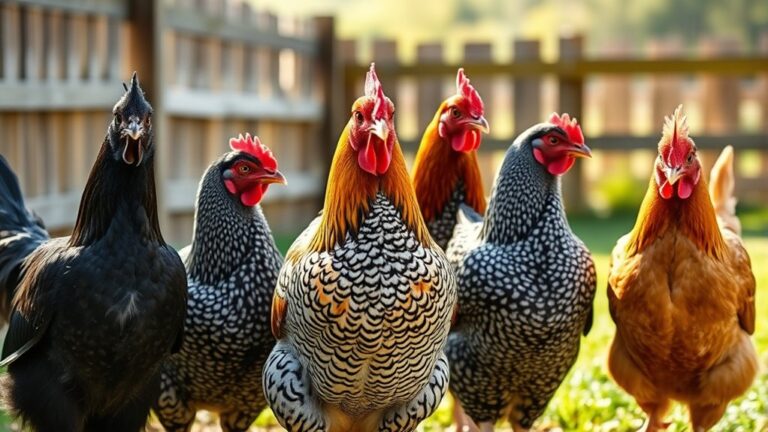
Is a Rooster a Chicken?
If you’ve ever started raising chickens, you might have found yourself wondering, “Is a rooster a chicken?” You’re not alone—many people struggle to tell the difference or understand the role roosters play in their flock. Knowing the answer can help you care for your birds better and create a healthy environment.
Yes, a rooster is a chicken, specifically the adult male chicken. You’ll notice roosters stand out with bigger combs, brighter feathers, and their crowing signals territory and alerts.
They protect hens, fertilize eggs, and lead the flock’s social order.
While they don’t lay eggs, they play a crucial role in flock dynamics. If you want to understand how they behave, identify them, and their impact on your chickens, there’s plenty more to investigate.
Key Takeaways
- A rooster is a male chicken, distinct from female hens and chicks within the same species.
- Roosters do not lay eggs but play a vital role in fertilizing eggs for reproduction.
- They have larger combs, wattles, and more vibrant feathers compared to hens.
- Roosters crow to establish territory, warn of danger, and attract hens.
- Keeping hens without a rooster is possible, but only fertilized eggs can hatch chicks.
Is a Rooster Really a Chicken? Defining the Rooster
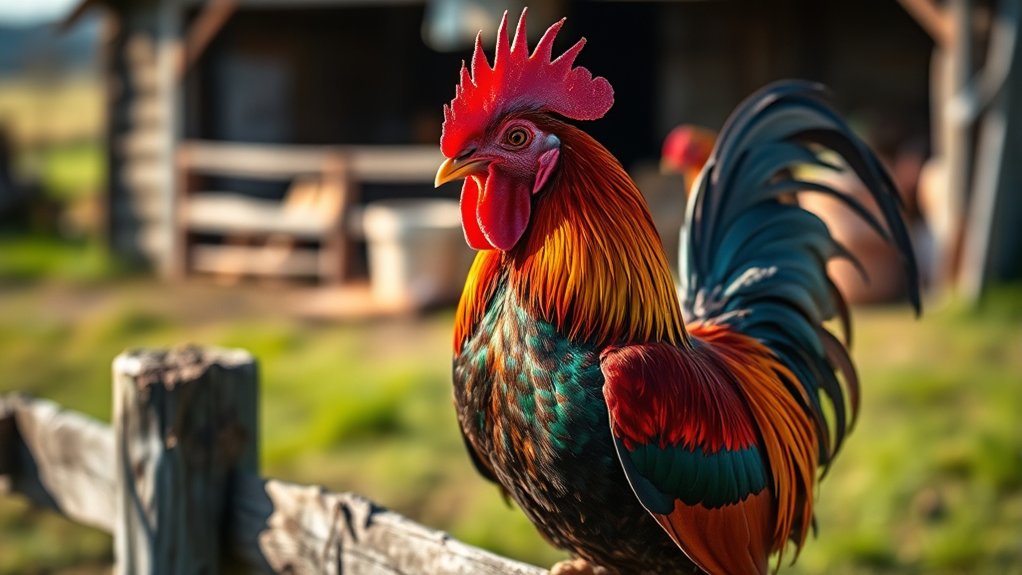
Although many people use the terms interchangeably, a rooster is actually a specific type of chicken, namely a male chicken. When you think about rooster symbolism, it often represents vigilance and confidence, traits that set roosters apart in a flock.
Unlike hens and chicks, roosters have distinct physical traits and behaviors. But when it comes to diet, there’s little difference. If you compare a chicken diet, both roosters and hens thrive on grains, seeds, insects, and greens, ensuring balanced nutrition.
Understanding this helps you appreciate that while a rooster is a chicken, it plays a unique role within the species. So, when you hear someone mention a rooster, remember they’re referring specifically to the male chicken, not just any bird in the coop. This distinction matters, especially when discussing their behavior, symbolism, or their place in farming and culture.
How Do Roosters Differ From Hens and Chicks?
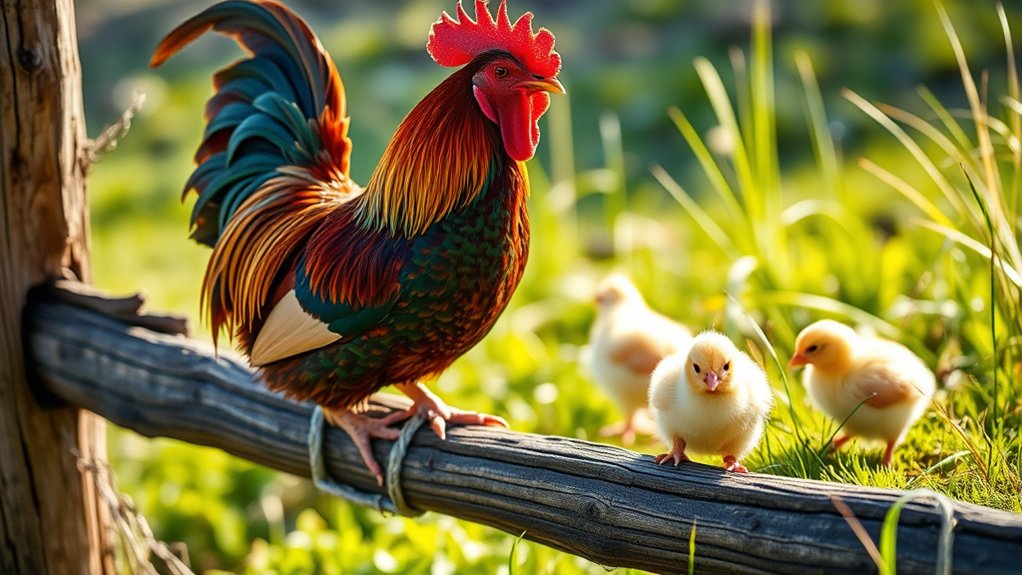
You’ll notice roosters stand out because they’re bigger and have more colorful feathers. Plus, their combs—the fleshy red things on top of their heads—are much more prominent than those of hens and chicks. And it’s not just how they look; their behavior is different too. Roosters tend to be more aggressive and are really protective of their flock. So, when you put all these physical and behavioral traits together, it’s easy to see what makes roosters unique.
Physical Differences Explained
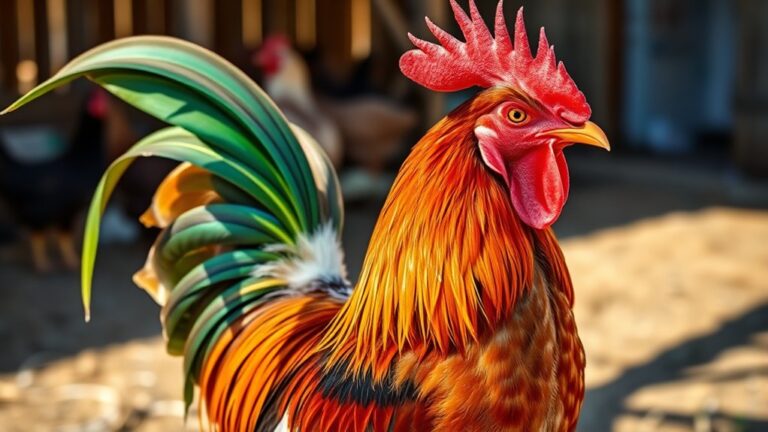
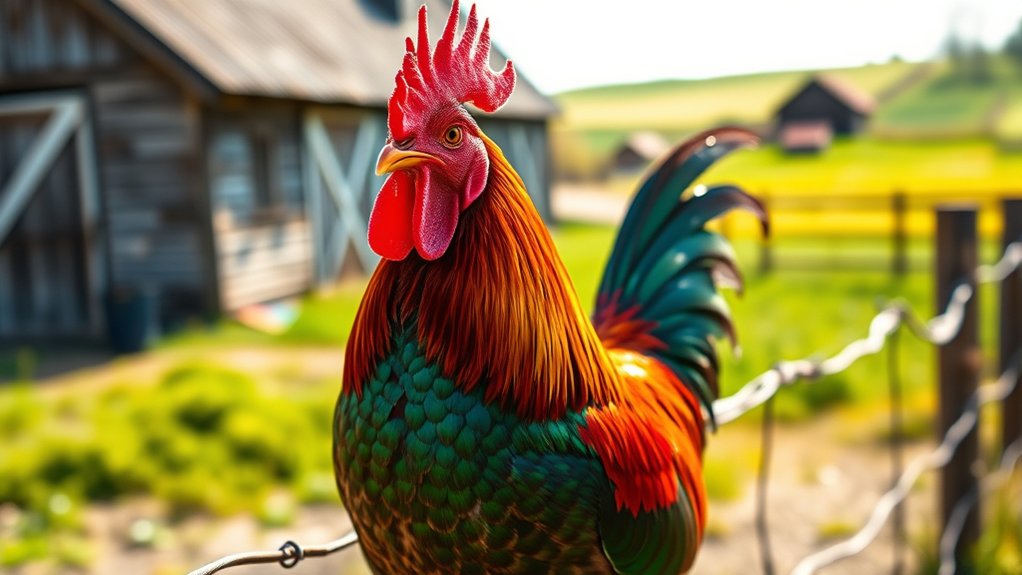
When you look closely at a rooster, you’ll notice several physical traits that set it apart from hens and chicks. One of the most obvious differences is feather coloration. Roosters usually have more vibrant, iridescent feathers in rich colors like deep reds, greens, and blues, while hens tend to have duller, earth-toned feathers for camouflage.
Moreover, comb development is a key feature. Roosters have larger, more prominent combs on their heads, which are bright red and stand upright. Hens have smaller, less pronounced combs, and chicks have barely developed combs at all.
These physical traits not only help you identify roosters at a glance but also play roles in attracting mates and establishing dominance within the flock. Understanding these differences makes it easier to tell roosters apart from hens and chicks.
Behavioral Traits Compared
While roosters share many behaviors with hens and chicks, they display distinct traits driven by their roles in the flock. For example, roosters don’t participate in egg laying habits, which are exclusive to hens. Instead, they focus on protecting and leading the group.
You’ll notice their feather coloration is often more vibrant and elaborate compared to hens and chicks, serving to attract mates and assert dominance. Behaviorally, roosters crow to mark territory and warn of danger, something hens and chicks rarely do.
Hens are more nurturing, dedicating time to incubating eggs and caring for young chicks. Meanwhile, chicks mostly focus on learning and growing. Understanding these behavioral differences helps you appreciate how each member contributes uniquely to the flock’s dynamic.
What Physical Traits Help You Identify a Rooster?
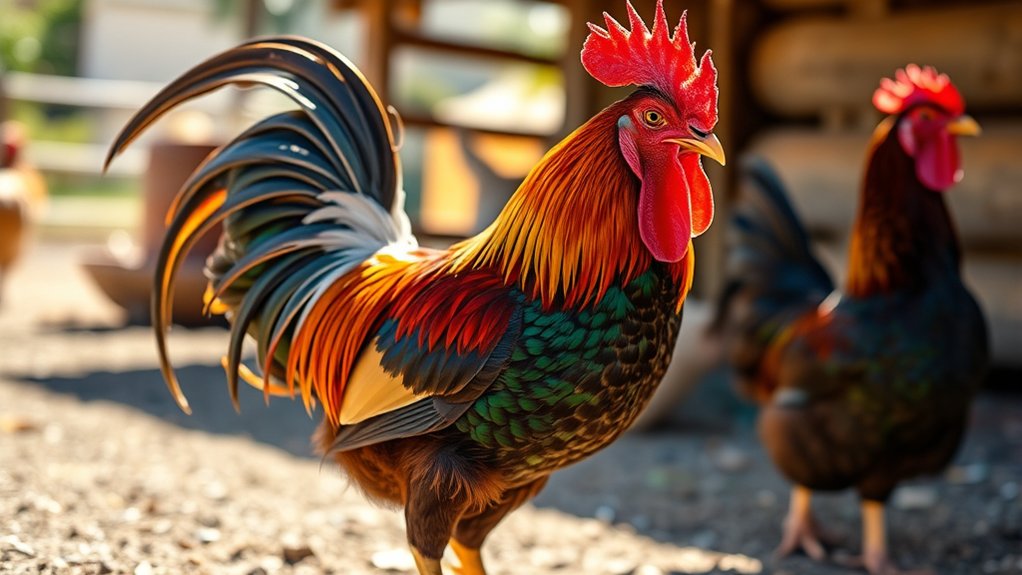
You can spot a rooster by its distinctive comb and wattles. These are usually larger and more vibrant compared to those of hens. Plus, their feather patterns often look more striking. They’re also generally bigger in size. So, keep an eye out for these key traits when you’re trying to identify a rooster.
Distinctive Comb And Wattles
Although hens and roosters share many features, the rooster’s comb and wattles stand out as clear identifiers. When you look closely, you’ll notice roosters have larger, more pronounced combs with distinct shapes, often jagged or pointed, compared to the smaller, smoother combs of hens.
These combs sit atop their heads, varying in size and shape depending on the breed, but always more prominent on roosters. Their wattles, the fleshy lobes hanging below the beak, are also noticeably bigger and brighter.
While feather color can vary widely, it doesn’t help as much in distinguishing roosters from hens. Instead, focusing on the comb shape and wattles gives you a reliable way to identify a rooster quickly and accurately in any flock.
Feather Patterns And Size
Because roosters typically boast more vibrant and varied feather patterns than hens, paying attention to their plumage can quickly help you spot one. Their feather coloration is often richer and more iridescent, making them stand out in a flock. Besides color, size variations play a key role in identification.
Here are three physical traits to look for:
- Feather Coloration: Roosters usually have glossy, multicolored feathers, especially around the neck and tail.
- Tail Feathers: Their long, curved tail feathers are more pronounced compared to hens’ shorter, rounder tails.
- Body Size: Roosters tend to be larger and more robust, with a bulkier frame and stronger legs.
Why Do Roosters Crow and What Does It Mean?
When a rooster crows, it’s not just a noisy wake-up call; it serves several important purposes in their daily life. You’ll notice roosters crow to establish territory, signaling to other males that this space is claimed.
Crowing also plays an essential role in mating rituals. By announcing their presence, roosters demonstrate confidence and vitality, traits attractive to hens. Their vibrant feather coloration, combined with loud crowing, intensifies this display, helping them stand out and assert dominance.
You might also hear crowing at dawn, but roosters don’t limit this behavior to mornings. They crow throughout the day to communicate with their flock, warn of danger, or reassert dominance after a challenge.
How Do Roosters Behave Compared to Other Chickens?
You’ll notice roosters often take charge in the social hierarchy. They make their presence known with distinct calls. They use these vocalizations to communicate important messages to the flock. Plus, they’re protective, watching out for threats in ways other chickens usually don’t.
Rooster Social Hierarchy
How do roosters establish their place among chickens? They use clear social cues to assert dominance in the pecking order. You’ll notice their feather coloration plays a big role. Brighter, more vibrant feathers signal strength and higher rank.
Here’s how roosters behave in their social hierarchy:
- Display dominance – Roosters puff up and show off their colorful feathers to intimidate rivals.
- Engage in mild fights – They spar with other roosters to test and establish rank without causing serious harm.
- Control access to hens – The top rooster guards hens and food sources, making sure his position is respected.
Understanding these behaviors helps you see why roosters act differently from hens and other chickens in the flock.
Vocalizations and Communication
Roosters don’t just rely on looks and physical strength to maintain their status. They use a variety of vocal signals to communicate with the flock. You’ll notice their vocal tone changes depending on the message, whether it’s a call to feed, an alert, or asserting dominance.
These communication signals are more complex than you might expect. They help keep the group organized and safe.
| Vocalization Type | Purpose |
|---|---|
| Crowing | Territory & status |
| Clucking | Calling hens |
| Alarm call | Warning of danger |
| Tidbitting call | Food uncover |
| Quiet clucks | Contentment |
Protective Behavior Traits
What sets a rooster apart from other chickens is his instinct to protect the flock. You’ll notice his vibrant feather coloration isn’t just for show; it signals strength and readiness to defend. Compared to hens, roosters display unique protective behaviors tied to their role in the group.
Here’s how roosters behave differently:
- Vigilant Watchdog: Roosters constantly scan for predators, alerting hens with specific calls.
- Aggressive Defense: When threats appear, they confront danger head-on, often risking their safety.
- Mating Rituals as Warning: Their elaborate dances not only attract hens but also assert dominance to deter rivals.
Understanding these traits helps you appreciate the rooster’s critical role in flock dynamics beyond just being a male chicken.
Why Are Roosters Important in a Chicken Flock?
Although you might not always notice them, roosters play an essential role in maintaining the health and order of a chicken flock. One key function is rooster mating, which ensures the continuation of your flock by fertilizing eggs. Without roosters, you won’t get fertilized eggs, limiting your ability to hatch new chicks.
Beyond reproduction, roosters influence chicken feed preferences. They often lead the flock to the best feeding spots, guiding hens toward nutritious food sources. This natural behavior helps the entire group access balanced nutrition, improving overall flock health.
Additionally, roosters help keep the social structure stable. Their presence reduces conflicts among hens by establishing clear pecking order dynamics. So, if you’re managing a flock, having a rooster can contribute to a healthier, more organized group, supporting both reproduction and feeding efficiency.
Common Myths About Roosters and Chickens: Busted
Even if you’ve heard plenty about roosters and chickens, some common beliefs don’t hold up under scrutiny. Let’s dive into a bit of myth busting to clear up the gender confusion and other misconceptions.
- Roosters aren’t just noisy alarm clocks. They play a vital role in flock protection and social order, not just crowing at dawn.
- All chickens aren’t hens. People often use “chicken” and “hen” interchangeably, but hens are female chickens, while roosters are males. Knowing this helps avoid gender confusion.
- Roosters don’t always fight to the death. While they can be aggressive, many roosters coexist peacefully within their flocks with proper management.
Can You Keep Chickens Without a Rooster?
Wondering if you can keep chickens without a rooster? Absolutely, you can! If your goal is simply to enjoy fresh eggs, a rooster isn’t necessary. Hens will lay eggs regardless of a rooster’s presence, but those eggs won’t undergo fertilization, meaning they won’t develop into chicks. So, if you’re not interested in chicken breeding or raising baby chicks, you can skip the rooster entirely.
Without a rooster, your hens won’t experience the natural breeding process, but this doesn’t affect egg production. Many backyard chicken keepers prefer hen-only flocks to avoid noise and aggressive behavior often associated with roosters. Just ensure your hens have proper care, nutrition, and space. If chicken breeding becomes a future goal, introducing a rooster is crucial to get fertilized eggs and hatch chicks. Until then, keeping hens alone is a perfectly fine way to enjoy fresh eggs with less hassle.
Does a Rooster Affect Egg Production?
While you don’t need a rooster to get eggs from your hens, you might be curious whether having one around influences how many eggs they lay. The short answer is: a rooster doesn’t affect egg laying frequency. Hens will lay eggs regardless of a rooster’s presence, but there are some nuances to take into account.
A rooster doesn’t impact how often hens lay eggs, but there are nuances to consider.
- Egg laying frequency: Hens lay eggs on their own cycle, influenced by factors like daylight and nutrition, not by roosters.
- Fertilization process: A rooster’s main role is to fertilize eggs, enabling you to hatch chicks. Without a rooster, eggs won’t be fertilized but are still perfectly edible.
- Hen behavior: Sometimes, having a rooster can make hens feel more secure, which might indirectly support consistent laying, but this varies by flock.
How to Identify a Rooster at Different Ages
How can you tell if a young chicken is a rooster or a hen? At different ages, roosters show distinct signs compared to hens, influenced by chicken breed variations. Early on, roosters develop thicker legs and larger combs.
Unlike hens, they don’t start egg laying habits, which is a clear clue. As they mature, roosters grow longer tail feathers and start crowing.
Here’s a quick guide to help you identify roosters by age:
| Age | Rooster Traits |
|---|---|
| 0–6 weeks | Larger comb, thicker legs |
| 6–12 weeks | Tail feathers grow, crowing begins |
| 12+ weeks | Full comb, spurs, no egg laying |
Frequently Asked Questions
What Do Roosters Eat Compared to Hens?
You’ll notice roosters and hens have similar feeding habits since both need a balanced diet of grains, seeds, insects, and greens. However, dietary differences come into play because roosters often eat slightly more protein-rich foods to support their muscle development and energy.
While hens focus on calcium-rich feed for egg production, roosters prioritize maintaining strength and stamina. So you might see them eating more insects and protein-packed snacks.
How Long Do Roosters Typically Live?
Roosters typically live around 5 to 8 years, but with good care, you can expect them to reach up to 10 years. When you focus on rooster breeding, their health and lifespan often improve due to selective practices.
Rooster coloration can sometimes indicate breed health, which also affects longevity. By providing proper nutrition and shelter, you’ll help your rooster live a full, vibrant life showcasing its beautiful plumage.
Can Roosters Be Trained Like Pets?
Absolutely, you can train roosters! Rooster behavior responds really well to routine and rewards, making them surprisingly smart companions.
With patience, you’ll see your rooster companionship strengthen as they learn simple commands or even tricks. They’re curious and social, so engaging with them daily builds trust.
Just remember, consistency is key. Use treats and gentle handling to encourage good behavior, turning your feathery friend into a loyal, lively pet.
Do Roosters Have Different Vocalizations Besides Crowing?
Yes, roosters have different vocalizations besides crowing. You’ll notice crowing variations that signal territory, alert danger, or call hens. They use vocal communication to express emotions, warn of predators, or gather their flock.
What Predators Commonly Target Roosters?
Coyotes, hawks, and foxes commonly target roosters, so you need to understand their predator awareness strategies well. Remarkably, roosters use their natural camouflage to blend into surroundings, which can surprise you by how effective it is.
You’ll notice they stay alert, often crowing loudly to warn the flock, enhancing their survival. By observing these behaviors, you can better protect your roosters from these persistent predators.
Conclusion
So, is a rooster really a chicken? Absolutely! Think of roosters as the colorful leaders in the chicken world, standing tall with their crowing and unique traits.
Now that you know how to spot and understand them, you’re ready to appreciate their role in the flock. Whether you keep hens alone or with a rooster, remember they each bring their own unique charm to your backyard barnyard story about chickens!