What Do Silkie Chicks Look Like?
If you’ve ever tried to identify Silkie chicks, you know it can be tricky to distinguish them from other breeds at first glance. You’re not alone—many people struggle with spotting their unique features early on. That’s why understanding what Silkie chicks look like can make all the difference when you’re raising or buying these special birds.
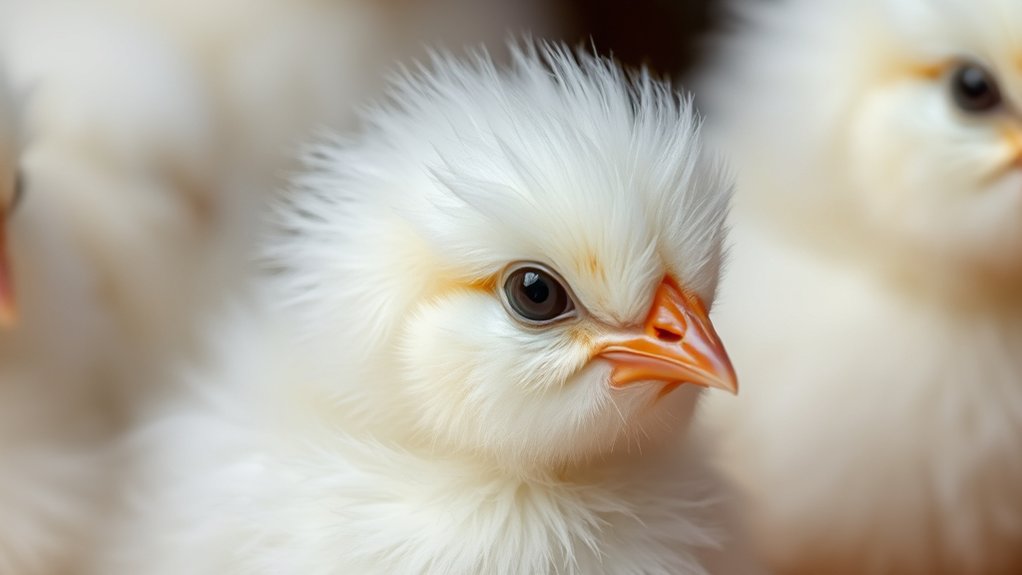
You’ll spot Silkie chicks instantly by their soft, fluffy down that looks like cotton balls, covering their whole body. They have dark bluish skin and bones from birth, plus unique five toes on each foot, unlike most chicks.
Their rounded bodies, short legs, and big heads give them a plush, compact look.
Their feathers and colors deepen as they grow, making them truly special. Keep exploring, and you’ll uncover even more fascinating traits about these charming birds.
Key Takeaways
- Silkie chicks have fluffy, soft down feathers covering their entire body, giving them a cotton ball-like appearance.
- They possess dark blue or black eyes and blue earlobes, which are distinctive features of the breed.
- Their skin and bones show dark pigmentation, often bluish or black, and this is visible from birth.
- Silkies have a compact, rounded body with short legs and a larger head relative to their size.
- Each foot has five toes, a unique trait that helps identify Silkie chicks immediately.
What Makes Silkie Chicks Look So Different?
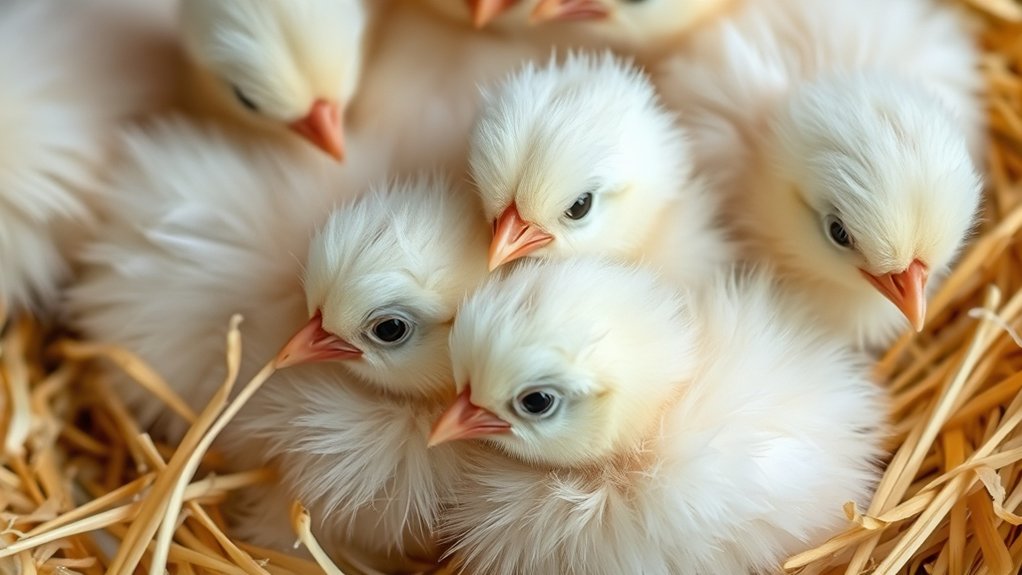
Although Silkie chicks share many traits with other breeds, their unique features immediately set them apart. When you first see a Silkie chick, you might notice their extraordinary feather insulation. Unlike typical feathers, theirs feel more like soft fur, providing exceptional warmth and protection.
This insulation helps them thrive in cooler conditions and gives them a distinct appearance right from the start.
You’ll also observe their notable broodiness behavior. Silkie hens are famous for being dedicated mothers who instinctively want to sit on eggs and care for their young. If you’re raising Silkies, expect them to show strong maternal instincts, often more so than other breeds.
This broodiness behavior makes them excellent for natural breeding and nurturing chicks, adding to their charm and usefulness in a flock. These traits combined make Silkie chicks truly one-of-a-kind in the poultry world.
How Their Fluffy Feathers Create a Cotton-Ball Look
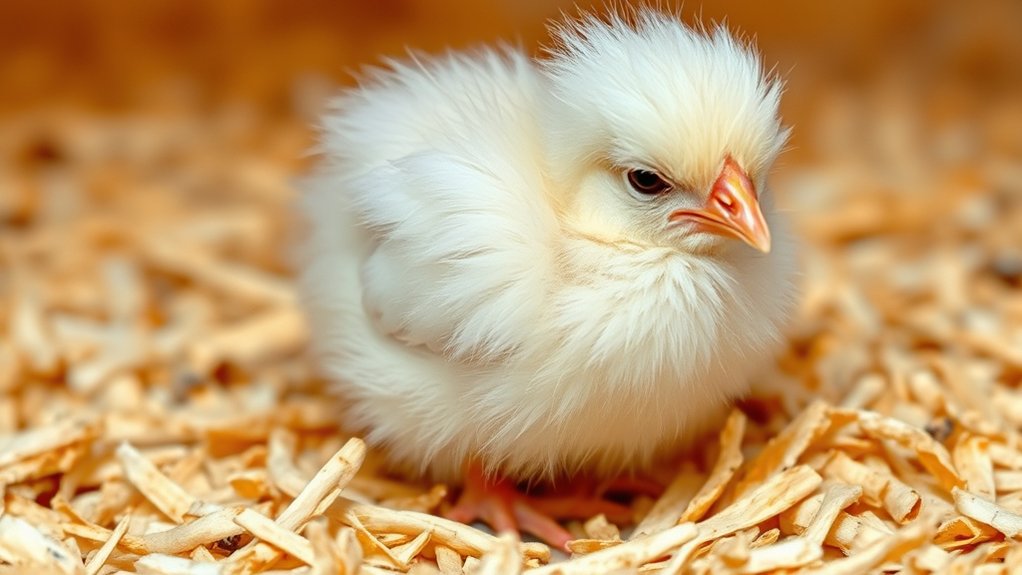
When you see a Silkie chick up close, you’ll notice their feathers don’t lay flat like most birds. Instead, they puff out in a way that makes the chick look like a tiny cotton ball. This unique feather texture comes from a genetic trait passed down through their breed history, which causes their feathers to lack barbicels, the tiny hooks that hold feathers flat.
Without these hooks, the feathers fluff out, giving Silkies that unmistakable soft, fuzzy appearance. This cotton-ball look isn’t just adorable; it reflects centuries of selective breeding to preserve this charming trait. When you hold a Silkie chick, you’ll feel how their feathers almost resemble fur rather than typical feathers, adding to their irresistible appeal.
| Feather Texture | Emotion Evoked |
|---|---|
| Soft and Fluffy | Warmth & Comfort |
| Puffy and Round | Cuteness Overload |
| Unique to Silkies | Fascination |
Why Silkie Chicks Have Dark Skin

You might be wondering why Silkie chicks have such dark skin compared to other breeds. Well, it all comes down to genetics and the high levels of melanin they produce. This pigmentation doesn’t just give them their unique look—it also provides some cool evolutionary benefits.
Genetics Behind Dark Skin
Because Silkie chicks inherit a unique genetic mutation, their skin appears dark and almost bluish from birth. This mutation affects the pigment cells, giving them the distinctive coloration you see.
Breeding techniques have carefully preserved this trait, ensuring each generation maintains the dark skin characteristic. Understanding these genetic mutations helps you appreciate why Silkies stand out among other chickens.
| Trait | Cause | Effect |
|---|---|---|
| Genetic Mutation | Fibromelanosis gene | Dark, bluish skin |
| Breeding Techniques | Selective breeding | Consistent trait passing |
| Pigment Cell Behavior | Increased melanocytes | Amplified pigmentation |
Melanin’s Role Explained
Although melanin is common in many animals, it plays a unique role in Silkie chicks by giving their skin a striking dark hue. This melanin pigmentation sets Silkies apart, complementing their fluffy Silkie feather texture.
When you observe them, you’ll notice:
- Their dark skin contrasts beautifully with their soft feathers.
- Melanin pigmentation *amplifies* their distinct appearance.
- The skin’s rich color isn’t just surface deep; it permeates tissues.
- This pigmentation adds to their exotic and charming look.
Understanding melanin’s role helps you appreciate why Silkie chicks stand out so vividly. Their combination of dark skin and silky feathers isn’t random; it’s a fascinating interplay of biology that makes these chicks truly unique.
When you hold one, you’ll feel the magic of melanin up close.
Evolutionary Advantages of Pigmentation
When you consider the dark skin of Silkie chicks, it’s clear that this pigmentation offers more than just aesthetic appeal. It provides evolutionary benefits like better UV protection and camouflage, helping them survive in varied environments.
Their distinctive feather patterns also play a role in blending into surroundings, while egg coloration may signal health and vigor to predators and mates alike. These traits work together to improve survival and reproduction.
| Feature | Advantage | Impact on Survival |
|---|---|---|
| Dark Skin | UV Protection | Reduces skin damage |
| Feather Patterns | Camouflage | Hides from predators |
| Egg Coloration | Health Indicator | Attracts mates, deters predators |
Understanding these factors helps you appreciate why Silkie chicks have evolved such unique pigmentation.
Why Silkie Chicks Have Blue Earlobes
If you’ve ever noticed the striking blue earlobes on Silkie chicks, you might wonder what causes this unique feature. It’s closely tied to their genetics, which also influence their feather coloration and egg shell color. The blue earlobes are a visual marker connected to the breed’s distinctive traits.
Here’s why they have those mesmerizing blue earlobes:
Discover the fascinating reasons behind the Silkie chick’s mesmerizing blue earlobes and their unique charm.
- Genetic Link: The gene responsible for their blue earlobes is linked to those that affect their fluffy feather texture and pigmentation.
- Breed Identity: Blue earlobes help you instantly recognize Silkies, setting them apart from other chickens.
- Egg Shell Indicator: The blue earlobes often signal the hens will lay tinted or cream-colored eggs, reflecting the breed’s unique egg shell color.
- Attraction Factor: These earlobes might play a role in mate attraction, highlighting their health and vitality.
What Colors Do Silkie Chicks Come In?
The blue earlobes you notice on Silkie chicks aren’t their only standout feature. These chicks also come in a variety of colors that make them even more fascinating. When you look at Silkie chicks, you’ll find feather patterns ranging from solid black, white, and buff to more unique shades like gray and partridge.
Each color variation gives these fluffy babies a distinct charm. As they mature, these colors often become richer and more defined, making your Silkie flock visually diverse.
In addition to their feather patterns, the egg color Silkie hens lay is typically a creamy or tinted shade, complementing their soft, colorful plumage. If you’re considering raising Silkies, knowing their color possibilities helps you anticipate the variety you’ll enjoy in both appearance and egg color.
Embracing this diversity amplifies your experience with these enchanting little birds.
Silkie Chick Size and Shape Compared to Other Breeds
You’ll notice Silkie chicks have distinct body proportions that really set them apart from standard breeds. They’re more compact and have that fluffy shape, which gives them a unique look you just don’t see in other chicks. Let’s take a closer look at how these features stack up against the chicks you might already know.
Silkie Chick Body Proportions
Although Silkies may look fluffy and delicate, they actually have distinct body proportions that set them apart from other breeds. When you observe a Silkie chick, you’ll notice these unique traits:
- A compact, rounded body that feels almost plush due to their soft feather patterns.
- Short legs that give them a squat, sturdy appearance.
- A larger head relative to their body size, accentuating their adorable look.
- Fluffy feathering that often obscures their eyes, enhancing their mysterious charm.
These proportions don’t just define their appearance; they also influence how Silkies move and behave. While their egg color is usually tinted cream or light brown, their body shape remains consistent, making them instantly recognizable.
You’ll find their unique silhouette both charming and endearing.
Comparing Silkie And Standard Chicks
When you compare Silkie chicks to standard breeds, you’ll quickly notice differences in size and shape that set Silkies apart. Silkie chicks tend to be smaller and rounder, with a fluffier appearance due to their unique feather coloration. This often appears softer and more muted than the bright, sleek feathers of standard chicks.
While standard breeds usually have leaner bodies and more defined features, Silkies’ compact build gives them a distinct look right from the start. Furthermore, if you’re considering egg production, standard breeds generally outperform Silkies, as Silkies lay fewer, smaller eggs.
Unique Silkie Chick Features
Because Silkie chicks grow differently from other breeds, you’ll notice their unique size and shape right away. They’re smaller and rounder, with fluffy feather patterns that give them a soft, almost plush appearance.
You’ll also spot their distinct features compared to standard chicks:
- Compact, round bodies that feel cozy to hold
- Fluffy, downy feathers covering legs and feet
- Unusual feather patterns that look more like fur
- Soft, pale egg coloration from adult Silkies, unlike other breeds
These traits make Silkie chicks stand out in any brood. Their size is petite but sturdy, and their shape adds to their charm.
When you observe their feather patterns and anticipate their unique egg coloration, you’ll appreciate why Silkies are so special among chickens.
What to Expect From Silkie Chicks’ Temperament and Behavior
Since Silkie chicks grow into some of the friendliest and most docile chickens, you can expect them to be gentle and curious from an early age. Their unique feather patterns often attract your attention, but their calm temperament will keep you coming back.
As they investigate, you’ll notice they’re not shy about vocal communication. Silkie chicks use soft chirps and trills to interact with you and their flock, making it easy to bond with them.
You’ll find that Silkie chicks enjoy gentle handling and quickly adapt to human interaction, thanks to their naturally docile nature. Their social behavior means they thrive in a calm environment where they feel safe.
Watching their curious nature and subtle vocal cues will help you understand their moods and needs, making your experience with Silkie chicks both rewarding and enjoyable.
How Silkie Chick Appearance Changes as They Grow
As your Silkie chick grows, you’ll start to see its feathers change in stages. They gradually get fluffier and silkier, which is pretty fascinating to watch. You might also notice its color shifting just a bit here and there.
Plus, the chick will get noticeably bigger over time. Paying attention to these changes really helps you get a feel for how your little Silkie is maturing day by day.
Feather Development Stages
Though Silkie chicks hatch covered in soft down, their feather appearance changes noticeably as they grow. You’ll see their unique feather coloration begin to emerge, influenced by breeding patterns that breeders carefully select for.
As they develop, their feathers become fluffier and more defined, creating that signature Silkie look. Here’s what you can expect during feather development stages:
- First week: Soft down starts to give way to tiny, delicate feathers.
- Weeks 2-4: Feathers thicken, and you notice the first signs of their fluffy texture.
- Weeks 4-8: Feather coloration deepens, reflecting the chick’s genetic background.
- After 8 weeks: Full feathering appears, showcasing the Silkie’s trademark silk-like fluff.
Watching these changes will deepen your appreciation for these charming birds.
Color and Size Changes
When you watch Silkie chicks grow, you’ll notice their colors deepen and their size changes considerably. Their soft, downy feathers gradually develop into the signature fluffy plumage, shifting feather coloration from pale yellow or white to richer hues like black, blue, or buff.
Alongside this, their beak structure strengthens and darkens, becoming more defined. These changes mark each growth phase, making it exciting to track their development.
| Age (Weeks) | Feather Coloration | Beak Structure |
|---|---|---|
| 1 | Pale yellow or white | Soft, light-colored |
| 2 | Slightly darker, fuzzier | Firming, darkening |
| 4 | Noticeable fluffiness | More defined shape |
| 6 | Richer, true feather hues | Strong, dark beak |
| 8+ | Full adult plumage | Fully formed beak |
Key Physical Traits to Identify Silkie Chicks
If you want to spot a Silkie chick among others, you’ll notice several distinctive physical traits right away. Their unique feather anatomy makes them stand out; their feathers resemble soft fur rather than typical feathers, giving them a fluffy, almost silk-like appearance. This trait is visible soon after their incubation period, which lasts about 21 days, just like most chickens.
Here’s what you should look for:
Here’s what you should look for when spotting a unique Silkie chick.
- Fluffy down feathers covering their entire body, making them look extra cuddly.
- Black or bluish skin and bones, a rare trait you won’t find in other chicks.
- Five toes per foot instead of the usual four, a quirky Silkie signature.
- Dark blue or black eyes that sparkle with curiosity.
These features make identifying Silkie chicks easy, even when they’re just hatched. Keep an eye out for these traits during and right after the incubation period to recognize them immediately.
Why Silkie Chicks Are Such Popular Pets
Recognizing Silkie chicks by their unique features is just the beginning of understanding why so many people adore them as pets. You’ll quickly notice their gentle temperament, making them great companions, especially if you have kids.
Their soft, fluffy feathers require regular feather grooming, which creates a bonding routine that many owners cherish. Unlike other chickens, Silkies are surprisingly calm and handleable, so you won’t have to worry about aggressive behavior.
While their egg production isn’t as high as standard breeds, they still lay a fair number of small, tinted eggs, adding to their appeal for backyard enthusiasts. Plus, their broodiness means they often make excellent mothers, which is great if you want to raise more chicks.
Frequently Asked Questions
How Do I Care for Silkie Chicks During Their First Week?
You’ll want to keep Silkie chicks warm with a heat lamp set around 95°F during their first week. Because of their unique Silkie feathering, they don’t insulate well, so consistent warmth is crucial.
Provide clean water and chick starter feed. If you notice broody behavior from a hen, let her help brood, as Silkies are great mothers.
Keep their brooder clean and dry to guarantee healthy growth.
What Do Silkie Chicks Eat Compared to Other Breeds?
You’ll feed Silkie chicks a diet similar to other breeds, focusing on high-quality chick starter feed for balanced Silkie chick nutrition. Their diet should be rich in protein (18-20%) to support growth.
You can also offer occasional treats like finely chopped greens or scrambled eggs, but avoid anything too rich. Keep fresh water available at all times. Sticking to this Silkie chick diet helps make certain they grow healthy and strong.
Are Silkie Chicks More Prone to Health Issues?
Yes, Silkie chicks are more prone to health issues, with studies showing up to 30% higher susceptibility due to genetic predispositions. You’ll want to watch for common health concerns like respiratory problems and Marek’s disease.
Because of their unique genetics, they may need extra care and regular checkups. By staying vigilant, you can help your Silkie chicks thrive despite these challenges and enjoy their charming nature fully.
Can Silkie Chicks Live Outdoors in Cold Climates?
You can keep Silkie chicks outdoors in cold climates, but you’ll need to be extra cautious. Their fluffy Silkie chick feathering isn’t as insulating as regular feathers, so they’re more vulnerable to cold.
Also, their Silkie chick coloration doesn’t affect warmth, but dense feathering does. Make sure they have a dry, draft-free shelter and use heat lamps if temperatures drop too low.
Regularly check for signs of chill or distress to keep them safe and cozy.
How Long Do Silkie Chicks Take to Mature?
You’ll find Silkie chicks take their sweet time blossoming, usually about 5 to 6 months to reach full maturity. During this period, their feather coloration gradually deepens, revealing their unique charm.
If you’re patient, you’ll also notice their strong broodiness tendencies emerging, making them excellent mothers later on. So, don’t rush; enjoy watching them grow at their own gentle pace, embracing all their fluffy quirks along the way.
Conclusion
Now that you know what makes Silkie chicks so unique, from their fluffy, cotton-ball feathers to their striking blue earlobes, you’re ready to spot them with ease. Their dark skin and gentle temperament add to their charm, making them truly one of a kind.
Like little clouds with personalities, Silkie chicks bring softness and warmth wherever they go. Once you see them, you’ll understand why Silkie chicks are such beloved pets in any backyard.