How to Build a Chicken Run in 3 Steps
Building a safe and spacious chicken run can feel overwhelming, especially if you want to give your flock plenty of room to roam without worrying about predators. You’re not alone—many backyard chicken keepers struggle with finding the right balance between security and space.
Luckily, creating a functional chicken run doesn’t have to be complicated. How to Build a Chicken Run?
Start by choosing the right size for your flock, giving each bird room to move, scratch, and dust bathe, with extra space for larger or more active breeds.
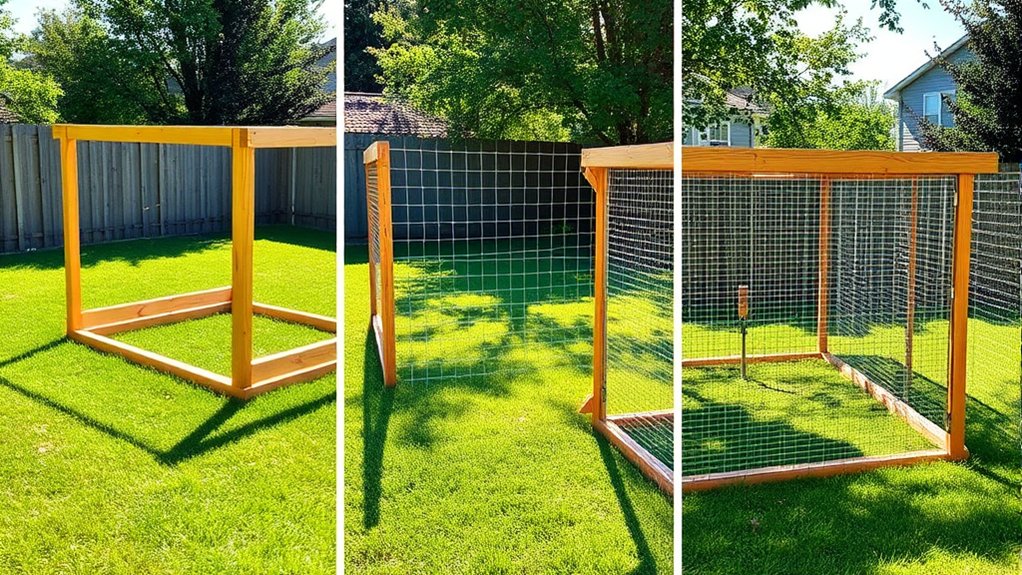
Next, build a sturdy frame on level ground using pressure-treated lumber, cedar, or metal, and secure it with screws, bolts, or posts.
Finally, install hardware cloth, overlap seams, bury it to stop digging predators, and add a secure latch for extra protection so you can keep improving it.
Key Takeaways
- Choose the run size based on your flock’s breed, number, activity level, and future growth.
- Build a sturdy frame from suitable materials. Then level and anchor it securely.
- Install predator-proof wire mesh, overlapping seams and burying it to stop digging.
- Add locks, roof protection, and covered vents to keep out predators and weather.
- Inspect regularly for damage, rust, gaps, and loose fasteners. Repair issues quickly.
Choose the Right Chicken Run Size

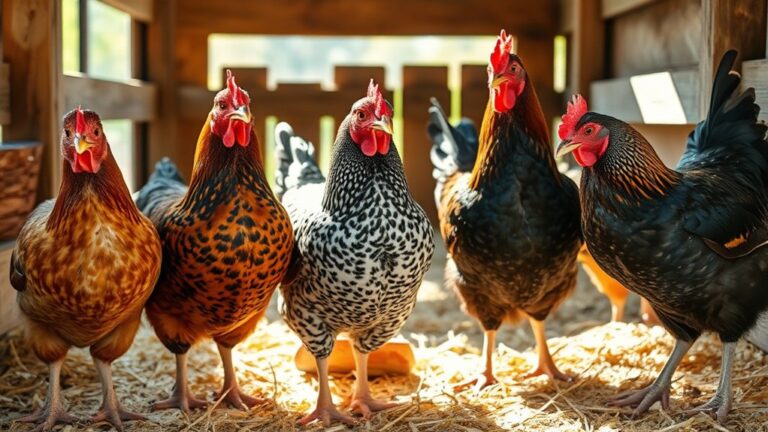
How big should your chicken run be? You need enough room for your flock to move, scratch, dust bathe, and avoid crowding. Start by checking space requirements for each bird, then multiply by the number of chickens you keep.
Give each chicken enough space to move, scratch, dust bathe, and stay comfortably uncrowded.
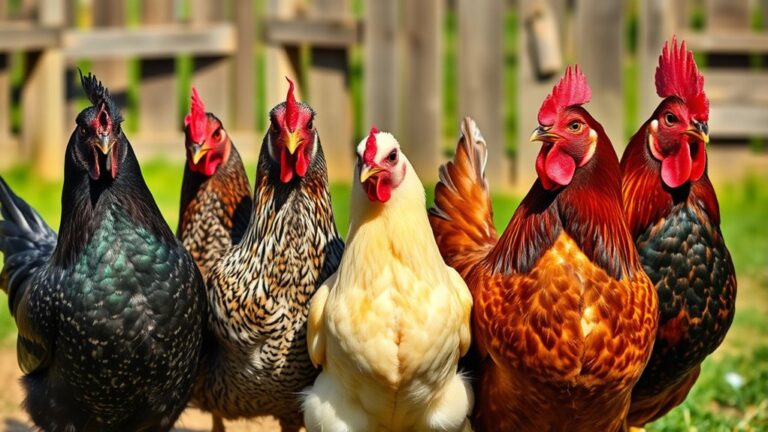
Bigger breeds need more room than bantams, and active birds need extra space to match their chicken behavior. If you plan to keep birds in the run all day, choose a larger area than you would for supervised ranging.
Tight quarters can lead to pecking, stress, and dirty ground, so give your flock space to stay healthy and calm. Also consider future growth; if you may add hens later, size the run now to avoid rebuilding soon.
Aim for a layout that lets you walk through easily and observe your birds without disturbing them. A well-sized run supports comfort, cleanliness, and better egg production.
Build the Frame and Base

Now that you know the run’s size, it’s time to build a sturdy frame and base that can stand up to weather, wear, and persistent chickens. Choose frame materials that match your budget and climate, such as pressure-treated lumber, cedar, or metal conduit.
Cut each piece to length, then assemble the perimeter on level ground so the structure stays square. Use corner brackets, screws, or bolts to lock joints tightly and prevent wobbling.
For base stability, anchor the frame with posts set into the soil or attached to concrete blocks if you need a movable design. Check each corner with a level before you continue, and adjust until the frame sits flat.
If the ground slopes, shim low points or dig slightly to create an even surface. A solid frame makes the rest of the build easier and helps your chicken run last longer.
Install Wire Mesh and Predator Protection
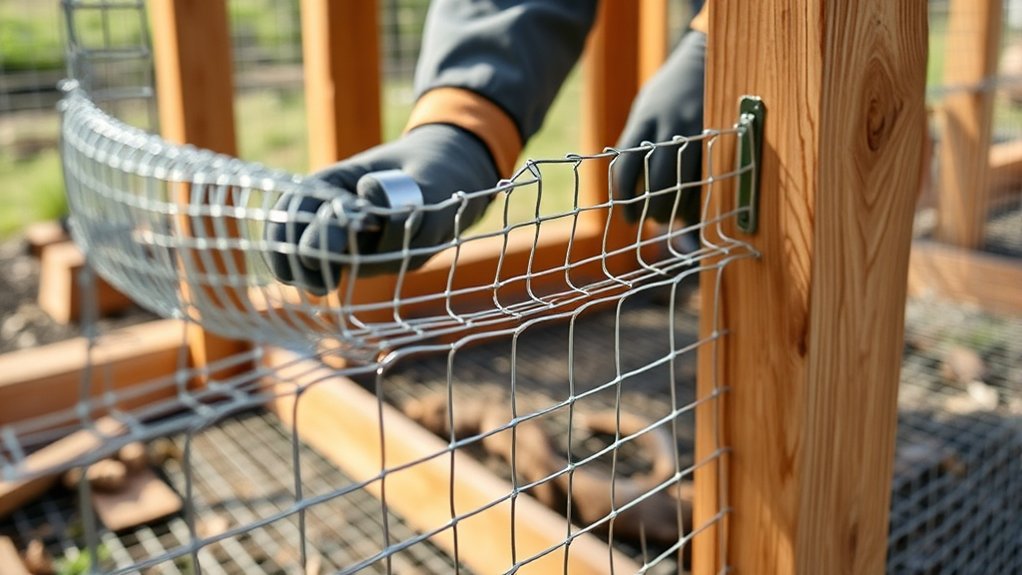
With the frame secure, you can start enclosing the run with wire mesh and the right predator defenses. Choose mesh types that match your threats: 1/2-inch hardware cloth stops raccoons and rats better than chicken wire. Chicken wire can work for upper sections but isn’t strong enough alone.
Cut each panel cleanly, then fasten it tightly with galvanized staples or screws and washers, overlapping seams by at least two inches. Bury the mesh six to twelve inches into the ground or flare it outward so diggers can’t slip under.
Add predator deterrents like locking latches, covered vents, and a roof or netting to block hawks and climbing animals. Check corners, doors, and gaps for weak spots. Good installation tips include tensioning the mesh well and trimming sharp ends.
For maintenance advice, inspect weekly for rust, loose fasteners, or holes, and repair damage right away to keep your flock safe.
Frequently Asked Questions
What Roof Materials Work Best for a Chicken Run?
For a chicken run, you’ll want roof materials that match your roof types and weather considerations. Corrugated metal works well because it’s durable and sheds rain fast. Clear polycarbonate lets in light while blocking rain and snow.
Heavy-duty wire mesh can help in mild climates, but it won’t protect from weather. Asphalt shingles suit covered runs, though they’re heavier. Pick a material that keeps chickens dry, shaded, and secure.
Should a Chicken Run Have a Concrete Floor?
Not usually, unless you want an easy-to-clean, permanent base. A concrete floor can boost chicken run benefits by blocking burrowers and adding predator protection. But it also removes natural scratching, drainage, and access to the soil.
Why trap your flock on hard ground if you don’t have to? You can use concrete under sheltered areas, then add dirt, sand, or mulch elsewhere so your chickens stay healthier and happier overall.
How Do I Add a Door Latch to Prevent Escapes?
Install a secure latch that your flock can’t bump open, like a slide bolt, barrel bolt, or hook-and-eye. You’ll want to mount it high, line it up carefully, and test it from both sides.
For better security, add a carabiner or padlock. These installation tips help keep predators out and chickens in. Check the latch often, because loose screws or warped wood can create escape gaps.
Can I Move a Chicken Run to Fresh Ground Easily?
Yes, you can move a chicken run, but it’s not always quick. Like shifting a tent on a windy day, you’ll need to plan ahead. If you built temporary structures, you can relocate it more easily.
Check for ground preparation at the new spot first, then lift, drag, or disassemble the run carefully. You’ll also want to protect your chickens during the move and secure the new area fast.
What Plants Are Safe to Grow Inside a Chicken Run?
You can grow hardy herbs like rosemary, thyme, mint, oregano, and sage inside your run. These give you smart herb selection, add plant benefits, and handle pecking well.
You can also try chicken-safe greens like kale, clover, comfrey, and lettuce for more landscaping options. Avoid foxglove, lilies, azalea, and nightshade, since they threaten chicken safety.
Keep plants protected with wire, and let your flock nibble only what you trust.
Conclusion
Now you’ve got the basics to build a chicken run that’s sturdier than a fortress and safer than a bank vault. By choosing the right size, building a solid frame and base, and adding wire mesh with predator protection, you’re giving your flock a happy, roomy place to strut, peck, and rule the yard.
Your chickens will thank you with joyful clucks and maybe enough eggs to make breakfast feel like a small miracle. Building a chicken run like this ensures your flock stays safe and comfortable every day.