Protect Chickens From Predators in 5 Simple Steps
If you raise chickens, you know how stressful it can be to keep them safe from predators. You’re not alone—many people struggle with finding effective ways to protect their flock without spending a fortune or turning their yard into a fortress.
The good news is there are simple, practical steps you can take to secure your chickens and give yourself peace of mind.
Protect chickens from predators in five simple steps.
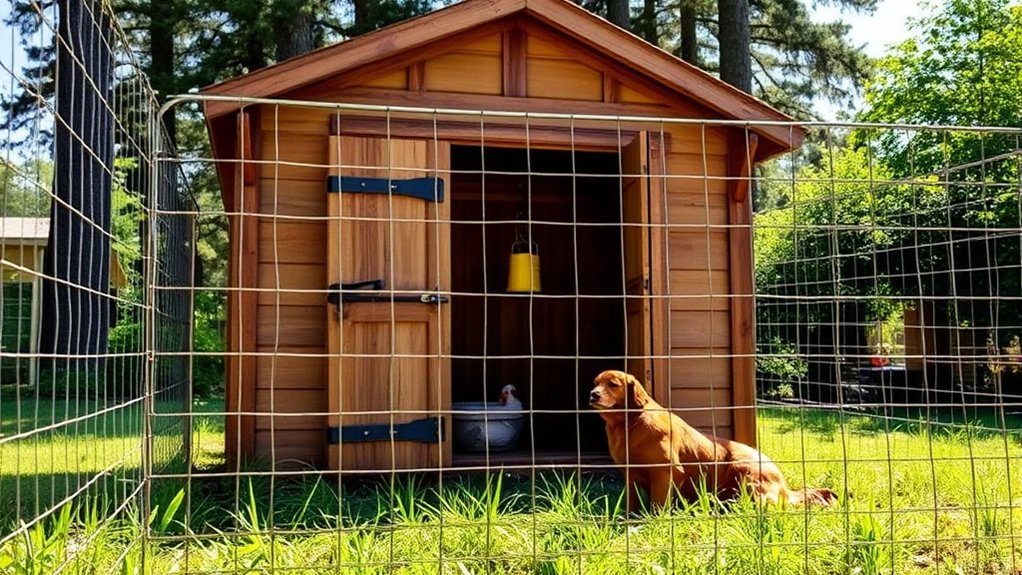
First, use galvanized wire, metal latches, and hardware cloth to harden the coop.
Next, lock birds up before dark every night.
Then bury wire or planks around the run to stop digging.
Add motion lights and other deterrents near dark corners and entry points.
Finally, check for scratches, holes, bent wire, and other warning signs so you can spot trouble before it gets worse and learn what helps most.
Key Takeaways
- Use predator-proof hardware like galvanized wire, metal latches, and hardware cloth on all openings. These materials help keep unwanted visitors out and secure your chickens.
- Lock chickens inside the coop before dark every night. This simple routine keeps them safe when predators are most active.
- Bury wire or hardware cloth around the run to stop digging predators. This underground barrier is key to preventing sneaky attacks from below.
- Add motion lights and deterrents near coop entrances and dark areas. These can scare off predators before they get too close.
- Inspect the coop regularly for damage, tracks, or signs of predator attacks. Catching issues early means you can fix them before problems grow.
Pick Predator-Proof Chicken Coop Hardware

Choose hardware that keeps predators out for good. You need tough coop materials like galvanized wire, metal latches, and rust-resistant hinges that withstand chewing, scratching, and prying.
Match your choices to local predator types: raccoons test weak locks, foxes dig, and hawks attack from above. Use hardware cloth, not chicken wire, on windows and vents, and secure every seam with screws and washers.
Raccoons pry weak locks, foxes dig, and hawks strike from above, so fortify every opening with hardware cloth.
Good coop ventilation matters, so cover openings with sturdy mesh that still lets air move freely. For nesting safety, install tight-fitting doors and smooth edges so birds can’t snag feet or feathers.
Build run design with buried mesh skirts or apron barriers to block digging. Keep feeding practices tidy by storing grain in sealed bins and cleaning spills fast, since food attracts trouble.
Inspect your hardware often, and replace bent pieces before a predator finds them.
Lock Chickens Up Before Dark

Even the strongest hardware can’t help if predators get a chance after sunset, so make a habit of locking your chickens in before dark every night. You’ll protect them best when you match your routine to chicken behavior, since hens naturally slow down, roost, and settle as light fades. Once dusk starts, move with purpose and close the coop promptly. Good nighttime safety depends on consistency, not guesswork.
- Check that every bird is inside and calm before you latch the door.
- Use a flashlight if needed, but avoid startling them with sudden noise or movement.
- Make the same closing routine part of your evening schedule so you don’t forget.
When you lock up on time, you cut off easy access for nocturnal hunters and give your flock a secure place to rest. That simple habit makes a big difference every night.
Fortify the Run With Digging Barriers

To stop digging predators from tunneling under the run, bury a barrier along the perimeter and make it hard for them to get beneath the fence. You can use welded wire, hardware cloth, or sturdy planks as barrier materials, then extend them downward at least 12 inches.
For extra protection, bend the bottom outward in an L shape so any animal that tries to dig hits a wider obstacle. You can also lay wire flat on the ground inside the fence and cover it with soil or gravel, which frustrates digging techniques and slows persistent pests.
Check the perimeter often for loose spots, exposed edges, or fresh holes, and repair damage right away. If your soil is soft, add deeper reinforcement at corners and gates, where animals usually test for weak points. A solid underground defense helps keep your flock safer without adding much work.
Use Motion Lights and Predator Deterrents
Motion-activated lights can startle prowling predators and make them think twice about approaching your coop or run, especially after dark. You’ll get the best results when you pair motion sensors with smart light placement around entry points, corners, and dark paths. Aim the beams outward so they wash the approach area, not your chickens, and keep the fixtures high enough that curious raccoons can’t reach them.
- Choose weatherproof LED lights with adjustable sensitivity so they won’t trigger from every breeze.
- Mount deterrents where predators usually linger, including gates, fence lines, and feed-storage areas.
- Combine lights with reflective tape, noise makers, or predator decoys to create a stronger scare effect.
Test the setup at dusk, then walk the route yourself to check coverage. If shadows remain, shift the angle or add another fixture. Consistent lighting can make your coop feel risky to predators and safer for your flock.
Check the Coop for Predator Signs
Lights and other deterrents help, but you should still inspect the coop regularly for signs that a predator’s testing your setup. During each coop inspection, look for scratches on wood, bent wire, loose latches, and digging around the run.
Check corners, doors, vents, and windows where raccoons, foxes, or weasels may probe for weakness. If you spot feathers outside the coop, broken eggs, or droppings, treat them as warning signs.
Check corners, doors, vents, and windows for weakness, and treat feathers, broken eggs, or droppings as warning signs.
Predator tracks near muddy ground or dust can tell you what’s visiting after dark, so photograph them and compare the size and shape. Reinforce any weak spots right away, and don’t wait for a full breach.
Replace damaged hardware, seal gaps, and add buried wire if needed. By catching trouble early, you reduce risk and keep your flock safer without relying on guesswork or luck.
Frequently Asked Questions
What Chicken Breeds Are Most Resistant to Predators?
No chicken breed is truly predator-proof, but you’ll have better odds with alert, hardy breeds like Leghorns, Australorps, Wyandottes, Rhode Island Reds, and Orpingtons. Their breed characteristics often include good vigilance, strong foraging instincts, and enough size to deter small predators.
You should also value predator awareness, because your flock’s safety depends on quick reactions, secure housing, and your daily watchfulness more than breed alone.
How Many Chickens Can Share One Coop Safely?
A good rule of thumb is 3 to 4 chickens per square foot inside the coop, so you can usually fit about 8 to 12 hens in a standard 4-by-8 coop. You’ll need extra room for coop space, roosts, and flock dynamics, or tensions can flare like sparks in dry grass.
Always give them more space if they’re larger breeds, spend time inside, or show pecking issues.
Which Guard Animals Help Protect Backyard Chickens?
You can use guard dog breeds like Great Pyrenees, Anatolian Shepherds, and Maremma Sheepdogs to protect your backyard chickens. A calm, well-trained livestock guardian can deter foxes, coyotes, raccoons, and stray dogs without harming your flock.
You’ll also want a donkey or llama if your setup suits them since they’ll often challenge predators. Always introduce any guardian slowly, and make sure your chickens have a secure coop to retreat into safely.
How Often Should Coop Bedding Be Replaced?
You should replace coop bedding weekly, or sooner if it’s wet, smelly, or packed down. Your bedding types change the cleaning schedule: straw and shavings may need more frequent swaps than hemp or sand.
You can spot-clean daily, then fully replace bedding during your weekly coop cleanup. If you keep the coop dry and well ventilated, you’ll stretch bedding life and keep your chickens healthier and happier.
What Vaccinations Do Chickens Need for Predator-Related Stress?
You don’t vaccinate chickens for predator-related stress itself; no shot stops fear. Instead, you follow a poultry vaccination schedule for diseases, then use stress management to keep birds resilient after scares.
You can ask your vet about Marek’s, Newcastle, and infectious bronchitis vaccines, depending on your area and flock size. Like a shield in an old epic, good housing, calm handling, and clean water help your hens recover and stay healthy.
Conclusion
You can do everything right and still feel like you’re running a tiny fortress for birds with better public relations than most politicians. But that’s the deal: sturdy hardware, early lockup, buried barriers, bright lights, and regular checks all stack the odds in your chickens’ favor.
Stay alert and stay practical. Don’t let a clever predator turn your coop into an all-you-can-eat buffet. Your flock depends on your consistency, not luck, and protecting chickens from predators is all about staying one step ahead.