Can Chickens Eat Oranges?
If you’re a chicken owner, you’ve probably wondered what treats are safe and healthy for your flock. You’re not alone—many people struggle with figuring out which fruits and snacks can add variety without harming their birds.
Finding safe, tasty options that your chickens will actually enjoy can be tricky. Can Chickens Eat Oranges.
Yes, you can feed chickens oranges in moderation as an occasional treat. Offer small pieces of the flesh and keep it under 10% of their daily diet.
Oranges add hydration, a little vitamin C, and variety, but you should remove seeds, peels, pith, and any moldy sections.
Watch for loose droppings or low appetite after feeding. If you want, you’ll find out which parts are safest and how much to serve.
Key Takeaways
- Yes, chickens can eat oranges safely in moderation as an occasional treat.
- Offer small flesh pieces only and keep oranges under 10% of their daily diet.
- Remove seeds, peels, pith, and any moldy parts before feeding.
- Oranges provide hydration, vitamin C, and a little quick energy, but too much sugar can upset digestion.
- If you notice loose droppings or reduced appetite, stop feeding oranges. Contact a poultry vet if symptoms continue.
Can Chickens Eat Oranges Safely?

Yes, chickens can eat oranges safely in moderation. You can offer small pieces as an occasional treat, and you don’t need to worry about the fruit’s acidity harming your flock when you keep portions modest.
For chicken health, a varied diet matters more than any single snack, so oranges should never replace balanced feed. You should also remove seeds and any moldy sections before serving.
If you notice that a bird has a sensitive crop or loose droppings after eating citrus, cut back or stop offering it. The citrus benefits come from variety and enrichment, not from making oranges a daily staple.
You can hand-feed a few segments or mix them with other safe foods to encourage interest. Always provide clean water and watch how your chickens respond, since every flock reacts a little differently to new treats.
What Chickens Get From Oranges
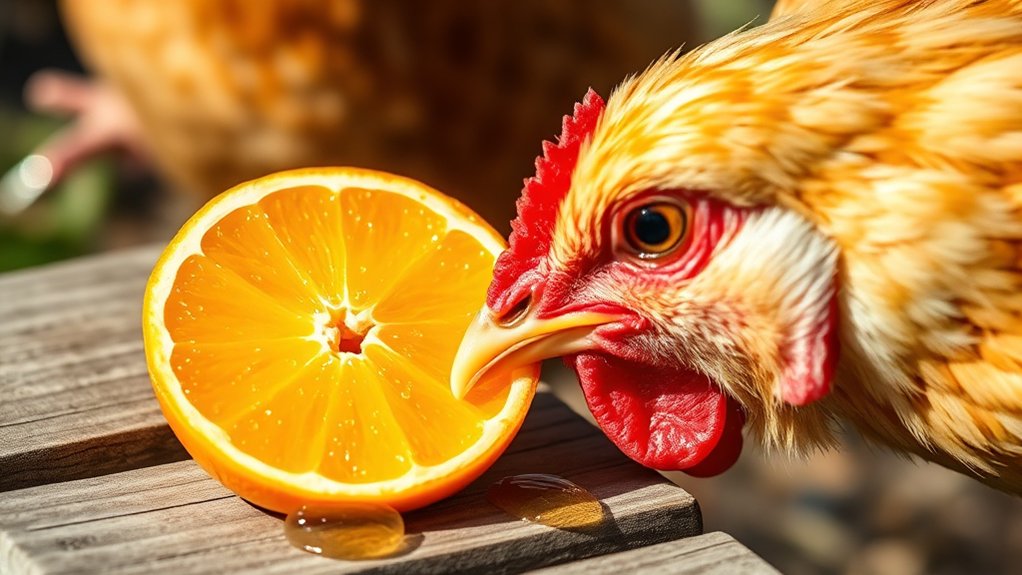
Oranges can give chickens a small boost of vitamin C, plus hydration and a bit of natural sugar for quick energy. You also get some nutritional benefits from the fruit’s juicy flesh, which can help add variety to your flock’s diet. The vitamin content in oranges includes vitamin C and small amounts of other helpful nutrients, so they’re more than just a sweet treat.
When you offer orange pieces, you’re giving your chickens a flavorful snack that can support general health and encourage pecking interest. The water in oranges can help your birds stay hydrated, especially on warm days. Their scent and taste may also tempt picky chickens to sample something new.
Because oranges are soft and easy to peck, they fit well into a mixed treat routine. Still, you’re mainly offering a supplement, not a meal replacement. Keep the focus on balanced feed, then use oranges to add variety, moisture, and a little extra enrichment for your flock.
How Much Orange Can Chickens Eat?

A few small orange pieces are plenty for most chickens, and treats like this should stay well under 10% of their daily diet. You can offer one or two bite-sized segments per bird, once or twice a week, and then watch how they respond. Too much fruit can crowd out balanced feed, so keep orange nutrition as a bonus, not a staple.
The citrus benefits are best when you use oranges sparingly and pair them with a solid layer ration.
| Chicken size | Orange amount | Frequency |
|---|---|---|
| Small bantam | 1 small piece | 1x weekly |
| Average layer | 2 pieces | 1–2x weekly |
| Large hen | 3 pieces | 1x weekly |
If you’re unsure, start with less and adjust. You want treats to support health, energy, and curiosity without replacing the foods your flock needs most.
Can Chickens Eat Orange Peels, Seeds, and Pith?
Orange flesh is the easiest part for chickens to handle, but peels, seeds, and the white pith are a different story. You can offer small amounts, but you should be cautious with peel toxicity and tough texture.
Orange flesh is easiest for chickens, but peels, seeds, and pith need caution in small amounts.
Orange peel isn’t highly toxic, yet its oils and bitterness can upset a sensitive crop or digestive tract. The white pith is fibrous and less appealing, so your birds may ignore it or peck only a little.
Seeds also deserve attention because seed digestion can be slow, especially if your chickens gulp larger pieces instead of chewing them well.
- Peels can be hard to chew.
- Pith adds extra fiber and bitterness.
- Seeds may pass through less easily.
- Excess citrus can reduce comfort.
If you let your flock sample these parts, keep portions tiny and watch for loose droppings, reduced appetite, or refusal to eat their normal feed afterward.
How to Serve Oranges to Chickens
When you’re offering oranges to your chickens, make sure to remove the seeds and peel first. It’s best to cut the fruit into small pieces so they can peck at it safely and easily. Just keep in mind, oranges should only be given as an occasional treat—not something they eat every day.
Remove Seeds And Peel
Before you offer oranges to chickens, peel away the skin and remove any seeds. You help protect chicken health by serving only the juicy flesh, since thick peel can be tough to manage and seeds aren’t worth the risk. This simple prep also lets your flock enjoy citrus benefits without extra mess or waste.
Wash the fruit first to clear dirt or residue. Strip off all peel, including pith. Check for every seed before serving. Keep the preparation clean and quick.
When you do this, you make oranges easier to handle and less likely to cause problems. You don’t need to add anything else; just present the cleaned fruit as a safe, tidy treat your chickens can peck at with less hassle.
Offer Small Orange Pieces
Cut the peeled orange flesh into small, bite-sized pieces so your chickens can peck at them easily. You’ll help them eat without struggle and reduce waste around the coop.
Small chunks let each bird grab a piece quickly, which suits different chicken preferences. Place the pieces in a clean dish or scatter them lightly on the ground so they can peck naturally.
If you notice some birds hesitate, try smaller bits or fewer pieces at once. This simple serving style also helps you watch how they respond and enjoy the orange benefits more comfortably.
Keep the portions manageable and make sure the fruit stays fresh. With this approach, you can offer oranges in a way that’s easy, tidy, and appealing for your flock.
Serve As Occasional Treat
Oranges should stay a small, occasional treat in your chickens’ diet, not a daily staple. You can offer a few pieces once or twice a week, watching chicken preferences closely so you don’t waste food. Keep portions tiny and mix oranges with their regular feed or other safe fruits. This helps you share citrus benefits without overloading them with sugar or acidity.
Remove seeds and any hard peel. Serve fresh, clean pieces only. Limit treats to a small handful per flock. Stop if you notice loose droppings or hesitation.
When Not to Feed Chickens Oranges
You really shouldn’t feed chickens too many oranges because the high sugar content can mess with their diet and cause health problems. Also, never give them orange peels if they’re moldy—spoiled fruit can make your flock sick. When in doubt, just offer oranges as an occasional treat and keep the portions small. That way, you’re keeping your chickens happy and healthy!
High Sugar Intake
- Offer oranges only in small amounts.
- Skip them if you use sweet feed or treats often.
- Focus on grains, greens, and clean water first.
- Watch for loose droppings or reduced appetite after treats.
If you’re unsure, think of oranges as a rare bonus, not a daily snack. That way, you support steady energy, better eating habits, and a healthier flock overall.
Moldy Orange Peels
If the orange peels are moldy, don’t feed them to your chickens. You might think a little spoilage is harmless, but mold can trigger serious mold effects in your flock, including digestive upset and reduced appetite.
Chickens peck quickly, so they may eat contaminated bits before you notice. Moldy citrus can also carry bacteria, making the treat unsafe. Even though oranges themselves aren’t usually a problem in moderation, rotten peels change everything.
You should toss any orange scraps that smell off, look fuzzy, or feel slimy. Don’t try to rinse away the danger; the spoilage can spread deeper than you can see. When you’re unsure, leave it out.
Avoiding bad citrus helps you prevent illness, stress, and any chance of citrus toxicity in your birds.
Are Orange Peels Safe for Chickens?
Yes, orange peels are generally safe for chickens in small amounts, but they shouldn’t become a regular treat. You can offer a little peel now and then if you want to add variety to their diet. The main orange peel benefits come from the fiber and plant compounds, but your flock won’t need them to stay healthy.
In fact, too much peel can be tough to chew and may upset chicken digestive health if you overdo it. Offer peels sparingly, not daily. Chop them into small pieces and remove any wax or pesticide residue.
Skip peels if your birds seem picky or stressed. If you do feed peels, mix them with other treats so your chickens don’t fill up on citrus instead of balanced feed. A small amount won’t hurt, but moderation keeps things simple and safe.
Can Baby Chickens Eat Oranges?
If you’re feeding baby chickens oranges, keep the portions tiny and think of them as an occasional snack, not something they eat all the time. It’s really important to watch closely for any signs of digestive upset because young chicks can react more easily than adults. Start with just a small bite or two and see how they handle it before giving more.
Baby Chick Safety
Baby chicks have delicate digestive systems, so you should be careful with oranges and other acidic fruits. If you want to protect baby chick nutrition and baby chick health, focus on gentle feed first, then introduce any new food slowly. Their small bodies can react quickly to sour juice, sugary flesh, or fibrous bits that are hard to digest.
Watch for loose droppings. Offer plain chick starter first. Keep treats rare and simple. Remove uneaten fruit quickly.
You should also make sure chicks always have clean water and a warm, stress-free brooder. If you notice reduced appetite or tired behavior after feeding fruit, stop immediately and return to their regular diet. Healthy chicks need consistency more than novelty, especially in the early weeks.
Orange Treat Portions
A tiny orange segment is plenty for a baby chick, since treats should stay a small part of its diet. You can offer one or two small bites of peeled orange as an occasional snack, not a daily staple.
Keep your orange serving sizes very modest, because chicks need starter feed for balanced growth and their chicken dietary preferences lean toward simple, nutrient-dense foods. Remove seeds and tough peel, then chop the fruit into tiny pieces so your chick can peck safely.
Serve it alongside clean water and a full ration of chick feed. If you want to try fruit treats, keep portions tiny and infrequent. That way, you add variety without crowding out the foods your chick relies on for healthy development.
Signs Of Digestive Upset
Even a small orange treat can upset a chick’s digestion if you overdo it, so watch for loose droppings, a swollen crop, reduced appetite, or unusual lethargy after feeding. If you notice digestive symptoms, stop citrus at once and return to a simple starter feed that supports growth and dietary balance.
- Check droppings for wateriness or mucus
- Feel the crop for lingering fullness
- Watch for droopy posture or fluffing up
- Monitor eating, drinking, and activity closely
You should also look for repeated peeping, huddling, or slow weight gain, since these can signal trouble. Keep fresh water available, and don’t offer more fruit until your chick acts normal again. If signs last more than a day, contact a poultry vet promptly for guidance and care.
Signs Your Chickens Ate Too Much Citrus
If your chickens got into too many oranges, they’ll usually show it pretty quickly. You may notice loose droppings, a sour smell in the coop, or droppings that look wetter than usual. Some birds might act off, skip feed, or spend more time standing still with fluffed feathers.
A few may also drink more water as their crops and gut try to cope with the extra acid and sugar. These signs don’t mean oranges are always bad; they just show you’ve gone past the point where citrus benefits help and started stressing digestive health.
Watch for reduced egg laying, mild crop upset, and a drop in energy. If the symptoms stay mild, remove citrus for a day or two and give plain feed and fresh water.
If you see repeated vomiting-like motions, severe diarrhea, or a bird that won’t eat, contact a poultry vet right away.
Best Fruits for Chickens Besides Oranges
Apples, berries, melons, and grapes are some of the best fruit treats for chickens besides oranges, since they’re easy to eat and usually gentler on the gut. You can offer fruit variety to keep your flock interested while giving them nutritional benefits like vitamins, hydration, and a little natural energy. Always wash fruit well, remove seeds or pits, and cut large pieces into bite-size bits so your chickens can peck safely.
- Apples: slice them thin and skip the seeds.
- Berries: serve fresh or thawed for a soft treat.
- Melons: give the flesh, not the rind.
- Grapes: halve them to prevent choking.
You can also rotate treats with bananas or pears, but keep portions small. Fruit should stay as a supplement, not a main diet, because your chickens still need balanced feed for steady health, egg production, and strong feathers.
Frequently Asked Questions
How Often Can Chickens Have Oranges?
You can give your chickens oranges occasionally, not daily. For feeding frequency, aim for a small citrus treat once or twice a week at most.
That way, your flock gets orange benefits like vitamin C and hydration without too much sugar or acidity. You should offer just a few bite-sized pieces, remove seeds, and watch how your birds react.
If they seem loose-droppings prone, cut back or stop.
Do Oranges Change Egg Flavor?
Yes, oranges can slightly affect egg taste, but you probably won’t notice much. If you feed your chickens a lot of citrus, the citrus impact may show up as a faint flavor in the eggs, especially in the yolks.
Most of the time, though, eggs stay normal. You can keep orange treats occasional, and that usually avoids any change in egg taste while keeping your flock happy and healthy.
Can Chickens Drink Orange Juice?
Yes, you can offer chickens a tiny amount of orange juice, but it shouldn’t replace water. You’ll want to keep it rare, since the sugar and acidity can upset digestion.
For chicken hydration, fresh water’s always best. Any orange juice benefits are minimal here, though a small splash may tempt picky birds to drink.
Skip anything with added sugar or flavorings, and monitor them for loose droppings afterward.
Are Mandarin Oranges Safe for Chickens?
Yes, you can offer mandarin oranges to your chickens in small amounts. You’ll give them a juicy treat with some mandarin benefits, like vitamin C and hydration, but you shouldn’t overdo it.
Remove seeds and peel if it’s tough, and cut the fruit into small pieces. If you want safer citrus alternatives, try berries, melon, or grapes instead.
Always balance treats with their regular feed for healthy birds.
Will Oranges Upset a Chicken’s Stomach?
Usually, oranges won’t upset your chicken’s stomach if you feed them in small amounts. About 1 in 4 backyard keepers offers fruit treats weekly, so you’re not alone.
Your bird’s chicken digestion can handle a little citrus, but too much can cause loose droppings or an off appetite. Watch for citrus effects, remove seeds, and keep oranges as an occasional snack, not a daily meal.
Conclusion
Yes, chickens can eat oranges in moderation, and you’ll likely see them peck at the juicy flesh first. I once watched a hen ignore the peel like it was a locked gate, then happily gobble the fruit inside.
That’s the lesson: oranges can be a bright treat, not a full meal. Offer small pieces, skip the seeds and tough pith, and watch for upset crops or loose droppings if you overdo it. So, remember, chickens can eat oranges safely when given as an occasional snack.