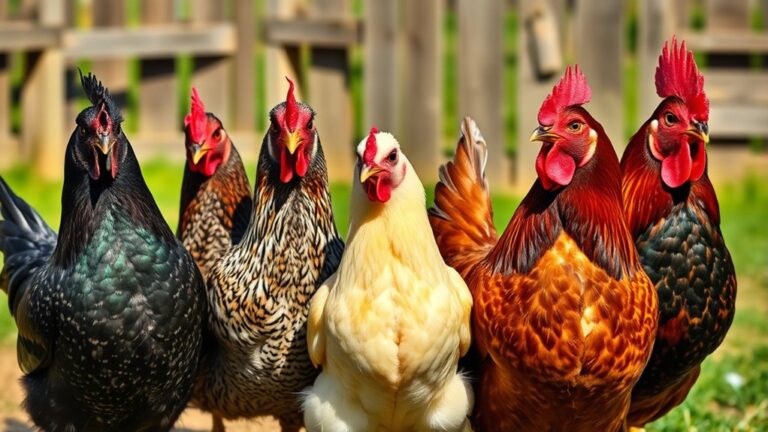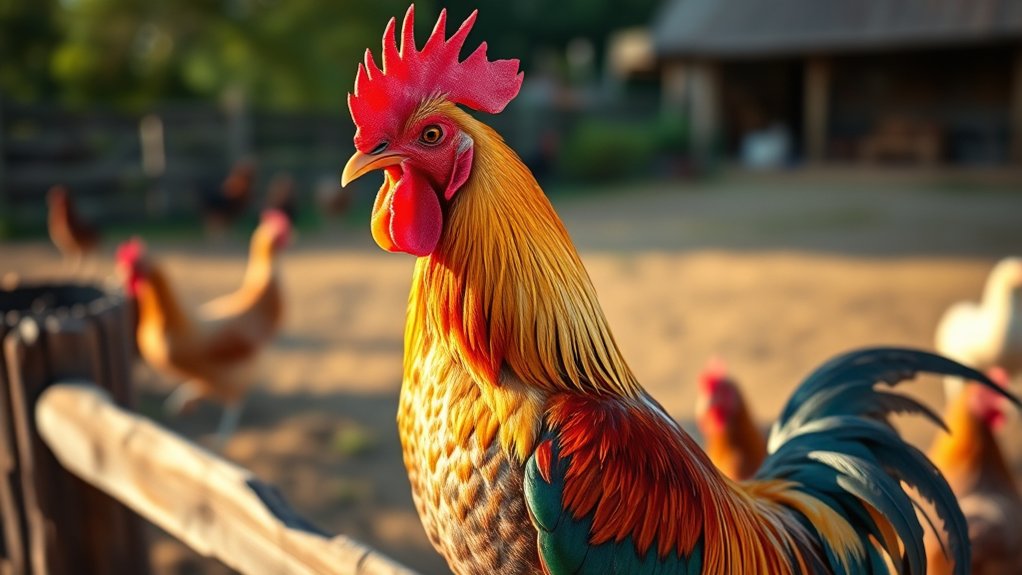
Is a Rooster Simply a Male Chicken?
If you’ve ever tried to identify the difference between a rooster and a male chicken, you’re not alone. Many people struggle with this because the terms often get used interchangeably. But understanding what really makes a rooster unique can help you better appreciate your flock or choose the right chicken for your needs.
You might think a rooster is just any male chicken, but it’s more specific than that. Roosters are mature males with bright, vibrant feathers, larger combs, and distinctive behaviors like crowing and courtship dances that set them apart.
They play key roles in flock leadership, protection, and communication. Their presence influences social dynamics and even farm health.
If you keep exploring, you’ll uncover how roosters connect to culture, symbolism, and fascinating social roles.
Key Takeaways
- A rooster is an adult male chicken, while younger males are called cockerels.
- Roosters have brighter, more vibrant feathers and larger combs than other male chickens.
- Distinctive courtship behaviors, like dances and vocal calls, characterize roosters.
- Roosters play important social and protective roles in the flock beyond just being male chickens.
- Not all male chickens are roosters; maturity and physical traits define a rooster specifically.
What Makes a Rooster Different From Other Chickens?
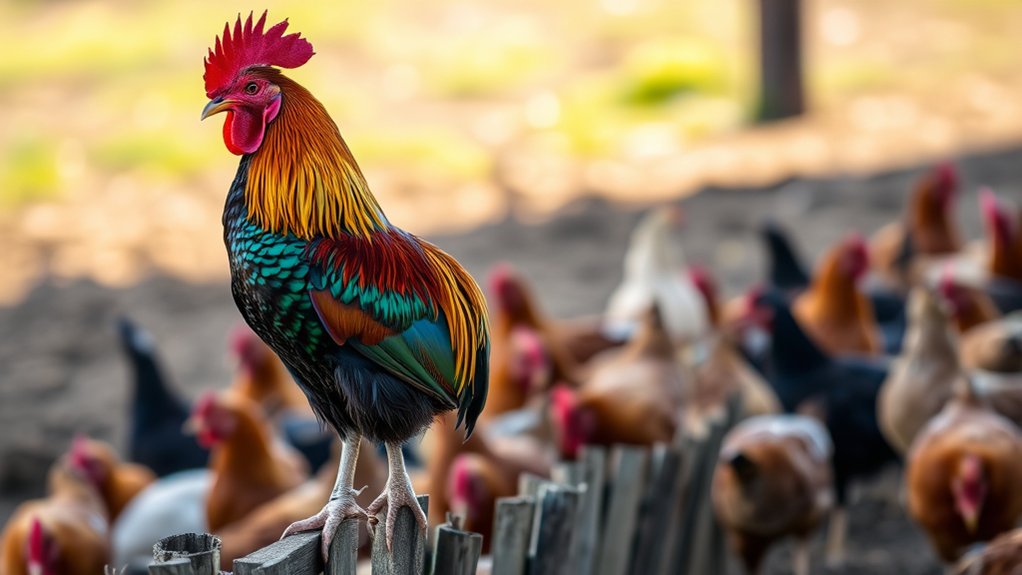
Although you might think a rooster is just a male chicken, several traits set roosters apart from hens and younger chickens. For starters, roosters don’t share the egg laying habits hens have since only hens lay eggs. This fundamental difference means you won’t find a rooster participating in nest duties or producing eggs, which is a key role in the chicken world.
Furthermore, roosters often display more vibrant feather coloration compared to hens and younger chickens. These colorful feathers help roosters stand out, especially during mating seasons when they attract hens. The bright plumage also signals dominance and health to other roosters.
Unlike younger chickens, roosters mature with these distinct behaviors and appearances that influence their role within the flock. So, while roosters are indeed male chickens, their lack of egg laying and unique feather coloration clearly distinguish them from hens and chicks in important ways.
What Physical Traits Set Roosters Apart From Hens?
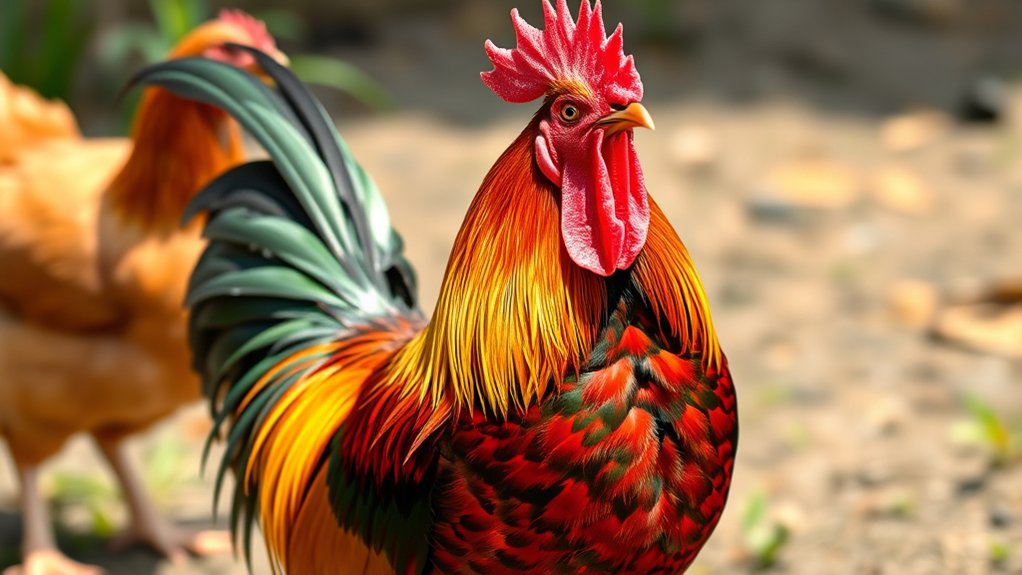
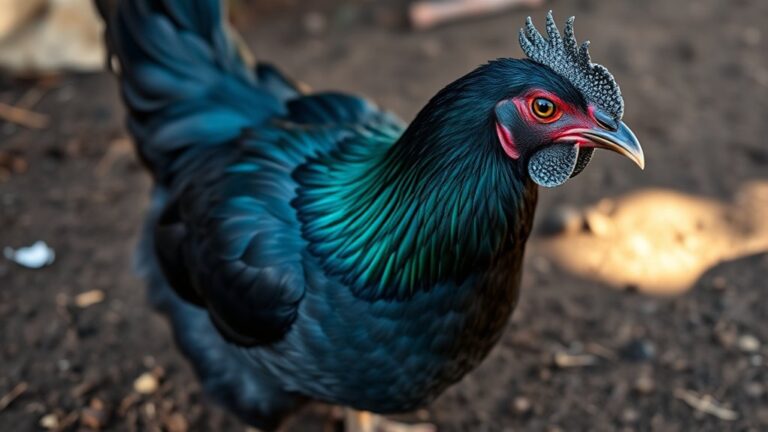
When you look closely at chickens, you’ll notice roosters have several distinctive physical traits that set them apart from hens. One of the most obvious differences is their feather coloration. Roosters often boast brighter, more vibrant feathers compared to the softer, duller tones of hens. This colorful plumage helps roosters stand out, especially during mating displays.
Another key feature is the comb size. Roosters typically have larger, more pronounced combs on top of their heads, which can be bright red and more elaborate than those of hens. The comb not only adds to their striking appearance but also plays a role in temperature regulation.
Moreover, roosters usually have longer tail feathers that curve elegantly, giving them a proud and commanding look. These physical traits make it easy for you to distinguish a rooster from a hen at a glance, highlighting the unique characteristics male chickens develop as they mature.
How Do Rooster Behaviors Differ From Hens?

While hens primarily focus on nesting and egg-laying, roosters display a range of behaviors centered on protection and dominance. You’ll notice roosters strut with confidence, showing off their vibrant feather colors to assert their status among the flock. This visual display plays a key role during mating rituals, where males use their bright plumage and bold movements to attract hens.
You’ll also see roosters actively defend the group, often standing guard and warding off potential threats. Unlike hens, roosters engage in more frequent and elaborate courtship dances, which help them secure mates. While hens tend to keep to themselves when nesting, roosters are more vocal and assertive, establishing their territory through various behaviors, though we won’t embark on their communication here.
Understanding these differences helps you appreciate how roosters contribute not just genetically but behaviorally to the flock’s dynamics.
How Do Roosters Communicate and Why Does It Matter?
Because roosters play a crucial role in flock dynamics, their communication methods are both complex and purposeful. When you observe a rooster, you’ll notice various vocalizations like crowing, clucking, and alarm calls that serve specific functions.
Rooster vocalizations alert the flock to danger, signal food discoveries, or establish territory. These sounds help maintain order and safety among hens and chicks.
Rooster calls warn of danger, announce food, and mark territory to keep the flock safe and organized.
Beyond sound, you can also read a rooster’s intentions through feather coloration. Bright, vivid feathers often indicate health and dominance, catching your eye and influencing how other chickens respond.
Feather coloration, combined with vocal signals, creates a rich communication system that’s essential for the rooster to navigate social interactions and protect the flock.
Understanding how roosters communicate helps you appreciate their role beyond simply being “male chickens.” Their signals keep the flock coordinated and secure, which matters for anyone raising or observing chickens.
Roosters’ Roles in Chicken Social Hierarchy
Although you might see a rooster simply as a male chicken, it actually holds a vital position in the flock’s social hierarchy. Roosters use their vibrant feather coloration to assert dominance and signal status to other chickens. You’ll notice that brighter, more colorful roosters often rank higher, deterring rivals through visual cues.
Territorial disputes are common as roosters defend their space and flock from intruders, maintaining order and peace.
Here’s a quick look at typical roles within the social hierarchy:
| Role | Behavior | Key Trait |
|---|---|---|
| Alpha Rooster | Leads, defends, mates | Bright feather coloration |
| Beta Rooster | Supports alpha, challenges occasionally | Moderate coloration |
| Subordinate | Avoids conflict, follows orders | Duller feathering |
| Hen | Nurtures, lays eggs | N/A |
Understanding this helps you see the rooster’s true social function beyond just being male.
Why Are Roosters Important on Farms and in Flocks?
If you want a healthy, well-protected flock, roosters play an essential role on farms and in flocks. They act as vigilant guardians, alerting you to predators and helping keep your chickens safe. Beyond protection, roosters contribute considerably to farm management by maintaining order within the flock, reducing stress among hens, and supporting natural behaviors.
When managing chicken nutrition, roosters can influence how hens feed by establishing pecking orders that ensure food distribution is more balanced. This helps prevent weaker hens from being pushed away during feeding times, promoting overall flock health. You’ll also find that roosters encourage hens to forage more actively, which can improve their diet with natural nutrients and insects.
Incorporating roosters into your farm management strategy means you’re not just caring for chickens; you’re fostering a balanced ecosystem where each bird’s role supports the flock’s well-being and productivity.
Roosters’ Impact on Egg Production and Hen Health
While roosters don’t lay eggs themselves, they greatly influence egg production and hen health in your flock. Their presence encourages hens to lay more consistently, as roosters help maintain a stable social structure that reduces stress among hens. This social stability plays a key role in promoting your flock’s overall egg laying contribution.
Without a rooster, hens may still lay eggs, but the rate and consistency can decline due to increased anxiety or disruptions in the pecking order.
Moreover, roosters have a direct hen health impact. They often protect hens from predators and alert them to danger, reducing stress-related health issues. Their grooming behavior, called “tidbitting,” stimulates hens and strengthens flock bonds, which further supports hen well-being.
Which Male Chickens Are Considered Roosters?
Because not every male chicken develops into a typical rooster, you need to know which ones truly fit the role. Rooster crowing is one clear sign. It’s a behavior mostly exhibited by mature males who have developed the traits associated with roosters.
These traits include bright plumage, a prominent comb and wattles, and assertive behavior. Male chicken genetics play an essential role here; only certain genetic lines express these distinct rooster characteristics fully.
Some male chickens, especially those raised purely for meat or from mixed breeds, might look less like traditional roosters and might not crow. Instead, they develop more subdued features and behaviors.
How Roosters Influenced Culture and Symbolism
Though you might see roosters simply as farm animals, they have played a powerful role in culture and symbolism throughout history. Roosters often represent courage, vigilance, and the break of dawn in various cultures. When you spot a rooster emblem or statue, it’s likely tied to cultural symbolism emphasizing awakening and protection.
Roosters symbolize courage, vigilance, and the dawn, embodying awakening and protection in many cultures.
In some traditions, the rooster’s crow signals the triumph of light over darkness, making it a potent symbol of hope and renewal.
You’ll also find roosters deeply embedded in mythology. Many cultures attribute mythological significance to them, viewing roosters as messengers between worlds or guardians against evil spirits.
For example, in ancient mythologies, the rooster’s crow was believed to ward off malevolent forces. So, when you consider roosters, remember they’re more than just male chickens. They’re enduring symbols woven into the fabric of human belief and storytelling.
Common Myths and Facts About Roosters
You probably think a rooster is just a male chicken, right? But actually, there’s a lot more to their behavior than that simple label. When you get to know how roosters act, it helps clear up some common myths about them. So, let’s break it down and see what really makes roosters stand out.
Rooster Behavior Explained
When you observe a rooster, you might assume its behavior is purely aggressive or territorial, but that’s not always the case. Roosters use their feather coloration not just to stand out but to signal health and vigor to hens and rivals alike.
Their vivid feathers play a key role during mating rituals, where they perform elaborate dances and vocal calls to attract mates. While roosters can defend their flock, their behavior is often more about communication and social order than constant fighting.
Understanding these behaviors helps you see that roosters are complex creatures with roles beyond aggression. Next time you watch one, notice how their actions balance between protecting their territory and engaging in natural courtship displays.
Rooster vs. Male Chicken
While many people use the terms “rooster” and “male chicken” interchangeably, they don’t always mean the same thing. A rooster specifically refers to an adult male chicken, known for its distinctive rooster feathers, which are long, shiny, and often colorful on the tail and neck.
Not every male chicken is a rooster. Young males, called cockerels, haven’t yet developed these features. Understanding this helps you spot the differences in appearance and behavior.
Also, keep in mind that a rooster’s diet doesn’t differ much from other chickens, but its nutritional needs might increase during mating season or when protecting the flock. So, while all roosters are male chickens, not all male chickens qualify as roosters, especially if you consider age, plumage, and maturity.
Frequently Asked Questions
Can Roosters Be Kept as Pets Indoors?
Yes, you can keep roosters as pets indoors, but it requires careful indoor housing to meet their needs. Roosters need space to move, proper ventilation, and quiet areas since their crowing can be loud.
If you’re seeking pet companionship, be prepared to spend time socializing and ensuring they feel comfortable inside. Proper care and setup will help your rooster thrive as an indoor companion without causing issues.
How Long Do Roosters Typically Live?
Roosters typically live around 5 to 8 years, though some can reach 10 years with great care. Their vibrant feather coloration often plays a role in rooster mating habits, helping them attract hens.
If you provide a safe environment, proper nutrition, and protection from predators, your rooster can enjoy a longer, healthier life. Keep in mind, their social behavior and mating displays require space and attention to thrive.
What Diseases Are Common in Roosters?
Imagine your rooster as a brave soldier facing invisible enemies daily. Common ailments like coccidiosis, mites, and respiratory infections often threaten his health.
You can keep these foes at bay through diligent disease prevention: clean coop, fresh water, and proper nutrition. Regular health checks help you spot trouble early, ensuring your rooster stays strong and vibrant.
He’ll be crowing proudly without the shadow of illness dampening his spirit.
Are Roosters Noisy at Night?
Roosters aren’t usually noisy at night since they don’t have much nighttime vocalizations. They’re primarily diurnal, so their nocturnal behavior is minimal. You might hear an occasional crow if something startles them, but it’s rare.
Most roosters settle down once it’s dark, so you won’t be kept awake by constant crowing. If your rooster is noisy at night, it could indicate stress or disruption in their environment.
Can Roosters Be Trained to Perform Tricks?
Yes, you can train roosters to perform tricks! Studies show chickens can remember over 100 individual faces, proving their learning ability.
By using consistent training techniques and behavior modification, you can teach your rooster simple commands or tricks, like coming when called or pecking a target. Patience and positive reinforcement are key.
Keep sessions short and rewarding, and your rooster will surprise you with its smart, trainable nature.
Conclusion
So, you might think a rooster is just a male chicken, but there’s more beneath those feathers. Their unique traits, behaviors, and roles in the flock shape the entire chicken world in ways you might not expect.
And just when you think you’ve figured them out, their cultural impact and surprising myths pull you back in. Ready to see roosters in a whole new light? They’re more than just a morning alarm.
When it comes down to it, a rooster is simply a male chicken—but understanding what that really means reveals a whole lot more.