How to Identify the Difference Between Chicken and Rooster
If you’ve ever found yourself staring at your flock wondering, “Is that a chicken or a rooster?” you’re not alone. Many people struggle to tell the difference, especially when they’re new to raising poultry. It can be confusing, but knowing how to identify roosters and hens is essential for managing your birds and keeping your flock happy.
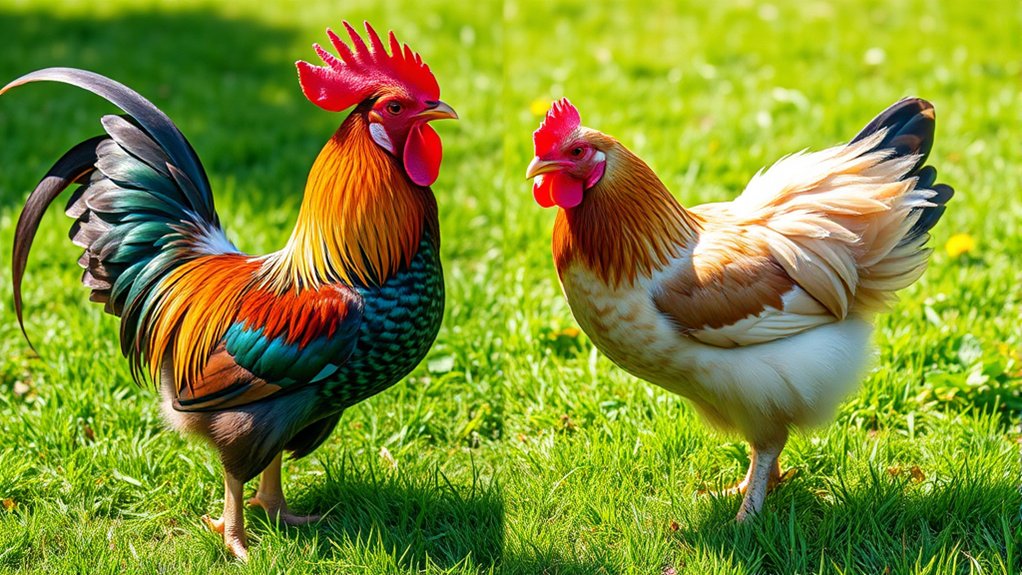
You can easily spot a rooster by its vibrant, glossy feathers, taller comb, and larger wattles compared to a hen’s softer colors and smaller features. Roosters stand taller, have longer tail feathers, and crow loudly throughout the day, while hens cluck quietly and focus on nesting.
Understanding these key differences helps you care for your flock better. Keep exploring to find out how their behaviors and roles shape flock life.
Key Takeaways
- Roosters have larger, brighter combs and wattles, while hens have smaller, paler, and smoother ones.
- Roosters stand taller with a more muscular build and broader shoulders compared to rounder, compact hens.
- Roosters have longer, glossy, iridescent tail feathers, whereas hens have shorter, rounded, and duller tails.
- Only roosters crow loudly to establish territory. Hens make softer clucking sounds related to nesting or stress.
- Roosters display dominant behaviors like patrolling and sparring. Hens focus on egg laying and caring for chicks.
How to Tell a Chicken From a Rooster at a Glance
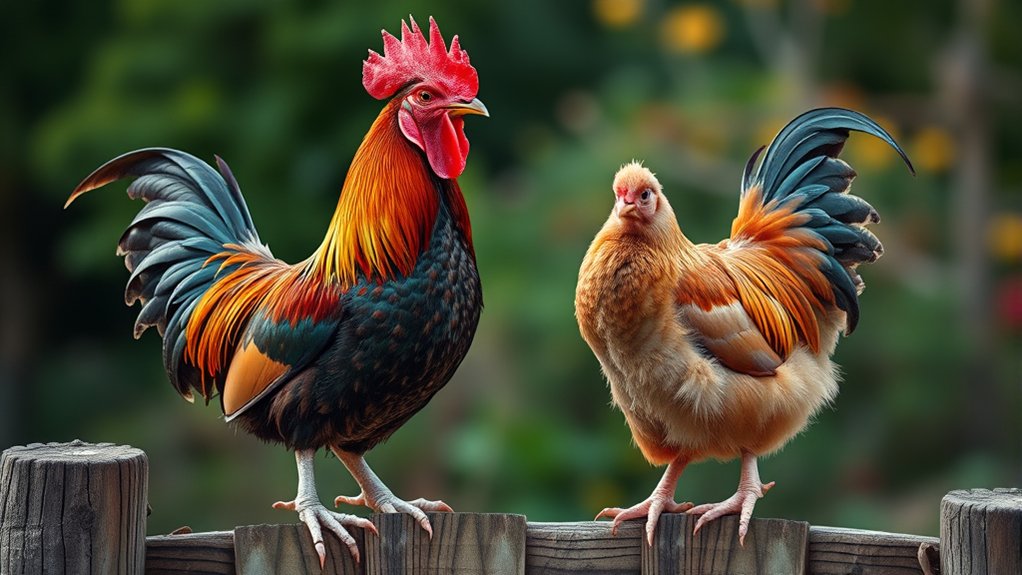
How can you quickly tell a chicken from a rooster? One of the simplest ways is by observing their overall feather sheen. Roosters usually have a more vibrant, glossy feather appearance compared to hens, whose feathers tend to be softer and less shiny. This difference in feather sheen helps you make a quick visual distinction even from a distance.
Another hint lies in egg color, though indirectly. Only hens lay eggs, so if you spot eggs nearby, you’re definitely looking at a chicken, not a rooster. While egg color varies by breed, it’s a reliable indicator that a hen is present in the flock.
Physical Traits That Differentiate Chickens and Roosters
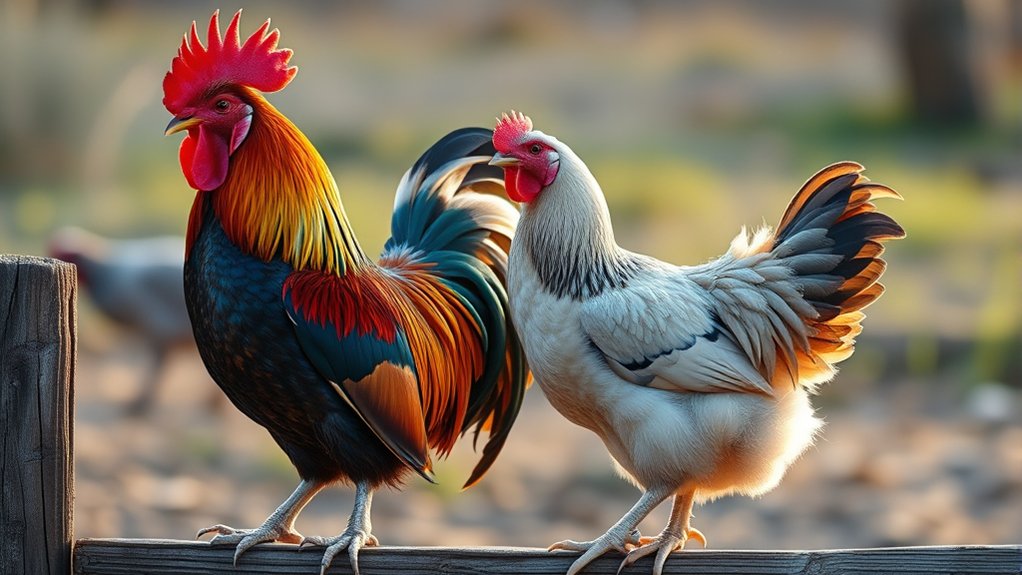
You’ll notice that roosters usually have larger combs and wattles compared to hens. Their feather colors and patterns tend to be more vibrant and distinct. Also, pay attention to their body shape and posture. Roosters often stand taller and appear more robust.
Comb And Wattle Size
Although comb and wattle size may seem like small details, they play a key role in distinguishing roosters from hens. Roosters typically have larger, more prominent combs and wattles compared to hens.
These features not only help you identify them but also signal their dominant position in the pecking hierarchy. Unlike hens, whose smaller combs and wattles support their egg laying behavior, roosters’ larger combs help attract mates and assert dominance.
When you see a chicken with a big, bright red comb and wattles, it’s likely a rooster showing off its status. So, by paying attention to these physical traits, you can quickly tell who’s who in the flock without relying on behavior alone.
Feather Color And Pattern
While comb and wattle size provide clear clues, feather color and pattern offer another reliable way to tell chickens and roosters apart. Roosters usually display more vibrant color variations, with brighter, shinier plumage that stands out.
Their feather patterning often includes iridescent hues, especially in the neck and tail feathers, which you won’t typically see in hens. Hens tend to have more muted, consistent colors that help them blend in and stay protected.
When you observe a bird with strikingly bold feather patterning and a mix of rich color variations, chances are you’re looking at a rooster. Paying attention to these details can make it easier for you to distinguish between the two, especially if comb and wattle size aren’t obvious.
Body Shape And Posture
Even if feather colors don’t give you a clear answer, body shape and posture can help you tell chickens and roosters apart. Roosters usually have a more upright posture, standing tall and proud, while chickens tend to appear rounder and more compact.
You’ll notice roosters have broader shoulders and a heavier build, giving them a commanding presence. Chickens, especially when showing nesting behavior, often squat low to the ground, preparing a safe spot to lay eggs.
During feather shedding, hens may look scruffier as they replace old feathers, but their posture remains low and protective. Roosters maintain a confident stance even during molt. Watching these physical cues closely will help you distinguish between the two, even when feather color or pattern isn’t obvious.
Size and Body Shape Differences to Look For

When you compare chickens and roosters, size and body shape stand out as key differences. Roosters usually have a larger, more muscular build compared to hens, with a pronounced chest and broader shoulders. Their bodies appear more robust and upright, making them look dominant.
Roosters are larger and more muscular, with broader shoulders and a dominant, upright posture.
You’ll also notice that roosters often have a glossier feather sheen, reflecting light more vividly than hens’ feathers, which tend to be duller and softer.
Another detail to watch is beak length. Roosters typically sport slightly longer, thicker beaks, which complement their aggressive and protective nature. This contrasts with hens, whose beaks are generally shorter and more delicate.
These subtle differences in size, body shape, feather sheen, and beak length help you distinguish between the two genders even before checking other features. Paying attention to these traits makes identifying chickens and roosters quicker and more accurate.
Recognizing Comb and Wattle Features in Chickens and Roosters
You’ll notice that roosters usually have larger, more pronounced combs compared to hens. It’s pretty easy to spot because their combs tend to be taller and more elaborate in shape.
Also, take a look at the wattles. Roosters often have wattles that are brighter in color and feel rougher to the touch than those of hens. These little differences really help tell them apart!
Comb Size And Shape
Although combs and wattles exist on both chickens and roosters, their size and shape differ noticeably, helping you quickly tell the two apart. Roosters typically have larger, more pronounced combs that stand upright with distinct points, while hens’ combs tend to be smaller and smoother.
When you observe a bird with a prominent comb, it often correlates with other features like coarse feather texture and longer tail length, both common in roosters. In contrast, hens usually display softer feathers and shorter tails, complementing their modest combs.
Wattle Color And Texture
Alongside comb size and shape, the color and texture of wattles offer clear clues to distinguish roosters from hens. When you observe wattle color, roosters typically have bright red wattles, while hens’ wattles tend to be paler or less vibrant.
The wattle texture also varies. Roosters’ wattles usually feel thicker and more robust compared to the softer, thinner wattles of hens. To identify these differences, focus on:
- Wattle Color: Roosters show deeper, richer reds; hens have lighter shades.
- Wattle Texture: Roosters’ wattles are firmer and more pronounced.
- Wattle Size: Roosters often have larger wattles complementing their combs.
What Feathers Reveal About Rooster and Chicken Identity
When you look closely at the feathers, you can quickly tell a rooster apart from a hen. Roosters usually have a more vibrant feather sheen, reflecting light with a glossy, iridescent look. Hens tend to have duller, matte feathers.
Tail length also plays a key role. Roosters boast long, sweeping tail feathers, whereas hens have shorter, more rounded tails.
| Feature | Rooster |
|---|---|
| Feather Sheen | Glossy, iridescent |
| Tail Length | Long, flowing |
| Feather Shape | Pointed saddle and hackle feathers |
| Feather Color | Often brighter and more varied |
Understanding these feather differences helps you identify the bird’s gender at a glance and avoid confusion. Keep these traits in mind when observing chickens in your yard or at a farm.
Behavioral Traits That Set Roosters Apart From Chickens
If you pay close attention, you’ll notice roosters behave quite differently from hens. Their distinct behavioral traits make it easier to tell them apart beyond just looks. Roosters often display more dominant and protective behaviors, especially in relation to the flock.
Unlike hens, their breeding behaviors are more obvious, as they actively court hens and establish hierarchy.
Here are some key behavioral differences to watch for:
- Roosters rarely engage in nesting habits; hens take on the responsibility of sitting on eggs and caring for chicks.
- Roosters often patrol the area, keeping an eye out for threats and warning the flock.
- You’ll see roosters assert dominance through posturing and sometimes sparring with other males.
How Crowing and Other Sounds Distinguish Roosters
You’ll notice roosters have distinct crowing patterns that set them apart from hens. Their vocal sounds serve different purposes, like marking territory or alerting the flock. So, let’s dig into how these sounds work and what makes them unique.
Crowing Patterns Explained
How exactly can you tell a rooster apart from a chicken just by listening? Roosters have distinctive crowing patterns that stand out, especially when you understand their crowing behavior. Unlike hens, roosters often crow throughout the day, not just at dawn.
Their crowing serves multiple purposes tied to their crowing behavior and nesting habits. Here’s what to listen for: Roosters crow to establish territory and assert dominance. Their crowing often increases if they sense threats or other roosters nearby.
Unlike hens, they rarely vocalize near nesting areas, reserving crowing for outside their nesting habits.
Vocal Differences Overview
Where do the differences in vocalizations between roosters and hens really lie? The key is in vocal differences, especially in sound frequency and tone. Roosters produce louder, more resonant sounds, with a higher sound frequency when they crow. This serves to assert territory and attract hens.
Hens, on the other hand, make softer clucks and quieter calls, usually at a lower sound frequency. You’ll notice roosters’ crowing is sharp, clear, and carries farther, while hens’ sounds are more subtle and varied. These distinctions help you identify which bird is which just by listening.
Sound Functions Compared
The distinct sounds roosters and hens make serve different purposes beyond just identification. When you listen closely, you’ll notice roosters crow mainly to establish territory and alert the flock. Hens cluck softly to communicate about egg production or signal a change in dietary needs.
Understanding these sound functions helps you better manage your flock.
- Roosters crow to mark dominance and warn of danger.
- Hens cluck or squawk to indicate laying eggs or stress.
- Both use calls to maintain social order within the group.
Roles of Roosters and Chickens in the Flock Explained
Although roosters and hens both belong to the same species, they play very different roles within a flock. Hens focus primarily on egg production, laying eggs consistently to sustain the flock or for your use. You’ll notice hens spend most of their time foraging, nesting, and caring for chicks once hatched.
Roosters, on the other hand, take charge of mating behaviors and protecting the flock. They’ll often assert dominance, crowing to mark territory, and keep an eye out for predators, warning hens of danger. While roosters don’t lay eggs, their presence encourages hens to maintain regular egg production.
Understanding these distinct roles helps you manage your flock better. You’ll see that hens guarantee the flock’s growth through egg-laying, while roosters contribute to reproduction and safety. Both are essential, but their functions clearly differ, so recognizing these roles lets you appreciate how each bird supports the flock’s overall health and productivity.
Why Knowing the Difference Matters for Poultry Care
Knowing how to tell a rooster from a hen helps you tailor your care to each bird’s unique needs. When you can distinguish between them, you can better manage their behaviors and health. This improves your flock’s overall well-being.
Recognizing roosters and hens lets you provide personalized care, enhancing their health and your flock’s harmony.
For example, hens focus on egg production and often display brooding behaviors. Roosters have different social and protective roles.
Understanding the difference matters because it allows you to monitor egg production accurately and adjust feed accordingly. You can also identify and support hens during brooding periods to ensure healthy chicks.
Plus, managing rooster aggression helps protect hens from stress.
Safe Tips for Handling and Managing Chickens and Roosters
When you handle chickens and roosters carefully, you reduce stress for both you and your birds. Always approach them calmly and speak softly to avoid startling them. Use gentle but firm handling to prevent injury.
Keep their dietary needs in mind. Roosters generally require more protein for energy, while hens need balanced nutrition to support egg production. Regularly check for signs of illness or distress to maintain a healthy flock.
| Handling Tip | Reason |
|---|---|
| Approach calmly | Minimizes stress and aggression |
| Separate for feeding | Meets specific dietary needs |
| Handle daily gently | Builds trust and eases care |
Frequently Asked Questions
Can Roosters and Chickens Interbreed With Other Bird Species?
You can’t successfully crossbreed roosters or chickens with other bird species because their genetics are too different. While you might hear about crossbreeding concerns, such attempts usually fail or produce sterile offspring.
If you’re worried about bird species mixing, it’s important to keep poultry separate from wild birds to avoid disease and maintain species purity. So, don’t expect roosters or chickens to interbreed with other bird species naturally.
How Does Diet Affect the Development of Roosters Versus Chickens?
Think of diet like fuel for a race car. What you feed your birds directly impacts their growth differences.
Roosters need higher protein and energy-rich diets to develop their muscular build and vibrant plumage, while hens thrive on balanced nutrition for egg production.
Diet implications are huge; underfeeding can stunt a rooster’s size and aggression traits, while overfeeding hens might affect laying. So, tailoring feed helps each grow to their potential.
What Are Common Health Issues Unique to Roosters?
You’ll notice roosters often face health issues linked to their aggressive behavior, like injuries from fighting, which can lead to infections. Their strong rooster behavior sometimes stresses their immune system, making them more vulnerable despite chickens generally having solid immunity.
Moreover, roosters can develop reproductive problems and respiratory infections more frequently. Keeping an eye on their behavior and ensuring a clean environment helps maintain their health and supports their natural immunity.
Are There Legal Restrictions on Keeping Roosters in Urban Areas?
Roosters often symbolize dawn’s loud herald, but in urban areas, that call can clash with peace. You’ll find legal restrictions like urban noise regulations and zoning restrictions that limit or ban keeping roosters to prevent early-morning crowing from disturbing neighbors.
Before you bring one home, check your local laws carefully; they often prioritize community calm over a rooster’s natural chorus, ensuring your feathered friend doesn’t break the city’s quiet harmony.
How Do Roosters and Chickens Differ in Egg-Laying Frequency?
Roosters don’t lay eggs, so their egg-laying patterns are nonexistent. Hens, or female chickens, lay eggs regularly, usually one per day depending on breed and conditions.
The fertility differences come into play when a rooster mates with hens, fertilizing their eggs. Without a rooster, hens lay unfertilized eggs, which won’t hatch. So, if you want fertilized eggs, you need a rooster, but for just egg laying, hens are your go-to.
Conclusion
Now that you know how to spot the difference between chickens and roosters, you’re ready to tell them apart at a glance. Remember, roosters often stand tall like proud kings with their bright combs and crowing calls, while hens stay more subtle.
Understanding these traits helps you care for your flock better and keeps everyone safe. So, go ahead, embrace your newfound knowledge and watch your poultry world come alive with the ability to identify the difference between chickens and roosters!