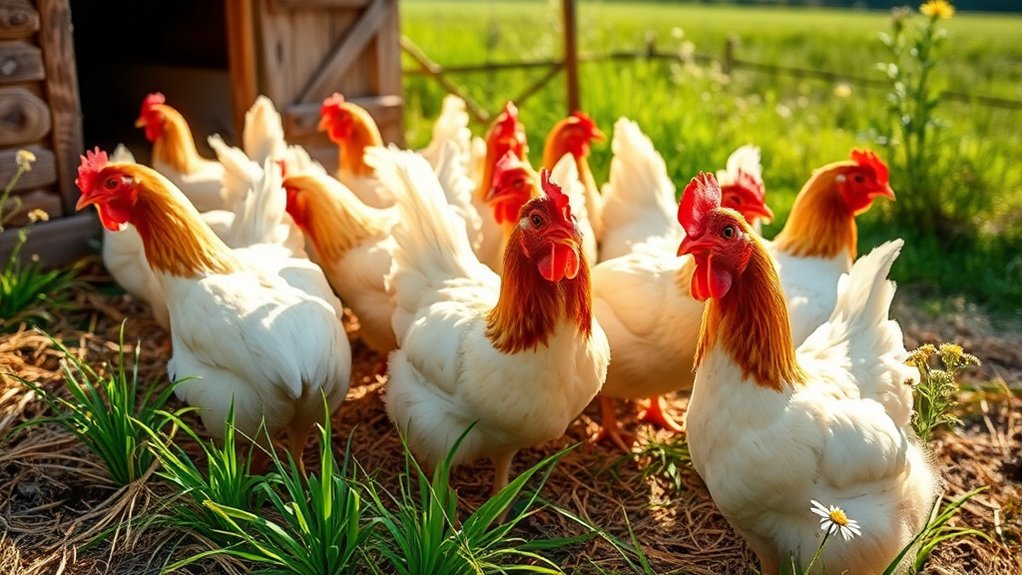
Sussex Chickens: Raising Them Successfully
If you’ve ever dreamed of raising chickens but felt overwhelmed by all the choices, you’re not alone. Many people struggle to find breeds that are friendly, productive, and easy to care for.
Luckily, Sussex chickens might just be the perfect solution for your backyard flock.
Sussex chickens are a smart choice if you want friendly birds that lay well, forage efficiently, and can also provide meat.
Give them a roomy, well-ventilated coop with nesting boxes, fresh water, and dry bedding. Feed chicks starter feed, then switch to layer feed when they mature, adding grit and oyster shell as needed.
Watch their health closely, keep the flock clean, and they’ll usually thrive in most climates, with plenty more to uncover ahead.
Key Takeaways
- Sussex chickens are friendly, adaptable dual-purpose birds valued for eggs, meat, and easy handling.
- Choose healthy, well-built birds from reliable breeders. It’s important to define your flock goals before breeding.
- Provide a spacious, well-ventilated coop with nesting boxes. Make sure it’s easy to clean and has enough room for roosting and scratching.
- Feed chicks starter feed, then layer feed. Always offer fresh water, oyster shell, grit, and treats that stay under 10% of their intake.
- Protect flock health with regular checks and quarantine new birds. Use dry bedding, good ventilation, and follow strict biosecurity practices.
What Makes Sussex Chickens a Great Choice?
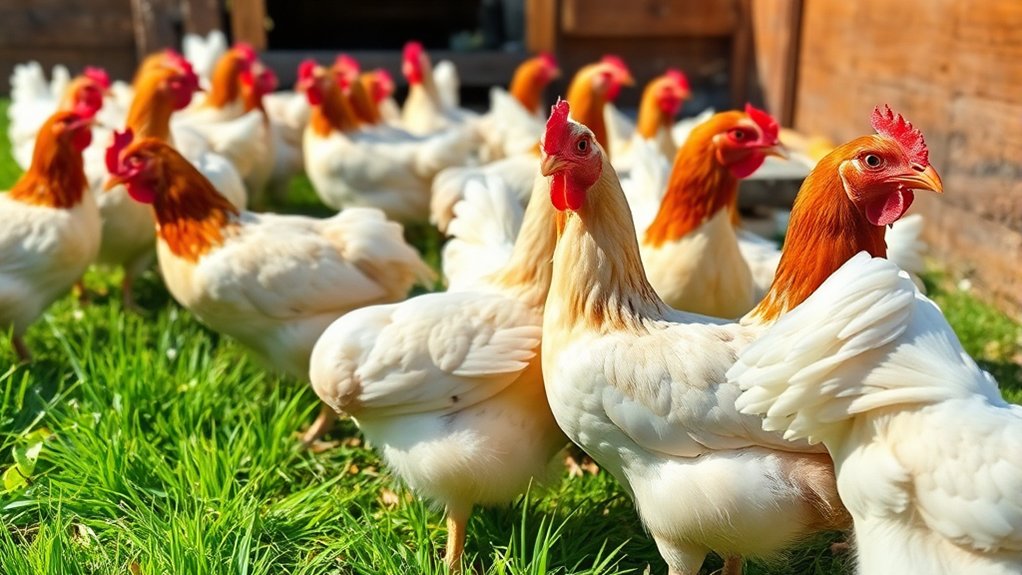
Sussex chickens are a great choice because they give you a lot of versatility in one hardy, easygoing bird. You can rely on them for steady egg production, useful meat, and a calm flock presence that fits many backyards.
Their Sussex characteristics include a friendly temperament, good foraging ability, and strong adaptability in different climates. Because they’re curious without being flighty, you’ll find them easy to observe and manage.
Sussex history also adds to their appeal; this breed has long been valued in England for practical farm use, so you’re choosing a bird shaped by centuries of utility. If you want a chicken that can handle varied conditions and still stay productive, Sussex chickens make a sensible, low-drama option.
They work well when you want dependable performance without extra fuss, and that balance is what makes them stand out.
How to Choose the Right Sussex Chickens
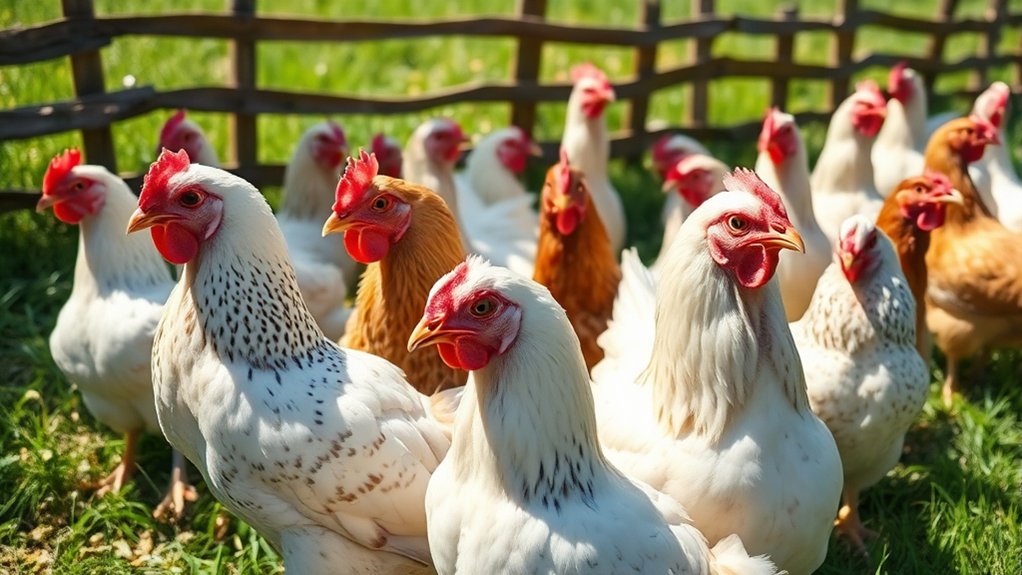
To choose the right Sussex chickens, start by deciding what you want most from your flock: eggs, meat, temperament, or all three. Then compare breeds and strain quality, because Sussex birds can vary by breeder.
Start by defining your flock’s goal—eggs, meat, temperament, or a balanced mix.
If egg production matters, ask for hens with strong laying records and healthy parents. Look at color varieties too; light, speckled, red, and buff Sussex each offer a classic look, but appearance shouldn’t outrank performance.
Choose birds with bright eyes, clean vents, smooth feathers, and active behavior. Avoid chickens that seem lethargic, overly thin, or have droopy posture.
If you want a calm flock for a family setting, pick birds that handle human contact well. Buy from a reputable source that can explain age, sex, and health history.
How to Set Up a Sussex Chicken Coop
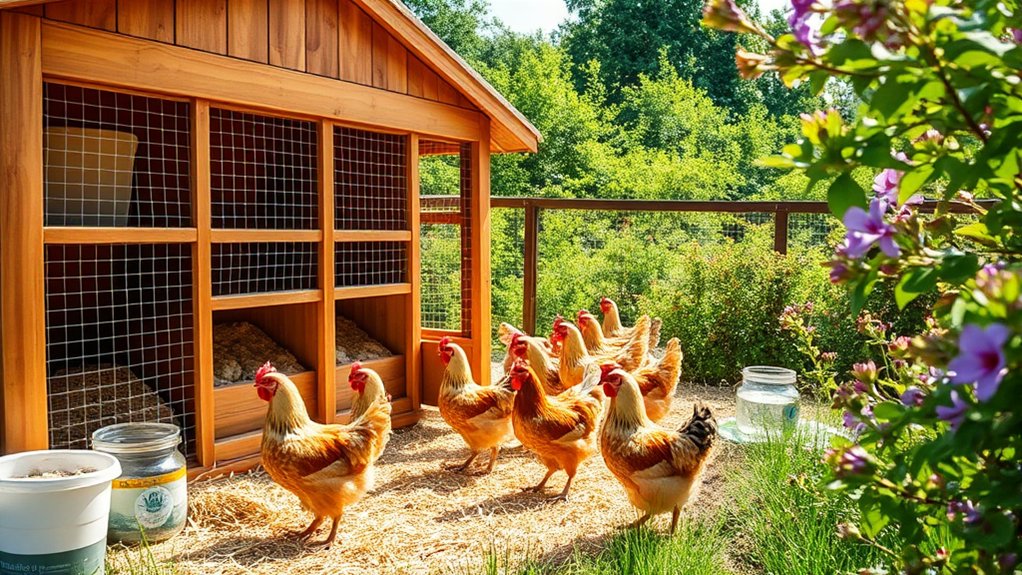
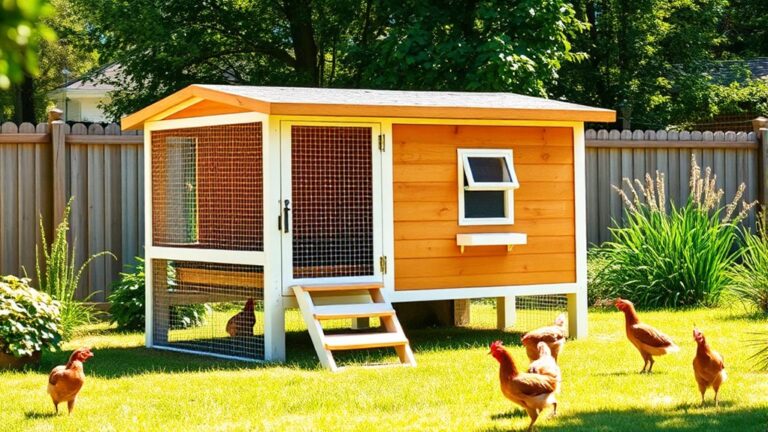
When you set up your Sussex chicken coop, be sure to give your birds plenty of space to move around, roost, and scratch comfortably. You want them to feel free and happy in their home. Also, make sure the coop has good ventilation. It’s important to keep fresh air flowing, but try to avoid any drafts that could make your chickens chilly.
Don’t forget to add nesting boxes in a quiet, cozy spot. This way, your hens can lay their eggs comfortably without any disturbances. It makes a big difference for their well-being and for collecting fresh eggs!
Coop Size And Space
For Sussex chickens, a roomy coop makes a big difference in health, comfort, and flock behavior. You should plan coop dimensions around your flock’s adult size and activity level, not just bird count. Give each bird enough floor space to move, scratch, and rest without crowding.
Tight quarters can trigger pecking and stress, so use clear space requirements when sizing the coop. If you keep a small flock, build extra room anyway, since Sussex birds grow broad and sturdy. Add enough height for you to clean comfortably and for the chickens to stand naturally.
A well-sized coop also makes daily care easier, because you can reach feed, water, and bedding without disturbing the birds. Prioritize function over decorative features.
Ventilation And Nesting Boxes
Good airflow helps Sussex chickens stay comfortable, dry, and healthy. Your coop should have vents near the roof that let moist air escape without creating a draft at roost level. You can add adjustable windows, ridge vents, or screened openings as practical ventilation methods for year-round control.
Keep airflow steady, but don’t aim it directly at your birds. Place nesting boxes in a quiet, dim corner at least 18 inches off the floor and give each box enough space for one hen. Line them with clean nesting materials like straw or pine shavings, and replace soiled bedding often.
Proper ventilation reduces ammonia, while well-kept boxes encourage calm laying and cleaner eggs. Check for moisture, odor, and pests regularly, and make small adjustments as seasons change.
What to Feed Sussex Chickens
You should start Sussex chicks on a quality starter feed to support steady growth and strong development. Then, once they begin laying, switch them to a balanced layer feed that provides the calcium they need for healthy eggs. You can also offer treats and supplements in moderation to add variety without upsetting their diet. Just keep an eye on how much they’re eating, and you’ll be good to go!
Starter Feed Needs
Young Sussex chicks need a high-quality starter feed with about 18% to 20% protein to support steady growth, strong bones, and healthy feather development. You should offer crumble since it’s easy for small beaks to eat and helps them get consistent starter nutrition each day.
Keep fresh water nearby so they can digest feed well and stay hydrated. Avoid supplements unless a poultry expert recommends them because a balanced starter already covers their early needs.
When chicks grow bigger, watch for signs that it’s time for feed changes. Then move them gradually to the next ration over several days. That slow change helps their digestion stay steady and keeps your flock developing without stress.
Layer Feed Choices
Once Sussex hens start laying, switch them to a quality layer feed with about 16% to 18% protein and added calcium. This supports strong eggshells and steady production. Choose an organic layer or other commercial options that fit your feed formulation and age-specific feed plan.
Check protein levels, calcium sources, and nutritional additives on the label so you know exactly what you’re offering.
| Option | Best use |
|---|---|
| Commercial layer feed | Reliable daily nutrition |
| Organic layer feed | Cleaner ingredient preference |
| Homemade recipes | Flexible local ingredients |
| Seasonal adjustments | Balance feed in heat or cold |
Keep feeding schedules consistent, and avoid abrupt changes. If you mix homemade recipes, match the ration carefully so Sussex hens still get complete nutrition.
Treats And Supplements
Treat your Sussex chickens to extras sparingly, with snacks that support health instead of replacing their balanced feed. You can offer treat options like chopped greens, berries, mealworms, cooked oats, and small amounts of scrambled egg. Keep treats under 10% of daily intake so they don’t upset nutrition or egg production.
Fresh vegetables add variety, while grains give quick energy in cold weather. For supplement benefits, provide oyster shell for laying hens and grit to help digestion. If your flock lacks sunlight, a veterinarian may suggest vitamin D support.
You should also give plain water at all times, since hydration helps birds use every nutrient well. Avoid salty, sugary, or moldy foods, and introduce anything new slowly so you can watch for digestive issues.
Understanding Sussex Chicken Temperament and Behavior
Sussex chickens are calm, curious birds that usually fit well into backyard flocks. You’ll notice their social behavior early: they often follow you, investigate gently, and settle into flock dynamics without much drama. Their temperament traits usually include friendliness, patience, and confidence, so they’re a good match if you want easy interaction styles and steady daily routines.
| Trait | What you’ll see |
|---|---|
| Temperament | Gentle, relaxed |
| Pecking order | Clear, but not harsh |
| Stress signals | Retreating, feather fluffing |
Watch for stress signals during changes, since sudden noise or crowding can unsettle them. You can support the pecking order by giving enough space, multiple feeders, and consistent routines. Soft handling techniques help them trust you, and slow bonding strategies, like offering treats by hand, build comfort over time.
If you stay calm and predictable, your Sussex flock will usually mirror that energy and respond with confidence, curiosity, and trust.
Keeping Sussex Chickens Healthy
To keep your Sussex chickens healthy, you’ll want to make sure they get balanced nutrition with quality feed, fresh water, and the occasional treat—just in moderation. It’s also important to keep an eye out for any signs of illness.
Keeping their coop clean goes a long way, too. Plus, practicing good biosecurity helps prevent disease from spreading. When you stay consistent with these basics, your flock will stay stronger and more productive.
Balanced Nutrition
A healthy Sussex flock starts with a balanced diet that gives birds the right mix of protein, carbohydrates, fats, vitamins, and minerals. You should offer a balanced diet of quality layer feed, scratch grains in moderation, and fresh greens to keep energy steady and eggs strong.
Adjust protein when pullets grow or molting hens need extra support. Fresh water must always be available because good digestion depends on it. You can use nutritional supplements when your flock needs a boost, but don’t rely on them instead of proper feed.
Offer oyster shell for laying hens and grit if birds forage away from soil. Watch body condition and egg production, then fine-tune portions so your Sussex chickens stay active, productive, and healthy year-round without overfeeding.
Disease Prevention
Keeping Sussex chickens healthy starts with simple prevention habits that stop problems before they spread. You should limit visitors, clean boots and tools, and quarantine new birds with strong biosecurity measures.
Follow local vaccination schedules so you lower the risk of common diseases like Marek’s, Newcastle, and coccidiosis. Watch your flock daily for changes in appetite, droppings, breathing, or posture; consistent health monitoring helps you catch trouble early.
Keep coops dry, well ventilated, and uncrowded to support stress reduction since stress weakens immunity. You also need regular parasite control: check for lice, mites, and worms, and treat promptly.
Fresh water, clean bedding, and quick isolation of sick birds all protect your Sussex flock and keep problems from spreading.
Why Sussex Chickens Are Reliable Layers
Sussex chickens earn their reputation as dependable layers because they keep producing well through much of the year, even in less-than-ideal conditions. When you choose this breed, you’re getting steady egg production from birds built with practical breed characteristics: a calm temperament, strong appetite, and efficient body condition.
You’ll often see consistent clutches instead of wild swings, which makes planning easier.
- A bright nest box filled with clean straw
- A curious hen stepping out at dawn
- A basket holding smooth brown eggs
Their balanced nature helps them stay focused on laying rather than fussing or panicking, so your flock settles into a reliable rhythm. You don’t need fancy tricks to enjoy results; you just need a comfortable coop, regular feed, and enough space.
If you want hens that pay you back with steady eggs and an easygoing presence, Sussex chickens fit the job beautifully.
How to Care for Sussex Chickens in Winter
When winter settles in, you’ll want to give your Sussex chickens a coop that stays dry, draft-free, and well-bedded, with enough ventilation to control moisture without chilling the birds. Use deep straw or shavings for a reliable winter shelter, and check for leaks after every storm.
Good frost protection starts with protected roosts and raised waterers, while avoiding overcrowding helps the birds conserve warmth. Skip risky heating options unless you truly need them; Sussex chickens usually do best with natural insulation and steady air flow.
Focus on moisture control by removing wet bedding and cleaning droppings often. Support winter feeding with slightly higher-energy rations, scratch grains, and unfrozen water. Keep up feather care by checking for broken or wet plumage, then watch for comb frostbite.
Finally, practice regular health monitoring so you can spot dullness, weight loss, or changes in appetite early, and act fast if problems appear.
Raising Sussex Chickens With Other Breeds
Once your Sussex chickens are settled through winter, you can think about how they’ll fit into a mixed flock. Sussex birds usually blend well with calm, steady breeds. You’ll see the best results when you match personalities, space, and feeder access. Good mixed flock management keeps everyone relaxed and reduces squabbles.
- Picture Sussex hens sharing a sunlit run with gentle Orpingtons, scratching side by side without crowding.
- Imagine a feeder line where active layers and Sussex birds eat in peace because you’ve given enough room.
- Envision roost bars at different heights, letting smaller or shyer birds settle safely at dusk.
Watch for breed compatibility before combining flocks, especially if you keep very assertive birds. Introduce new chickens slowly, and let them meet through wire first so they can adjust without stress. You should also provide multiple waterers and hiding spots so timid birds don’t get pushed away. With thoughtful planning, your Sussex flock can live harmoniously and thrive.
How to Breed Sussex Chickens Successfully
Breeding Sussex chickens successfully starts with choosing healthy, well-built birds that match your goals for size, temperament, and egg production. You’ll get better results when you pair birds with strong legs, clear eyes, and calm behavior.
Use proven breeding techniques like line breeding or outcrossing, but keep your flock records organized so you can track traits over time. Pay attention to genetic considerations such as plumage color, body shape, and disease resistance, because these traits influence future generations.
| Focus | Action |
|---|---|
| Health | Select vigorous birds only |
| Genetics | Match traits carefully |
| Results | Hatch and evaluate chicks |
Provide clean nesting boxes, balanced feed, and fresh water during breeding season. Separate the breeding pair from the main flock if you want tighter control over mating.
Then observe hatch rates, chick growth, and laying performance, and adjust your pairings as needed.
Frequently Asked Questions
How Long Do Sussex Chickens Typically Live?
Sussex chickens typically live 5 to 8 years, though you can sometimes keep them longer with excellent health care. Your flock’s lifespan factors include diet, shelter, genetics, disease prevention, and predator protection.
If you give them clean water, balanced feed, and regular checks, they’ll often stay active and healthy for years. Backyard birds with lower stress and good care may even reach 10 years or more.
Do Sussex Chickens Need Special Permits in My Area?
Usually, you won’t need a special permit just for Sussex chickens, but you should check your local regulations first. Like a key opening a locked gate, permit requirements can change from town to town.
You may need approval for flock size, coop placement, or noise rules. Call your city office or county extension service, and you’ll avoid surprises. A quick check now can save you trouble later and keep your birds legal.
Can Sussex Chickens Recognize Their Owners?
Yes, Sussex chickens can recognize you, especially if you handle them often and feed them regularly. You’ll usually see owner recognition through their social behavior: they may come when you call, relax around you, and follow you in the yard.
They won’t know you like a dog does, but they can learn your voice, routines, and scent. With calm, consistent care, you’ll build trust and a friendly bond quickly.
What Predators Are Most Dangerous to Sussex Chickens?
Fox threats, raccoon risks, hawk attacks, and dog dangers are the most serious predators you’ll face with Sussex chickens. You should worry most about foxes and raccoons at night when they’ll raid coops and kill birds quickly.
Hawks can strike from above during the day, especially in open runs. Loose dogs may chase, injure, or scatter your flock.
Secure housing and netting help keep your Sussex chickens safe.
How Noisy Are Sussex Chickens Compared to Other Breeds?
Sussex chickens aren’t especially noisy; you’ll usually find them quieter than many talkative breeds, though individuals vary. You may hear clucks, purrs, and alert calls, but they rarely match the constant racket of Leghorns or some hybrids.
In breed comparisons, their noisy behaviors seem moderate and manageable, especially if you keep them well fed and comfortable. If you want friendly birds without too much fuss, they’re a solid choice.
Conclusion
In the end, Sussex chickens give you sturdy, serene, and satisfying success. You’ll enjoy their gentle nature, dependable eggs, and easygoing charm as they roam your yard and settle into your coop.
If you give them good shelter, wholesome feed, and steady care, they’ll reward you with bright eggs and beautiful companionship. Raise them well, and you’ll see why Sussex chickens are such a smart, sweet choice for your flock.