How Many Eggs Does a Chicken Lay on Average?
If you’ve ever raised chickens, you know how frustrating it can be to wonder exactly how many eggs you should expect from your flock. You’re not alone—many people struggle with understanding what’s normal and when to worry.
Whether you’re aiming for a steady supply of fresh eggs or just curious about your hens’ productivity, knowing the average can really help set the right expectations.
A healthy chicken typically lays about 250 to 300 eggs a year, which works out to roughly one egg every 24 to 26 hours when conditions are ideal. How Many Eggs Does a Chicken Lay.
You’ll usually see hens laying in cycles, with busy stretches and short breaks in between. Breed, age, diet, health, daylight, and stress all affect how many eggs you get.
Some hens lay more, some less, and a few simple factors can make a big difference.
Key Takeaways
- A healthy chicken lays about 250 to 300 eggs per year on average.
- Most hens lay roughly one egg every 24 to 26 hours.
- Egg production varies by breed, age, feed quality, and stress.
- High-laying breeds like Leghorns can produce 250 to 320 eggs yearly.
- Laying often slows in winter, during molting, or as hens get older.
How Many Eggs Does a Chicken Lay?
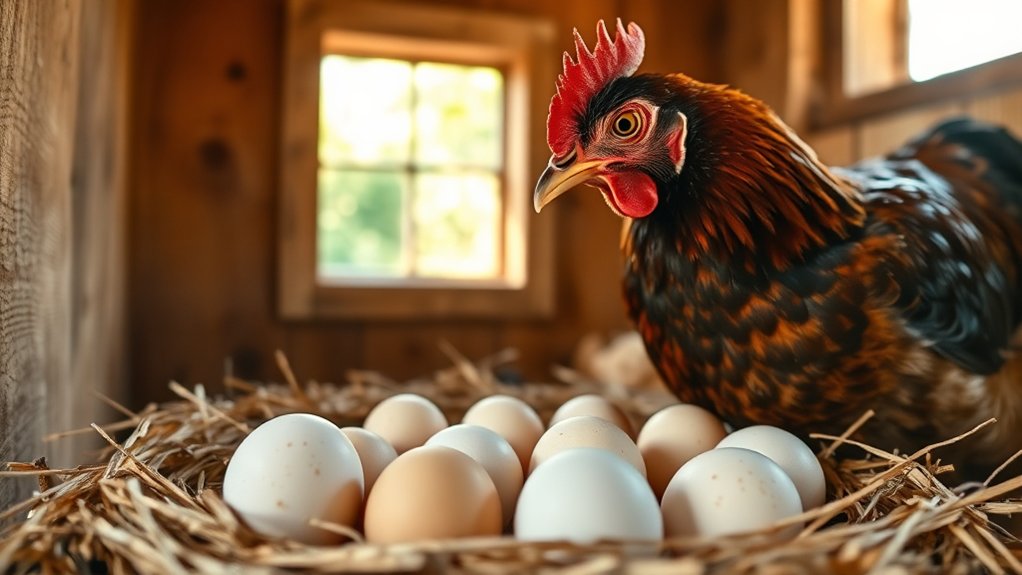
A healthy chicken can lay about 250 to 300 eggs a year, though the exact number depends on the breed, age, diet, and season. You can usually expect a hen to lay one egg about every 24 to 26 hours when she’s in her egg laying frequency cycle.
That means she may produce several eggs each week, but not always on a perfectly fixed schedule. In the chicken lifecycle, pullets begin laying after they mature, then keep producing regularly for months.
Hens may lay several eggs a week, though their schedule isn’t always perfectly regular.
You’ll notice that laying often happens in clusters, with short breaks between cycles. A hen doesn’t lay an egg every day forever, but her output can still stay steady for a long stretch.
If you’re counting eggs for home use, a single hen can supply a surprising amount over a year.
What Affects Egg Production?
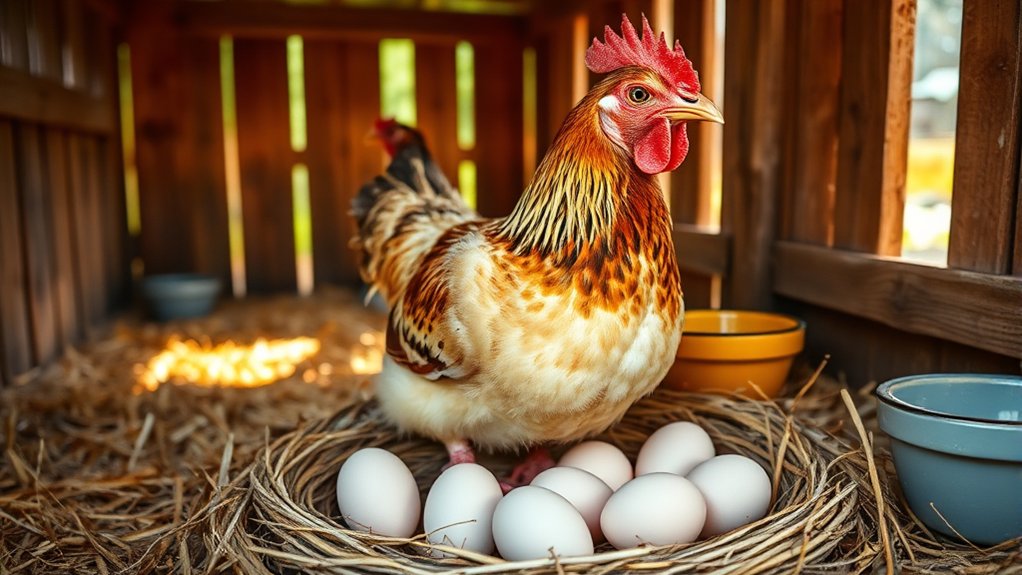
Your chicken’s breed and genetics play a big role in how many eggs it lays. But that’s not the whole story. You’ll also notice changes in egg production depending on the quality of the feed and the environment you provide. So, if you want more eggs, it’s important to pay attention to both what your hens are and how you care for them.
Breed And Genetics
Breed and genetics play a major role in how many eggs a chicken lays, and different breeds can vary widely in productivity. If you choose a high-producing layer, you’ll usually get more eggs than from a heritage breed, because selective breeding has shaped each bird’s traits.
Genetic variation also means birds within the same flock can differ, so one hen may outlay another. Good breeding practices help preserve traits linked to steady laying, early maturity, and consistent cycles.
Leghorns often lay many white eggs. Rhode Island Reds are dependable layers. Hybrids can be bred for high output. Heritage breeds may lay fewer eggs. Individual hens still vary in performance.
Feed And Environment
Feed and environment can make a big difference in how many eggs your chickens lay, even when you start with a good breed. You should give layers a balanced ration with enough protein, calcium, and fresh water every day. Different feed types can change production, so choose a quality layer feed instead of relying on scraps alone.
Your flock also needs stable environmental conditions to stay productive. Too much heat, cold, dampness, or crowding can stress hens and reduce laying. Clean bedding, good ventilation, and regular light help them keep a steady cycle.
If you manage feed and housing well, you’ll support stronger health, fewer pauses in laying, and more consistent egg production through the year.
How Many Eggs Do Chickens Lay by Breed?

If you’re picking chickens for eggs, the breed really makes a big difference. For example, high-laying breeds like Leghorns can give you way more eggs each year. On the other hand, dual-purpose breeds usually lay fewer eggs, but they’re great because you can also use them for meat. So, knowing these differences helps you choose the right birds that match what you want.
High-Laying Breeds
Some hens are true egg machines, and if you’re choosing birds for production, breed makes a big difference. You’ll get the best results from high yield layers like Leghorns, Australorps, and Rhode Island Reds. They can produce around 250 to 320 eggs a year under good care.
Their temperament traits also matter, because calm birds are easier to manage and keep laying steadily.
Leghorns: white eggs, sharp output
Australorps: steady layers, hardy in heat
Rhode Island Reds: reliable, active flock birds
Isa Browns: commercial favorites, very productive
Sex Links: efficient, consistent daily laying
Give them balanced feed, clean water, light, and nest boxes. You’ll help each hen reach her egg-laying potential without unnecessary stress.
Dual-Purpose Breeds
Dual-purpose breeds give you a nice middle ground if you want both eggs and meat from the same flock. You’ll usually get about 180 to 250 eggs a year, depending on the breed, feed, and season.
Breeds like Plymouth Rocks, Sussex, Orpingtons, and Wyandottes fit this category well because they combine steady laying with solid body weight. Their dual purpose characteristics make them practical for small homesteads, since you don’t have to choose between breakfast and dinner.
Their eggs are often medium to large, and egg size can vary with age and nutrition. If you want a flock that’s dependable without chasing maximum production, these birds work well. You’ll get fewer eggs than top layers, but you’ll gain versatility and stronger all-around value.
How Age Changes Egg Laying
As chickens age, their egg production usually changes in a predictable way. Pullets may start laying fewer eggs at first, then reach their peak in their first year, and gradually slow down over time. You’ll notice this shift as your birds move through chicken maturity and pass through key egg production stages.
A young hen may lay irregularly, while a mature layer often settles into a steadier rhythm. After that peak, you can expect fewer eggs, larger gaps between clutches, and occasional skips during molt or seasonal changes.
- pullets begin with uneven laying
- first-year hens usually lay the most
- mature hens slow down gradually
- older birds may skip more days
- each hen ages at her own pace
How Diet Impacts Eggs Per Week
What your hens eat has a direct effect on how many eggs they lay each week. When you give them strong protein sources, enough calcium needs, and steady fresh greens, you support shell quality and production. Good hydration levels also matter, because even a slight drop can reduce laying. Aim for nutritional balance with quality organic feed, then add feed additives only when you need to fill a gap.
| Feed choice | Benefit |
|---|---|
| Protein sources | Fuels egg formation |
| Calcium-rich foods | Strengthens shells |
A little dietary variety helps hens stay interested in their ration and meet more nutrient needs. You don’t have to overcomplicate things; consistent access to clean water, balanced feed, and safe treats usually keeps weekly output steadier. If you notice soft shells or fewer eggs, review the diet first. Often, a simple adjustment restores better laying without major changes.
How Seasons Affect Egg Laying
You’ll often notice egg production going up in spring because hens respond to milder weather and longer days. But when summer rolls around, the heat can stress them out and cause laying to drop. Then in winter, the shorter daylight hours usually slow things down even more. So, by paying attention to these seasonal changes, you can get a better idea of why egg numbers go up and down throughout the year.
Spring Laying Increase
When spring arrives, many hens naturally ramp up egg production as longer daylight hours and warmer temperatures signal their bodies to lay more often. You’ll often notice brighter combs, steadier routines, and a boost in spring fertility that supports consistent laying.
As daylight hours increase, your flock’s hormones shift, and hens may produce eggs more frequently than they did in winter.
- Nest boxes fill up faster
- Egg counts rise week by week
- Hens spend more time foraging
- Feathers look sleek and active
- Morning eggs appear more regularly
You can support this seasonal surge with fresh water, balanced feed, and calm housing. Keep collecting eggs daily so they stay clean and fresh.
Summer Heat Effects
Summer heat can slow a hen’s egg laying because high temperatures stress her body and reduce appetite, which can lead to fewer eggs and thinner shells. You’ll notice that heat stress makes her spend more energy cooling off instead of producing eggs.
When the coop gets hot, she may eat less, drink more, and lay less consistently. You can help by giving her cool, clean water all day and placing extra containers in shaded spots to meet her hydration needs.
Good airflow, shade, and light-colored coop materials also help her stay comfortable. Keep feed available in the cooler morning and evening hours, when she’s more likely to eat well.
With smart summer care, you can reduce stress and keep production steadier through the hottest months.
Winter Daylight Reduction
As winter days get shorter, hens often lay fewer eggs because reduced daylight tells their bodies to slow down production. You’ll usually notice that shorter daylight hours mean less consistent laying, especially if your flock relies on natural light alone.
When you use winter lighting, you can help maintain egg production by extending light in the coop each morning or evening. Still, you shouldn’t overdo it; hens need rest, too. Watch for these seasonal signs:
- Fewer eggs in the nest box
- Slower activity at dawn
- More time spent roosting
- Pale combs and reduced energy
- A steady drop after the first frost
Why Chickens Lay Fewer Eggs
Chickens lay fewer eggs when their bodies are under stress because egg production takes a lot of energy and nutrients. If you notice a drop, look at age, illness, parasites, poor nutrition, and sudden changes in routine.
Stress, illness, age, and poor nutrition can all cause hens to lay fewer eggs.
As hens get older, their egg laying patterns naturally slow, and that’s normal. Disease or discomfort can also disrupt laying and weaken reproductive health, so you may see missed days or smaller eggs.
Heat, cold, crowding, and noise can trigger stress responses that tell a hen’s body to conserve energy instead of making eggs. Molting also shifts resources away from laying while feathers regrow.
Even breeding cycles can vary between birds, so one hen may pause while another keeps laying. Understanding these factors helps you read the signals your flock gives you, without assuming every pause means something is wrong.
How to Help Chickens Lay More Eggs
You can often boost egg production by making sure your hens have the basics right: steady feed, clean water, enough light, and a calm coop. Offer a balanced layer ration, and keep grit available so birds can digest feed well. Add oyster shell in a separate dish to support strong shells.
Keep the coop clean, dry, and roomy, because stress cuts output. Respect nesting preferences by giving hens quiet boxes with soft bedding and enough space to settle comfortably. Good egg laying techniques also include handling birds gently and protecting them from pests, loud noise, and sudden changes.
- Fresh water all day
- 14 hours of light
- Clean nesting boxes
- Calm, predator-proof housing
- Consistent feeding times
How Long Do Chickens Keep Laying Well?
Even with great care, a hen’s best egg-laying years don’t last forever. You’ll usually see peak production in the first one to two years after she starts laying, when her body is still efficient and her laying cycles stay strong. After that, output often eases down as she gets older.
Many hens keep laying well for several more years, but the pace and consistency usually drop each season. You can think of it as a gradual taper, not an instant stop. Some hens hold steady longer, especially if you keep them healthy, comfortable, and stress-free.
Many hens lay well for years, but production usually tapers slowly rather than stopping all at once.
Others slow sooner because of breed, genetics, or the time of year. Molting, shorter daylight, and age all affect how often she lays. If you watch her laying cycles over time, you’ll notice her best years first, then a slower rhythm later.
That’s normal. Your hen isn’t done; she’s just moving through a different stage of production.
What Healthy Backyard Hens Produce
A healthy backyard hen usually gives you a steady, modest supply of eggs rather than a huge daily haul. When you keep up with good feed, clean water, and safe shelter, you’ll see stronger backyard health and better chicken happiness. That usually means firmer shells, richer yolks, and fewer skipped days.
Your hens may also look alert, scratch actively, and keep bright combs and smooth feathers.
- warm nesting boxes
- glossy feathers
- steady egg size
- calm, curious behavior
- clean, sturdy shells
You won’t get the same output every day, but you can expect a reliable rhythm from birds that feel good. Stress, parasites, poor nutrition, and short daylight can lower production fast. If you watch their condition closely, you’ll spot changes early and protect both health and laying consistency.
Frequently Asked Questions
How Old Is a Chicken When It Starts Laying Eggs?
You’ll usually see a chicken start laying eggs at about 18 to 24 weeks old, depending on breed, diet, and care. As your bird reaches chicken maturity, her body prepares for egg laying and production begins.
Heavier breeds often start a bit later, while lighter breeds may begin sooner. If you keep her healthy, well-fed, and stress-free, you’ll help her begin laying on time and keep producing steadily.
Do Hens Need a Rooster to Lay Eggs?
No, you don’t need a rooster for hens to lay eggs. Picture your coop at dawn: the nest holds a warm egg, but no chick can emerge unless a rooster’s there.
Rooster benefits come into play only if you want fertile eggs for hatching. Fertility factors like mating, hen health, and age decide whether those eggs can become chicks.
Without a rooster, you’ll still get eggs, just unfertilized ones.
Can Chickens Lay Eggs Every Day?
Yes, you can have chickens lay eggs almost every day, but not all hens do. A healthy hen with good feed, light, and care often reaches strong egg laying frequency and steady daily egg production.
You’ll usually see one egg about every 24 to 26 hours, then a short break. Age, breed, stress, molting, and daylight all affect it, so your hen may skip some days.
What Time of Day Do Chickens Usually Lay Eggs?
You’ll usually find chickens laying eggs in the morning, often within a few hours after sunrise. Their morning routines and laying habits tend to make early-day egg production the norm, though some hens lay later.
You can expect a regular pattern if you keep them on a consistent schedule, provide good light, and reduce stress. Still, each hen’s rhythm differs, so you might notice occasional afternoon eggs too.
Do Eggshell Color and Egg Count Are Related?
No, you usually won’t see a link between eggshell color and egg count. You’ll get more insight from eggshell genetics than from color influence on laying rate.
A hen can lay 250 eggs a year, yet brown, white, or blue shells don’t predict how many she’ll produce. You should focus on breed, age, diet, and health instead, because those factors drive egg output far more than shell color does.
Conclusion
So, when you ask how many eggs a chicken lays on average, you can expect about five to six eggs a week from a healthy hen. Breed, age, diet, and season all play a role in this number.
For example, a backyard Rhode Island Red might give you 250 eggs in a good year, then slow down as she gets older. If you feed her well and keep her stress low, you’ll help her stay productive longer.
In summary, understanding how many eggs a chicken lays on average helps you care for your hens better and enjoy more fresh eggs over time.