7 Tips to Keep Chickens Happy
If you’re a chicken owner, you know how challenging it can be to keep your flock happy and healthy. You’re not alone—many people struggle with finding the right balance of care, nutrition, and enrichment to ensure their chickens thrive.
That’s why we’ve put together these 7 Tips to Keep Chickens Happy, so you can create the best environment for your feathered friends.
Keep your chickens happy by giving them a clean, dry coop with soft bedding and enough space to rest. Feed a balanced layer ration, offer fresh water all day, and add healthy treats in moderation.
Let them roam, scratch, and dust bathe safely. Use toys and scattered greens to fight boredom. Keep routines calm, lock predators out, and watch for early signs of illness, so you can catch problems fast and learn even more helpful tips.
Key Takeaways
- Keep the coop clean, dry, and well-ventilated. Make sure it’s spacious with comfortable nesting and perching areas.
- Feed a balanced layer diet and always provide fresh water.
- Give your chickens daily free-range time. Add enrichment like dust baths, treats, and toys to keep them entertained.
- Maintain a calm, predictable routine. Also, protect the flock from predators.
- Watch for signs of illness every day and isolate any sick birds quickly.
Give Chickens a Cozy, Dry Coop
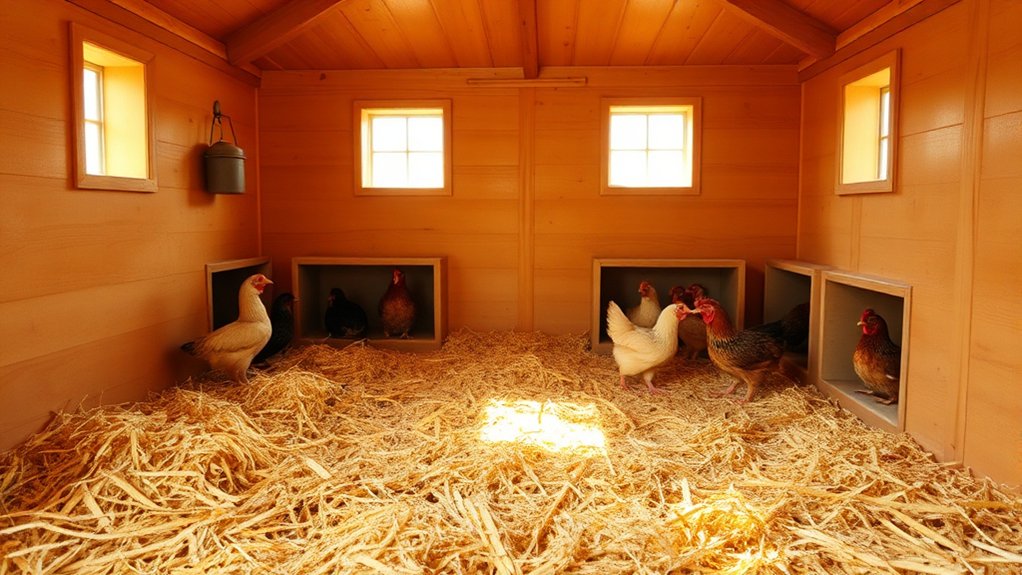
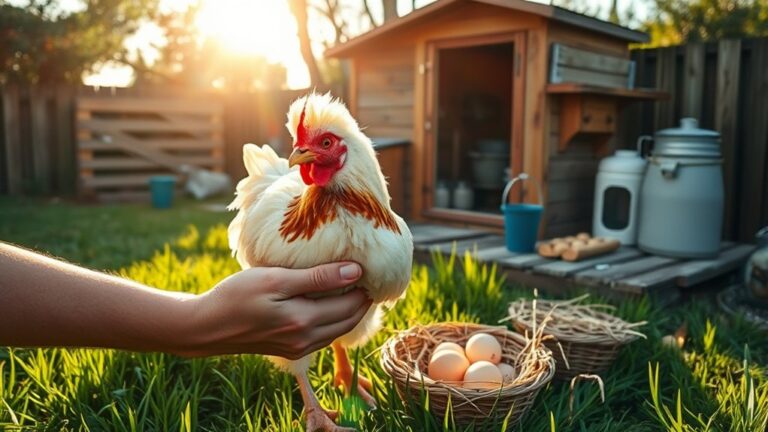
A cozy, dry coop keeps your chickens healthier and calmer, so start by making sure it stays clean, well-ventilated, and protected from rain and drafts. You should line the floor with cozy bedding such as straw, pine shavings, or chopped hay, and replace it before it turns damp or dirty.
Good ventilation importance can’t be ignored; fresh air helps reduce ammonia and moisture without creating a chilly breeze. Check vents, windows, and roof gaps so air moves out, but cold wind stays out.
Fresh air lowers ammonia and dampness, while careful venting keeps cold drafts out and chickens comfortable.
Keep coop cleanliness high by removing droppings, spilled feed, and wet litter often. Inside, give each hen enough space to perch and move without crowding.
Make nest box comfort a priority by keeping boxes dark, dry, and softly lined. When your coop feels warm, dry, and orderly, your chickens rest better, stay cleaner, and show less stress.
Feed a Balanced Diet Every Day
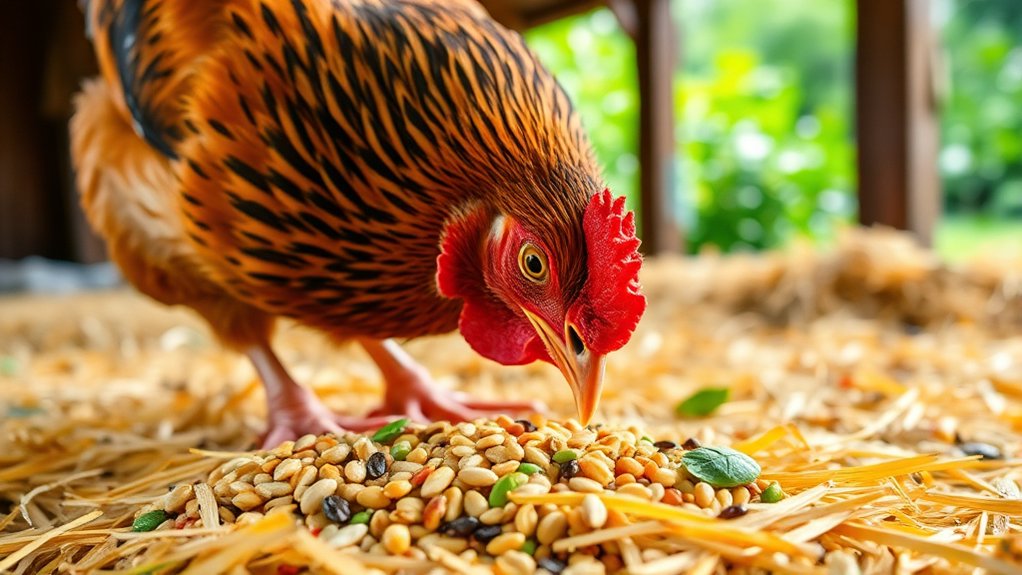
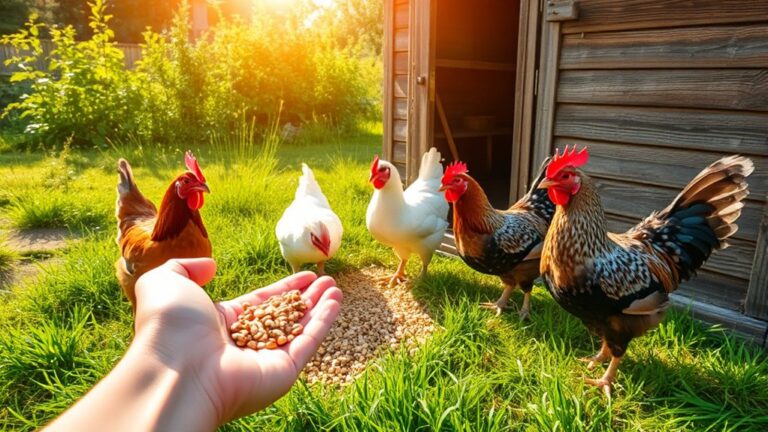
You’ll keep your chickens healthy by giving them a balanced diet every day, making sure they get enough protein, grains, and greens. It’s important to offer fresh water at all times, so they can eat well and stay hydrated.
Keeping a steady routine really helps your flock stay active, lay well, and feel their best. Just a little consistency goes a long way!
Daily Nutritional Balance
While treats and scraps can make chickens excited, they still need a balanced diet every day to stay healthy and productive. You should offer a complete layer feed as the base of their diet, then keep their meals on a consistent feeding schedule so they know when to eat.
Check the label for essential vitamins and minerals, and use nutritional supplements only when a vet or poultry expert recommends them. Fresh water should always be available, because hydration supports digestion and egg quality.
Keep feed dry, clean, and free from mold, and remove leftovers before they spoil. When you stay consistent, you help your flock maintain strong bodies, steady energy, and better overall health without overcomplicating their care.
Protein, Grains, And Greens
Protein, grains, and greens should round out your flock’s daily diet, giving chickens the energy and nutrients they need beyond their base layer feed. You can rotate protein sources like mealworms, scrambled eggs, or fish scraps to support growth and feathering.
Choose grain types such as oats, wheat, or cracked corn, and use grain mixing to keep meals varied while maintaining protein balance. Offer green vegetables like kale, lettuce, and herbs for extra vitamins, and use vegetable scraps as practical treat options.
If you provide dietary supplements, keep them minimal and targeted so they don’t replace a sound feeding schedule. Let your birds peck through safe forage, too, because good forage quality helps them stay active, satisfied, and healthy every day.
Fresh Water Access
Fresh water should be available to your chickens at all times, since even a balanced diet won’t support healthy growth, egg production, or digestion without it. You should check water quality daily, scrub containers often, and refill them before they run dry.
Clean, cool water helps you protect the hydration importance of every bird, especially during hot spells or heavy laying periods. Watch temperature effects closely, because freezing weather can stop drinking, while heat can quickly dehydrate your flock.
If you use automatic drinkers, test them regularly and consider автоматизация системы to keep flow steady and reduce waste. Place waterers in shaded, easy-to-reach spots, and keep extra sources available so timid birds don’t get pushed away.
Keep Fresh Water Available
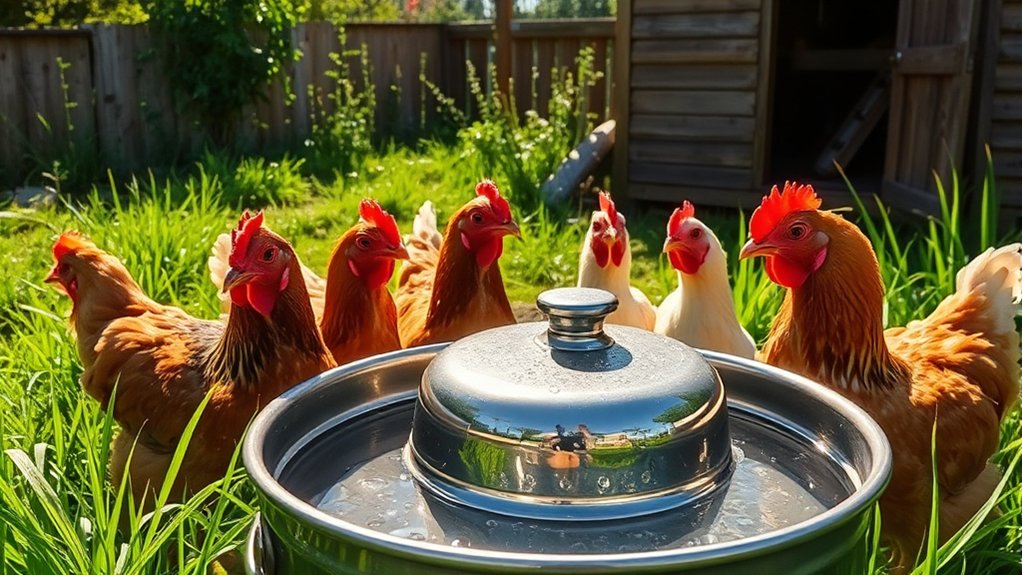
Water is one of the most important things your chickens need each day. You should check their drinkers morning and night, and refill them before they run low. Clean containers help protect water quality, so wash bowls often and remove algae, bedding, or droppings right away.
Check chicken drinkers morning and night, and keep containers clean to protect water quality.
When the weather heats up, chickens drink more, and hydration importance rises fast because dehydration can lower egg production and leave birds sluggish. In cold weather, make sure the water doesn’t freeze, since chickens still need steady access.
Place waterers where hens can reach them easily, but keep them stable so they won’t tip or spill. If you use multiple containers, spread them out to reduce crowding and stress. Fresh water should always look clear, smell neutral, and stay available throughout the day.
When you stay consistent, your flock will drink well, stay comfortable, and remain healthier overall.
Let Chickens Roam and Scratch
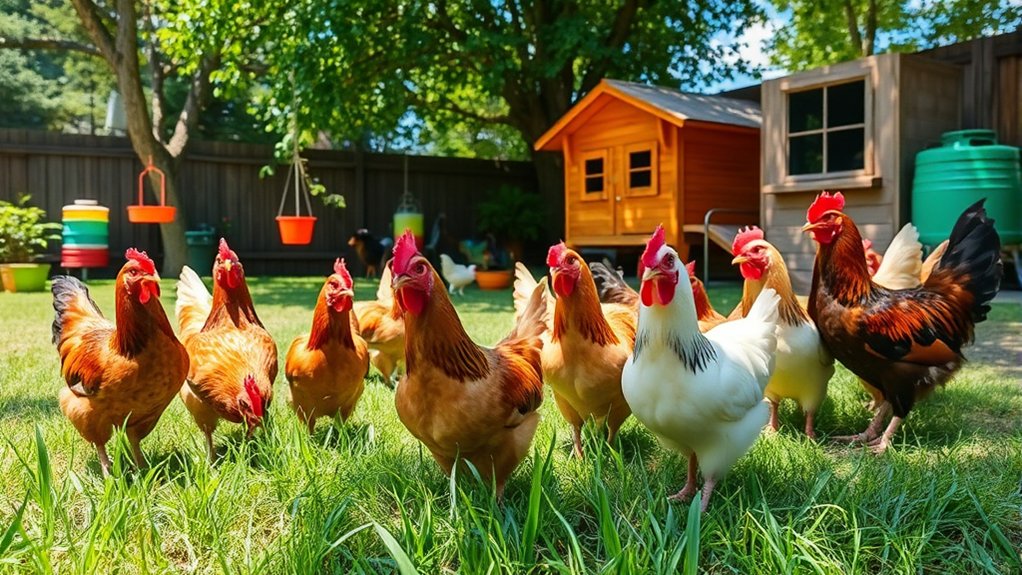
You should give your chickens daily free-range time so they can stretch their legs and explore a bit. Let them scratch around in loose soil or bedding—dust baths are great for keeping their feathers clean and helping control pests. Just make sure the area is safe for foraging, with no predators, toxic plants, or sharp hazards lurking about.
Daily Free-Range Time
When possible, give your chickens daily free-range time so they can roam, scratch, and wander. You’ll see better foraging habits as they hunt seeds, greens, and insects, and their social interactions often improve too.
Keep the area safe, supervise at first, and call them back before dark. Short sessions can still make a big difference in confidence and calm behavior.
| Benefit | What You’ll Notice | Simple Tip |
|---|---|---|
| Exercise | More movement | Open the run daily |
| Foraging | Natural pecking | Scatter grains lightly |
| Social time | Less pecking order stress | Let the flock mix |
| Curiosity | Alert behavior | Add safe obstacles |
| Routine | Easier coop return | Use a consistent call |
Dust Bath Benefits
Dust baths help chickens stay clean, control mites, and keep their feathers in good shape. You give your flock dust bath benefits when you offer dry soil, sand, or fine ash where they can roll, fluff, and scratch. This supports feather maintenance by loosening dirt and excess oils, while natural exfoliation helps skin health and reduces irritation.
It also improves parasite control because the dust can smother pests and make hiding spots less comfortable. Beyond the physical gains, dust bathing brings behavioral enrichment, social interaction, and stress relief as birds take turns and copy one another. You’ll often notice climate adaptation too, since chickens use dust to stay comfortable in heat.
These happy routines are strong happiness indicators.
Safe Foraging Space
A safe foraging space lets your chickens roam, scratch, and peck naturally while staying protected from predators and hazards. You can give them fenced access to grass, weeds, insects, and leaf litter so they can express foraging behavior every day.
Rotate the area often to prevent bare ground and keep the soil healthier. Provide shade, fresh water, and cover from overhead threats. Also, remove sharp debris, toxic plants, and standing water.
When you let your flock investigate, you support their natural instincts and reduce boredom, stress, and feather picking. You’ll also see stronger legs, better appetites, and more activity.
Keep pathways clear, secure gates tightly, and watch for digging spots under fences. A well-managed range keeps chickens busy, safe, and content.
Add Enrichment to Prevent Boredom
Keeping chickens busy helps them stay calm, curious, and less likely to develop bad habits like feather pecking or egg eating. You can boost their day with interactive toys that peck, roll, or hang, giving them foraging challenges that reward effort.
Add sensory stimulation by scattering leaves, herbs, or safe treats in shallow trays, and make small environmental changes often so the coop feels fresh. Rotate social interactions by pairing hens with different flock mates when possible, since variety can keep the group engaged.
Create discovery areas with logs, boxes, and tunnels, and include climbing structures so they can perch, hop, and inspect their space. Offer varied textures like straw, sand, wood, and grass to keep their feet and beaks interested.
When you refresh the setup regularly, your hens will discover more, peck less, and spend their energy in healthy, natural ways.
Reduce Stress and Keep Predators Out
Even a happy flock can get stressed if its routine feels chaotic or unsafe, so you should keep the coop quiet, predictable, and secure. Close the coop at dusk, lock latches firmly, and check for gaps, loose wire, or weak doors that invite raccoons, foxes, and rats.
Use predator proofing techniques like buried fencing, hardware cloth, and covered runs to block digging and climbing. Keep feed sealed and scraps cleaned up so you don’t attract unwanted visitors.
Inside the coop, avoid sudden noise, overcrowding, and frequent changes in layout. Give your birds enough space, steady access to water, and a calm daily routine. These stress reduction strategies help chickens feel settled, which supports better eating, roosting, and egg laying.
If you move birds or make repairs, do it gradually so they can adjust without panic. A secure, peaceful coop keeps your flock relaxed, confident, and ready to thrive.
Spot Health Problems Early
Watch your chickens closely each day so you can spot health problems before they become serious. Build a habit of symptom recognition by noting appetite, energy, posture, and comb color.
When a bird isolates itself, limps, coughs, or stops laying, those behavioral changes can signal trouble. Check feather condition for missing patches, mites, or dullness, and look for swelling around the eyes, legs, or vents.
During regular check ups, weigh birds if you can and listen for wheezing or odd breathing. Do droppings analysis too, since changes in color, texture, blood, or excess moisture often reveal illness signs before they’re obvious elsewhere.
Keep a simple log so you can compare today’s flock with yesterday’s. If you catch problems early, you can separate the sick bird, clean the coop, and call a vet faster. Quick action protects the rest of the flock and helps every chicken stay healthy and comfortable.
Frequently Asked Questions
How Often Should Chicken Bedding Be Replaced in Winter?
You should replace chicken bedding in winter every 1 to 2 weeks, but you’ll need to spot-clean daily. If the bedding stays dry and fluffy, you can stretch changes a bit longer.
Watch for damp spots, ammonia smell, or caked litter, since those reduce winter insulation and hurt your flock’s comfort. Use fresh bedding materials often enough to keep the coop dry, warm, and healthy throughout the cold months.
What Toys Do Chickens Enjoy Most Indoors?
You’ll find chickens enjoy simple toys most indoors: hanging cabbage, treat balls, mirrors, and shallow boxes of straw or leaves. These chicken enrichment ideas turn indoor playtime into a little carnival, keeping them busy and curious.
You can also add perches, paper rolls, and safe pecking treats. Rotate toys often so they stay novel, and you’ll see less boredom, more activity, and happier birds overall.
Can Chickens Live Happily Without a Traditional Coop?
Yes, you can keep chickens happy without a traditional coop if you give them enough free range time and solid shelter options. You’ll need a predator-proof night spot, dry bedding, shade, and protection from wind and rain.
A secure run, insulated shed, or portable coop can work well. If you monitor weather, space, and safety, your birds can thrive. Just don’t leave them exposed overnight or they won’t feel secure.
Do Chickens Need Dust Baths in Cold Weather?
Yes, they can still use dust baths in cold weather, but you’ll want to adjust how you provide them. As the saying goes, “where there’s a will, there’s a way.” You can offer a dry, sheltered spot so they enjoy dust bath benefits without getting chilled.
Good cold weather adaptations include keeping the area wind-free, dry, and loose. If the ground’s frozen, bring in sand or soil for a safe option.
How Do I Introduce New Chickens Without Fighting?
You can introduce new chickens by keeping them separate at first, then letting them see each other through a fence for several days. This helps you read chicken behavior and adjust flock dynamics before contact.
After that, swap locations so they share scents. Introduce them at night, when they’re calm, and watch closely. Provide extra feeders and space, and step in quickly if pecking turns into real fighting.
Conclusion
Keep your chickens happy by making their lives safe, simple, and steady. Give them a dry coop, fresh feed, clean water, room to roam, and little treats to discover.
When you add enrichment and watch for stress or illness, you help them thrive. A healthy flock is a cheerful flock, and with your care, they’ll cluck with contentment from dawn to dusk like a well-tuned chorus.
Remember, keeping chickens happy means giving them what they need to feel secure and engaged every day.