How to Determine How Old Chickens Are at Tractor Supply
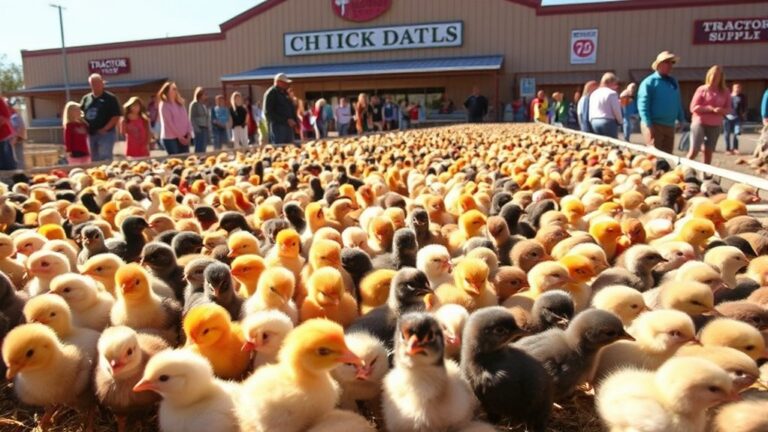
Trying to figure out how old chickens are at Tractor Supply can be tricky, and you’re not alone if you’ve struggled with this. Many people want to make sure they’re getting healthy birds but don’t know where to start.
Knowing a chicken’s age helps you pick the right ones for your flock, whether you’re after egg production or raising chicks.
You can determine a chicken’s age at Tractor Supply by checking its feather color and texture. Juveniles have duller, softer feathers while mature birds show vibrant, consistent plumage.
Look at the comb size and color; younger chickens have smaller, paler combs that grow bright red with age. Examine leg scales and toenail wear; smoother legs and sharp nails indicate youth.
Don’t forget to ask staff about hatch dates and breed traits to get accurate details. There’s more to uncover for confident choices.
Key Takeaways
- Check the hatch date provided by Tractor Supply for precise chicken age information.
- Examine comb size and color. Larger, bright red combs usually mean the chicken is mature.
- Observe feather quality and coloration. Younger chicks have softer, duller feathers compared to mature birds.
- Inspect legs and feet for scale texture and toenail wear to help estimate age.
- Ask store staff about shipment dates, care routines, and breed-specific aging traits.
How to Tell a Chicken’s Age by Its Feather Development
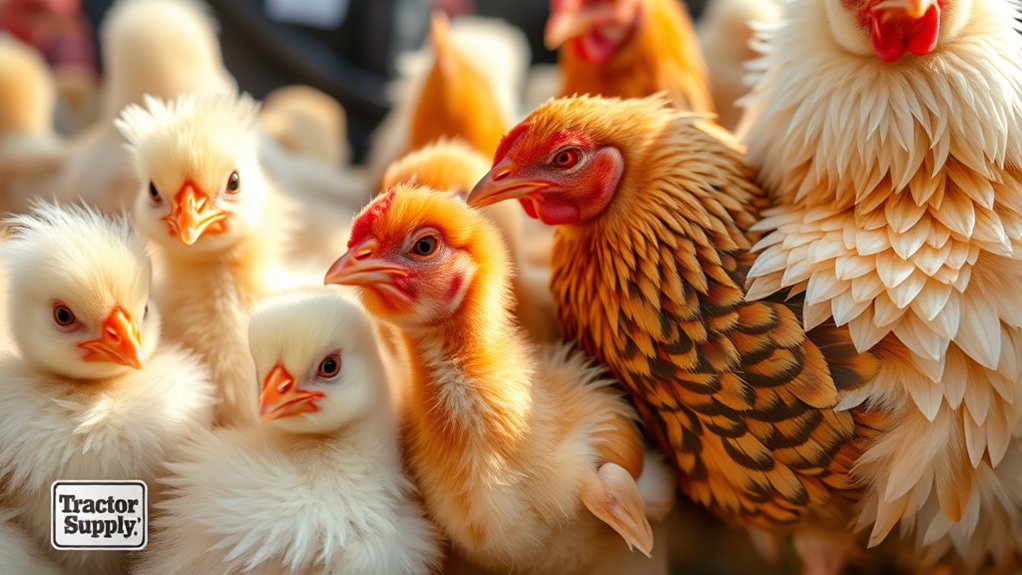
Although it might seem tricky at first, you can estimate a chicken’s age by examining its feather development. Young chicks have soft, downy feathers that lack the defined feather coloration you’ll see in older birds.
As the chicken grows, its feathers become more structured and vibrant, showing distinct patterns and richer colors. Pay close attention to feather coloration. Juveniles often have duller, less consistent hues, while mature chickens display more uniform and vivid feathers.
Alongside feather changes, check the beak shape. Younger chickens have shorter, smoother beaks that gradually lengthen and harden with age. The beak’s texture becomes more pronounced, and slight curves might develop as the chicken matures.
How to Tell a Chicken’s Age by Its Comb Appearance
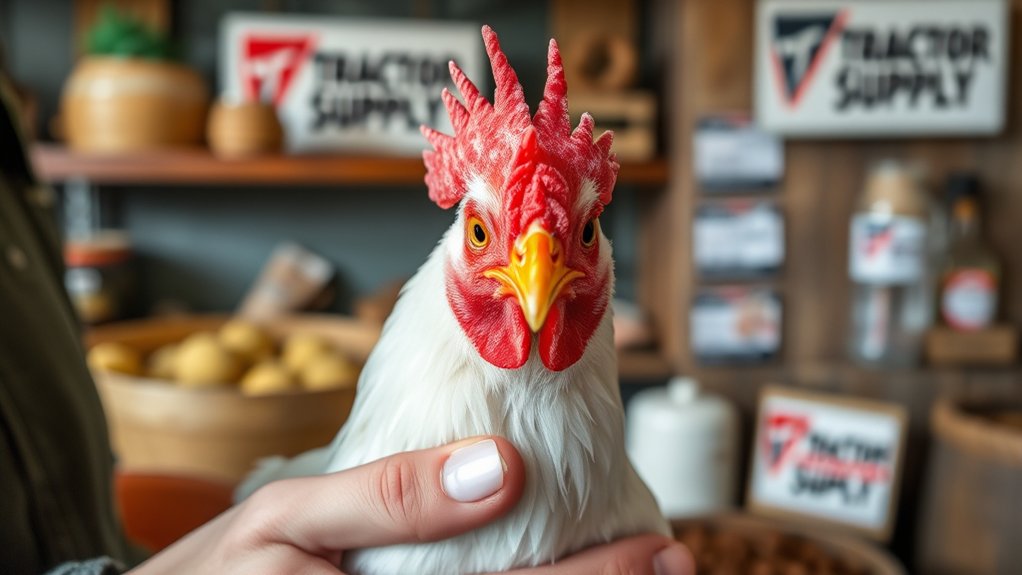
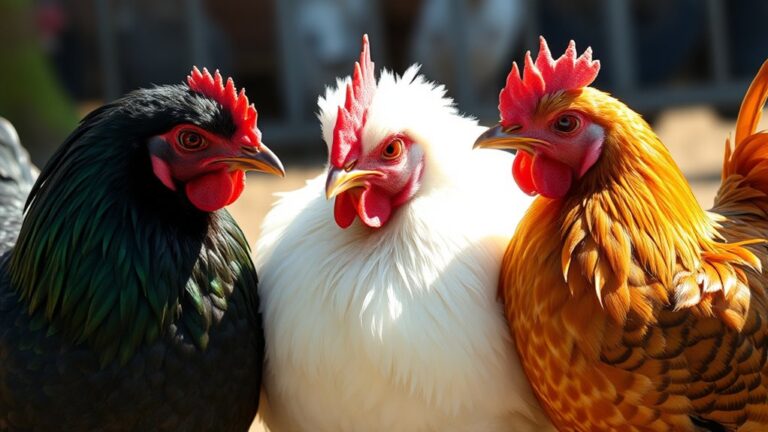
You can tell a chicken’s age by looking at its comb. As chickens grow, their combs get bigger and change color from pale to bright red. So, by paying attention to these changes, you can quickly get a good idea of how old they are. It’s a simple and handy way to estimate their age without any fuss.
Comb Color Changes
When a chicken’s comb changes color, it can reveal a lot about its age and health. As you observe chickens at Tractor Supply, pay attention to these color shifts. They often correlate with the bird’s development stage.
- Pale or light pink combs usually indicate young pullets whose feather coloration is still developing and who haven’t reached full maturity.
- Bright red combs signal that the chicken is mature, with full comb development and peak health.
- Dull or purplish combs might suggest an older chicken or one facing health issues, as blood flow diminishes with age.
Tracking these changes alongside feather coloration helps you estimate the chicken’s age more accurately without relying solely on size.
Comb Size Growth
As chickens grow, their combs increase in size, giving you a clear visual clue about their age. When you observe a young chick, its comb size is tiny and often barely noticeable.
As the chicken matures, especially during the pullet stage, the comb becomes more prominent and develops distinct shapes. You’ll notice that comb size correlates closely with maturity, so a larger comb usually indicates an older chicken.
Alongside comb size, pay attention to feather patterns, which change as chickens age and can help confirm your assessment. Younger birds have softer, fluffier feather patterns, while older ones display more defined and structured feathers.
How to Tell a Chicken’s Age by Its Legs and Feet
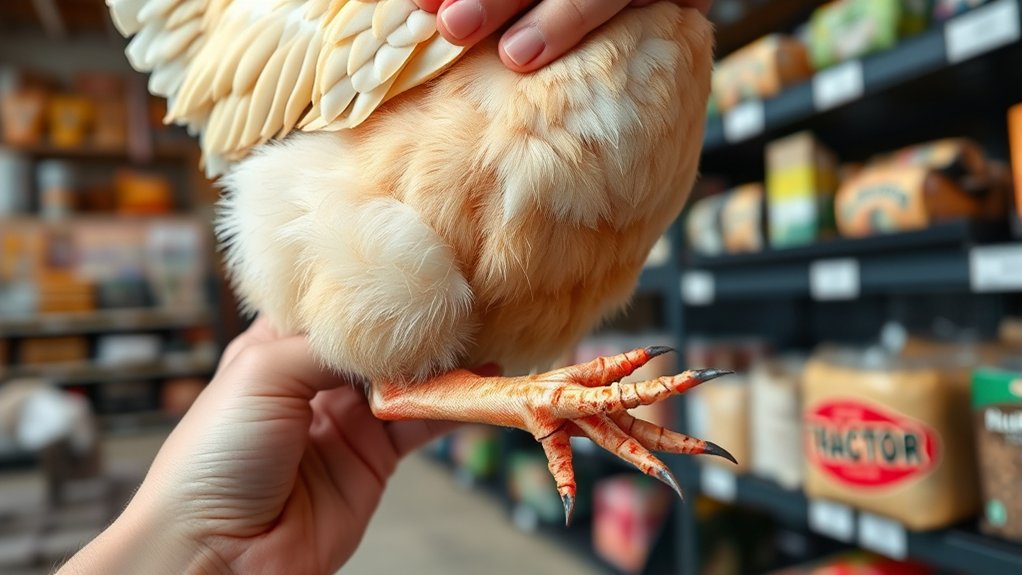
You can learn a lot about a chicken’s age just by looking at its legs and feet. For example, check out the texture of its leg scales. Younger chickens usually have smoother scales, while older ones tend to have rougher, more pronounced scales.
Also, take a look at the color of their feet. This can change as they get older, so it’s another handy clue. And don’t forget to notice how worn their toenails are—older chickens often have more worn-down nails from all their walking around.
Leg Scale Texture
Although it might not be the first thing you notice, the texture of a chicken’s leg scales can reveal a lot about its age. When you’re checking out chickens at Tractor Supply, you’ll want to compare their leg scale texture along with other signs like feather pattern and beak coloration for a better age estimate.
Here’s what to look for:
1. Smooth, tight scales
Usually found on younger chickens, indicating their legs haven’t faced much wear.
2. Rough, raised scales
These suggest an older bird, as the scales thicken and become more pronounced over time.
3. Flaky or cracked scales
Often a sign of advanced age or environmental stress, signaling an older chicken.
Pay attention to these textures to make a confident guess about your chicken’s age.
Foot Color Changes
How can you tell a chicken’s age just by looking at its feet? Foot pigmentation and color variation change as chickens grow. Younger chickens often have brighter, more uniform foot colors. Older chickens show duller, sometimes patchy pigmentation.
This foot color change helps you estimate their age quickly.
| Age Range | Foot Pigmentation | Color Variation |
|---|---|---|
| 0-6 months | Bright, vibrant hues | Minimal variation |
| 6 months-2 years | Moderate brightness | Some fading or spots |
| 2+ years | Dull, faded colors | Noticeable patchiness |
Toe Nail Wear
Foot color changes offer a helpful clue about a chicken’s age, but examining toenail wear can give you even more insight. When you check their legs and feet, focus on these key points:
- Toenail length and wear: Older chickens usually have more worn, blunt nails due to walking and scratching. Younger ones have sharper, less worn nails unless nail trimming has been done recently.
- Nail condition: Look for cracks or excessive brittleness, which tend to develop with age and environmental exposure.
- Beak condition: While not part of the legs, the beak’s wear often parallels toenail wear since both get worn down by foraging and scratching.
How to Spot Pullets vs. Mature Hens to Estimate Chicken Age
When you’re trying to estimate a chicken’s age at Tractor Supply, distinguishing pullets from mature hens can give you a clear starting point. Look closely at feather color and beak shape. Pullets often have brighter, sleeker feathers, while mature hens’ plumage may appear duller or worn.
Beak shape changes subtly. Pullets’ beaks tend to be sharper and smaller, whereas hens’ beaks are sturdier and sometimes more curved from use.
| Feature | Pullet | Mature Hen |
|---|---|---|
| Feather Color | Bright, smooth, uniform | Duller, worn or faded |
| Beak Shape | Small, sharp | Larger, sturdier, slightly curved |
| Comb & Wattles | Smaller, less pronounced | Larger, more developed |
Using these visual cues helps you estimate whether a chicken is likely under a year old (pullet) or older (mature hen) before checking other factors.
How Egg-Laying Behavior Reveals Chicken Age
Once you’ve distinguished between pullets and mature hens by their appearance, observing their egg-laying behavior can offer additional clues about their age. Younger hens tend to lay eggs more consistently, while older chickens may slow down or stop altogether. Here’s what to look for:
- Egg Frequency: Pullets usually start laying around 18-22 weeks old and produce eggs regularly. Mature hens might lay fewer eggs as they age.
- Egg Size and Quality: Younger hens lay smaller, thinner-shelled eggs. As they mature, eggs get larger and stronger, reflecting changes in chicken nutrition needs.
- Nest Use: Older hens may become less interested in nesting, especially if coop maintenance isn’t ideal. A well-maintained coop encourages steady laying behavior across ages.
How to Check for Signs of Molting to Gauge Chicken Age
Although molting is a natural process, you can use it to estimate a chicken’s age by observing the condition of their feathers. Feather shedding happens annually, usually starting around one year old. Molting patterns can reveal if a chicken is young, mature, or older.
Younger chickens often have a smoother, more uniform feather coat, while older birds show signs of repeated molting cycles.
Here’s a quick reference to help you gauge age through molting signs:
| Age Range | Feather Shedding Pattern | Feather Condition |
|---|---|---|
| Under 1 year | Minimal or no molting | Smooth, bright feathers |
| 1-2 years | First full molt cycle | Slightly worn feathers |
| Over 2 years | Multiple molt cycles, patchy loss | Dull, worn feathers, patchy |
Why Hatch Dates Are Important When Buying Chickens at Tractor Supply
Since knowing a chicken’s hatch date gives you insight into its exact age, it helps you make smarter decisions when buying at Tractor Supply. Hatch dates let you avoid guesswork, especially since feather colors and breed variations can sometimes mislead you about a chicken’s age.
Here’s why hatch dates matter:
- Accurate Growth Expectations: You know when your chicken will start laying eggs or reach maturity based on its exact age.
- Health Monitoring: Younger birds need different care than older ones, so hatch dates guide you on vaccinations and feed.
- Breed-Specific Timing: Different breeds mature at different rates, and feather colors might vary widely. Hatch dates help you track these breed variations without confusion.
How to Ask Staff for Accurate Age Information at Tractor Supply
When you’re at Tractor Supply, asking staff directly about a chicken’s age can save you time and guesswork. Approach them politely and mention that knowing the age helps you care better for your flock.
Staff often track hatch dates or approximate ages based on arrival times. Don’t hesitate to inquire about the chicken diet they’ve been fed, as it can affect growth rates and overall health, providing clues to age.
Also, ask about coop cleanliness and living conditions, since well-maintained coops help chickens grow steadily and stay healthy. This can indicate how well they’ve been cared for over time.
If staff can’t give an exact age, request information about the shipment date or any recent restocking. This direct approach helps you make informed decisions and ensures you get chickens suited to your needs without relying solely on physical appearance.
Understanding Breed Differences in Chicken Aging Signs
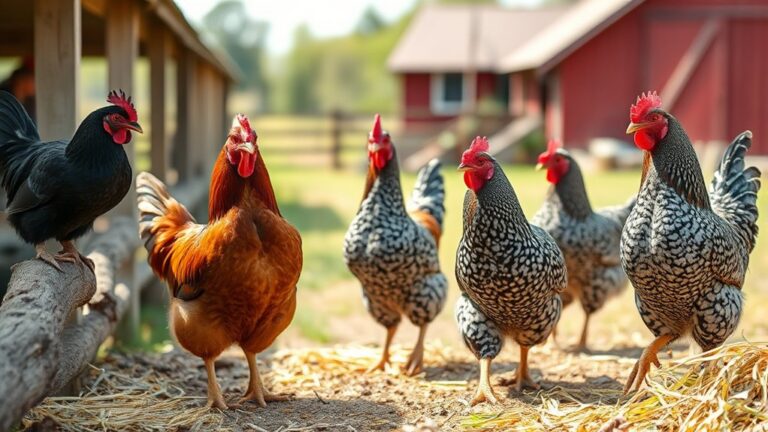
Knowing a chicken’s age from staff is helpful, but you’ll also want to recognize how different breeds show aging signs. Breeds vary in their feather coloration changes and beak shape as they mature, so understanding these differences helps you estimate age more accurately.
Here are three key breed differences to watch for:
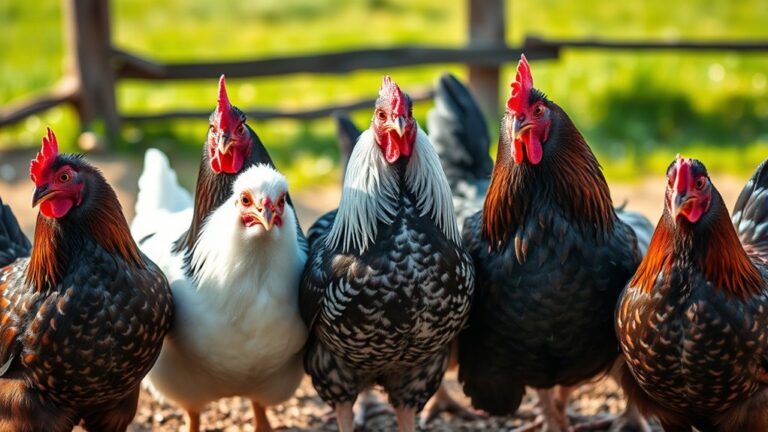
- Feather Coloration: Some breeds, like the Rhode Island Red, darken their feathers as they age, while others, such as Leghorns, maintain consistent coloration. Watch for dulling or graying in older hens.
- Beak Shape: Aging chickens often show subtle beak wear. Breeds with thicker beaks, like Orpingtons, may show smoother edges, whereas slender-beaked breeds retain sharper shapes longer.
- Feather Texture: Certain breeds develop coarser or less glossy feathers with age, signaling maturity. For example, Sussex chickens’ feathers can lose vibrancy as they grow older.
Knowing these breed-specific signs helps you gauge a chicken’s age beyond just asking, giving you a clearer picture when choosing your flock.
Choosing Older Chickens or Younger Pullets for Your Flock
Although younger pullets require more time and care before they start laying eggs, they often bring fresh energy and longer productive years to your flock. When choosing between older chickens and younger pullets, consider your goals and how much effort you’re ready to invest.
Younger birds need consistent chicken nutrition to develop strong bones and feathers, and you’ll want to stay on top of coop maintenance to keep them comfortable as they grow.
Older chickens, on the other hand, usually start laying sooner, which is great if you want immediate egg production. However, they may require more attention to health issues and might not lay as long.
If you prefer a low-maintenance flock and quicker egg output, older hens could be the way to go. But if you’re ready to nurture your chickens and focus on long-term productivity, younger pullets will reward you with vitality and a longer laying lifespan. Consider your resources and goals carefully before deciding.
Frequently Asked Questions
What Is the Average Lifespan of Chickens Bought at Tractor Supply?
You can expect chickens bought at Tractor Supply to live around 5 to 8 years on average. Their egg production usually peaks in the first two years, then declines.
You’ll notice molting patterns where they lose feathers and stop laying eggs temporarily, typically once a year. Understanding these patterns helps you manage their care better and anticipate changes in egg production throughout their lifespan.
How Should I Feed Chickens of Different Ages Purchased There?
You should tailor feeding schedules to each chicken’s age, meeting their specific nutritional needs. Chicks need starter feed high in protein, given frequently throughout the day.
Pullets require grower feed with balanced nutrients, fed twice daily. Adult hens thrive on layer feed with calcium for eggshells, offered once or twice daily.
Always provide fresh water and adjust portions based on activity and growth to keep your flock healthy and productive.
Can Tractor Supply Chickens Be Vaccinated or Treated On-Site?
You can’t put the cart before the horse. Tractor Supply doesn’t vaccinate or treat chickens on-site. You’ll need to handle chicken health and vaccination protocols yourself once you bring them home.
They sell vaccines and medications for you to administer, but the actual care is up to you. Make sure you follow proper vaccination schedules to keep your flock healthy and avoid common diseases. Always consult a vet if you’re unsure.
Are There Seasonal Differences in Chicken Availability at Tractor Supply?
Yes, you’ll notice seasonal differences in chicken availability at Tractor Supply. These changes happen because of seasonal breeding and hatchery schedules, which influence when chicks are hatched and ready for sale.
Typically, spring and early summer see the most chicks available since hatcheries ramp up production during these times. So, if you’re planning to buy chickens, it’s best to check Tractor Supply’s stock during these peak seasons for the widest selection.
What Are the Best Coop Setups for Chickens of Various Ages?
For chicks, you’ll want a brooder with heat lamps and easy access to food and water. As they grow, move them to a secure coop with ample space to support egg production.
Adult hens need nesting boxes and good ventilation to stay healthy. Remember, regular coop maintenance is key. Clean bedding and disinfect to prevent disease.
Tailor each setup to their age to keep your flock thriving and productive.
Conclusion
Determining a chicken’s age at Tractor Supply isn’t just about numbers. It’s about reading the story written in feathers, combs, and behavior. Like a seasoned detective, you’ll learn to spot subtle signs that reveal their true age.
Remember, every chicken’s journey is unique. Understanding these clues helps you choose the perfect addition to your flock. So trust your eyes and instincts—they’re your best tools in this feathered mystery.
When it comes to determining a chicken’s age at Tractor Supply, these skills make all the difference.