Many Types of Chickens: 5 Common Ones You Should Know
Choosing the right type of chicken can feel overwhelming, especially if you’re new to raising them. You’re not alone—many people struggle with finding breeds that fit their needs, whether it’s for eggs, meat, or simply backyard enjoyment.
Understanding the different types can make all the difference in creating a happy and productive flock.
If you’re starting out, friendly and hardy breeds like Buff Orpingtons make handling easy and adapt well to different climates.
For backyard egg layers, consider Leghorns or Rhode Island Reds for reliable, high egg production.
Small-scale meat farmers often choose fast-growing Cornish Cross or the hardy Red Ranger.
Show enthusiasts love the fluffy Silkie or crested Polish, while rare breeds like the striking Ayam Cemani add flair and heritage.
Keep exploring to uncover more about these popular chicken types.
Key Takeaways
- Buff Orpington and Plymouth Rock are friendly, hardy chicken breeds ideal for beginners. They’re calm and adapt well to different climates, making them perfect for starting out.
- Leghorn, Rhode Island Red, Sussex, and Australorp are top backyard egg-layers. They’re known for high production and use feed efficiently, so you get more eggs without extra cost.
- Cornish Cross and Red Ranger are popular meat breeds. They grow fast, use feed well, and are great for small-scale farming setups.
- Silkie, Polish, Sebright, and Hamburg are show breeds prized for their unique plumage and striking looks. They really stand out in exhibitions.
- Rare breeds like Ayam Cemani and Swedish Flower Hen offer unique traits. They also support heritage conservation and help maintain genetic diversity.
Friendly and Hardy Chicken Breeds for Beginners
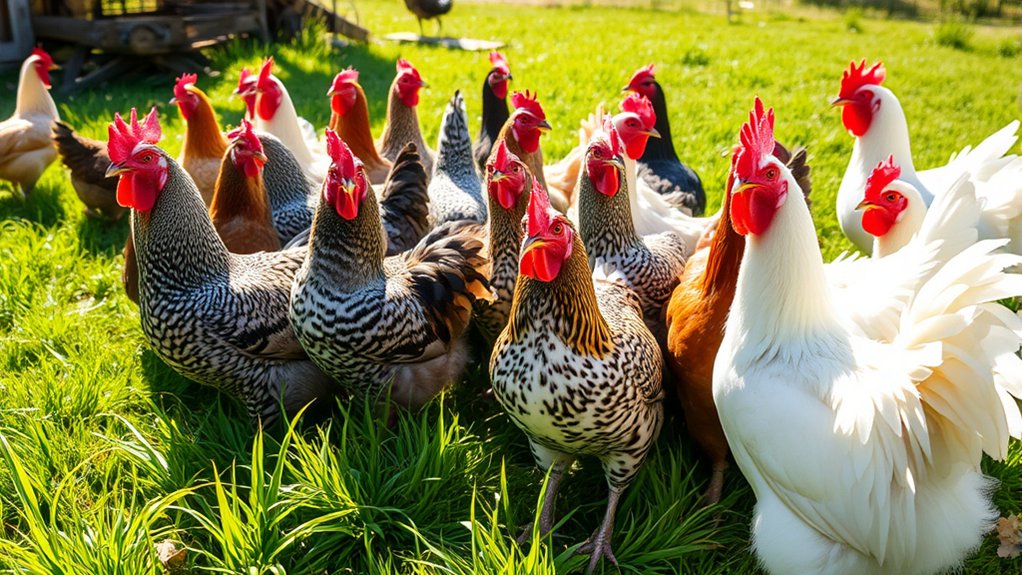
If you’re new to raising chickens, choosing friendly and hardy breeds can make your experience much smoother. You’ll want to focus on breeds known for their calm temperament traits, which make them easy to handle and great for families.
Breeds like the Buff Orpington and Plymouth Rock are excellent choices because they adapt well to different climates and are less prone to illness. Plus, these breeds come in appealing color variations, from soft buff to striking barred patterns, adding visual interest to your flock.
Their hardy nature means they withstand outdoor conditions and stress better than more delicate types. When selecting your chickens, consider how their temperament traits align with your lifestyle. Some breeds love human interaction, while others prefer more independence.
Best Egg-Laying Chicken Breeds for Your Backyard
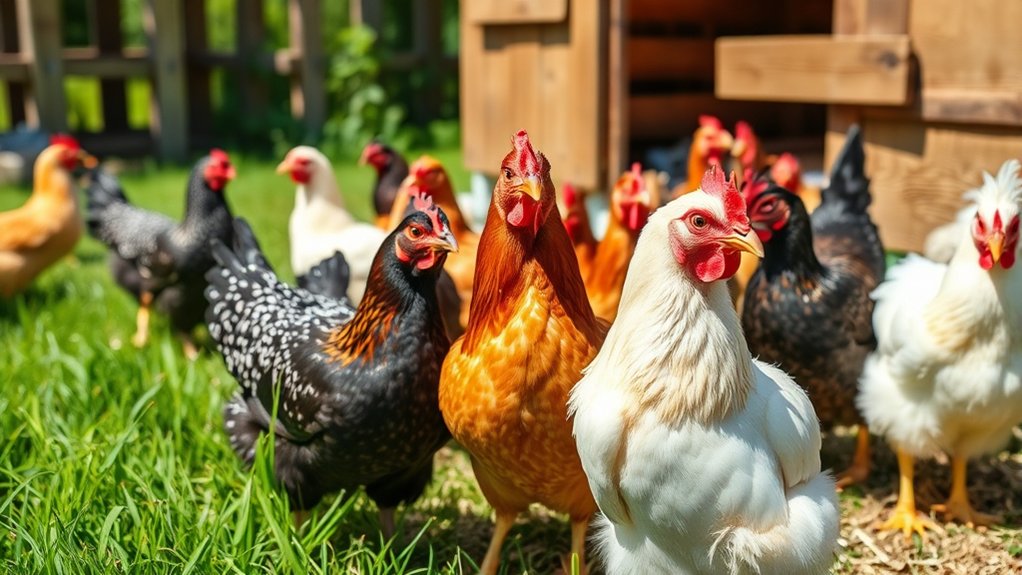
When you want a steady supply of fresh eggs, choosing the right chicken breeds is essential for your backyard flock. Some breeds are known for high egg production, while others handle egg production challenges better. You’ll also want to weigh feed requirements, as some breeds need more nutrition to lay consistently.
Here’s a quick look at some top egg-laying breeds:
| Breed | Egg Production & Feed Requirements |
|---|---|
| Leghorn | High egg output; low feed needed |
| Rhode Island Red | Reliable layers; moderate feed requirements |
| Sussex | Good layers; tolerate varied feed well |
| Australorp | Consistent layers; efficient feed conversion |
Popular Meat Chicken Breeds for Small-Scale Farming
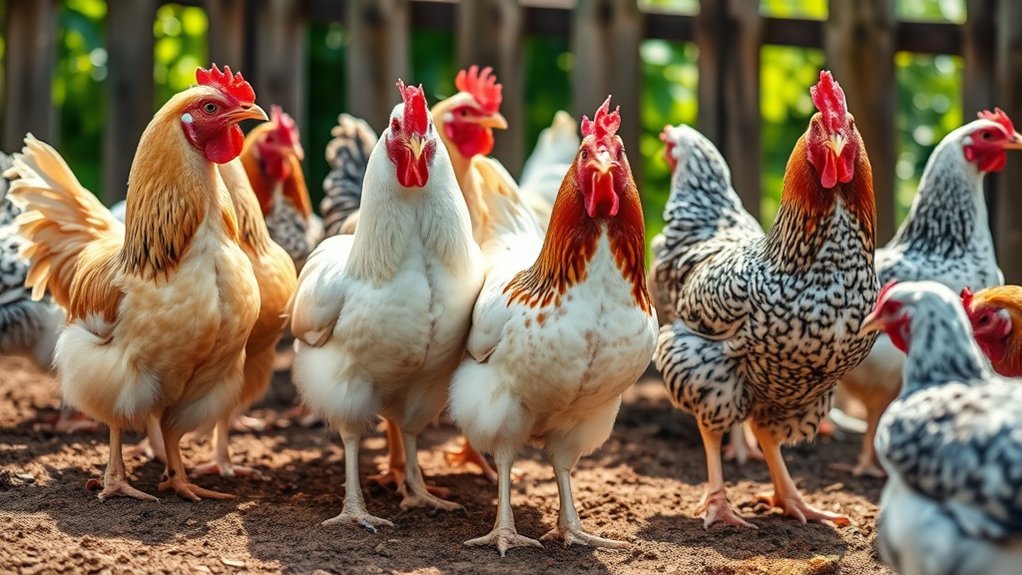
Although raising chickens for meat requires different considerations than egg production, selecting the right breeds can make all the difference for small-scale farming. You’ll want breeds with fast broiler growth rates so your birds reach market weight quickly, saving you time and resources.
Cornish Cross chickens are a popular choice because they grow rapidly and have excellent feed conversion efficiency, meaning they turn feed into muscle effectively. Another great option is the Red Ranger, which grows slightly slower but boasts better foraging ability and hardiness, ideal if you want more natural farming methods.
Keep in mind, focusing on breeds with good feed conversion efficiency reduces your feed costs, boosting profitability. Choosing the right meat breeds also depends on your climate and space. By picking breeds tailored to your needs, you’ll optimize growth, manage costs, and enjoy a steady supply of quality meat without the complexity of large-scale operations.
Beautiful Show Chicken Breeds for Backyard Exhibitions
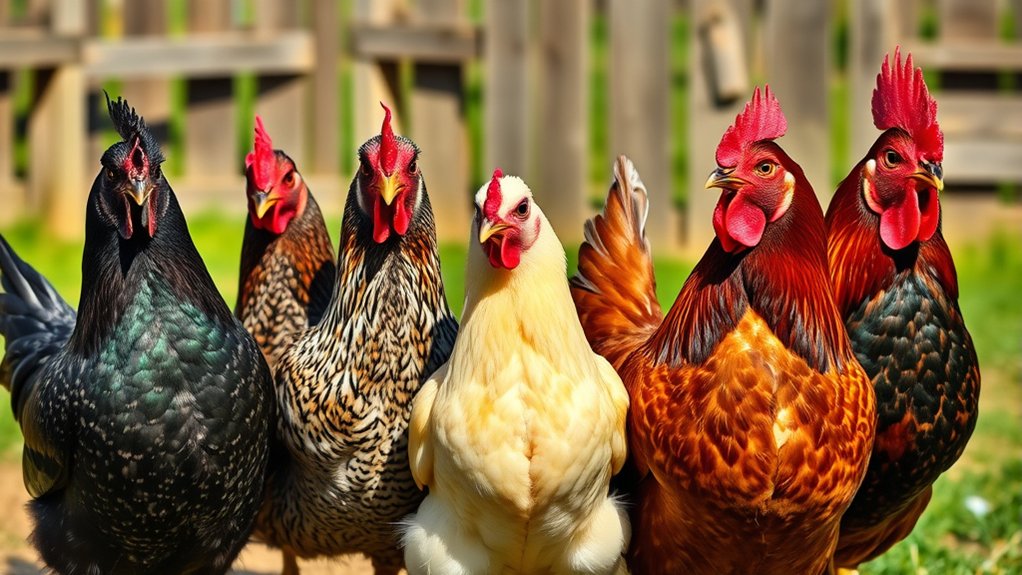
Because show chickens combine striking appearance with unique personalities, they make a fantastic addition to any backyard exhibition. When you choose beautiful show chicken breeds, you’ll enjoy colorful feather patterns that instantly catch the eye.
Breeds like the Silkie, known for its fluffy plumage, and the Polish chicken, with its dramatic crest, showcase diverse and vibrant looks that stand out.
Understanding the historical breed origins adds depth to your selection. For example, the Sebright, one of the oldest ornamental breeds, originates from England and boasts intricate laced feathers.
The Hamburg chicken, with roots tracing back to the Netherlands and Germany, offers sharp, spotted plumage. These rich histories connect you to centuries of poultry breeding traditions.
Unique and Rare Chicken Breeds You’ll Love
If you’re looking to add a truly distinctive flair to your flock, unique and rare chicken breeds offer exceptional traits you won’t find in common varieties. These breeds often come with fascinating histories and contribute considerably to heritage conservation efforts. By raising rare chickens, you help preserve genetic diversity, which is essential for the resilience and health of poultry populations.
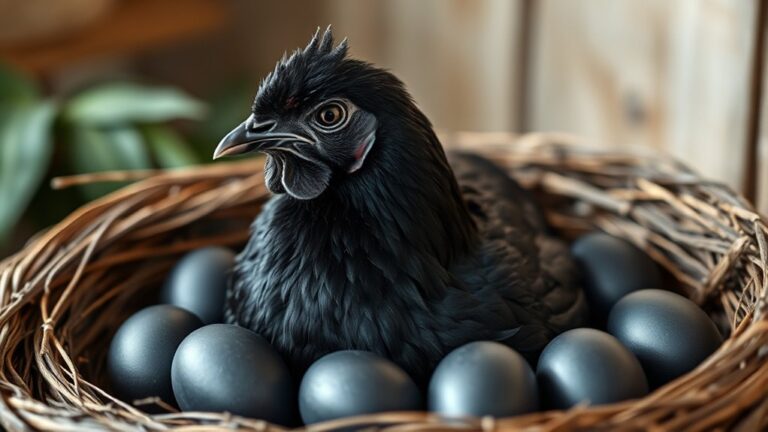
You might consider breeds like the Ayam Cemani, known for its striking all-black appearance, or the Swedish Flower Hen, celebrated for its colorful plumage. These chickens not only stand out visually but also bring unique behaviors and hardiness to your backyard. Incorporating rare breeds ensures you’re supporting a broader gene pool, reducing the risk of disease and maintaining traits that could be indispensable in the future.
Choosing these special chickens means you’re not just enhancing your flock’s charm, you’re actively participating in conserving poultry heritage for generations to come.
Frequently Asked Questions
How Do I Properly Care for Baby Chicks?
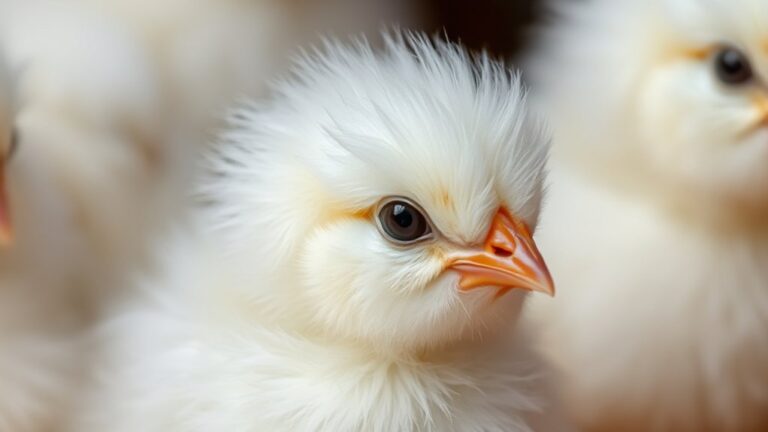
You’ll want to keep your baby chicks warm by maintaining the brooder temperature around 95°F during their first week. Then lower it by 5°F each week as their feather development progresses.
Provide clean water and chick starter feed, and make certain the brooder is dry and draft-free. Watch for signs they’re too hot or cold. If they huddle, it’s cold; if they scatter, it’s too warm.
Regularly clean their space to keep them healthy.
What Vaccinations Do Chickens Typically Need?
You’ll typically need to follow vaccination schedules that protect against diseases like Marek’s disease, Newcastle disease, and infectious bronchitis. These vaccines play an essential role in disease prevention, keeping your flock healthy.
It’s best to vaccinate chicks early, often within the first day or week. Consult your vet for a tailored schedule since vaccines can vary by region and flock risk. Staying consistent with vaccinations helps you avoid costly outbreaks.
How Can I Prevent Common Chicken Diseases?
Imagine your flock happily pecking in a clean, sunlit yard. To keep them healthy, you need strong biosecurity measures, like disinfecting equipment and limiting visitors.
Stick to vaccination schedules to build their immunity against common diseases. Regularly clean their coop and provide fresh water and balanced feed.
What Is the Average Lifespan of a Chicken?
The average lifespan of a chicken is usually 5 to 10 years, depending on breed and care. If you focus on good chicken nutrition, providing balanced feed with essential vitamins, you’ll help your chickens live longer and stay healthier.
Egg production rates typically peak in the first 2-3 years, then gradually decline. By maintaining proper nutrition and a clean environment, you’ll maximize both their lifespan and egg-laying potential.
How Do I Build a Predator-Proof Chicken Coop?
To build a predator-proof chicken coop, start with a secure coop design using sturdy materials like hardware cloth instead of chicken wire.
Install predator-proof fencing around the run, burying it at least 12 inches underground to stop digging predators.
Make sure all doors and windows have strong locks and tight seals. Raise the coop slightly to prevent burrowing and regularly inspect for any weak spots. These steps will keep your flock safe and sound.
Conclusion
Whether you’re just starting your backyard flock or dreaming of farm-fresh eggs, these chicken breeds are your trusty companions on a feathery adventure. Like a colorful palette, each type brings its own charm: hardy friends, prolific layers, meaty stars, dazzling showstoppers, and rare gems.
So, grab your coop’s keys and let these clucky characters brighten your days with their unique personalities and gifts. Your perfect flock is just a scratch away when you know the many types of chickens to choose from!