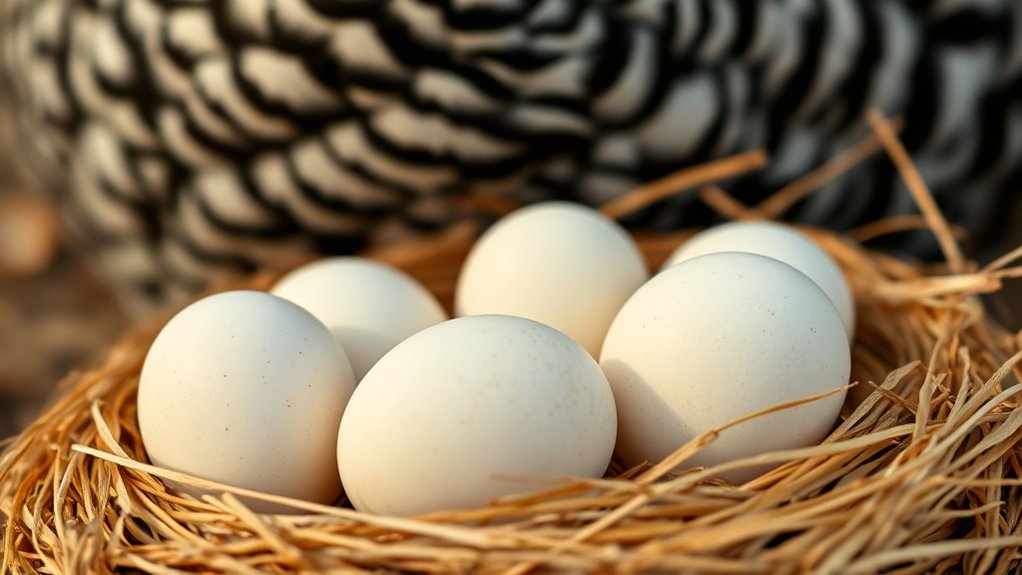
What Are Barred Plymouth Rock Chicken Eggs Like?
Finding a reliable source of delicious, high-quality eggs can be frustrating. You want eggs that not only taste great but also come from hens that lay consistently and adapt well to different environments. If you’ve struggled with this, you’re not alone—many people want eggs that are both nutritious and dependable.
You’ll find Barred Plymouth Rock chicken eggs are large, light brown with smooth, sturdy shells that resist cracking. They taste rich and creamy, with deep yellow yolks perfect for cooking and baking. These hens lay consistently, adapting well to many environments, making them great for reliable egg supply.
Their eggs also offer solid nutrition, packed with protein and vitamins. If you want to know about care tips, cooking uses, and common myths, keep exploring for more insights.
Key Takeaways
- Barred Plymouth Rock eggs are large, light brown with smooth, sturdy shells that resist cracking.
- They reliably produce consistent, medium-to-large eggs suitable for various climates and keepers.
- The eggs feature rich, creamy yolks with a slightly buttery flavor, which is ideal for cooking and baking.
- Nutritionally, they offer high-quality protein, essential vitamins, healthy fats, and antioxidants.
- Proper care includes balanced feed, clean coops, and health monitoring to maintain steady egg production.
What Do Barred Plymouth Rock Eggs Look Like And What Color Are They?
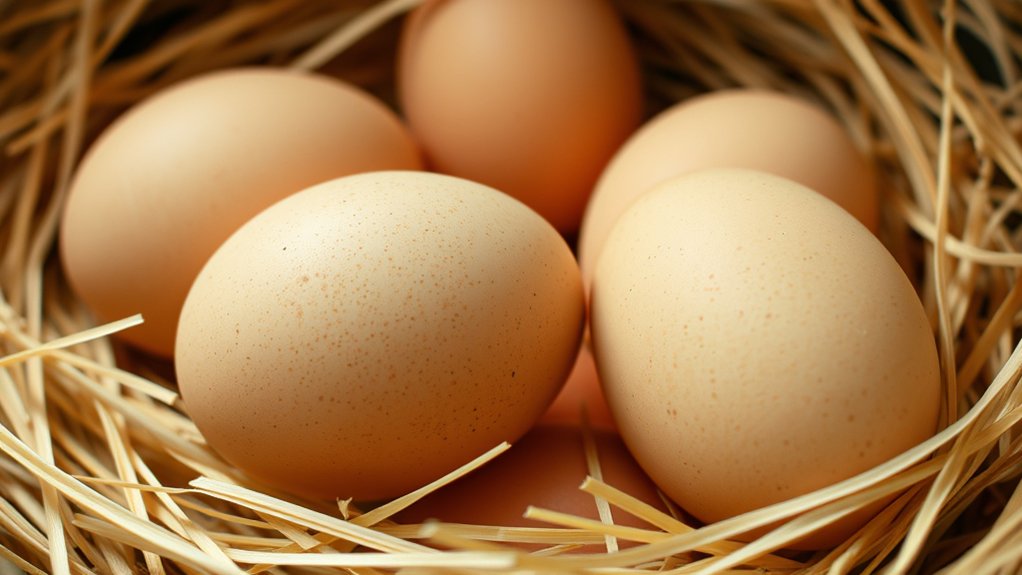
Although Barred Plymouth Rock chickens are known for their striking black-and-white striped feathers, their eggs have a more understated appearance. When you collect their eggs, you’ll notice they typically feature a creamy, light brown egg coloring that’s consistent and appealing.
The shell texture is smooth but sturdy, giving the eggs a nice feel in your hand and making them less prone to cracking during handling. You won’t see any unusual speckles or color variations, which keeps the eggs looking clean and classic.
This subtle coloring and solid shell texture make Barred Plymouth Rock eggs easy to identify among other varieties. If you’re raising these chickens, you can count on their eggs to have that dependable light brown hue and a firm shell every time, perfect for daily use or sharing with friends. Their eggs may be simple in appearance, but they’re reliable and attractive in their own right.
How Big Are Barred Plymouth Rock Chicken Eggs?
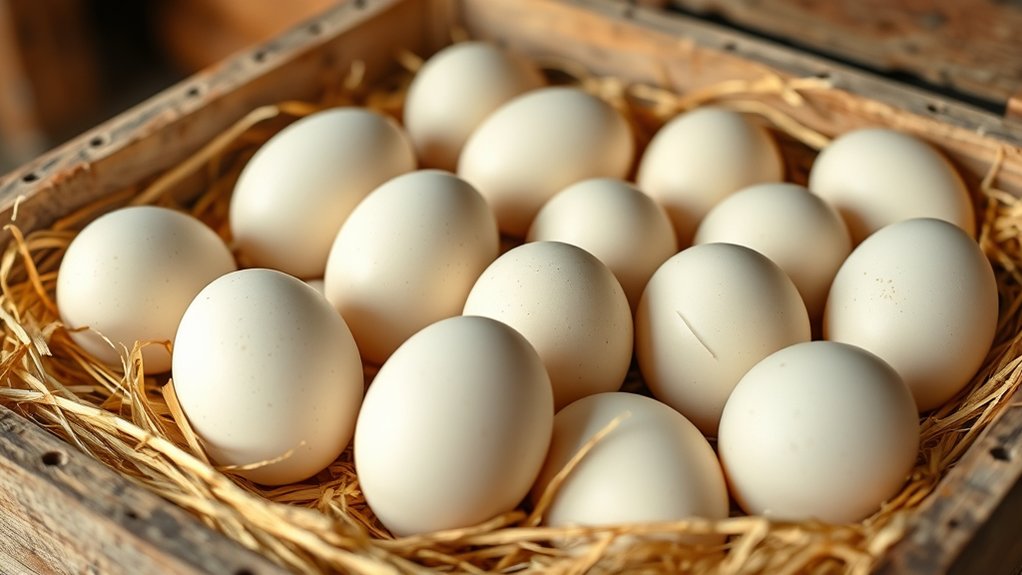
You’ll find Barred Plymouth Rock eggs are usually large, often weighing around 55 to 60 grams each. They’re pretty consistent in size, which is great if you’re keeping track of your egg production. Compared to other breeds, their eggs tend to be bigger than those from smaller or bantam chickens. So, if you’re raising these birds for fresh eggs, knowing their size gives you a good idea of what to expect.
Average Egg Size
How big are Barred Plymouth Rock chicken eggs compared to other breeds? These hens typically lay large eggs, often weighing around 55 to 60 grams each. You’ll notice their eggs have a smooth, firm eggshell texture, which offers good protection during handling and incubation.
Speaking of incubation period, Barred Plymouth Rock eggs usually hatch in about 21 days, similar to most chicken breeds. The eggs are not only sizable but also sturdy enough to withstand the natural incubation process.
If you’re raising these chickens, you can expect consistent egg sizes that suit both baking and eating purposes. Their reliable egg size and quality make them a favorite among backyard chicken keepers focused on both egg production and hatchability.
Comparison With Other Breeds
When comparing Barred Plymouth Rock chicken eggs to those of other breeds, you’ll find they generally fall on the larger side. Their eggs typically measure between large and extra-large, making them a great choice if size matters to you.
Unlike breeds that lay pale or tinted eggs, Barred Plymouth Rocks produce eggs with a consistent light brown eggshell color, which many find appealing. Their reliable nesting behavior also contributes to steady egg production, as these hens prefer calm, secure nesting spots.
In contrast, some breeds may lay smaller eggs or have more erratic nesting habits. So, if you want larger eggs with attractive shell color and dependable laying patterns, Barred Plymouth Rocks stand out among other common backyard chickens.
How Do Barred Plymouth Rock Eggs Taste Compared To Others?
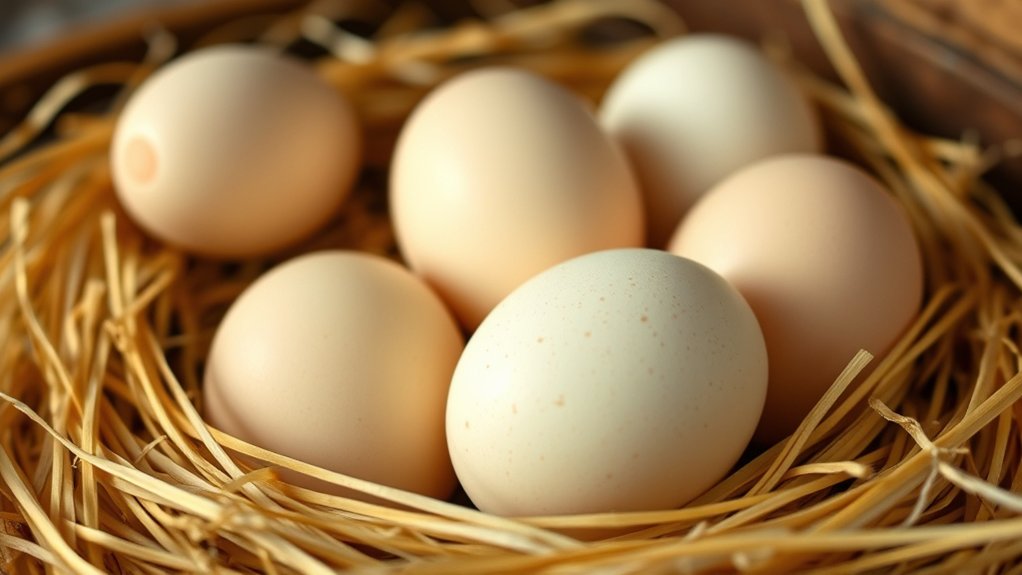
Although taste preferences vary, Barred Plymouth Rock eggs often stand out for their rich, creamy flavor and vibrant yolks. When you crack one open, you’ll notice the yolk richness is more pronounced compared to many other breeds, giving your dishes a fuller taste and appealing color.
The eggshell texture also plays a subtle role; these eggs typically have a sturdy, smooth shell that protects freshness and helps maintain flavor integrity.
If you’re used to eggs with a bland or watery taste, switching to Barred Plymouth Rock eggs can be a pleasant surprise. Their yolks carry a slightly buttery note that amps up simple preparations like scrambled eggs or omelets.
Plus, the consistent quality means you won’t have to worry about off-flavors or thin whites that some other breeds occasionally produce. Overall, these eggs deliver a satisfying taste experience that often feels more homemade and wholesome.
What Nutritional Benefits Do Barred Plymouth Rock Eggs Offer?
The rich, creamy flavor of Barred Plymouth Rock eggs comes with impressive nutritional benefits that contribute to a healthy diet. When you crack open these eggs, you’ll notice their eggshell pigmentation does not affect their nutritional content, but it does signal a healthy, well-nourished bird.
These eggs are rich in high-quality protein, essential amino acids, vitamins like B12 and D, and minerals such as selenium and phosphorus. Their balanced nutritional profile supports muscle health, brain function, and immune defense.
Moreover, the yolks provide healthy fats and antioxidants, including lutein and zeaxanthin, which promote eye health. Choosing Barred Plymouth Rock eggs means you’re fueling your body with nutrient-dense food that complements a variety of meals.
How Often Do Barred Plymouth Rocks Lay Eggs?
You’ll want to know how often Barred Plymouth Rocks lay eggs so you can plan your flock’s production. Their laying frequency changes with the seasons, and things like diet and daylight can have an impact. Let’s take a closer look at what affects their egg-laying patterns throughout the year.
Egg Laying Frequency
How often can you expect Barred Plymouth Rock chickens to lay eggs? Typically, these hens lay about 3 to 4 eggs per week. Their consistent egg-laying depends heavily on proper feeding habits and housing requirements.
If you provide a balanced diet rich in protein and calcium, you’ll support their egg production. Likewise, clean, spacious housing with good ventilation helps keep them healthy and stress-free, which encourages regular laying.
Seasonal Laying Patterns
Although Barred Plymouth Rock chickens can lay eggs year-round, their production often slows down during colder months or shorter daylight periods. You’ll notice their egg-laying frequency decreases with seasonal variations, as less light affects their natural cycle.
Notably, eggshell pigmentation remains consistent despite these changes, so you won’t see color shifts in the eggs throughout the year.
Here’s a quick look at their seasonal laying pattern:
| Season | Laying Frequency |
|---|---|
| Spring/Summer | High (5-6 eggs/week) |
| Fall | Moderate (3-4 eggs/week) |
| Winter | Low (1-2 eggs/week) |
Factors Affecting Production
When managing Barred Plymouth Rocks, understanding the factors that influence their egg production can help you optimize their laying potential. These chickens have a historical significance as reliable layers, thanks to selective breeding programs that improved their productivity.
Typically, Barred Plymouth Rocks lay about 200 to 280 eggs per year, but this varies depending on their diet, lighting, and overall health. Breeding programs aimed to maintain these traits, ensuring consistent egg-laying even in variable conditions.
If you provide them with balanced nutrition, proper lighting especially during shorter daylight months, and a stress-free environment, you’ll see better results. Remember, age also plays a role; peak production happens in the first year, then gradually declines.
Knowing these factors helps you manage your flock for steady egg output.
How Do Environment And Care Affect Their Egg Quality And Quantity?
Because environment and care directly influence a Barred Plymouth Rock chicken’s health, you’ll notice a clear impact on both the quality and quantity of their eggs. When you provide ideal conditions like adequate space, clean water, balanced feed, and protection from stressors, your hens express their best genetic traits.
These traits include consistent egg production and a typical brown egg color, though some egg color variability naturally occurs due to genetics.
If you neglect their environment, you might see fewer eggs and thinner shells. Stress, poor nutrition, or inadequate lighting disrupts their laying cycle and can dull egg appearance.
On the other hand, maintaining a stable, comfortable environment improves shell strength and yolk richness. Remember, while genetic traits set the baseline for egg color and output, your daily care refines these results.
How Well Do Barred Plymouth Rock Eggs Perform In Cooking?
If you’ve ever cooked with Barred Plymouth Rock eggs, you know they bring a rich flavor and vibrant color to your dishes. Their yolks tend to be deep yellow, which improves the appearance of baked goods and omelets alike.
Thanks to their historical significance as one of America’s oldest chicken breeds, these eggs carry a unique culinary charm that’s hard to match. When you use them, you’re not just cooking; you’re supporting breed conservation efforts that keep this heritage chicken thriving.
Barred Plymouth Rock eggs perform exceptionally well in various recipes, from simple scrambled eggs to delicate custards. Their balanced fat and protein content help create fluffy textures and stable emulsions.
Common Myths About Barred Plymouth Rock Eggs: Busted
Although Barred Plymouth Rock eggs have a devoted following, you might still hear some misconceptions about their quality and uses. Let’s explore myth debunking based on the breed history and facts.
Here are some common myths busted:
Myth: Their eggs are always smaller than other breeds. In reality, Barred Plymouth Rocks lay medium to large eggs, comparable to many popular breeds.
Myth: The egg color is dull or unattractive. Their eggs have a pleasant light brown hue that many find appealing.
Myth: These eggs are less nutritious. Nutrition-wise, Barred Plymouth Rock eggs hold up well, just like other standard chicken eggs.
Myth: They’re only good for backyard pets, not serious egg production. Thanks to the breed’s history, they’re reliable layers and great for consistent egg supply.
Understanding their breed history helps you separate fact from fiction and appreciate the true value of Barred Plymouth Rock eggs.
Should You Choose Barred Plymouth Rocks For Your Egg Supply?
When you’re deciding on a breed for your egg supply, Barred Plymouth Rocks offer a solid balance of productivity and hardiness. They lay consistently with moderate egg shell thickness, protecting eggs well without being too heavy. Plus, you’ll notice some yolk color variation, which adds appeal to your breakfast plate.
Here’s a quick look at what you can expect:
| Feature | Barred Plymouth Rocks |
|---|---|
| Egg Shell Thickness | Moderate, durable |
| Yolk Color | Varies from pale to rich yellow |
| Egg Production | Steady throughout the year |
If you want reliable hens that handle different climates and provide quality eggs, Barred Plymouth Rocks are a smart choice. Their adaptability and consistent laying make them a favorite for both beginners and seasoned keepers. So, if you appreciate good egg quality with a bit of yolk variation, these birds are worth adding to your flock.
Tips For Caring For Barred Plymouth Rocks To Maximize Egg Production
If you want to get the most eggs from your Barred Plymouth Rocks, it’s all about focusing on a few key things: their diet, living space, and overall health. First off, make sure you’re feeding them a balanced layer feed. This gives them the nutrients they need to lay eggs consistently.
Next, keep their coop clean and comfortable. A tidy space helps reduce stress and keeps the hens feeling safe and happy. Plus, it cuts down on the risk of disease.
Finally, keep an eye on your flock for any signs of illness. If you catch problems early, it’s easier to treat them and keep your birds laying strong. Stick to these simple steps, and your Barred Plymouth Rocks will stay productive and content.
Optimal Diet For Layers
How can you guarantee your Barred Plymouth Rock hens lay their best eggs? It starts with providing an ideal diet tailored for layers. Balanced nutrition supports strong breeding genetics and ensures your hens produce quality eggs consistently. This is essential for successful egg incubation.
Focus on these key dietary elements:
- High-protein feed (16-18%) to boost egg production
- Calcium supplements to strengthen eggshells
- Fresh greens and grains for vitamins and minerals
- Clean, fresh water to maintain hydration and overall health
Ideal Living Environment
Although a balanced diet is essential, creating an ideal living environment plays an equally important role in maximizing your Barred Plymouth Rocks’ egg production. Pay attention to their feather coloration because it reflects their health and comfort. Guarantee proper ventilation and clean bedding to keep feathers vibrant.
The presence of a rooster can influence laying patterns by reducing stress and encouraging natural behaviors. But too many roosters may cause aggression.
| Factor | Recommendation |
|---|---|
| Space per bird | At least 4 sq ft |
| Rooster presence | 1 rooster per 8-10 hens |
| Feather care | Regular dust baths & clean coop |
Health Monitoring Practices
When you regularly check your Barred Plymouth Rocks for signs of illness or distress, you can catch health issues early and keep their egg production steady. Maintaining genetic diversity within your flock helps prevent hereditary diseases and strengthens their immune systems. Just as crucial is predator protection. Secure their coop to reduce stress and injury, which can hinder laying.
To monitor their health effectively, focus on these key practices:
- Inspect feathers, eyes, and feet for abnormalities or parasites
- Observe behavior changes like lethargy or reduced appetite
- Keep their living area clean and dry to avoid infections
- Ensure balanced nutrition tailored to laying hens
Frequently Asked Questions
How Long Do Barred Plymouth Rock Chickens Live?
Barred Plymouth Rock chickens typically live around 6 to 8 years if you care for them well. While their eggs feature a light brown eggshell color and offer excellent nutritional content, focusing on their lifespan helps you plan for long-term care.
You’ll want to keep them healthy with good feed and shelter, ensuring they stay productive and happy throughout their years. This way, you get plenty of delicious, nutritious eggs to enjoy.
What Is the Temperament of Barred Plymouth Rock Chickens?
You’ll find Barred Plymouth Rock chickens have a calm and friendly temperament, making them great for families. Their striking black-and-white barred feather coloration adds charm to your flock.
They’re social and easy to handle, so you won’t struggle with them. Plus, the egg color variations they produce, from light brown to medium brown, mean you’ll enjoy a lovely variety in your egg basket while appreciating their gentle nature every day.
Are Barred Plymouth Rocks Good for Meat Production?
Barred Plymouth Rocks boast balanced benefits beyond beautiful barred feathers. You’ll find they’re fabulous for meat production, offering flavorful, firm flesh that satisfies supper selections.
While their egg color is typically a light brown, don’t overlook their dependable shell quality, which supports steady egg-laying. So, if you want a dual-purpose bird delivering both delicious dinners and dependable eggs, these chickens definitely deserve a place in your poultry plans.
How Do Barred Plymouth Rocks Compare to Other Breeds in Hardiness?
You’ll find Barred Plymouth Rocks are tougher than many breeds, handling cold and heat well. Their hardiness makes them reliable layers, often producing brown eggs consistently.
They also have great nesting habits, preferring cozy spots and returning regularly, which helps keep egg collection easy. Compared to more delicate breeds, these birds thrive with less fuss, so if you want hardy chickens that lay steady, they’re a smart pick for your flock.
What Are Common Health Issues for Barred Plymouth Rock Chickens?
You’ll find Barred Plymouth Rock chickens generally hardy, but they can face common health issues like mites, respiratory infections, and egg binding. Maintaining their coop clean helps prevent these problems.
Their eggs have a rich flavor and a light brown shell color, which many people love. By monitoring their health regularly, you’ll guarantee your flock stays vibrant and productive, giving you tasty eggs with that classic, appealing shell color.
Conclusion
If you’re looking for reliable egg layers, you’ll love that Barred Plymouth Rocks lay about 200 eggs a year! Their medium to large brown eggs taste great and cook well for all your recipes.
Plus, they offer solid nutrition and are easy to care for. Choosing Barred Plymouth Rocks means a steady, tasty egg supply that fits right into your kitchen and lifestyle. Give Barred Plymouth Rock chicken eggs a try—you won’t be disappointed!