What Are Black Chickens With Black Skin?
If you’ve ever been curious about rare and striking poultry breeds but felt overwhelmed by all the options, you’re not alone. Many people struggle to find chickens that stand out not just in appearance but also offer unique qualities.
Whether you want something exotic for your farm or kitchen, black chickens with black skin might just be what you’re looking for.
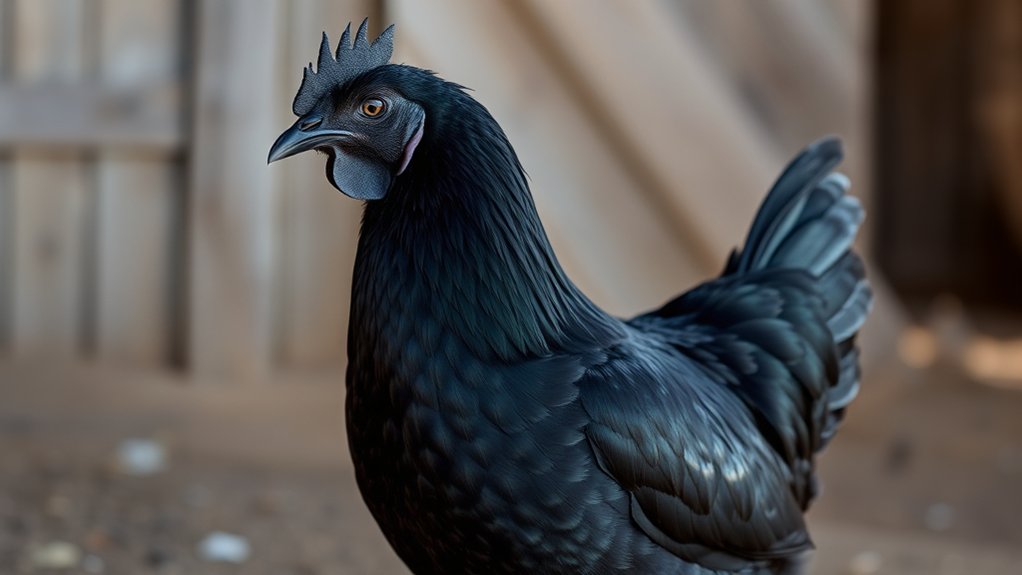
Black chickens with black skin owe their unique look to a rare genetic mutation called fibromelanosis, which causes an overproduction of melanin in feathers, skin, and even organs. You’ll find these traits mainly in breeds like Ayam Cemani, Silkie, and Kadaknath, originating from Asia.
These chickens are highly valued for their rich flavor, cultural significance, and rarity. If you want to know how to care for and cook them, there’s plenty more to uncover.
Key Takeaways
- Black chickens with black skin have a rare genetic mutation called fibromelanosis. This causes overproduction of melanin in their skin, feathers, and organs.
- Breeds like Ayam Cemani, Silkie, and Kadaknath are famous for their distinctive black skin and dark pigmentation.
- These chickens hold cultural significance, symbolizing prosperity. They’re often used in traditional dishes and ceremonies.
- They have a rich, tender, slightly gamey flavor and offer higher nutritional value, including antioxidants and iron.
- Because they’re rare and selectively bred, black-skinned chickens tend to be costly. They also need specific care to stay healthy and well-maintained.
What Are Black Chickens With Black Skin?
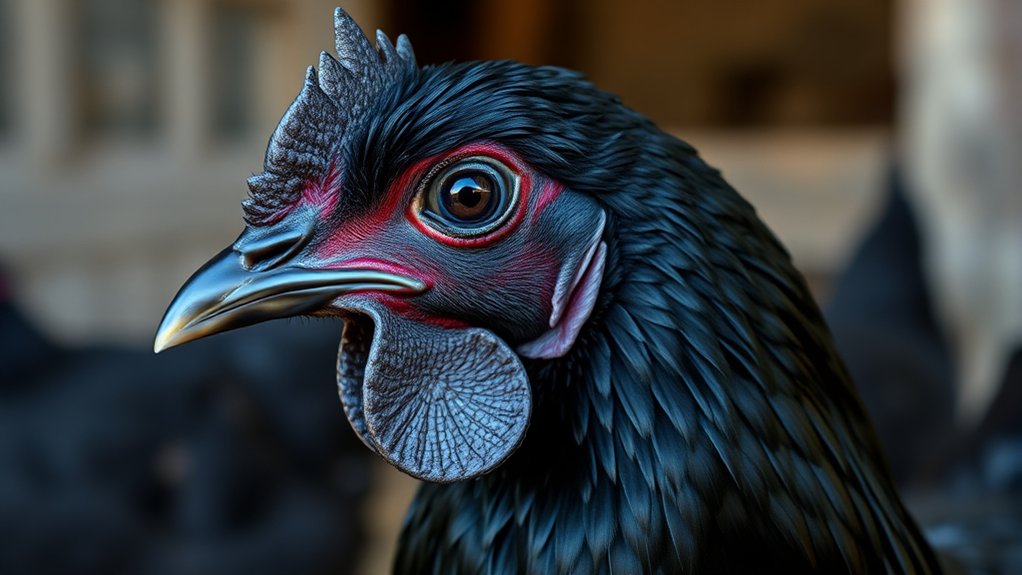
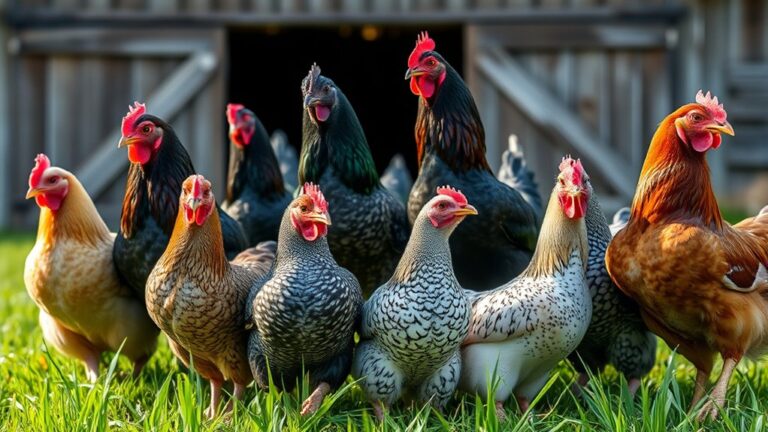
Although black chickens with black skin might seem unusual, they are a distinct breed known for their unique appearance and qualities. You might wonder how these chickens developed such striking traits. It’s primarily due to specific genetic mutations that affect pigmentation, setting them apart from typical chickens.
Black chickens with black skin owe their unique look to special genetic mutations affecting pigmentation.
These mutations influence not only their skin but also their feathers, beak, and even internal organs. Over time, breeders have carefully selected and refined these traits through deliberate breeding practices.
By choosing chickens that display the deepest pigmentation and strongest health characteristics, they’ve improved these features across generations. When you look at these chickens, you’re seeing the result of both natural genetic variations and human-guided breeding efforts.
Understanding this helps you appreciate how this breed’s distinctive black skin is more than just a novelty. It’s a confirmation of genetics and dedicated breeding working together to create something truly unique.
How Does Fibromelanosis Cause Black Pigmentation?
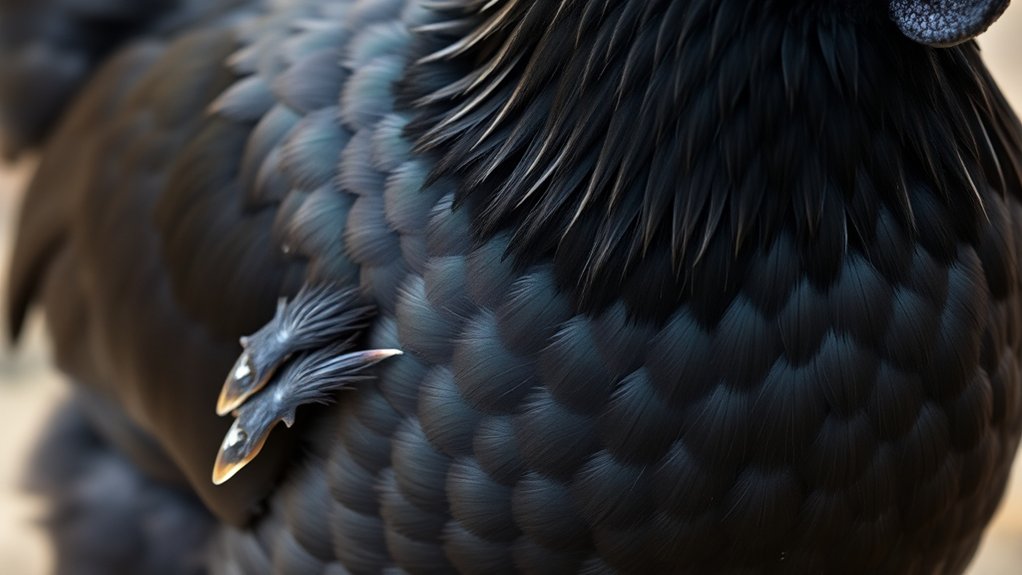
When you examine the black pigmentation in these chickens, you’ll find that fibromelanosis plays an essential role. This condition is caused by a specific genetic mutation that triggers an overproduction of melanin, the pigment responsible for dark coloration.
Unlike typical pigmentation, fibromelanosis affects not only the feathers but also the skin, connective tissues, and even internal organs. This results in the distinctive black appearance.
Breeding practices have intentionally selected for this mutation, reinforcing the trait over generations. By choosing chickens that exhibit fibromelanosis, breeders guarantee the trait remains prominent in offspring.
This genetic mutation is relatively rare in nature, so human intervention through selective breeding has been pivotal in maintaining and spreading it. Understanding fibromelanosis helps you appreciate how genetics and breeding practices combine to create the unique black pigmentation in these chickens, making them stand out from other poultry varieties.
Which Breeds Have Black Skin?
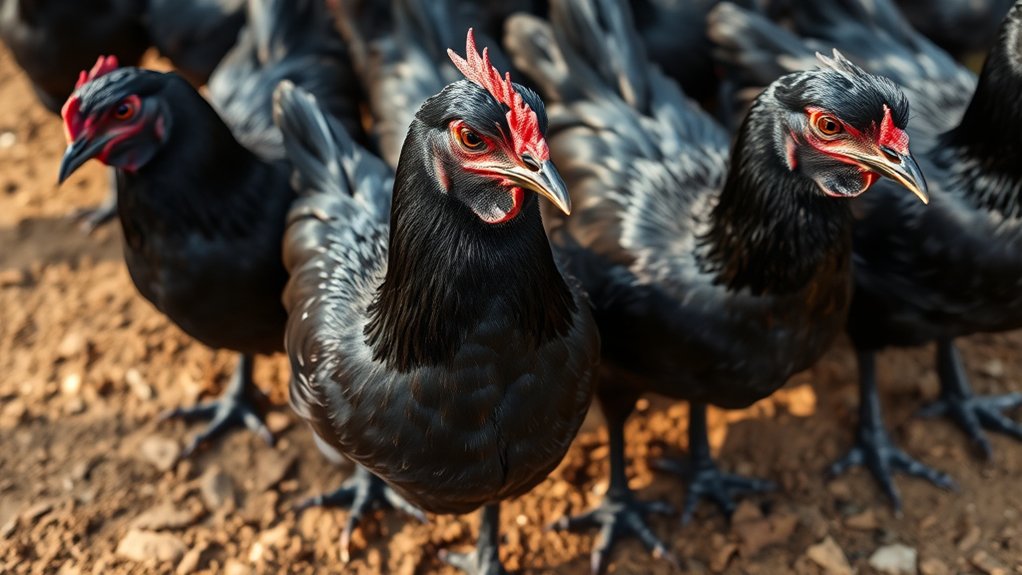
Fibromelanosis creates the striking black pigmentation that sets certain chickens apart, but you might wonder which breeds actually carry this trait. The most famous is the Ayam Cemani, a breed from Indonesia known for its entirely black feathers, skin, muscles, and even organs. This unique look results from a genetic mutation causing fibromelanosis.
You’ll also find black-skinned chickens like the Silkie, famous for its fluffy plumage and dark blue-black skin, which breeders have selectively developed over time. Breeding practices have played a vital role in maintaining and enhancing these traits, as farmers carefully select birds exhibiting the desired pigmentation.
Other breeds, such as the Kadaknath from India, also display black skin due to similar genetic factors. When you investigate black-skinned chickens, recall that fibromelanosis is relatively rare and tied to specific genetic mutations that breeders have nurtured to keep these enthralling birds distinct.
Where Did Black-Skinned Chickens Originate?
You might be curious about where black-skinned chickens first appeared. Well, their historical origins trace back to specific regions known for unique poultry traits. So, let’s take a look at the geographic roots that shaped these distinctive birds.
Historical Origins
Although black-skinned chickens may seem exotic today, their origins trace back thousands of years to Southeast Asia, particularly regions like Indonesia and India. Early poultry farming techniques in these areas focused on selecting chickens not just for meat or eggs, but also for unique traits like their striking feather colors and skin pigmentation.
Farmers noticed that certain breeds developed black skin alongside dark feathers, a genetic trait that intrigued them. This selective breeding helped preserve the distinct look of these birds over generations. Understanding these historical origins shows how black-skinned chickens weren’t just a curiosity. They were the result of purposeful cultivation, blending natural genetic variation with early farming practices to create a truly unique poultry breed.
Geographic Roots
Where exactly did black-skinned chickens first appear? These unique birds are believed to have originated in Southeast Asia, particularly in regions like Indonesia and China. Their distinctive black skin results from genetic mutations that cause hyperpigmentation, a trait that early breeders noticed and valued.
Over time, selective breeding techniques helped reinforce this trait, ensuring it became a stable characteristic within specific chicken breeds. You’ll find that these chickens weren’t simply a natural curiosity; they were purposefully cultivated for their unusual appearance and perceived health benefits.
Understanding their geographic roots helps you appreciate how both nature and human intervention through breeding techniques shaped the black-skinned chicken’s distinct features. This mix of genetic mutations and careful breeding made them a fascinating part of poultry history.
How Are Black Chickens Important in Different Cultures?
How do black chickens with black skin hold significance across various cultures? You’ll find that many communities value these unique birds for more than just their appearance.
In festive celebrations, black chickens often play a central role, symbolizing prosperity, protection, and good fortune. For example, in some Asian cultures, they’re included in special dishes during Lunar New Year feasts, representing traditional symbolism tied to health and longevity.
Likewise, African and Caribbean cultures regard black chickens as sacred, using them in rituals that honor ancestors or seek spiritual guidance. When you examine these customs, it’s clear black chickens carry deep cultural meanings that go beyond their physical traits.
How Do Black Chickens Differ From Regular Chickens?
When you compare black chickens to regular chickens, you’ll notice distinct differences in appearance, genetics, and even behavior. Black chickens typically have a striking color variation, with black feathers, skin, and sometimes even internal organs, unlike the more common lighter-skinned breeds. This unique pigmentation results from specific genetic traits, especially the fibromelanosis gene, which causes the black coloration to spread throughout their bodies.
Breeding techniques play an essential role in maintaining these traits. Breeders selectively mate black chickens to preserve their distinctive color variation and physical characteristics. This focused breeding guarantees that black chickens retain their unique genetic makeup, setting them apart from regular chickens. You might also find slight behavioral differences, as black chickens can be hardier and adapt differently to environments compared to standard breeds.
Why Are Black Chickens Popular in Cooking?
You’ll notice black chickens really stand out in cooking because they have a unique flavor that adds depth to so many dishes. Plus, they’re packed with impressive nutritional benefits, which makes them a healthy choice too. So, let’s dive in and see what exactly makes these chickens so popular in the kitchen.
Unique Flavor Profile
Why do black chickens stand out in kitchens around the world? Their unique flavor profile makes them a favorite among chefs and home cooks alike. Thanks to selective breeding techniques, these chickens develop distinct color variations and a richer taste.
Their meat tends to be more tender and flavorful compared to regular chickens, offering a subtle gamey note that boosts many dishes. When you cook with black chickens, you notice a depth of flavor that’s hard to match.
| Flavor Aspect | Description |
|---|---|
| Tenderness | More tender than typical chicken |
| Richness | Deep, savory taste |
| Aroma | Slightly gamey, appealing scent |
| Versatility | Ideal for stews, soups, grills |
| Texture | Firmer yet juicy |
This unique profile makes black chickens a prized choice in diverse cuisines.
Nutritional Benefits
Beyond their distinctive taste, black chickens offer impressive nutritional benefits that make them a popular choice in cooking. Thanks to their unique color genetics, these birds often have higher levels of antioxidants, iron, and vitamins compared to conventional chickens.
When you choose black chicken, you’re not only savoring rich flavor but also gaining a boost in nutrients that support overall health. Furthermore, the breed diversity among black chickens means you can find varieties with varying textures and nutrient profiles, catering to different dietary needs.
Their black skin and flesh indicate the presence of melanin, which some studies suggest may contribute to improved nutritional value. So, incorporating black chickens into your meals lets you enjoy both culinary and health advantages.
Essential Tips for Raising Black-Skinned Chickens
Although raising black-skinned chickens requires some specific care, you can guarantee their health and growth by understanding their unique needs. Pay attention to their feather coloring; it’s a good indicator of their overall health.
Dull or patchy feathers may signal nutritional deficiencies or illness, so provide a balanced diet rich in protein and vitamins to keep their plumage vibrant.
Black-skinned chickens are known for steady egg production, but environmental factors like temperature and lighting can affect this. Make sure they have a comfortable coop with adequate ventilation and consistent light exposure to encourage laying.
Regularly check for parasites and maintain cleanliness to prevent disease. Also, give them space to roam, as exercise promotes muscle development and well-being.
Are Black-Skinned Chickens Rare or Expensive?
Taking good care of black-skinned chickens helps maintain their health and productivity, but you might wonder how common these birds are and what they cost. Black skin in chickens results from a rare genetic mutation affecting poultry genetics, making these birds less common than typical breeds.
Because this trait is unusual, black-skinned chickens often come with a higher price tag. Breeders who specialize in these unique birds usually charge more due to the difficulty in maintaining pure bloodlines and the limited availability of stock.
If you’re considering adding black-skinned chickens to your flock, expect to pay a premium compared to standard chickens. However, their rarity can also make them a rewarding investment both for their distinct appearance and potential culinary uses.
Understanding the role of this genetic mutation helps you appreciate why these chickens aren’t as widespread, influencing their cost and availability in the market.
How to Use Black Chickens in Your Backyard and Kitchen
You can easily care for black chickens in your backyard with just a few simple tips to keep them healthy and happy. It’s not as complicated as you might think, really. Once you’ve raised them well, you’ll find plenty of tasty ways to prepare their unique, flavorful meat in your kitchen. Trust me, it’s a whole different experience. So, let’s take a look at how to make the most of black chickens, both outside and on your plate.
Backyard Care Tips
When you welcome black chickens into your backyard, they quickly become more than just pets. They turn into valuable helpers around the home. Their striking feather coloration adds beauty to your space, while their reliable egg production offers fresh, nutritious eggs daily.
To care for them effectively, keep these tips in mind:
- Provide a secure, clean coop to safeguard them from predators and maintain health.
- Offer a balanced diet rich in protein to support vibrant feathers and steady egg laying.
- Allow free-range time for natural foraging, which boosts their well-being and enriches egg quality.
Culinary Preparation Ideas
How can you make the most of black chickens beyond their role in the backyard? Their unique color variations and rich flavor make them a standout in your kitchen. Thanks to selective breeding techniques, these chickens often have tender, flavorful meat that’s perfect for roasting, stewing, or grilling.
You can prepare them just like traditional chickens but expect a slightly gamier taste and striking appearance when served. Try slow-cooking black chicken in herbal broths for a nutritious, aromatic meal often celebrated in Asian cuisine.
Whether you’re experimenting with color variations in your flock or simply cooking a fresh bird, black chickens bring both visual appeal and culinary versatility. Appreciate their distinct qualities to enhance everyday dishes with a healthy, delicious twist.
Frequently Asked Questions
Do Black-Skinned Chickens Have Different Nutritional Values?
You’ll find that black-skinned chickens offer unique nutritional benefits compared to regular chicken. They tend to have higher levels of antioxidants and certain vitamins, which can improve your diet.
When considering dietary considerations, these chickens might provide more iron and protein, supporting your overall health. Including black-skinned chicken in your meals can diversify your nutrient intake, making it a smart choice if you want to boost your nutrition naturally.
Can Black Chickens Be Crossbred With Other Hens?
Yes, you can crossbreed black chickens with other hens to increase genetic diversity, but you should be aware of breeding challenges. The unique traits of black chickens, like their skin color, may not consistently pass on due to complex genetics.
You’ll need careful selection and patience to maintain desired characteristics while mixing breeds. Crossbreeding can improve overall health and adaptability, but managing expectations and understanding genetics is key for success.
Are Black-Skinned Chickens More Resistant to Diseases?
You know what they say, “An ounce of prevention is worth a pound of cure.” Black-skinned chickens often show better resistance to diseases due to genetic variations that affect their immune systems.
Breeding practices focusing on these traits can improve overall flock health. While not immune, these chickens tend to cope better with certain illnesses. So if you prioritize health, selecting for black skin through careful breeding might give you a stronger, hardier flock.
How Long Do Black-Skinned Chickens Typically Live?
Black-skinned chickens typically live around 6 to 8 years, depending on their breed history and care. Color variations within black-skinned breeds, like the Ayam Cemani or Silkie, don’t substantially affect lifespan but reflect unique genetic traits.
If you provide proper nutrition and a clean environment, these breeds can thrive longer. Understanding their breed history helps you anticipate health needs and maximize their longevity.
Do Black Chickens Require Special Veterinary Care?
You don’t need special veterinary care just because of genetic pigmentation, but breeding considerations do matter. While black chickens’ unique coloring won’t demand extra medical attention, you should still watch for common poultry health issues.
Their black skin doesn’t make them fragile, but breeding them selectively requires care to maintain their traits. So, focus on regular checkups and good husbandry rather than worrying about unusual veterinary needs.
Conclusion
Now that you know black-skinned chickens owe their unique color to fibromelanosis and rich cultural history, why not add them to your flock? These striking birds aren’t just rare beauties; they’re prized for their flavor and health benefits in cooking.
Raising them can be rewarding, offering both a fascinating glimpse into genetics and a tasty ingredient for your kitchen. Ready to bring a little mystery and magic to your backyard with black-skinned chickens?