5 Essential Tips You Need to Know for Raising Chickens
If you’ve ever tried raising chickens, you know it’s not always as simple as it looks. Many people struggle with keeping their flock healthy and happy, and you’re definitely not alone. Whether you want fresh eggs or friendly pets, getting the basics right can feel overwhelming at first.
To raise healthy chickens, start by choosing breeds that fit your climate, space, and goals, like egg-layers or friendly pets. Build a secure, well-ventilated coop with predator-proof fencing and plenty of space.
Feed your flock a balanced diet with fresh water daily.
Protect them by keeping the coop clean, quarantining new birds, and watching for illness. Collect eggs twice daily, storing them cool without washing until use.
Keep these tips in mind to make certain a thriving flock and learn how to perfect each step.
Key Takeaways
- Choose chicken breeds suited to your climate, space, and purpose, ensuring compatible temperaments for flock harmony.
- Build a well-ventilated, predator-proof coop with secure locks and easy-to-clean materials for safety and hygiene.
- Provide a balanced diet with grains, proteins, calcium, and fresh water to support health and egg production.
- Regularly monitor chickens for illness, maintain cleanliness, and quarantine new birds to prevent disease spread.
- Collect eggs twice daily, clean gently if needed, and store in a cool, consistent environment to maintain freshness.
Picking the Best Chicken Breeds for Your Backyard
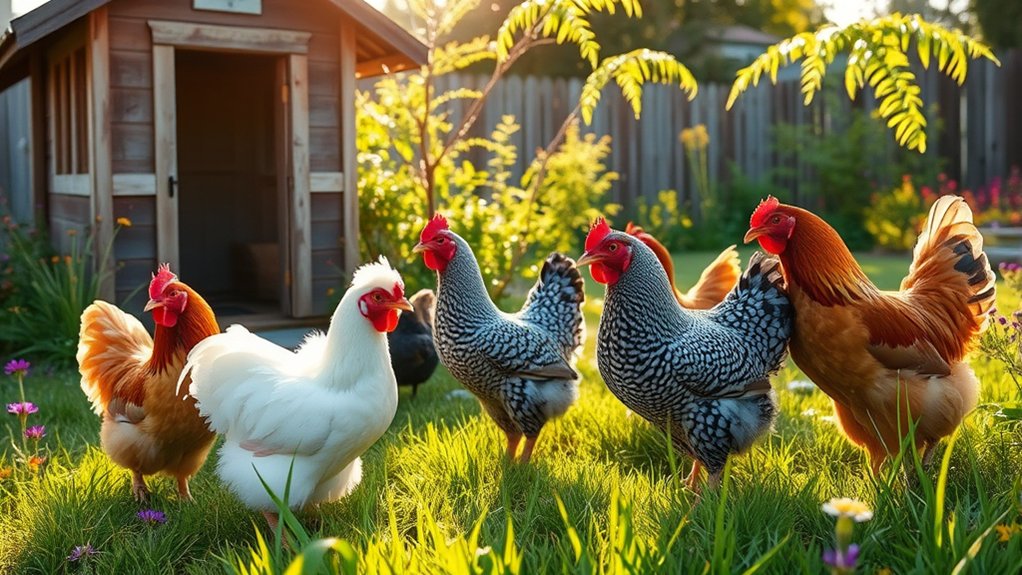
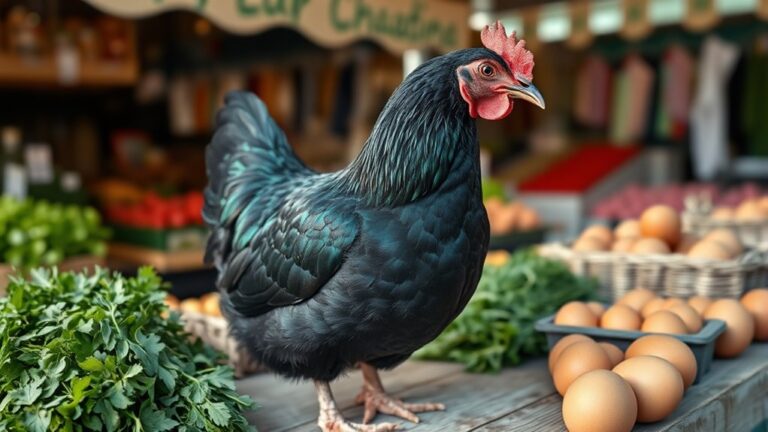
When choosing chicken breeds for your backyard, you’ll want to take into account factors like climate, space, and your goals, whether for eggs, meat, or pets. If egg production is your priority, consider breeds like Leghorns or Rhode Island Reds, known for laying consistently. On the other hand, if you want friendly pets, Orpingtons and Silkies offer gentle temperaments.
Breed compatibility is another important factor. You’ll need to pick breeds that get along well together to avoid conflicts that could stress your flock. Mixing aggressive breeds with docile ones can cause issues, so choose breeds with similar temperaments. Also, think about how much space you have; larger breeds require more room to roam comfortably.
Building a Safe and Cozy Chicken Coop
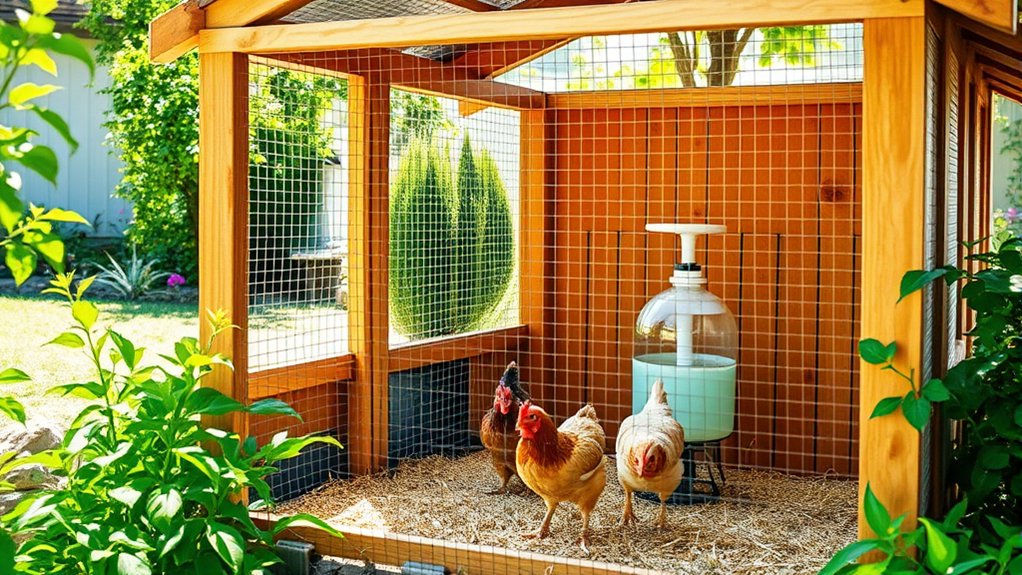
Although choosing the right chicken breeds is essential, building a safe and cozy coop is what truly protects your flock and keeps them comfortable. Start by selecting a sturdy structure with good coop ventilation to prevent moisture buildup and harmful ammonia fumes. Proper airflow helps maintain a healthy environment, reducing respiratory issues among your chickens.
Next, install predator-proof fencing around the coop and run to keep foxes, raccoons, and other threats at bay. Make sure the fencing extends underground to stop animals from digging in. Use secure locks on doors and windows, and avoid gaps larger than half an inch where predators could squeeze through.
Inside, provide enough space for each bird to roost and nest comfortably, and use easy-to-clean materials to maintain hygiene. With these measures, your chickens will stay safe, dry, and happy, making your backyard flock thriving and secure all year round.
Feeding and Caring for Healthy Chickens
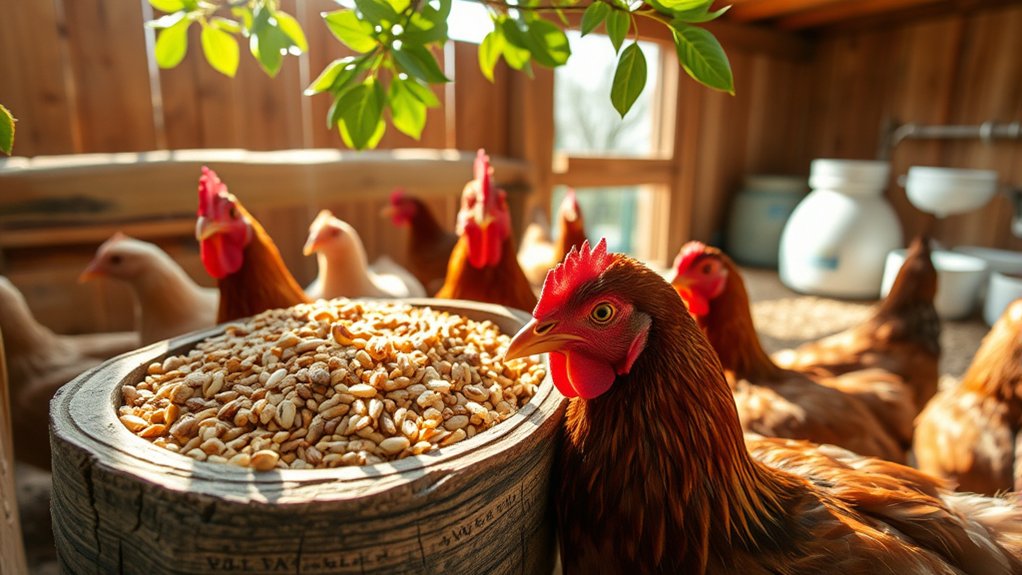
Keeping your chickens safe and comfortable sets the stage for their overall well-being, but providing the right nutrition and care guarantees they stay healthy and productive. Start by offering a balanced diet rich in grains, proteins, and fresh greens. Incorporate nutritional supplements like calcium and vitamins to support strong eggshells and boost immunity. Clean, fresh water should always be accessible to keep them hydrated.
Behavioral training plays a vital role in managing your flock. Spend time gently handling your chickens to build trust and reduce stress, which improves their overall health. Teach them simple routines, like returning to the coop at dusk, to maintain order and safety. Regularly check for signs of illness or discomfort and adjust their diet or environment accordingly. By focusing on both proper feeding and thoughtful care, you’ll create a thriving, happy flock that consistently produces quality eggs and remains resilient.
Keeping Your Chickens Safe From Predators and Illness
Protecting your flock from predators and illness is crucial to maintaining a healthy and productive environment. Start by installing predator proof fencing around your chicken run to keep out common threats like raccoons, foxes, and stray dogs. Make sure the fencing is buried several inches underground to prevent digging predators and sturdy enough to withstand attempts to break through.
Implement disease prevention strategies by regularly cleaning the coop and providing fresh water and feed. Quarantine new birds before introducing them to your flock to avoid spreading illness. Watch for signs of sickness such as lethargy, loss of appetite, or unusual droppings, and isolate any affected chickens immediately.
Maintain good ventilation in the coop to reduce airborne pathogens and moisture buildup. Regularly inspect your flock and their environment to catch problems early. By combining predator proof fencing with effective disease prevention strategies, you’ll safeguard your chickens and ensure they stay healthy and safe.
Collecting and Storing Fresh Eggs
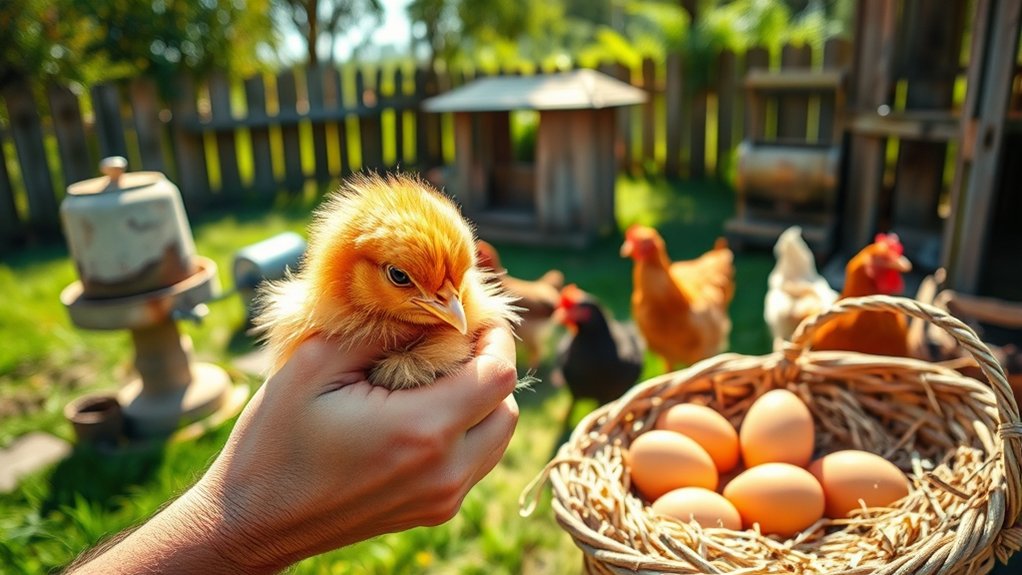
When should you collect your eggs to guarantee they stay fresh and safe? Aim to gather them at least once or twice daily, preferably in the morning and late afternoon. Frequent collection prevents eggs from becoming dirty or cracked and reduces the risk of contamination.
After collecting, inspect each egg for dirt or debris. If necessary, use proper egg washing techniques with warm water and a gentle brush to clean them without removing the protective bloom that keeps bacteria out. Avoid washing eggs until just before use if you store them unwashed.
Next, choose the right storage containers; cartons or specially designed egg trays work best to keep eggs from rolling and cracking. Store your eggs in a cool, consistent environment, ideally in a refrigerator, to maintain freshness.
Frequently Asked Questions
How Do I Train My Chickens to Return to the Coop at Night?
To train your chickens to return to the coop at night, establish a consistent routine by calling them at dusk with a familiar sound or treat. Make the coop inviting and safe to reduce feather pecking caused by stress.
Guarantee good lighting and comfortable nesting areas to boost egg production. Gradually, they’ll associate the coop with safety and rewards, making them enthusiastic to return each evening without fuss.
Can Chickens Help Control Pests in My Garden?
Yes, chickens can help control pests in your garden naturally. They love to eat insects, grubs, and larvae, providing natural pest control without chemicals.
By letting your chickens roam in the garden, you’ll see fewer harmful bugs damaging your plants. This garden benefit not only reduces pests but also improves soil health as their scratching aerates the ground.
Just make sure to manage where and when they forage to protect your plants.
What Are the Signs of Molting in Chickens?
You’ll notice molting when your chickens start feather shedding heavily, leaving them patchy or bald in spots. Their skin might appear dry or flaky as new feathers grow in.
During this time, they may seem less active and stop laying eggs temporarily. Keep an eye out for these signs so you can adjust their care, providing extra protein and a comfortable environment to help them through this natural process smoothly.
How Often Should I Clean the Chicken Coop?
You should clean the chicken coop thoroughly at least once a week to keep your flock healthy. Daily, remove droppings and old bedding, especially around feeding areas, to prevent contamination and maintain good feeding habits.
Also, collect eggs every day to avoid attracting pests and keep them fresh. Regular cleaning helps control odors and reduces disease risks, ensuring your chickens stay comfortable and productive. Don’t forget to replace bedding regularly!
Can Chickens Be Kept With Other Types of Pets?
Think of your backyard as a delicate ecosystem, where bird compatibility is key. You can keep chickens with other pets, but you’ve got to watch for predator risks.
Dogs and cats might seem friendly, but they can stress or harm chickens if not supervised. Smaller pets usually coexist well, but always introduce them slowly.
Keep a close eye, and create safe spaces for your chickens to feel secure among other animals.
Conclusion
Raising chickens means choosing the right breeds, building a safe coop, feeding them well, protecting them from harm, and collecting fresh eggs daily. By picking your chickens carefully, creating a cozy home, providing nutritious food, guarding against predators and illness, and handling eggs with care, you’ll enjoy a thriving backyard flock.
Follow these steps, stay consistent, and watch your chickens flourish while you reap the rewards of fresh, homemade eggs every day. Raising chickens is a rewarding experience that brings fresh eggs and joy to your home.