What Is a Male Hen and How to Identify It
If you’ve ever tried to tell the difference between chickens in your flock, you’re not alone. Many people struggle with identifying a male hen, especially when they’re new to raising poultry or just want to manage their birds better. Understanding how to spot a rooster early on can make a big difference in flock dynamics and care.
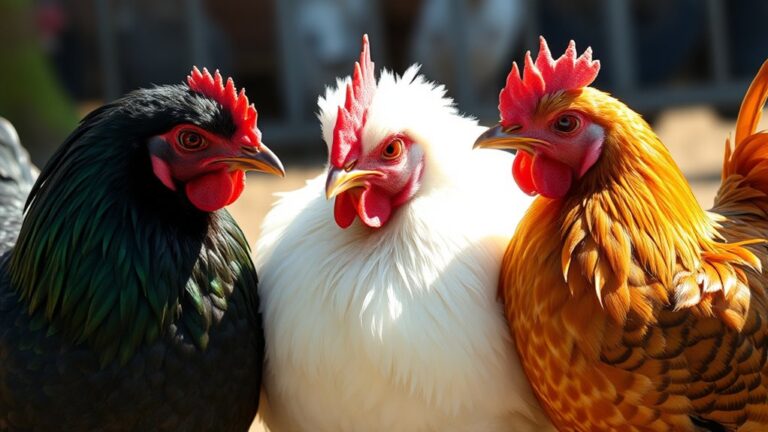
A male hen, called a rooster, stands out with a larger body, bright red comb and wattles, and long, curved tail feathers. You’ll notice its vibrant plumage and distinctive crowing, especially at dawn.
Roosters also show bold, dominant behaviors like leading the flock and courtship displays. Identifying them early involves watching comb growth and assertiveness.
If you want to spot these traits and manage roosters well, there’s plenty more to uncover about their role and care.
Key Takeaways
- A male hen, or rooster, is the male chicken known for larger combs, wattles, and more vibrant plumage than hens.
- Roosters exhibit crowing, assertive behavior, and courtship displays not seen in hens.
- Key physical traits include longer, curved tail feathers, pointed saddle feathers, and sharp spurs.
- Males develop brighter combs and wattles faster and have larger body size compared to females.
- Unlike hens, roosters do not lay eggs, making egg-laying a clear female indicator.
What Does “Male Hen” Mean in Chickens?
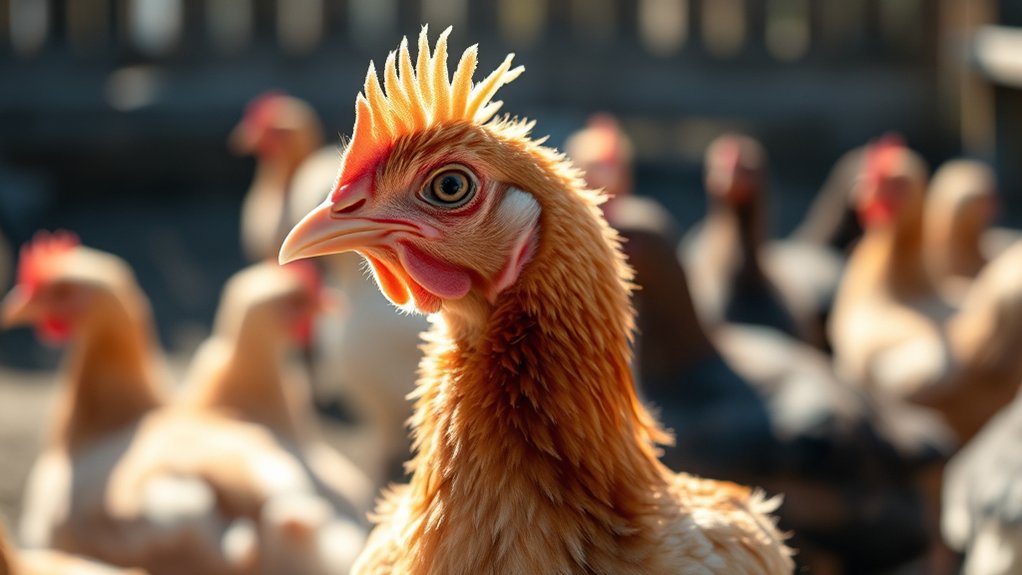
Although the term “male hen” might sound confusing, it simply refers to a rooster, the male counterpart of a hen in chicken terminology. When you come across rare chicken breeds, you’ll notice that roosters often have distinct features like brighter plumage and larger combs compared to hens. Understanding this helps you recognize the male hen in various breeds.
You should also pay attention to chicken mating behaviors, as roosters are usually the ones performing courtship dances and crowing to attract hens. These behaviors are vital for establishing dominance and mating rights within the flock. If you’re raising chickens or just curious, knowing what “male hen” means in this context helps you better understand flock dynamics.
How to Quickly Identify a Male Chicken
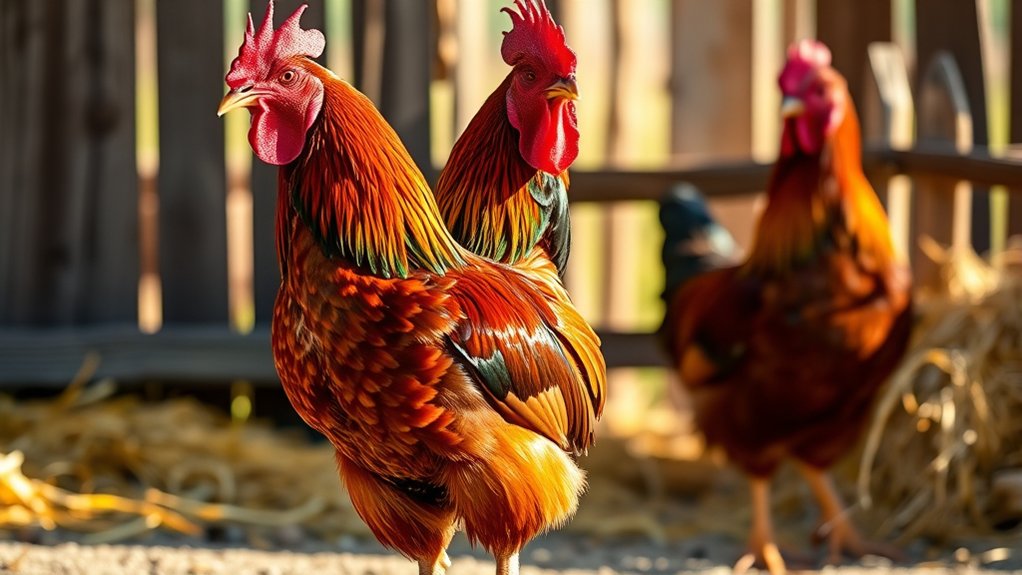
You can spot a male chicken by looking for a few key physical traits. For example, they usually have larger combs and brighter feathers.
Also, keep an eye on their behavior. Males often act more assertively and are the ones that crow.
Knowing these quick signs makes it easy to identify a male chicken with confidence.
Physical Characteristics Overview
When you spot a chicken, several physical traits can help you quickly tell if it’s a male. Genetic variations and breeding patterns influence these traits, but common features stand out.
Male chickens typically have larger combs and wattles, more vivid plumage, and longer tail feathers. Their body size is often bigger, and spurs on their legs grow sharper and more pronounced.
These characteristics make identification straightforward once you know what to look for.
| Trait | Male Chicken | Female Chicken |
|---|---|---|
| Comb & Wattle | Large, bright red | Smaller, paler |
| Plumage | Vivid, shiny feathers | Duller, less flashy |
| Tail Feathers | Long, curved | Shorter, rounded |
| Size & Spurs | Larger body, sharp spurs | Smaller body, minimal spurs |
Behavioral Differences Explained
How can you quickly tell a male chicken apart from a female beyond physical traits? Focus on their behavioral differences. Male chickens often display more assertive and territorial behaviors due to genetic variations that influence their breeding behaviors.
You’ll notice a rooster crowing loudly and frequently, especially at dawn, signaling dominance and territory. They also tend to be more protective, often leading hens and warding off threats. In contrast, hens are generally quieter and less aggressive.
When observing a flock, watch for these behavioral cues. Dominant posturing, crowing, and active guarding are strong indicators of a male. Understanding these patterns helps you identify a male chicken quickly without relying solely on appearance, reflecting the natural instincts shaped by their genetics and reproductive roles.
Key Physical Traits: Size, Shape, and Plumage Differences
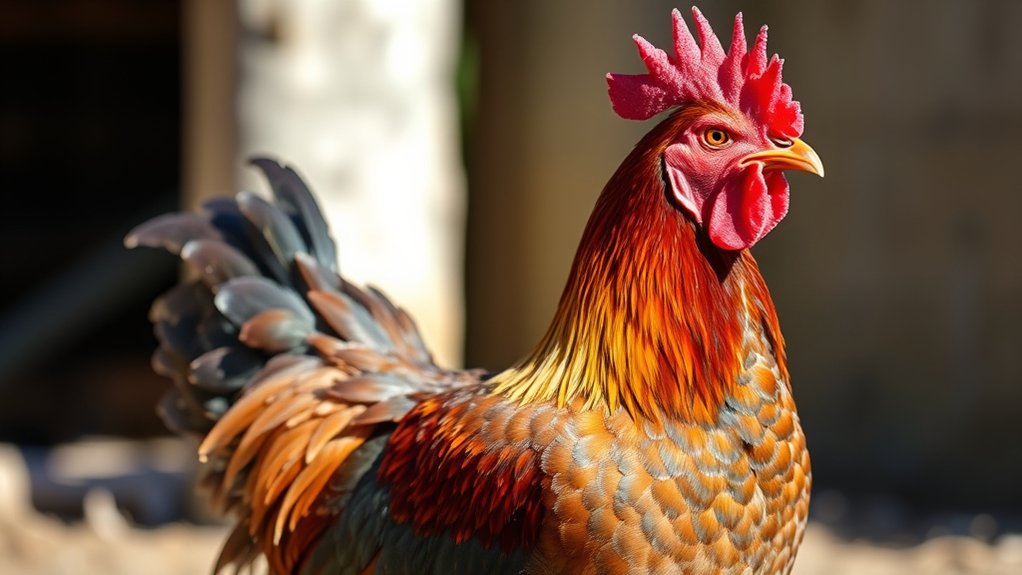
Although male hens might look similar to females at first glance, their size, shape, and plumage reveal clear differences that help you identify them. These traits can vary because of breed variations and even genetic mutations, so keep an eye out for subtle signs.
Male hens may appear alike, but size, shape, and plumage differences reveal their true identity.
Here are key physical traits to look for:
- Size: Males are usually larger and more robust than females.
- Body Shape: Males often have a more upright posture and broader bodies.
- Feather Shape: Look for pointed saddle and hackle feathers in males, unlike the rounded feathers of females.
- Plumage Color: Males tend to have brighter, more iridescent plumage, though this varies by breed.
- Tail Feathers: Males often display longer, curved tail feathers, which females generally lack.
How Combs and Wattles Help You Spot Males
Since combs and wattles play a significant role in chicken identification, paying attention to their size, shape, and color can help you quickly spot a male hen. Males typically develop larger, more vibrant combs and wattles compared to females, making these features standout markers.
You’ll notice that genetic variations affect how pronounced these traits appear, but generally, a male hen’s comb and wattles are bright red and more prominent. In contrast, females tend to have smaller, paler combs and wattles.
Additionally, feather coloration often complements these differences, reinforcing the male’s distinctive appearance. While females may have muted feather shades, males commonly display more vivid and iridescent plumage alongside their bold combs and wattles.
How Male Chickens Behave Differently From Females
Recognizing a male hen by its physical features is just one part of the story. You’ll notice male chickens behave quite differently from females, helping you distinguish them beyond looks. Unlike hens, males often show dominant, territorial behaviors. These traits usually don’t appear in females unless influenced by genetic mutations.
Male chickens aren’t just different in looks—they often display dominant, territorial behaviors unlike typical hens.
For example, some hens with genetic mutations might display atypical aggression or crowing, but these cases are rare.
Here’s how male chickens typically behave differently from females:
- Strut and display to assert dominance
- Protect the flock more aggressively
- Engage in frequent crowing (though we’ll investigate why later)
- Show less interest in egg production activities
- Exhibit more territorial pecking and chasing
Why Do Roosters Crow? Understanding Male Chicken Calls
When you hear a rooster crow, it’s not just noise. It’s a powerful way for him to communicate. Roosters crow to establish territory, warn of potential threats, and assert dominance over other males.
This calling behavior also signals to hens that he’s present and ready to protect the flock. By doing this, he indirectly supports egg production since a secure environment helps hens stay stress-free and healthy. Stress can negatively impact hen health and reduce the number of eggs laid.
Roosters also crow to mark the start of the day, which helps synchronize the flock’s routine. When a rooster crows early in the morning, it encourages hens to begin their daily activities, including foraging and nesting.
Understanding why roosters crow gives you insight into their role beyond just being a noisy presence. They help maintain order and well-being within the flock, which ultimately supports both egg production and hen health.
How to Tell a Cockerel From a Hen at Different Ages
You’ll start to notice physical differences between cockerels and hens as they grow. Things like feather patterns and comb size begin to set them apart. Also, keep an eye on their behavior—males often act a bit more assertive, even when they’re still young. By watching these changes closely, you’ll get better at telling them apart at different stages.
Physical Differences By Age
Although young cockerels and hens can look quite similar at first, subtle physical differences start to appear as they grow. You’ll notice changes in feather color and egg laying behavior that help you tell them apart. For example:
- Feather color: Cockerels often develop brighter, more iridescent feathers; hens usually have duller tones.
- Comb and wattles: These grow larger and redder faster in males.
- Tail feathers: Males get longer, curved tail feathers; females’ tails stay short and rounded.
- Body size: Cockerels become bulkier with more muscular legs.
- Egg laying behavior: Hens begin laying eggs around 5-6 months; males don’t, which is a clear sign.
Behavioral Traits To Watch
Since cockerels and hens show distinct behaviors as they mature, paying attention to these traits can help you identify their sex at different ages. Early on, cockerels often display more assertive behavior, such as standing taller and showing dominant postures.
You might notice differences in feather coloration. Cockerels tend to develop brighter, more vibrant feathers compared to hens. As they grow, hens start exhibiting egg laying behavior, like spending more time in nesting areas and showing restlessness before laying eggs.
In contrast, cockerels won’t engage in this behavior but may begin crowing and practicing mating displays. By observing these behavioral traits alongside physical cues, you can confidently tell a cockerel from a hen throughout their development without confusion.
Feather And Comb Changes
When observing feather and comb changes, you can spot key differences between cockerels and hens as they grow. Feather coloration often becomes more vibrant in cockerels, while hens usually keep softer, duller tones.
Comb development is another clear indicator; cockerels’ combs grow larger and redder faster than hens’. To help you tell them apart:
- Look for brighter, iridescent feathers on the cockerel’s neck and tail
- Check the size and redness of the comb; bigger and redder means likely a cockerel
- Notice if the feathers on the back form pointed “saddle” feathers (cockerels) or rounded (hens)
- Watch for longer, curved tail feathers in males
- Observe comb growth speed. Cockerels develop theirs earlier and more prominently
These signs become clearer as your birds mature, making identification easier.
Common Mistakes Backyard Keepers Make When Identifying Males
Mistaking a hen for a male is a common error many backyard keepers make, especially if you’re new to raising chickens. One mistake is relying solely on feather grooming; hens can sometimes display shiny, well-groomed feathers that mimic a male’s glossy appearance. You might also confuse a hen with a rooster if you don’t observe egg laying habits closely.
Hens consistently lay eggs, while males obviously don’t, so tracking laying patterns helps you identify them correctly. Another trap is focusing too much on comb size or color without considering age and breed variations. Young hens can have prominent combs that look rooster-like.
Also, don’t assume males always crow right away; some roosters start later, so crowing isn’t an immediate indicator. By paying attention to a combination of physical traits and behaviors rather than just one factor, you’ll avoid these common identification errors and confidently distinguish males from hens in your flock.
Tips for Managing Male Chickens in Mixed Flocks
How do you keep peace and order in a mixed flock that includes males? Managing male chickens requires a balance between their natural behaviors and the overall health of your flock. Proper handling helps maintain harmony, supports breeding programs, and maximizes egg production.
Here are key tips for managing males in your mixed flock:
- Provide enough space to reduce territorial disputes and stress.
- Monitor interactions closely to prevent bullying or injury.
- Include males strategically in breeding programs to improve flock genetics.
- Make sure roosters don’t overshadow hens, protecting egg production.
- Offer separate feeding stations to avoid competition and ensure proper nutrition.
When to Separate Roosters: Practical Management Advice
Although roosters play an important role in your flock, you’ll need to separate them at times to prevent aggression and protect your hens. When roosters become overly territorial or start fighting, it’s a clear sign to intervene. You should also consider separation when you notice a genetic mutation causing unusual behavior or physical traits that disrupt flock harmony. This helps maintain a peaceful environment and guarantees your hens aren’t stressed.
Separating roosters can also boost egg production. When hens feel safe and less harassed, they lay more consistently. If you notice a drop in egg production after introducing a new rooster, it might be due to stress or dominance issues, signaling it’s time for separation. Use separate pens or areas with enough space and resources to reduce competition. Properly managing when to separate roosters keeps your flock healthy and productive, balancing natural behaviors with your flock’s well-being.
Frequently Asked Questions
Can Male Hens Lay Eggs Under Certain Conditions?
No, male hens can’t lay eggs, despite some egg laying myths you might hear. You’ll notice male hen behavior differs because they don’t have the biological ability to produce eggs.
If you see an egg, it’s always from a female. Understanding this helps you avoid confusion and recognize that egg laying is strictly a female hen’s job.
Are Male Chickens More Aggressive Than Females?
Yes, male chickens are generally more aggressive than females due to behavior differences rooted in mating instincts. You’ll notice roosters often act territorial and protective, especially around hens.
Their aggression helps them establish dominance and attract mates. While hens tend to be calmer, males may display more fighting and crowing behaviors.
Understanding these differences can help you manage your flock better and reduce conflicts.
How Long Do Roosters Typically Live Compared to Hens?
While hens might seem more delicate because of egg-laying myths, roosters often live just as long or even longer. A rooster lifespan comparison shows averages of 5 to 8 years. You might expect hens to outlive roosters since they lay eggs, but that’s not always true.
If you care for them well, both can thrive alike. Don’t let myths cloud your judgment about their lifespans.
Can Male Chickens Be Kept With Other Poultry Species?
Yes, you can keep male chickens with other poultry species, but you need to watch for mixed species compatibility. Roosters might show dominant or aggressive behaviors, especially during breeding season.
To guarantee harmony, introduce them gradually and provide enough space and resources. Observing their interactions closely helps you prevent conflicts and stress.
With careful management, different poultry can coexist peacefully in your flock.
Do Male Chickens Require Different Nutrition Than Females?
Think of your rooster as a different breed of athlete; his diet differences from hens are subtle but important. You’ll want to meet his unique nutritional needs by providing higher protein levels to support muscle and energy.
While hens focus on calcium for eggshells, males benefit more from extra protein and vitamins to stay strong and active. Tailoring their feed keeps your flock thriving, no matter the gender.
Conclusion
Now that you know a male hen isn’t just a confusing term but a rooster in disguise, you’ll spot those larger combs and confident struts with ease. While hens quietly gather eggs, males proudly guard the flock.
Mixing them up can lead to chaos or calm, depending on your approach. By identifying and managing males early, you keep harmony in your coop. Knowing who’s who, especially spotting a male hen, makes all the difference between order and disorder.