What Do Baby Chicks Eat?
If you’ve ever raised baby chicks, you know how challenging it can be to figure out the best way to feed them. You’re not alone—many people struggle with choosing the right food that helps their chicks grow strong and healthy.
Getting it right from day one makes all the difference, and having the right information at your fingertips can save you time and worry.
Baby chicks eat a high-quality chick starter feed from day one, and you should keep it available all day. Choose a crumble with about 18% to 20% protein, plus fresh water at all times.
As they grow, you can switch to grower feed around 8 weeks. Offer treats like tiny bits of oatmeal or scrambled egg sparingly, but avoid bread and salty foods.
If you keep going, you’ll pick up the best feeding tips for every stage.
Key Takeaways
- Baby chicks should eat high-quality chick starter crumble from day one, with about 18% to 20% protein. Keep chick feed available all day so they can eat small amounts frequently.
- Provide fresh, clean water at all times in shallow, safe waterers.
- After 8 weeks, switch chicks to grower feed until about 16 to 18 weeks.
- Offer treats sparingly, and avoid bread, scratch grain, moldy foods, and toxic items like onion or avocado.
What Do Baby Chicks Eat First?
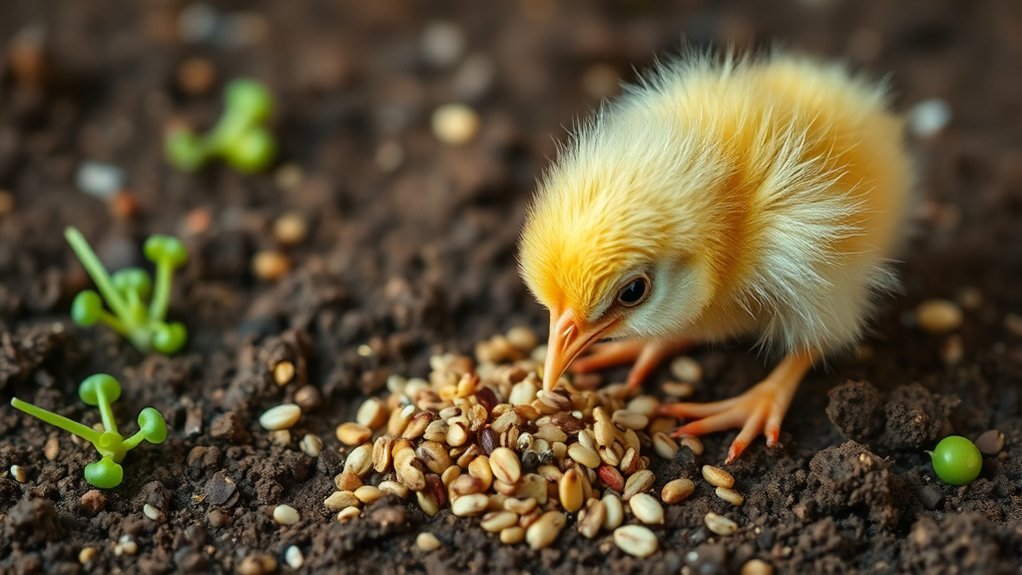
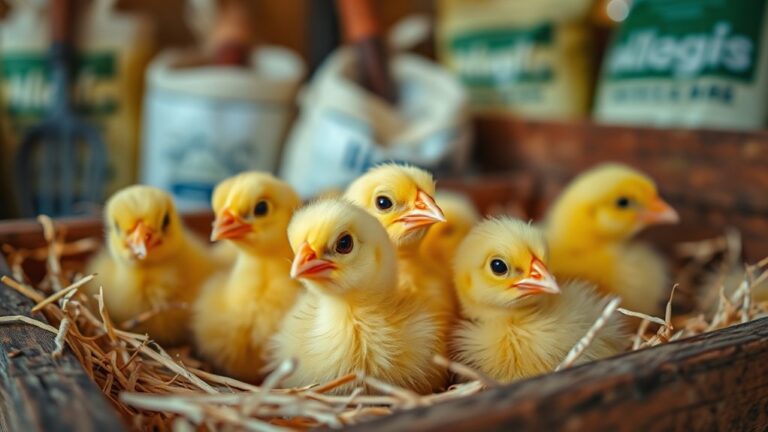
Baby chicks should eat a high-quality chick starter feed as soon as they’re able to peck and drink on their own. This should be their first food because it gives you the right nutritional balance for rapid growth, strong bones, and healthy feathers.
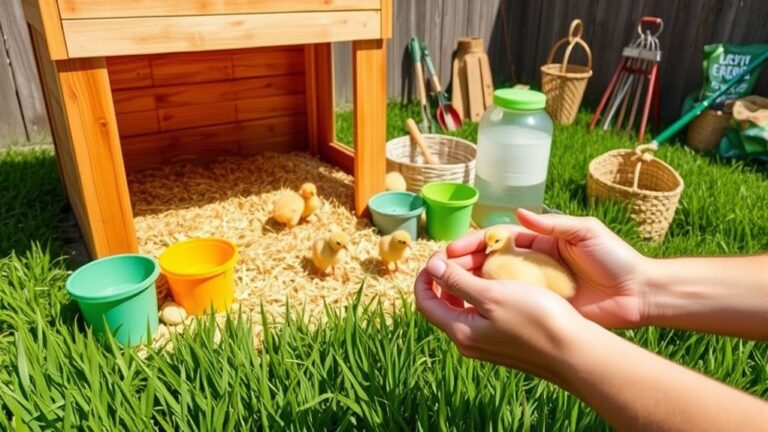
You can offer the feed in a shallow dish or feeder so the chicks can reach it easily. Keep fresh water nearby at all times, since chicks need to drink often while they learn to eat.
If you’re raising chicks with a broody hen, you can still provide the same starter feed. Avoid giving treats, bread, or scratch grain during this stage, because those foods can dilute the nutritional balance they need now. Their first foods should stay simple and complete.
Which Chick Starter Feed Is Best?
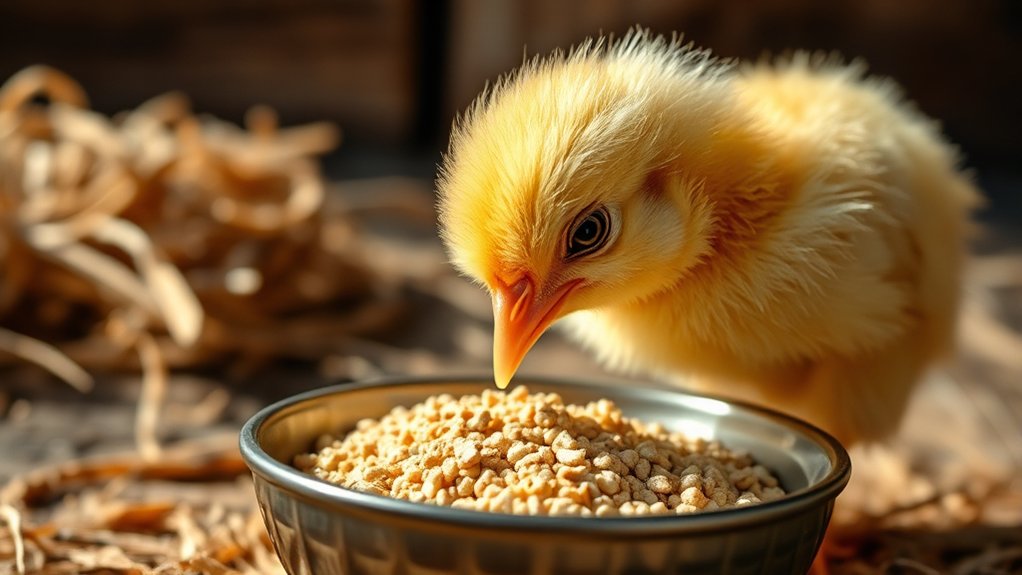
The best chick starter feed is a fresh, high-quality feed made specifically for young chicks, with about 18% to 20% protein to support steady growth and development. You’ll want a crumble form because chicks can peck it easily, and it helps reduce waste.
Fresh, high-quality chick starter feed should be a 18% to 20% protein crumble for easy pecking and steady growth.
When you do a starter feed comparison, check the label for balanced vitamins, minerals, and amino acids, not just protein. Good nutritional content should include enough niacin, which supports healthy legs and overall growth.
Choose a medicated feed only if you’ve decided it fits your flock’s needs; otherwise, a nonmedicated option works well for many backyard setups. Avoid feeds made for layers or adult birds, since their formulas don’t match a chick’s early requirements.
Freshness matters too, so buy feed in small amounts and store it in a cool, dry place. When you pick the right starter feed, you give your chicks a strong foundation for healthy development and better long-term performance.
How Much Water Do Baby Chicks Need?

Once you’ve chosen the right starter feed, make sure fresh water is always available. Chicks need to drink often to stay hydrated and support healthy growth. You should offer clean, shallow water at all times so your chicks can reach it safely.
Small poultry waterers work best, and you can also use very shallow dishes with marbles or pebbles to reduce spills and prevent drowning. Check the water several times a day since bedding, feed, and droppings can contaminate it quickly.
In hot weather, chicks may drink more, so refresh their water sources more often. Good hydration tips include placing water near the brooder’s warm area but not so close that it overheats. If you notice dry droppings, lethargy, or weak activity, your chicks may need water immediately.
Fresh, cool water helps them digest feed, regulate body temperature, and grow strong.
How Often Should Baby Chicks Eat?
You should keep chick feed available all day so your baby chicks can nibble whenever they’re hungry. They usually eat in small amounts throughout the daytime, which helps them stay active and grow well.
As they get older, you can still offer steady access, but you might notice their eating patterns change a bit.
Feeding Frequency Basics
Baby chicks should have constant access to starter feed during their first weeks, since they eat small amounts often to fuel rapid growth and warm their bodies. You don’t need to count meals or feed on a strict timetable; instead, keep the feeder full and fresh.
Good feeding tips include placing enough feed where every chick can reach it and checking it several times a day. These nutrition basics help you avoid hunger gaps and support steady development.
If you notice feed piling up, reduce waste by offering smaller amounts more often, but never let the dish run empty. Clean water should stay available at all times, too.
When you follow this approach, you’ll support healthy growth, strong energy, and calm, active chicks.
Daytime Eating Schedule
Because baby chicks nibble frequently throughout the day, they should have access to starter feed at all times rather than set mealtimes. You’ll notice their daytime habits include quick visits to the feeder, short breaks, then more pecking. That’s normal.
Keep fresh feed available from morning until lights-out so your chicks can follow their own feeding routines without stress.
| Time | What to do | Why it helps |
|---|---|---|
| Morning | Refill feeder | Keeps feed ready |
| Midday | Check supply | Prevents empty gaps |
| Afternoon | Observe eating | Confirms normal appetite |
| Evening | Top off feed | Supports steady intake |
| All day | Offer water too | Aids digestion and comfort |
Remove wet or dirty feed promptly.
Age-Based Feeding Changes
As chicks grow, their feeding needs stay frequent, but the way they eat can change with age. You should offer feed at all times during the first weeks, since their nutritional requirements support rapid growth and steady body development. Small chicks peck often, so easy access matters more than strict meal times.
As they mature, you can still keep feed available, but they’ll eat larger amounts in fewer visits. Watch for feeding changes when you move them from starter crumble to grower feed around six to eight weeks, depending on breed and growth rate.
Keep fresh water beside the feeder, and check that every chick eats well. If one falls behind, make sure it isn’t being crowded out.
What Treats Are Safe for Chicks?
Safe treats for chicks should stay simple, tiny, and easy to digest. You can offer chick treat options that complement starter feed, not replace it. Safe snack ideas include finely chopped herbs, a few oatmeal bits, and small amounts of soft scrambled egg.
Keep portions tiny and introduce one treat at a time so you can watch how your chicks handle it.
| Treat | Prep | Frequency |
|---|---|---|
| Chopped herbs | Finely mince parsley or dill | Occasionally |
| Oatmeal bits | Serve plain, cooked, and cool | Sparingly |
| Scrambled egg | Soft, unseasoned, and crumbled | Rarely |
You should also provide clean water whenever you serve treats. Offer them in the afternoon, after your chicks have already eaten starter feed, so they don’t fill up on extras.
If you notice loose droppings or less interest in feed, cut back and return to basics.
What Foods Should Baby Chicks Never Eat?
You should never feed baby chicks anything moldy, salty, sugary, or heavily seasoned, since their digestive systems are still developing. Avoid dangerous foods like raw beans, avocado skins, chocolate, onion scraps, and spoiled leftovers, because even small amounts can upset them fast.
You also need to keep toxic plants far from their brooder and run, including rhubarb leaves, nightshade, and ornamental garden clippings. If you’re unsure about a food, leave it out and choose a chick-safe option instead.
Clean water and proper starter feed should stay their main diet, while treats must remain minimal and simple. Watch for discarded kitchen bits, pet food, and anything greasy, since these can cause digestive trouble too.
- Moldy grains
- Salty snacks
- Sugary cereal
- Seasoned table scraps
- Toxic plants with unknown leaves
When Should Chicks Switch From Starter Feed?
Most chicks should stay on starter feed until they’re about 16 to 18 weeks old or until they begin laying, depending on their breed and growth rate. You should make the feed change only when they’re physically ready for a less concentrated diet.
Starter feed gives young birds the protein, vitamins, and minerals they need for strong feathers, bones, and steady growth. If you switch too early, you may slow development or create nutritional gaps.
Starter feed supports strong feathers, bones, and growth; switching too early can cause nutritional gaps.
Watch your flock’s age, size, and maturity, and compare them with the feed’s nutritional guidelines. After you move them off starter, choose a ration that matches their current stage, such as grower or layer feed, based on whether they’re producing eggs yet.
Don’t rush the change just because they look bigger. A gradual switch over several days can help your chicks adjust without stress, especially if you’re changing brands or formulations.
How Should You Feed Chicks By Age?
You’ll feed chicks differently as they grow. Starting from day one and continuing through about 8 weeks, give them a high-protein starter crumble. Then, after 8 weeks, you can switch to a grower feed. This helps support steady development without overloading them with protein. And don’t forget to keep fresh water available at all times so they stay healthy and hydrated.
Day-Old To 8 Weeks
From day one to 8 weeks old, chicks need a high-protein starter feed that supports rapid growth, strong feathers, and healthy development. You should offer a crumble made for chicks, keep it available all day, and give fresh water nearby.
This steady routine fuels chick growth and helps you avoid feeding mistakes, like giving treats too soon or using adult feed. Keep the brooder clean, dry, and warm so they can eat confidently and stay active.
Watch their appetites daily; healthy chicks peck enthusiastically and fill out quickly.
- Use chick starter crumble
- Keep feed fresh
- Provide clean water
- Avoid gritty treats
- Check growth often
8 Weeks And Beyond
By 8 weeks old, chicks are ready to move from starter crumble to a grower feed with less protein and more balanced nutrition for steady development. You should make the switch gradually over several days so their digestive system adjusts without stress.
Keep fresh water available at all times, since proper hydration supports chick growth and feed use. Offer the grower ration until they’re about 16 to 18 weeks old, or until you’re ready to shift pullets to layer feed.
Avoid giving scratch grains, treats, or kitchen scraps too often, because they can upset nutritional balance and slow healthy development. If you keep your chicks on a consistent schedule, you’ll help them build strong bones, feathers, and muscles while maintaining steady growth.
What Are Signs Of Poor Chick Nutrition?
Poor nutrition shows up quickly in chicks, so watch for warning signs like slow growth, weak legs, poor balance, ruffled feathers, or constant lethargy. You may also notice nutritional deficiencies causing pale combs, messy droppings, and dull eyes.
Poor nutrition can show quickly in chicks, with slow growth, weak legs, and dull, ruffled feathers.
When feed falls short, growth stunting can appear fast, and feather development may look patchy or delayed. Behavioral issues matter too; chicks might crowd feed, peck excessively, or stay isolated instead of exploring.
Check for uneven body size in the brooder. Notice if chicks struggle to stand or walk. Look for feathers that stay sparse or brittle. Watch appetite changes or refusal to eat. Track any sudden drop in energy or alertness.
If you spot several of these signs, review your feed quality and your flock’s daily eating patterns right away.
How Does Good Feeding Keep Baby Chicks Healthy?
Good feeding gives baby chicks the nutrients they need to grow fast, build strong bones, and develop healthy feathers and organs. When you offer a starter feed made for chicks, you support a nutritional balance that matches their rapid growth and tiny digestive systems.
You help them turn protein into muscle, calcium into sturdy skeletons, and vitamins into stronger immunity. Clean water matters too because it helps digestion and keeps their bodies working well.
As your chicks move through growth stages, you can adjust feed to fit their changing needs so they don’t fall behind or get too much of one nutrient. With steady, proper feeding, you lower stress, prevent weakness, and give them the energy to investigate, eat, and thrive.
Good nutrition also helps you raise healthier birds with better feathering and fewer setbacks.
Frequently Asked Questions
Can Baby Chicks Eat Grass Clippings Safely?
Yes, you can offer baby chicks small amounts of grass clippings, but only if they’re fresh, pesticide-free, and cut short. You should avoid long, wet, or moldy clippings since they can cause choking or stomach trouble.
For chick health, introduce grass gradually and watch how they react. Grass benefits include extra pecking fun and natural foraging, but chick starter still needs to stay their main food every day.
Do Baby Chicks Need Grit for Digestion?
Yes, baby chicks need grit for digestion only if you give them treats or anything other than starter feed. You should offer fine grit types, like chick grit, to help them grind food in their gizzards and support digestive health.
If they’re eating only commercial starter crumble, you don’t need to add grit yet. Keep it available once they start pecking at greens, insects, or other extras.
Can Chicks Eat Scrambled Eggs?
Yes, chicks can eat scrambled eggs, and you can offer them in small, soft pieces. They’re easy for young birds to peck at and digest. Scrambled eggs also provide nutritional benefits, including protein and healthy fats, which can support growth.
Just keep them plain, without salt, butter, or seasoning. You should treat them as an occasional supplement, not a main diet, alongside chick starter feed and clean water.
Should Baby Chicks Have Access to Sunlight?
Yes, you should give baby chicks access to sunlight, but you’ve got to keep it gentle and supervised. Sunlight benefits them by helping with vitamin D and natural behavior.
Too much heat exposure can quickly stress or dehydrate them. Let them enjoy short periods in a safe, shaded area with water nearby.
You’ll protect them better if you avoid harsh midday sun and watch them closely for overheating.
Can Baby Chicks Eat Chick Starter Crumble?
Yes, you can feed baby chicks chick starter crumble. Many people think chicks can’t handle crumble, but that theory isn’t true; they peck it easily and digest it well.
You’ll give them the right nutrition for steady growth, strong bones, and healthy feathers. For best chick starter benefits, keep fresh water nearby and follow proper feeding instructions closely.
Don’t add treats yet, since balanced starter feed should stay their main diet.
Conclusion
So, when you raise baby chicks, you’re doing more than filling a feeder. You’re setting up their tiny future. With the right starter feed, fresh water, and just a few safe treats, you give them the fuel to grow strong, feather out fast, and stay healthy.
Watch them closely because their diet tells a story. If you feed them well now, you won’t just hear cheerful peeps—you’ll see thriving hens and roosters soon enough. Remember, what baby chicks eat today shapes their tomorrow.