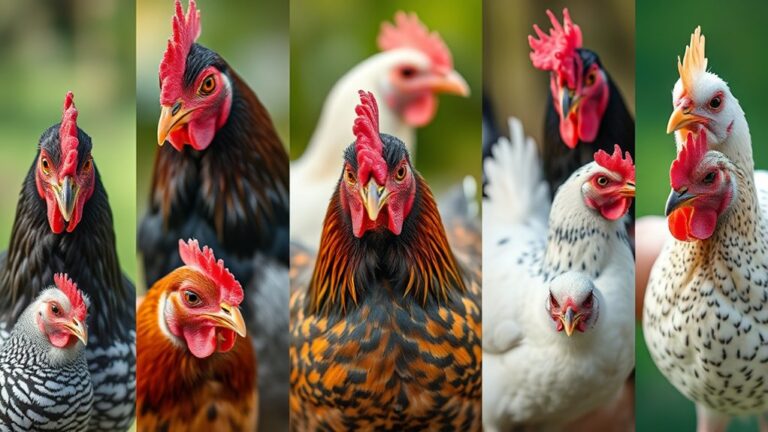
7 Chicken Breeds That Lay Colored Eggs
If you’ve ever wished your egg basket could be a little more colorful, you’re not alone. Many chicken keepers struggle with the same desire to brighten up their breakfasts with eggs that stand out.
Luckily, there are some fantastic chicken breeds that lay eggs in stunning shades, turning an ordinary basket into a vibrant display. Chicken Breeds That Lay Colored Eggs.
If you want colorful egg baskets, you can choose several breeds that lay striking shells.
Ameraucanas lay medium blue eggs, while Easter Eggers may give you blue or green ones in many shades.
Olive Eggers produce olive eggs, Marans lay deep chocolate brown, and Welsummers often lay speckled brown eggs.
Cream Legbars add sky-blue shells, and these colors come from genetics, not nutrition, with more details to examine below.
Key Takeaways
- Ameraucana chickens lay medium blue eggs and are calm, alert backyard birds.
- Easter Eggers produce blue or green eggs, often in pale, olive, or mixed shades.
- Olive Eggers lay olive-colored eggs by combining blue and brown shell pigments.
- Marans and Welsummers are popular for deep brown and speckled brown eggs.
- Cream Legbars lay striking sky-blue eggs, adding variety to colorful egg cartons.
What Makes Chicken Eggs Different Colors

Egg color comes down to genetics and the pigments a hen deposits while forming the shell. You’ll notice egg color variations because each breed carries genes that influence whether a shell stays white, turns brown, or picks up another tint.
As the egg moves through the oviduct, your hen adds pigments near the end of shell formation, and those pigments create the final shade. Diet, age, stress, and season can affect how strong the color looks, but they won’t change the breed’s basic shell type.
You may also hear claims about nutritional differences, yet shell color doesn’t determine the protein, fat, or vitamin content of the egg. What matters most is the hen’s health and feed.
If you compare eggs from different breeds, focus on shell strength, freshness, and flavor instead of color alone. Once you understand the genetics behind it, you can appreciate why your flock lays such a colorful mix.
Ameraucana Chickens: Blue Eggs

Ameraucana chickens are one of the best-known breeds for laying blue eggs, and you can spot them by their neat beards, tufts, and clean, slate-blue shells. When you keep them, you’ll notice their calm, alert nature and medium build fit well in backyard flocks.
Strong Ameraucana characteristics include pea combs, muffs, and hardy bodies that handle cool weather better than many breeds. You can expect a steady supply of medium-sized blue eggs, though each hen’s output still depends on feed, light, and age.
Good Ameraucana care means giving them balanced layer feed, fresh water, dry bedding, and space to forage. You should also provide predator protection and regular health checks so they stay productive.
Because they’re active foragers, they’ll help themselves to insects and greens while adding color to your egg basket and charm to your coop.
Easter Eggers: Blue and Green Eggs
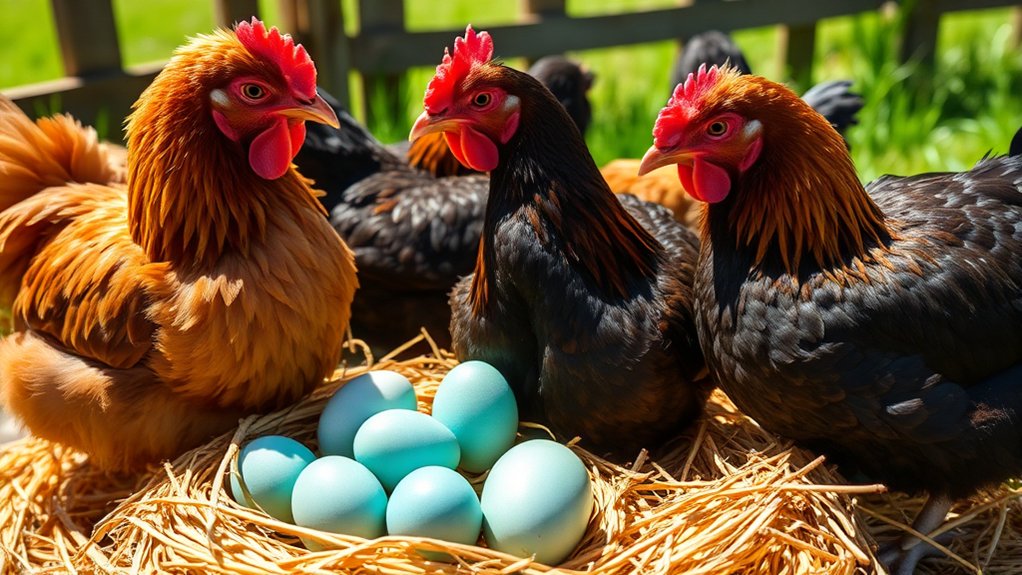
Easter Eggers can surprise you with blue or green shells, which makes each egg a colorful little treat. You might find it pretty cool that these shades actually come from egg color genetics. It’s all about how different inherited traits mix together in interesting ways. That’s why no two flocks lay exactly the same eggs.
Blue And Green Shells
Blue and green shells are what make Easter Eggers so popular with backyard chicken keepers. You’ll often get these colors from hens with mixed, nonstandard ancestry rather than a fixed breed standard.
You’ll see each egg shell vary in shade, from pale sky blue to olive green. The inside stays just like any other egg; egg nutrition doesn’t change because of shell color.
| Shade | Common look |
|---|---|
| Blue | Soft pastel |
| Green | Olive tint |
| Teal | Blue-green mix |
| Mint | Light, fresh hue |
| Olive | Deep muted green |
When you collect them, enjoy the surprise and variety they bring to your basket and kitchen.
Egg Color Genetics
What gives Easter Eggers their blue and green shells comes down to egg color genetics. You’re seeing a gene that deposits blue color through the egg shell. Then other genes can add brown pigment production on top. That’s why you get shades from sky blue to olive green.
- A blue egg shell starts the process.
- Brown pigment production deepens the shade.
- The hen’s genes decide how much color appears.
- You can’t predict every egg exactly.
Olive Egger Chickens: Olive-Shell Eggs
Olive Egger chickens are prized for the striking olive-shell eggs they lay, which blend blue and brown pigments into a rich greenish-olive hue. When you add olive eggers to your flock, you get a fun mix of genetics and dependable egg production.
Their eggs often stand out in baskets, making them a favorite if you want variety without extra fuss. You’ll usually see birds that are calm, curious, and easy to manage, so they fit well into backyard setups.
Because each olive egger can differ slightly, your eggs may range from lighter sage to darker olive tones. Good nutrition, clean water, and a stress-free coop help support steady laying.
If you enjoy collecting colorful eggs, these hens give you visual appeal and practical value in one package. They’re a smart choice when you want a flock that’s both productive and interesting, day after day, year after year.
Marans Chickens: Deep Brown Eggs
If you like eggs that stand out, Marans chickens take that rich color in a different direction with deep brown shells that often look almost chocolate. You’ll appreciate their calm temperament and steady presence in a backyard flock.
Marans history traces back to France, where keepers valued them for both table birds and their dark eggs.
You can keep them in a secure coop, give them quality feed, and expect dependable results. Their egg production usually stays moderate, but each egg feels special.
- Choose healthy pullets with clean feathers.
- Offer calcium so shells stay strong.
- Collect eggs often to keep them clean.
- Provide space, shade, and fresh water daily.
Because they mature at a measured pace, you won’t rush the payoff, but you will enjoy rich color and reliable laying. If you want beauty and function together, Marans fit nicely in your flock.
Welsummers: Speckled Brown Eggs
Welsummers bring a different kind of charm to the egg basket, with warm brown shells marked by darker speckles that make each one look hand-painted. You’ll appreciate their friendly, alert nature and steady routine, which fit well in backyard flocks.
Among key Welsummer characteristics are their rustic look, strong foraging skills, and calm confidence around people. They handle free-ranging well and can thrive when you give them space, shelter, and balanced feed.
Their egg production is reliable rather than flashy, typically giving you a good supply of medium to large eggs through much of the year. The speckling on the shell can vary, so each egg feels a little unique.
If you want a bird that adds color, personality, and practical value, Welsummers are a smart choice. They don’t demand much, yet they reward you with attractive eggs and a lively presence in the coop every day.
Cream Legbar Chickens: Sky-Blue Eggs
Cream Legbar chickens lay striking sky-blue eggs that really stand out in any basket. You’ll also notice they’re active and friendly birds with a neat crested look. Plus, they have steady laying habits. If you give them good feed, plenty of space, and proper shelter, you can keep them healthy and productive.
Sky-Blue Egg Color
Sky-blue eggs stand out as one of the most distinctive shades in the chicken world, and Cream Legbar hens are the breed most closely tied to this color. You’ll notice that their shells often show subtle sky blue variations, from pale robin’s-egg tones to deeper pastel blue. That range adds charm without feeling artificial, and it’s why many keepers prize them for egg aesthetics.
- Their color looks cool and clean.
- It contrasts beautifully in baskets.
- It signals a unique breed identity.
- It adds visual interest to daily collecting.
When you want eggs that feel both natural and eye-catching, this blue delivers. You get color that’s gentle, memorable, and easy to appreciate.
Breed Traits And Care
Though they’re best known for their sky-blue eggs, Cream Legbars also bring useful breed traits that make them appealing backyard chickens. You’ll appreciate their calm, curious temperament and active foraging, which helps cut feed costs and keeps them busy.
They mature well, handle free-range life nicely, and adapt to small flocks if you give them enough space. Good breeding techniques matter because you want strong, lively birds with reliable laying and proper crests.
For care, focus on solid coop requirements: dry bedding, secure roosts, predator-proof doors, and enough nesting boxes. They do best with balanced feed, clean water, and regular health checks.
Because they’re alert and energetic, you should plan for room to roam and a setup that supports steady, stress-free laying.
Frequently Asked Questions
Which Colored Egg Breed Is Best for Backyard Beginners?
You’ll do best with Easter Eggers for your backyard flock. They’re usually friendly, hardy, and forgiving, so beginner chicken care feels simpler.
Their egg color genetics can give you blue, green, or even tinted eggs, which makes collecting fun without needing special management. You won’t get a guaranteed shade, but you’ll get variety, good temperament, and reliable laying.
If you want easy and colorful, they’re a smart first choice.
Do Colored Egg Chickens Lay Differently in Winter?
Yes, you’ll usually see winter laying patterns change, and you may notice egg production variations in cold weather. You can expect fewer eggs because shorter daylight, cold stress, and molting slow hens down.
If you keep coop light, offer steady feed, and protect them from drafts, your birds may keep laying better. Colored-egg hens don’t act dramatically different, but they often pause or reduce output just like other chickens.
Can Egg Color Change as Hens Age?
Yes, your hen’s egg color can shift as she ages, though not like a curtain changing scenes overnight. You’ll usually see subtle fading or darkening tied to age influence and egg color genetics, not a brand-new shell color.
As hens mature, stress, diet, and laying frequency can affect pigment intensity. So if you notice lighter eggs, you’re often seeing nature’s quiet revision, not a mystery in the coop.
How Do I Identify a Chicken Breed From Its Egg?
You can’t reliably identify a chicken breed from its egg alone, because many breeds lay similar shells. You’ll need to compare egg genetics, breed characteristics, and clues like size, shape, shell color, bloom, and even flock behavior.
Ask about the hen’s appearance, comb, feathering, and leg color too. If you want certainty, hatch the egg and raise the chick, or use breeder records and DNA testing.
Are Colored Eggs More Nutritious Than White Eggs?
No, you shouldn’t assume colored eggs are more nutritious than white ones. At first glance, the shells may look special, but the truth is simpler: egg nutrition depends more on the hen’s diet, health, and living conditions than on shell color.
Don’t fall for color myths. You’ll usually find similar protein, fat, vitamins, and minerals in both. If you want better eggs, focus on how the hens are raised.
Conclusion
You’ve seen how one coop can hold a rainbow: Ameraucanas give you blue, Marans offer deep brown, and Olive Eggers surprise you with olive-shell shades. Each breed brings its own beauty, yet they all share the same simple job of giving you fresh eggs.
That contrast between everyday utility and striking color makes these birds unforgettable. If you want a flock that feeds you and delights you, these chicken breeds that lay colored eggs are a perfect place to start.