7 Must-Know Chicken Breeds Complete List
Choosing the right chicken breeds for your backyard flock can feel overwhelming. You want hens that lay well, handle your local climate, and maybe even look unique. If you’ve ever struggled to pick the perfect breeds, you’re not alone. Many people face this challenge when starting or expanding their poultry collection.
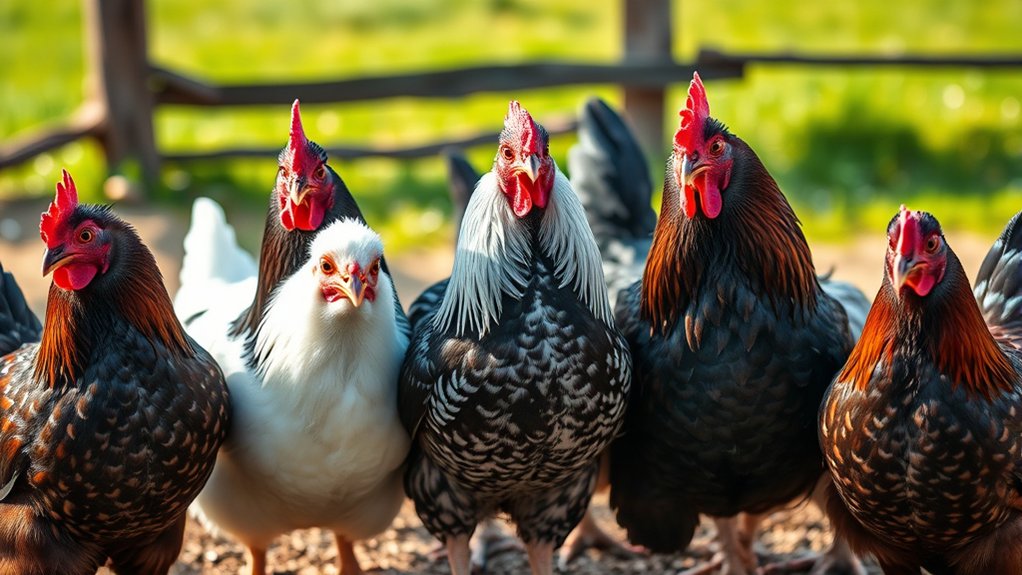
You’ll want to know seven key chicken breeds to master backyard poultry. For eggs, choose Leghorns and Rhode Island Reds; they lay reliably and handle different climates.
Dual-purpose breeds like Plymouth Rock and Sussex offer both meat and eggs.
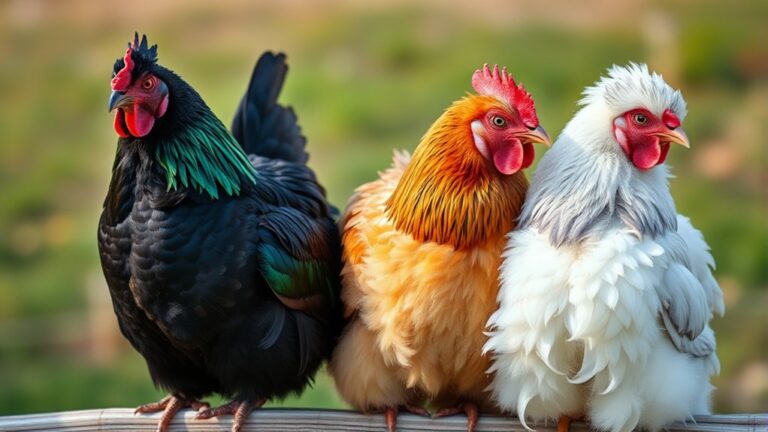
Silkies and Polish add friendly temperaments and unique looks, perfect for families.
Don’t overlook rare heritage breeds like Jersey Giants for genetic diversity and resilience.
Keep exploring to uncover which breed best fits your flock goals.
Key Takeaways
- Rhode Island Red, Leghorn, and Sussex are top breeds known for reliable egg production and adaptability.
- Plymouth Rock and Sussex serve as excellent dual-purpose breeds for both eggs and meat.
- Silkies, Polish, and Sebright offer unique ornamental features that enhance backyard flock appeal.
- Delaware, Jersey Giant, and Ancona are rare heritage breeds important for conservation and genetic diversity.
- Choosing breeds based on temperament, climate resilience, and purpose ensures a balanced and sustainable flock.
How to Choose the Best Chicken Breeds for Your Needs
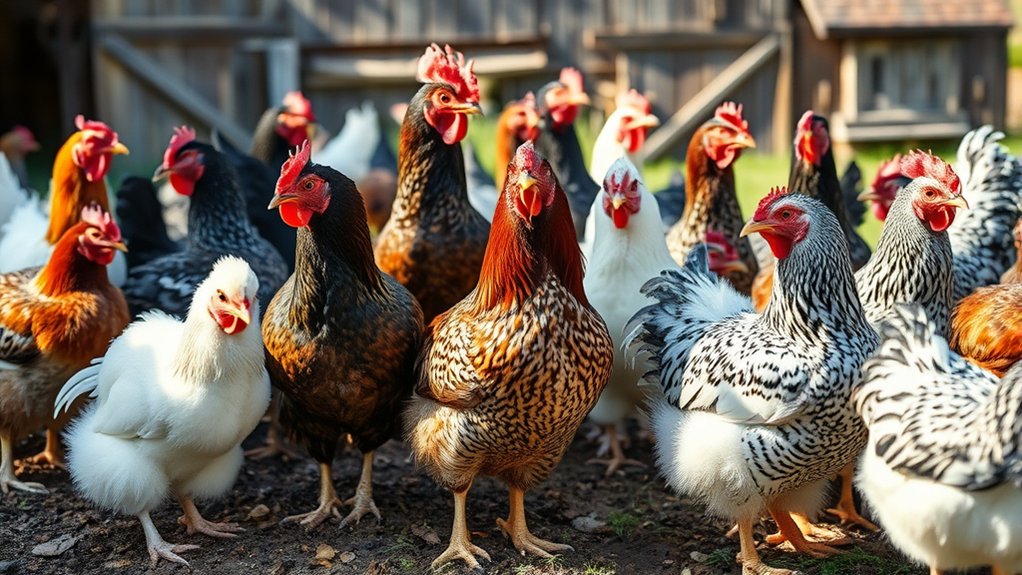
Choosing the best chicken breeds for your needs starts with identifying your primary goals, whether it’s egg production, meat quality, or ornamental value. Once you know what you want, consider how each breed’s feeding habits align with your available resources.
Some chickens require more specialized diets, while others thrive on simple feed and foraging. This impacts both your budget and daily care routine. Next, think about your coop design. Certain breeds need more space, perching options, or ventilation due to their size or temperament.
For example, larger meat breeds often require sturdier, more spacious coops, while ornamental breeds might benefit from protection against predators and weather to maintain their plumage. Matching breed characteristics to your feeding habits and coop setup guarantees healthier chickens and smoother management.
Best Chicken Breeds for Consistent Egg Laying
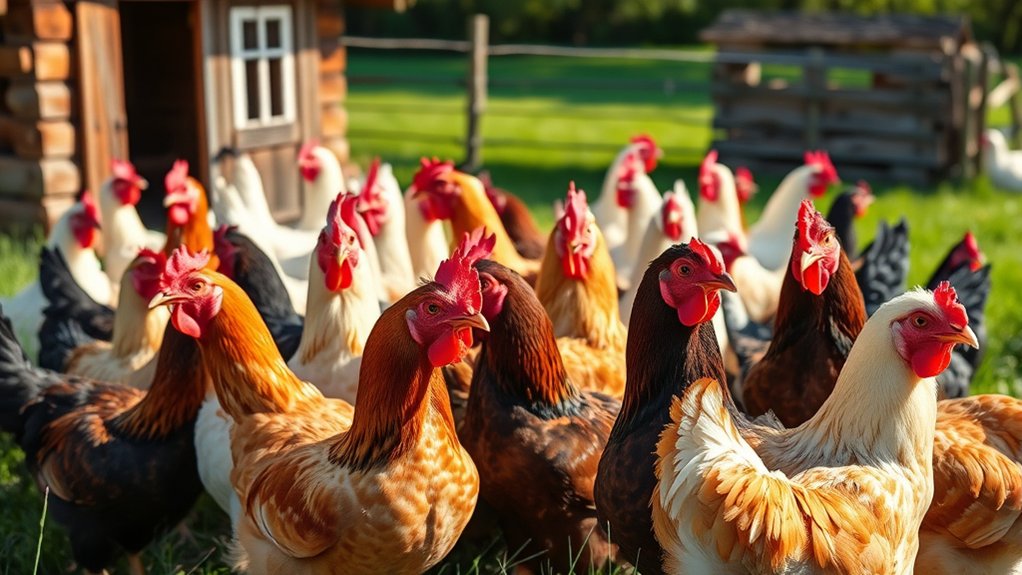
If you want a steady supply of fresh eggs, choosing the right breed is key. You’ll want to focus on top egg-laying breeds known for their reliability and productivity. So, let’s take a closer look at the traits that make these chickens such excellent layers.
Top Egg-Laying Breeds
Wondering which chicken breeds will keep your egg basket full? When it comes to egg production, some breeds clearly stand out. The Rhode Island Red, Leghorn, and Sussex top the list due to their consistent laying habits.
Comparing these breeds, the Leghorn excels in producing large white eggs, while the Rhode Island Red offers a steady supply of brown eggs and is hardier in different climates. Sussex chickens provide a reliable medium-sized egg output and adapt well to backyard settings.
If you want a breed that balances quantity with ease of care, these choices are your best bet. By focusing on breed comparison in egg production, you can select chickens that match your needs and maximize your daily egg yield without hassle.
Traits of Productive Layers
Although many chicken breeds lay eggs, the most productive layers share specific traits that help you get a steady supply without extra effort. These hens typically have efficient feeding habits, converting their food into energy and eggs without waste.
You’ll notice they eat consistently but aren’t picky, which helps maintain their health and egg production. Another key trait is favorable molting patterns; productive layers usually experience shorter or less severe molts, so they spend less time off-laying.
This means you’ll get more eggs year-round. Furthermore, these breeds tend to be hardy, adapting well to various climates and resisting common illnesses. By choosing hens with these traits, you ensure your flock consistently delivers fresh eggs with minimal extra care.
Best Dual-Purpose Chicken Breeds for Eggs and Meat
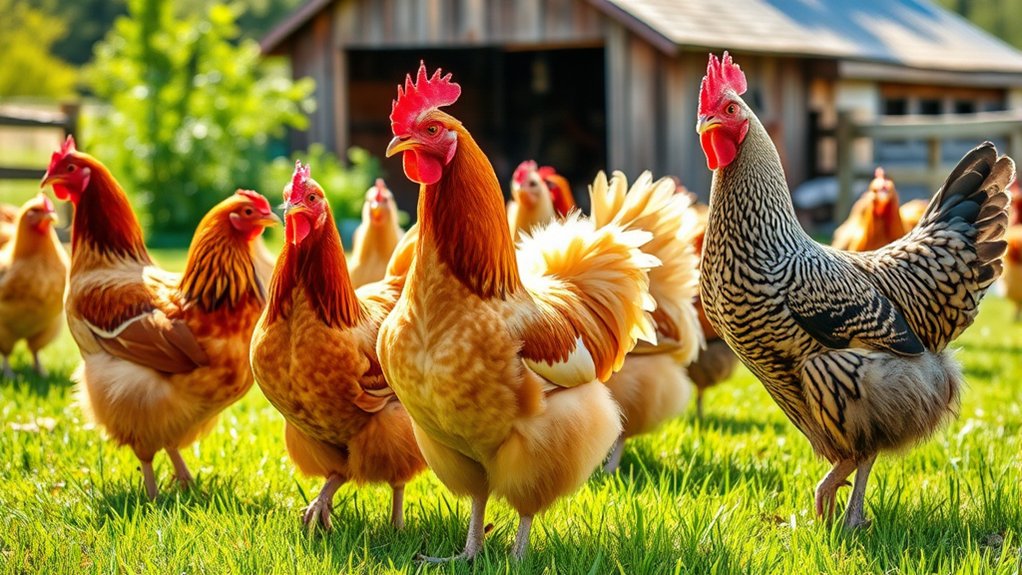
When you raise chickens, choosing dual-purpose breeds lets you enjoy both fresh eggs and quality meat from the same flock. These breeds often benefit from hybrid vigor, which means they’re healthier and more productive thanks to crossbreeding advantages. You get the best of both worlds: steady egg production and substantial meat yield.
Dual-purpose chicken breeds provide healthier, more productive flocks with reliable eggs and quality meat.
Here are three top dual-purpose breeds to contemplate:
- Rhode Island Red – Known for hardiness, they lay well and provide flavorful meat.
- Plymouth Rock – A calm bird with good egg-laying ability and tender meat.
- Sussex – This breed offers consistent egg production and is prized for its meat quality.
Friendly and Low-Maintenance Chicken Breeds for Families
If you’re looking for chickens that are calm and easy to care for, there are definitely some breeds that stand out as perfect for families. You’ll really appreciate breeds known for their gentle nature and simple maintenance. So, let’s take a closer look at some kid-friendly chickens that make great backyard companions.
Calm Temperament Breeds
Choosing chicken breeds with calm temperaments can make raising poultry a more enjoyable and stress-free experience for your family. When you select meditative roosters and tranquil hen breeds, you guarantee a peaceful environment that’s perfect for kids and beginners alike.
These chickens are less likely to cause disruptions or stress, allowing you to focus on bonding with your flock.
Here are three calm temperament breeds to contemplate:
- Silkies – Known for their gentle nature and fluffy appearance, they’re perfect for families.
- Orpingtons – Friendly and patient, these hens and roosters stay calm even around children.
- Plymouth Rocks – Hardy and easygoing, they adapt well to various environments without fuss.
Easy Care Requirements
Because family life is busy, you’ll want chicken breeds that don’t require constant attention or complicated care. Choose breeds known for being hardy and adaptable. They thrive with basic chicken coop design that prioritizes good ventilation and easy cleaning.
A well-planned coop reduces stress for both you and your birds, making daily chores simpler. Regarding feather care tips, focus on providing a balanced diet and regular dust baths to keep feathers healthy without extra grooming.
Avoid breeds prone to excessive molting or delicate feathers if you want a low-maintenance flock. By picking easy-care breeds and optimizing your chicken coop design, you’ll enjoy fresh eggs and friendly hens without added hassle. It’s perfect for busy families looking for a smooth backyard chicken experience.
Kid-Friendly Chicken Types
Selecting chicken breeds that are both friendly and low-maintenance makes it easier to include your kids in daily care. When choosing kid-friendly chicken types, focus on breeds that tolerate handling well and require simple chicken grooming routines. Keeping poultry hydration consistent is also key to their health and your family’s enjoyment.
Here are three great options:
- Silkie – Known for their gentle nature and fluffy feathers, they’re perfect for kids learning chicken grooming.
- Buff Orpington – Calm and hardy, they adapt well to families and need minimal maintenance.
- Plymouth Rock – Friendly, hardy birds that tolerate handling and outdoor living.
These breeds help teach responsibility without overwhelming you or your children. They make daily care a fun, manageable activity.
Hardy Chicken Breeds That Thrive in Any Climate
While not all chickens handle extreme weather well, hardy breeds adapt quickly and stay healthy in any climate. You want chickens with strong climate resilience and key adaptability factors like dense feathers, robust immune systems, and foraging ability. These traits help them thrive through cold winters, scorching summers, or humid conditions.
Here’s a quick snapshot of some top hardy breeds:
| Breed | Climate Resilience | Adaptability Factors |
|---|---|---|
| Plymouth Rock | Cold & heat tolerant | Thick feathers, calm nature |
| Rhode Island Red | Heat & cold resistant | Good foragers, strong immunity |
| Sussex | Handles humidity well | Active foragers, hardy build |
Unique-Looking Chicken Breeds for Backyard Appeal
If you want your backyard to stand out, choosing unique-looking chicken breeds can add charm and personality to your flock. These chickens flaunt striking feather pattern diversity and ornamental plumage variations that catch the eye and spark conversation. When selecting breeds for visual appeal, consider these three:
Choosing unique chicken breeds adds charm and eye-catching variety to your backyard flock.
- Silkie Known for their fluffy, soft feathers and black skin, Silkies offer an almost mythical look with their unique texture and gentle nature.
- Polish Famous for their extravagant crests, Polish chickens showcase dramatic head plumage that sets them apart instantly.
- Sebright This bantam breed features intricate laced feathers, displaying remarkable feather pattern diversity in a compact size.
These breeds not only brighten your backyard but also bring diversity in appearance, making your flock a true ornamental treasure. By choosing unique-looking chickens, you create an engaging and visually stunning environment that’s as enjoyable to watch as it is to raise.
Rare and Heritage Chicken Breeds You Should Know
Uncovering rare and heritage chicken breeds can deepen your appreciation for poultry and add valuable genetics to your flock. These breeds often boast unique traits and resilience, making them excellent choices for heritage preservation.
By raising rare breeds like the Delaware, Jersey Giant, or the Ancona, you contribute directly to rare breed conservation efforts. These chickens carry genetic diversity that modern commercial breeds lack, which helps maintain a robust gene pool.
When you choose heritage breeds, you’re not just adding variety; you’re preserving cultural history and supporting sustainable farming practices. These birds tend to be hardier and better suited to natural living conditions, which can reduce your reliance on intensive care.
Plus, their distinctive appearances and behaviors make them fascinating to observe and raise. Embracing rare and heritage chicken breeds guarantees you play a crucial role in protecting poultry diversity for future generations while enjoying a unique flock.
Frequently Asked Questions
How Long Do Chickens Typically Live?
Chickens typically live around 5 to 10 years, but their lifespan depends on factors like egg laying habits and breeding behaviors. If you focus on breeds that lay eggs frequently, you might notice they tire faster and live shorter lives.
On the other hand, chickens bred for hardiness and less intense egg production often live longer. Understanding these behaviors helps you care better for your flock and enjoy their company for years.
What Are Common Health Issues in Chickens?
Common chicken challenges can cause concern, especially when egg production dips. You’ll want to watch for feather pecking, which can lead to injuries and stress.
Parasites, respiratory issues, and mites frequently frustrate flock owners too. To keep your chickens cheerful and consistent layers, regularly check their environment, provide balanced nutrition, and maintain cleanliness.
Promptly addressing health hiccups helps make certain your birds stay strong and productive.
How Much Space Does Each Chicken Need?
You should provide at least 2 to 3 square feet per chicken inside your indoor coop to keep them comfortable and healthy. For free range space, aim for about 8 to 10 square feet per bird so they can roam and forage freely.
Giving them enough room reduces stress, prevents overcrowding, and promotes good health. Make sure both indoor and outdoor spaces are secure and well-maintained for your chickens’ well-being.
What Do Chickens Eat Besides Chicken Feed?
Chickens spend up to 60% of their day natural foraging, which means they eat grass, insects, and seeds besides chicken feed. You can boost their diet with supplementary treats like vegetable scraps, fruits, or mealworms. This variety keeps them healthy and happy.
Just remember to avoid giving them anything toxic, like chocolate or raw potatoes. By mixing natural foraging with supplements, you’ll help your chickens thrive naturally and nutritiously.
Can Chickens Be Trained or Tamed?
Yes, you can train and tame chickens with patience and consistency. Using behavior training, you’ll teach them to respond to your voice or hand signals.
Start with simple taming techniques like offering treats and gentle handling to build trust. Over time, chickens learn routines and even come when called.
Conclusion
So, you’re ready to pick your perfect feathered friend, huh? Whether you want eggs, meat, or just a backyard celebrity, these chicken breeds have you covered.
Who knew choosing a chicken could be this complicated? From hardy survivors to flashy show-offs, your coop will never be boring.
Just remember, no matter which breed you pick, they’ll probably outsmart you before breakfast. That’s the real charm of keeping chickens and why learning about the best chicken breeds is so important!